Photo: Wikipedia
Demographics of Lake County
Affluence Level in Lake County
A middle-class area roughly in line with national averages across income, home values, education, and employment.
People of Lake County
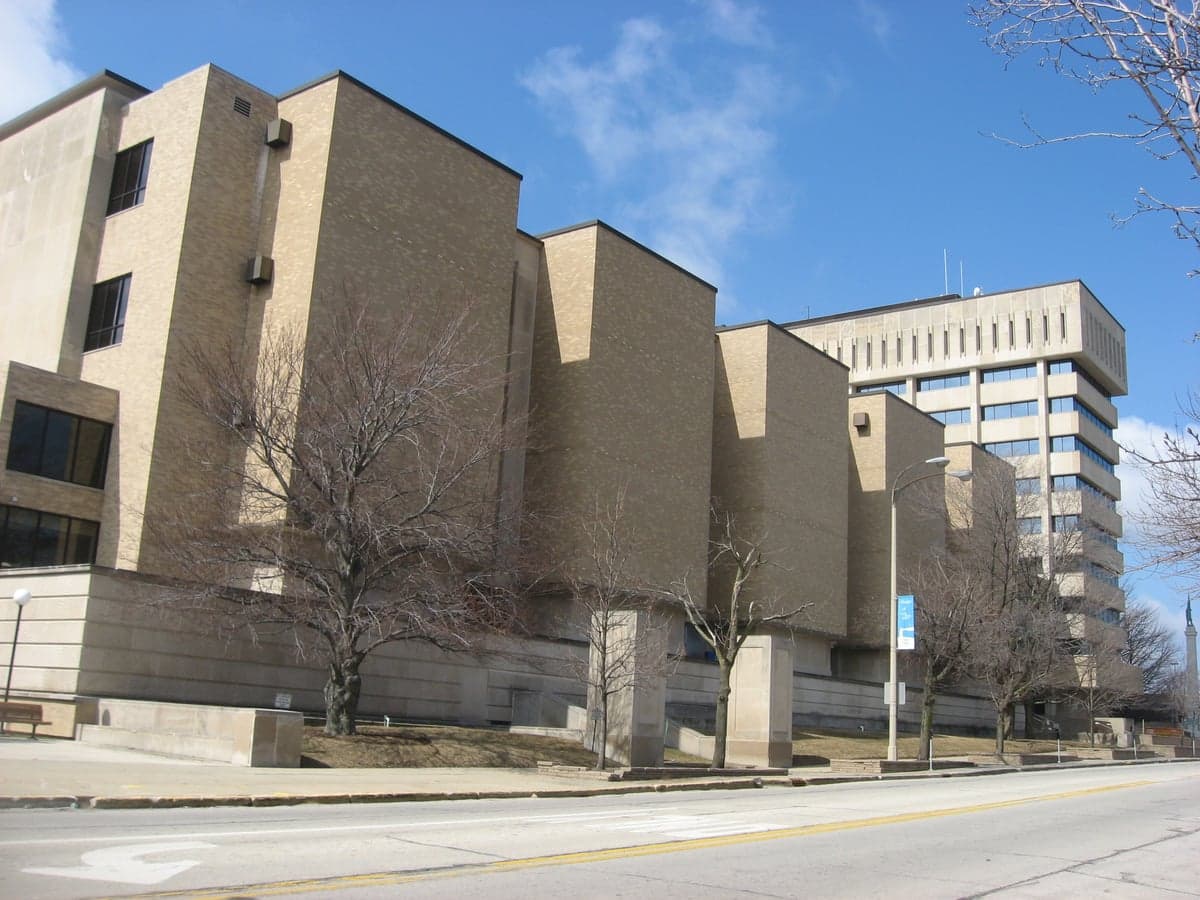
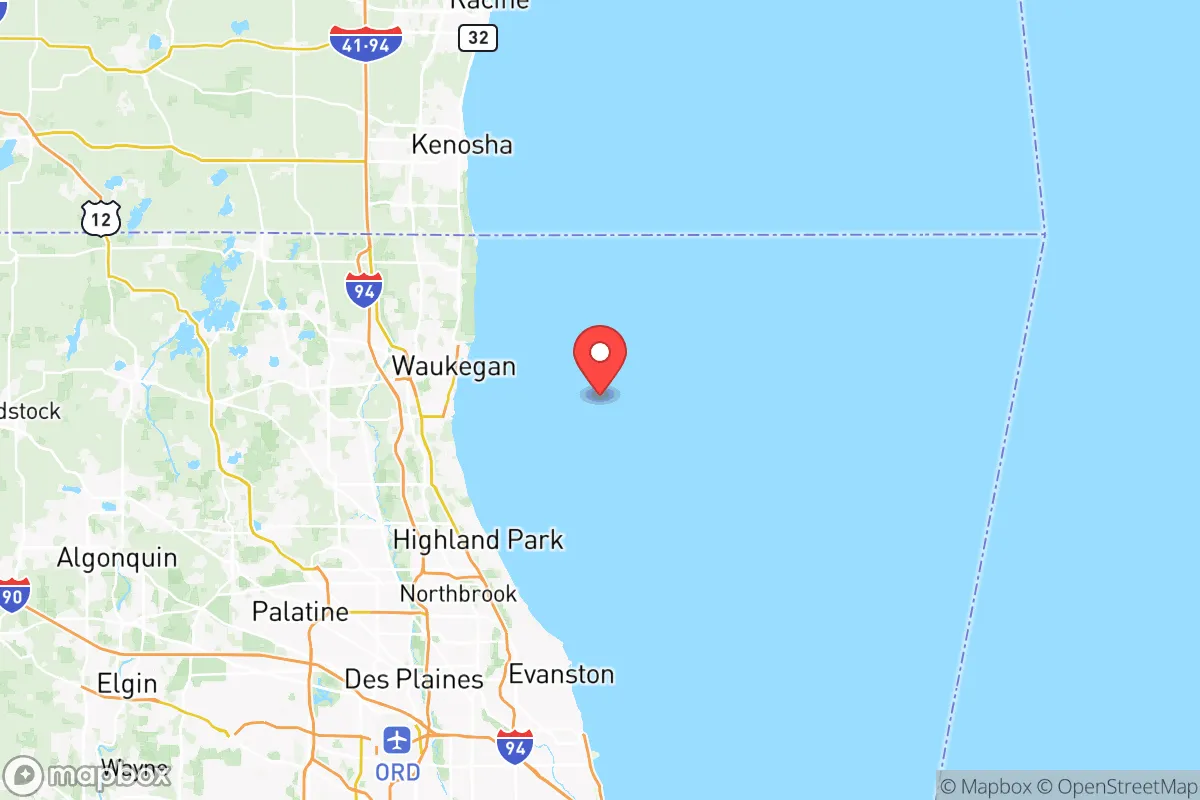
Lake County, Illinois, is home to 711,885 residents who form one of the Chicago metropolitan area's most economically dynamic and demographically diverse suburban populations. The county's character is defined by sharp contrasts: affluent lakefront communities like Lake Forest and Highland Park sit alongside rapidly diversifying inland suburbs such as Waukegan and Round Lake Beach, while the county's 47.0% college-educated workforce supports a knowledge economy anchored by major employers like AbbVie, Baxter, and Discover Financial Services. With a foreign-born population of 9.4% and a Hispanic community that now constitutes 24.4% of residents, Lake County has transformed from a predominantly white, Protestant stronghold into a multi-ethnic suburban region where old-money estates and new immigrant enclaves coexist within a single county boundary.
Settlement & growth (pre-1960)
Before European settlement, the area now known as Lake County was home to the Potawatomi people, who maintained seasonal villages along the Des Plaines River and the shores of Lake Michigan. The Potawatomi ceded their lands in the 1833 Treaty of Chicago, opening the region to American settlement. The first wave of Euro-American settlers arrived in the 1830s and 1840s, primarily Yankees from New England and New York who established the county's earliest towns. These settlers founded Libertyville in 1837 and Waukegan in 1841, drawn by the region's fertile prairie soils and access to Lake Michigan shipping routes. The Yankees brought with them a tradition of town governance, Congregationalist churches, and an emphasis on education that would shape the county's civic culture for generations.
The second major wave arrived in the 1840s and 1850s: German and Irish immigrants who built the railroads and worked the growing industrial operations. German farmers settled in the county's interior, establishing communities like Mundelein (originally called Mechanicsburg) and Grayslake, where their descendants remain a visible presence today. Irish immigrants concentrated in Waukegan and North Chicago, working on the Chicago and North Western Railway and in the emerging manufacturing sector. The 1850s also saw the arrival of Swedish immigrants, who established a significant presence in Zion and Waukegan, where Swedish Evangelical Covenant churches became community anchors.
The late 19th and early 20th centuries brought a third wave: Eastern European immigrants, particularly Poles and Czechs, who found work in the county's expanding industrial base. Polish immigrants concentrated in Waukegan and Round Lake, where they established Catholic parishes and fraternal organizations that sustained their cultural identity through the mid-20th century. The 1920s saw the founding of Zion as a utopian Christian community by John Alexander Dowie, attracting followers from across the United States and Europe, though the community's religious character has since faded.
The post-World War II period transformed Lake County from a rural-agricultural region into a suburban extension of Chicago. The 1950s and early 1960s brought a massive wave of white, middle-class families from Chicago and other Rust Belt cities, drawn by new housing developments, the construction of the Tri-State Tollway (I-94), and the expansion of corporate headquarters along the Lake Michigan shoreline. Buffalo Grove, Vernon Hills, and Lincolnshire grew from tiny crossroads into planned suburbs during this period, their populations swelling with families seeking good schools and safe neighborhoods. By 1960, Lake County's population had reached 293,656, more than double its 1940 count, and the county's character had shifted decisively toward suburban affluence.
Modern era (post-1965)
The 1965 Hart-Cellar Act fundamentally reshaped Lake County's demographics, though the effects took decades to fully manifest. The first major post-1965 immigrant group to arrive was East and Southeast Asian communities, particularly Chinese and Korean professionals who came in the 1970s and 1980s to work in the county's growing pharmaceutical and technology sectors. These families concentrated in Buffalo Grove and Vernon Hills, where they now constitute a visible presence in the professional class. Today, East and Southeast Asian residents make up 4.4% of the county's population, with significant concentrations in the central and southern suburbs.
Indian subcontinent immigrants began arriving in significant numbers in the 1990s and 2000s, drawn by employment at Abbott Laboratories (now AbbVie) in North Chicago and the growing technology corridor along I-94. Indian professionals concentrated in Buffalo Grove, Vernon Hills, and Long Grove, where they now constitute 4.0% of the county's population. These families have established cultural institutions including Hindu temples and community centers, and their children are disproportionately represented in the county's top-performing school districts.
The most transformative demographic shift, however, has been the growth of Lake County's Hispanic population. From a negligible presence in 1970, Hispanic residents now account for 24.4% of the county's population, driven by both domestic migration from other parts of the United States and direct immigration from Mexico and Central America. The Hispanic community concentrated initially in Waukegan and North Chicago, where affordable housing and existing industrial employment provided a foothold. Since 2000, the community has spread to Round Lake Beach, Round Lake Park, and Zion, where Hispanic residents now constitute a majority or near-majority of the population. This growth has reshaped the county's politics, with Waukegan and North Chicago electing Hispanic representatives to local offices and the county's overall political orientation shifting from reliably Republican to competitive.
The Black population, at 6.3%, is concentrated in North Chicago and Waukegan, with smaller communities in Zion and Mundelein. This community has deep roots in the county, dating to the Great Migration of the 1940s and 1950s when Black families moved from the South to work in the county's industrial plants. The Black population has remained relatively stable as a share of the total, even as the county's overall diversity has increased dramatically.
Domestic migration patterns have also shifted. Since 2000, Lake County has experienced net domestic out-migration, with families leaving for Sun Belt states like Texas, Florida, and Arizona, as well as for more affordable parts of the Midwest. This outflow has been partially offset by international immigration and by the natural increase of the Hispanic population, which tends to be younger and have higher birth rates than the county's white population. The result is a county that is simultaneously becoming more diverse and more economically stratified, with affluent white and Asian communities in the south and east and a growing Hispanic working class in the north and west.
The future
Lake County's population is projected to continue diversifying, with the Hispanic share likely to approach 30% by 2035 and the white share declining below 50% within the same timeframe. The East and Southeast Asian and Indian subcontinent populations are expected to grow modestly, driven by continued professional employment in the pharmaceutical and technology sectors, though rising housing costs in the county's most desirable suburbs may push some families to more affordable areas in McHenry County or southeastern Wisconsin.
The county's cultural identity is evolving from its historic image as a wealthy, white, Republican stronghold toward a more complex reality. The northern and western suburbs — Waukegan, North Chicago, Round Lake Beach, Zion — are becoming majority-minority communities with growing Hispanic political influence and a working-class economic base. The southern and eastern suburbs — Lake Forest, Highland Park, Deerfield, Lincolnshire — remain predominantly white and affluent, though they are gradually diversifying at the professional level. This geographic sorting by income and ethnicity is likely to intensify, creating a county of two distinct demographic zones connected by commuter corridors but divided by school district boundaries and property tax rates.
For someone moving to Lake County now, the choice of community will largely determine their experience of the county. The affluent lakefront suburbs offer top-ranked schools, low crime rates, and access to Lake Michigan, but at housing prices that start well above $500,000. The inland suburbs offer more affordable housing and greater ethnic diversity, but with school districts that face fiscal challenges and more variable outcomes. The county's overall trajectory is toward greater diversity, greater economic stratification, and a political culture that is increasingly competitive between its Democratic-leaning northern communities and its Republican-leaning southern and eastern suburbs.

* Values derived from national, state, county, city and local statistics and may differ in a specific area. Last updated: 2026-06-16T14:29:21.000Z
Narrative content on this page is AI-generated and may contain mistakes. Verify any details that matter before acting on them.
ReloMaps may earn a commission from affiliate links at no extra cost to you.

