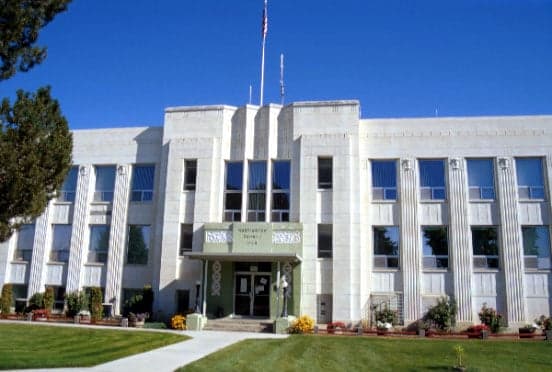
Photo: Wikipedia
Political ClimatePolitical Climate in Washington County
Showing district-level results — no local-only data available.
Local Political AnalysisPolitical Analysis of Washington County
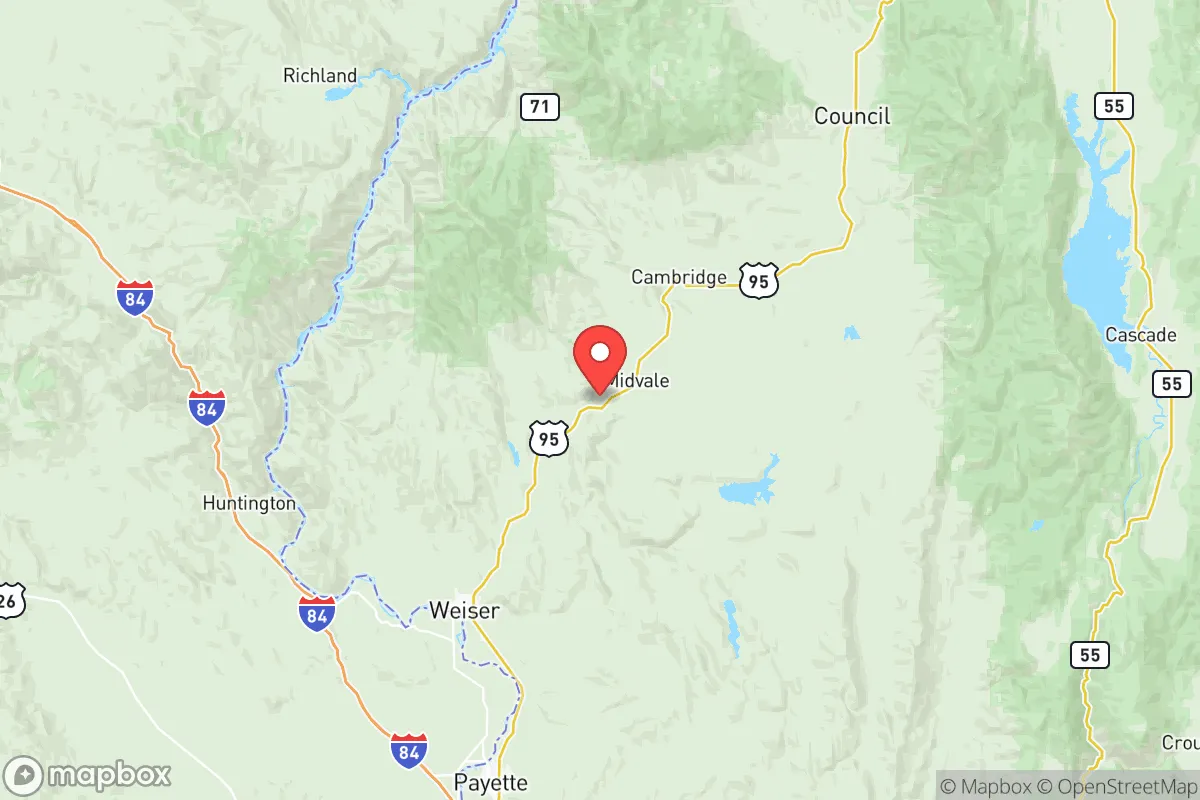
Washington County, Idaho, is a reliably conservative part of the state, carrying a Cook Partisan Voting Index (PVI) of R+22. That’s a full four points more Republican than the state of Idaho’s overall R+18 rating, making it one of the more staunchly red counties in a deeply red state. But if you’re thinking the whole county votes the same way, you’d be wrong — the political landscape shifts noticeably depending on whether you’re in Weiser, the county seat, or out in the smaller communities like Cambridge, Midvale, or the rural stretches near the Snake River.
How it compares
Compared to Idaho as a whole, Washington County is more consistently conservative. While Idaho’s PVI of R+18 is already among the most Republican in the nation, Washington County’s R+22 puts it in the company of the state’s rural, agricultural core — think counties like Payette or Gem. But the local variation matters. Weiser, the biggest town (around 5,000 people), is the political bellwether: it still votes Republican, but its precincts nearer the downtown and along the river tend to produce the county’s few Democratic votes, often by single-digit margins. In contrast, Cambridge and Midvale are reliably deep red, with precincts regularly delivering 75-80% of the vote for GOP candidates. The unincorporated areas south and east of Weiser, particularly around the Mann Creek Reservoir, are the most conservative, where you’ll often see lopsided 85%+ Republican returns. In a practical sense, a Republican running countywide can expect about 65-70% of the vote, while a Democrat is lucky to break 30%. This is a county where a primary challenge is the real contest, not the general election.
What this means for residents
For a conservative resident, this political climate means your views are the default. County commission meetings, school board discussions, and local law enforcement priorities all align with a small-government, pro-Second Amendment, and generally anti-tax mindset. You won’t feel like an outsider in local politics. For a liberal resident, it’s a different story. While you won’t face hostility in day-to-day life — folks here are neighborly — your political voice is a distinct minority. Donating to a Democratic campaign or putting up a yard sign in Weiser might draw a few raised eyebrows, but it’s not dangerous. Realistically, you’ll need to be comfortable with the fact that your vote on local races — sheriff, commissioner, even the hospital board — isn’t going to change the outcome. The community tends to focus on practical issues like water rights, ag land preservation, and infrastructure, which keeps political conversations more grounded and less ideological than in a place like Boise.
Culturally, the big distinction between Washington County and the rest of Idaho is its relative isolation and self-reliance. Unlike the fast-growing, more politically mixed Treasure Valley to the east, this county has seen slower population growth and less in-migration. That means less of the "California transplant" dynamic that has shifted some Idaho suburbs to the center-right. The policy conversation here is still dominated by the old-timers — ranchers, farmers, and small business owners who’ve been here for generations. A hot-button issue like public lands access or wolf management can actually split the conservative vote more than you’d expect, pitting ranchers against hunters in a way you don’t see in Ada County. Looking ahead, unless a major employer or housing boom hits Weiser, the political trajectory is stable: solidly, deeply Republican, with the only real action being which faction of the GOP holds sway in any given election cycle.

State Political ClimatePolitical Climate in Idaho
State Political AnalysisPolitical Environment in the State
Idaho is one of the most reliably Republican states in the nation, with a Cook Partisan Voting Index of R+18, meaning it votes about 18 points more Republican than the national average. The state’s dominant coalition is a blend of rural conservatives, Mormon cultural conservatives in the southeast, and a fast-growing wave of out-of-state transplants—many from California and the Pacific Northwest—who are often more libertarian than traditional GOP. Over the last 20 years, Idaho has shifted sharply rightward: in 2004, George W. Bush won it by 38 points; in 2024, Donald Trump carried it by roughly 30 points, but the state’s legislature has grown even more conservative than its presidential vote, passing some of the nation’s most restrictive abortion laws, a near-total ban on transgender care for minors, and a school voucher-like program. The practical effect for a relocator: if you lean conservative, you’ll find your views reflected in state law; if you lean liberal, you’ll be in a clear minority, though Boise and a few college towns offer blue enclaves.
Urban vs. rural divide
The political map of Idaho is starkly split between a handful of growing urban centers and vast, deeply red rural expanses. Boise and its immediate suburbs in Ada County are the state’s only real swing area: Ada County voted for Trump by just 3 points in 2024, down from a 12-point margin in 2016, reflecting the influx of moderate and left-leaning professionals. The city of Boise itself is reliably Democratic, while the suburbs of Meridian and Eagle lean Republican but are softening. Blaine County, home to the Sun Valley ski resort, is the state’s only consistently blue county outside of Boise, voting Democratic by double digits. By contrast, Idaho Falls, Rexburg, and Pocatello in the east are deeply conservative, driven by the large LDS population and agricultural roots. Coeur d’Alene and the northern Panhandle have become a flashpoint: historically more moderate, the area has seen an influx of conservative transplants from California and Washington, pushing it further right, though Kootenai County still has a libertarian streak that sometimes clashes with the Mormon-dominated legislature in Boise. The rural counties—like Lemhi, Custer, and Owyhee—routinely vote 80-90% Republican, making the urban-rural gap one of the widest in the nation.
Policy environment
Idaho’s policy environment is defined by low taxes, limited regulation, and a strong tilt toward cultural conservatism. There is no state income tax on corporate or personal income—a major draw for relocators—and the sales tax is a flat 6%. Property taxes are relatively low but vary by county, with Ada County seeing increases due to rapid growth. The regulatory posture is business-friendly: Idaho is a right-to-work state, has no statewide zoning mandates, and permits concealed carry without a permit (constitutional carry). Education policy is a battleground: the state has a new school voucher-like program (the Idaho Launch grant and Education Savings Account expansion) that directs public funds to private and homeschool expenses, but it faces legal challenges. Healthcare policy is conservative: Idaho has not expanded Medicaid under the Affordable Care Act in a traditional sense, though voters passed a 2018 ballot initiative for expansion that the legislature has since weakened with work requirements. Election laws are among the most restrictive in the West: voter ID is required, same-day registration is not available, and the state has closed primaries for most offices, though a 2024 ballot initiative to create open primaries and ranked-choice voting passed in some counties but faces legislative pushback.
Recent policy direction
Over the past five years, Idaho’s legislature has moved aggressively on cultural and liberty issues, often outpacing public opinion. On abortion, the state passed a near-total ban in 2023 (the Idaho Defense of Life Act), with exceptions only for rape, incest, and the life of the mother—one of the strictest in the nation. On transgender rights, the 2023 House Bill 71 bans gender-affirming care for minors, and the state has also barred transgender girls from female sports. On gun rights, Idaho is a constitutional carry state, and in 2024 it passed a law prohibiting local governments from enforcing federal gun regulations (a “Second Amendment Sanctuary” law). On education and parental rights, the state passed a “Parents’ Bill of Rights” in 2023, requiring schools to notify parents about curriculum changes and allowing them to opt children out of certain materials. On privacy and surveillance, Idaho has no broad data privacy law, but it passed a 2024 law restricting the use of facial recognition by government agencies. On voting, the legislature has tightened ballot access: in 2023, it banned ballot drop boxes and shortened the absentee ballot request window. On property rights, Idaho is a strong “right-to-farm” state, limiting nuisance lawsuits against agricultural operations. The overall direction is toward maximal individual liberty on guns, property, and speech, combined with heavy government intervention on abortion and transgender care.
Civil unrest & political movements
Idaho has a visible but relatively low-intensity protest scene compared to coastal states. The most notable flashpoint has been anti-abortion activism: Planned Parenthood in Boise has been the site of regular protests and counter-protests, and the 2022 Supreme Court leak sparked a large but peaceful rally at the Idaho State Capitol. Immigration politics are a hot-button issue, particularly in the agricultural Magic Valley (Twin Falls, Jerome), where a significant Latino population works in dairy and food processing. In 2024, the legislature passed a bill requiring local law enforcement to cooperate with federal immigration authorities, though it was vetoed by Governor Brad Little. Secession and nullification rhetoric is more fringe than mainstream, but the “Greater Idaho” movement—which proposes moving eastern Oregon counties into Idaho—has gained some traction in Oregon but little legislative action in Idaho. Election integrity controversies flared after 2020, with some county GOP officials pushing for hand-counting ballots, but the state’s Republican Secretary of State has largely resisted these efforts. White nationalist activity has been a persistent concern: the Aryan Nations had a compound in northern Idaho in the 1990s, and while the group is largely defunct, the region still sees occasional rallies and has a reputation that new residents should be aware of, though it is not a daily reality for most.
Projection
Over the next 5-10 years, Idaho will likely become more culturally conservative on social issues while more libertarian on economic and gun policy, driven by two demographic forces: the continued influx of conservative-leaning transplants from California, Washington, and Oregon, and the out-migration of younger, more liberal Idahoans to states like Montana or Colorado. The Boise metro area will continue to moderate politically, potentially flipping Ada County to Democratic in presidential elections by 2032, but the legislature will remain deeply red due to gerrymandering and rural overrepresentation. The biggest wildcard is the school voucher debate: if the current program survives legal challenges, it could accelerate the growth of private and homeschool networks, further fragmenting the education landscape. On abortion, expect continued legal battles and potential ballot initiatives to soften the ban, though the legislature is unlikely to budge. A new resident moving in now should expect a state that is increasingly polarized between a growing, moderate Boise and a deeply conservative rural and suburban hinterland, with state policy firmly in the hands of the latter.
Bottom line for a new resident: If you’re a conservative, you’ll find Idaho’s laws align closely with your values—low taxes, strong gun rights, and a government that actively restricts abortion and transgender care. If you’re a liberal, you’ll need to accept that your views will be in the minority at the state level, though Boise and Sun Valley offer like-minded communities. The state is safe, growing fast, and politically stable, but the culture war battles are real and visible, especially in the legislature. Plan your move knowing that your vote will have little impact on state policy unless you live in Ada or Blaine County, but your daily life will be shaped by a government that is unapologetically conservative.
* Values derived from national, state, county, city and local statistics and may differ in a specific area. Last updated: 2026-06-29T00:18:47.000Z
Narrative content on this page is AI-generated and may contain mistakes. Verify any details that matter before acting on them.
ReloMaps may earn a commission from affiliate links at no extra cost to you.

