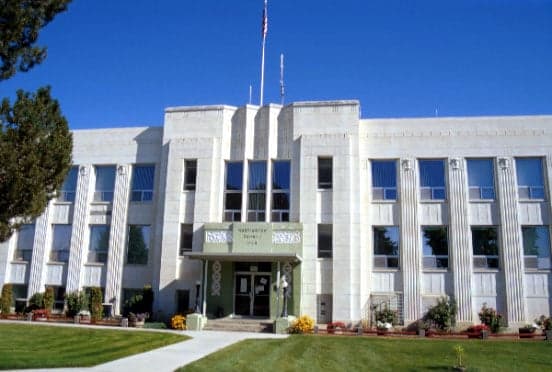
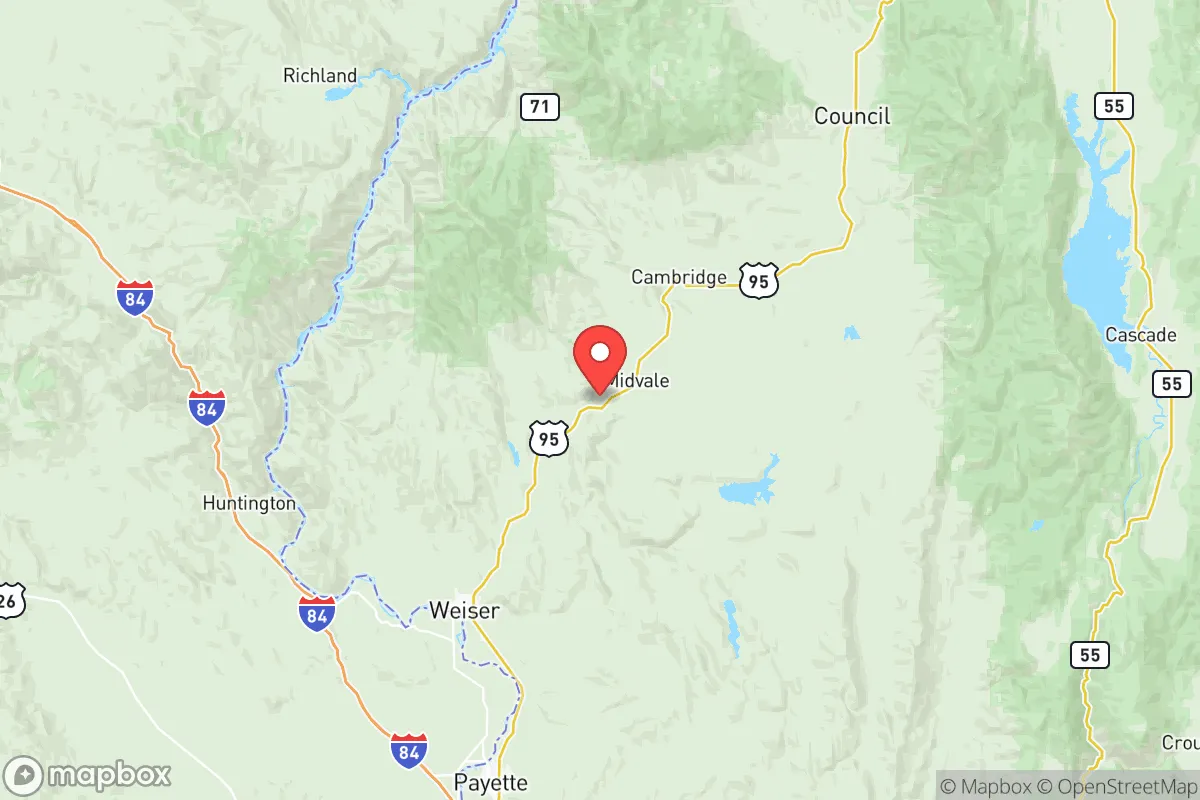
Photo: Wikipedia
Personal Sovereignty in Washington County
Moderate friction. Expect trade-offs in some aspect of personal liberty and independence.
What does Personal Sovereignty tell us?
Personal Sovereignty measures your capacity for self-reliance and independence with minimal government friction. Higher scores mean fewer barriers between you and the way you want to live... but it assumes you have the space you need and good neighbors.
What does this tell us?
Personal Sovereignty measures your capacity for self-reliance and independence with minimal government friction. Higher scores mean fewer barriers between you and the way you want to live... but it assumes you have the space you need and good neighbors.
State Policy
Energy independence: Importer (25% of energy produced in-state)
Personal Liberty
Homesteading

Personal Liberty Analysis
Washington County, Idaho, offers a notably high degree of personal sovereignty, grounded in Idaho’s strong constitutional protections for individual rights and a state-level regulatory environment that leans heavily toward local control and limited government. For residents prioritizing autonomy—whether in financial decisions, self-defense, land use, or family matters—the county provides a framework where state law generally preempts local overreach, and the culture reinforces self-reliance. The county seat of Weiser, along with towns like Cambridge, Midvale, and Council, each reflect this ethos, though practical differences in zoning, infrastructure, and community norms create distinct experiences for those seeking maximum personal freedom.
Tax burden and regulatory posture: how light is the government footprint?
Washington County’s tax burden is among the lightest in the nation, a direct result of Idaho’s constitutional limits on property tax growth and the absence of a state-level personal property tax on most assets. The county’s property tax rate averages roughly 0.6% of assessed value, well below the national median, and Idaho’s income tax is a flat 5.8% (as of 2026), with no inheritance or estate tax. Sales tax is 6%, applied to most goods but not groceries or prescription drugs. Regulatory posture is similarly restrained: Washington County has no county-wide building codes outside of the small incorporated cities, and Weiser and Council enforce only minimal zoning for commercial and residential density. In unincorporated areas—such as the rural stretches near Midvale or along the Little Salmon River—land use is effectively unregulated, with no permit required for most agricultural or residential structures. This contrasts sharply with more restrictive counties in the Pacific Northwest, making Washington County a clear destination for those seeking to minimize government interaction in daily financial and property decisions.
Self-defense and gun law specifics: what are the legal boundaries?
Idaho is a constitutional carry state, meaning no permit is required to carry a concealed firearm for any law-abiding adult 18 or older. Washington County fully aligns with this framework: the sheriff’s office in Weiser issues enhanced permits for reciprocity with other states, but the default legal posture is that carrying a firearm—openly or concealed—is unrestricted on most private and public property. State law preempts local governments from enacting their own gun ordinances, so towns like Cambridge and Council cannot impose magazine bans, waiting periods, or registration requirements. Stand-your-ground and castle-doctrine statutes are codified in Idaho code, with no duty to retreat in any place where a person has a legal right to be. For self-defense training, the county has a handful of private ranges and informal shooting areas on public land, particularly in the Payette National Forest near Council. The legal environment is among the most permissive in the nation, and enforcement culture in Washington County is generally supportive of armed self-defense as a personal responsibility.
Self-reliance and homesteading viability: lot sizes, zoning, and off-grid feasibility
Homesteading and off-grid living are not just feasible in Washington County—they are the norm for many residents. Unincorporated land parcels are commonly available in sizes from 5 to 40 acres, with prices ranging from $1,500 to $4,000 per acre depending on proximity to water and paved roads. Zoning in unincorporated areas is minimal: no county-wide minimum square footage for dwellings, no restrictions on alternative housing like tiny homes, RVs, or yurts, and no requirement for connection to municipal water or sewer. Off-grid systems—solar panels, rainwater catchment, composting toilets—are legal and common, particularly around Midvale and the rural areas south of Weiser. The county does not enforce building codes outside city limits, so owner-builders can construct their own homes without permits or inspections, provided they meet basic state health and safety standards for septic systems. In Council, the city’s zoning is light but does require a building permit for new structures; however, the process is straightforward and inexpensive. For those seeking maximum self-reliance, the unincorporated areas near Cambridge offer the fewest regulatory hurdles, with abundant public land for foraging, firewood collection, and small-scale livestock grazing.
Personal liberties: parental rights, medical autonomy, speech, and property
Idaho’s legal framework strongly protects parental rights, including the right to direct a child’s education, medical care, and religious upbringing. Washington County has no county-level mandates on school curriculum or vaccination requirements, and homeschooling is common, with a simple notification process to the local school district. Medical autonomy is similarly broad: Idaho does not have a state-level vaccine mandate for adults, and the state’s medical freedom laws prohibit discrimination based on vaccination status for employment or public accommodation. In Weiser and Council, local healthcare providers generally respect patient choice, though the county’s rural nature means access to specialized care is limited. Free speech and property rights are constitutionally protected, and Washington County has no local ordinances restricting signage, political expression, or peaceful assembly. Property rights are further reinforced by Idaho’s private property protection act, which requires government to compensate landowners for any regulatory taking. This combination of protections makes the county a stronghold for those who prioritize personal autonomy in family, health, and expression over collective mandates.
Overall, Washington County ranks among the most sovereignty-friendly areas in the Intermountain West, comparable to neighboring Adams and Idaho counties but with slightly more infrastructure and access to services in Weiser. The regulatory environment is light, the tax burden is low, and the legal culture supports self-defense, off-grid living, and parental authority. For individuals and families seeking a place where personal freedom is the default rather than the exception, Washington County offers a practical, legally grounded option that avoids the extremes of both coastal urbanism and isolated frontier living.

* Values derived from national, state, county, city and local statistics and may differ in a specific area. Last updated: 2026-06-29T00:18:47.000Z
Narrative content on this page is AI-generated and may contain mistakes. Verify any details that matter before acting on them.
ReloMaps may earn a commission from affiliate links at no extra cost to you.

