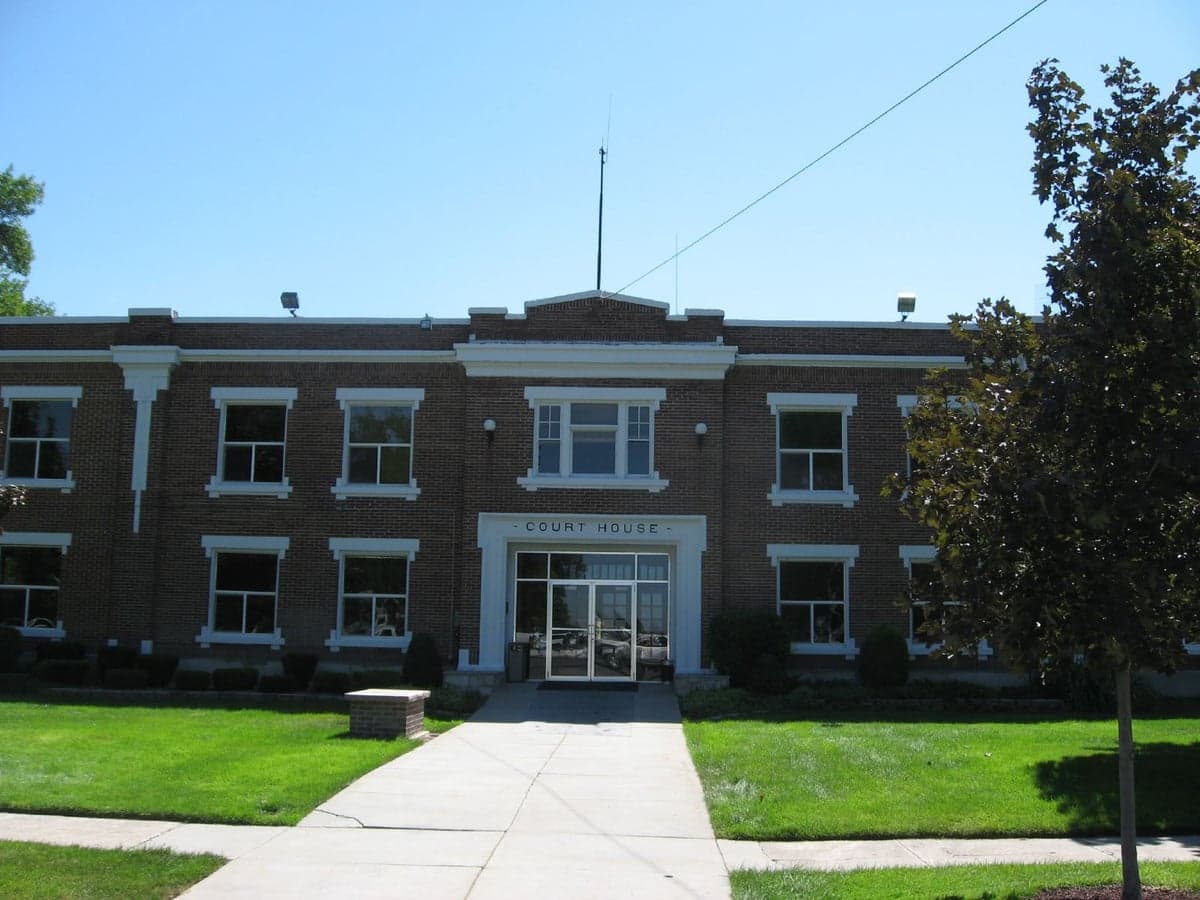
Photo: Wikipedia
Political ClimatePolitical Climate in Power County
Showing district-level results — no local-only data available.
Local Political AnalysisPolitical Analysis of Power County
Power County is a solidly conservative area, but it’s not as deep red as the rest of Idaho. With a Cook PVI of R+13, it leans Republican, but that’s a full five points less conservative than the state’s R+18 rating. That gap tells you something important: Power County has a bit more political diversity than you might expect for rural Idaho. The county has been reliably Republican for decades, but there are subtle shifts happening, especially in the larger towns, that are worth keeping an eye on.
How it compares
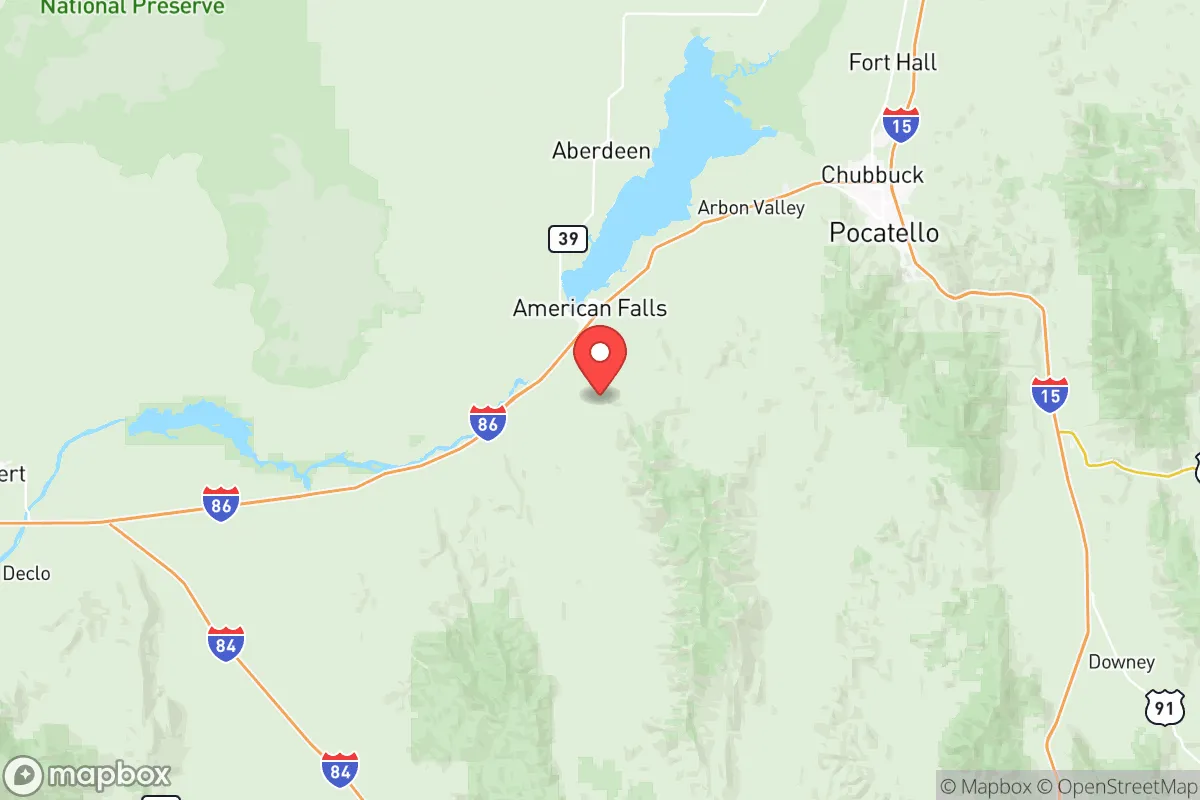
The biggest difference between Power County and the rest of Idaho is the presence of American Falls, the county seat and largest town. American Falls has a noticeable Democratic-leaning precinct, largely driven by its agricultural workforce and a significant Hispanic population. In the 2024 election, that precinct voted about 55% Democratic, while the surrounding rural areas—places like Rockland and Arbon Valley—went 75-80% Republican. That’s a stark contrast. The rest of Idaho, particularly the booming suburbs of Boise and the conservative strongholds in eastern Idaho like Rexburg, doesn’t have that kind of internal split. The state’s R+18 rating is a reflection of a more uniformly conservative electorate, while Power County’s R+13 is a reminder that even in deep-red states, local dynamics can create real pockets of blue. The swing precincts are mostly in the unincorporated areas around the Snake River, where independent voters can tip a race by a few hundred votes.
What this means for residents
For a conservative resident, the main concern here is that the progressive influence from American Falls is slowly creeping into county-level decisions. You see it in school board meetings and zoning debates—there’s a growing push for policies that feel like government overreach, like stricter land-use regulations and diversity initiatives that don’t reflect the values of the rural majority. The county commission has stayed conservative, but the margin has narrowed in recent cycles. If you value personal freedoms—like the right to manage your own property without endless permits or to send your kids to a school that doesn’t push ideological agendas—this is a trend to watch. The state government in Boise is still a strong check, but local elections matter more than ever here.
Culturally, Power County is still a place where neighbors help neighbors and the Second Amendment is a given, not a debate. But the policy distinctions are real. Unlike the rest of Idaho, which has aggressively pushed back on federal overreach (think the 2023 “Constitutional Carry” law and resistance to EPA water rules), Power County has been slower to adopt those stances. The county’s reliance on federal land management for grazing and irrigation creates a tension: you want the feds out of your life, but you also need the water rights. That’s the kind of practical, boots-on-the-ground conservatism that defines this place. It’s not about slogans; it’s about whether the government will let you run your farm the way your grandfather did. So far, the answer is mostly yes, but the margin for error is shrinking.

State Political ClimatePolitical Climate in Idaho
State Political AnalysisPolitical Environment in the State
Idaho is one of the most reliably Republican states in the country, with a Cook PVI of R+18, meaning it votes about 18 points more Republican than the national average. The dominant coalition is a mix of rural conservatives, Mormon cultural conservatives in the southeast, and a growing wave of out-of-state transplants fleeing blue states, which has only deepened the red hue over the last 10-20 years. While the state was already solidly red in the 2000s, the last three cycles have seen a sharp rightward shift, with Trump winning by 30+ points in 2020 and 2024, and the legislature passing some of the most aggressive conservative legislation in the nation.
Urban vs. rural divide
The political map of Idaho is starkly divided between a handful of urban islands and a vast, deeply red rural expanse. The Treasure Valley, anchored by Boise, Meridian, and Nampa, is the state’s population center and the only area where Democrats can compete. Ada County (Boise) has trended purple in recent cycles, with Biden winning it by a slim margin in 2020, but it flipped back to Trump in 2024 as new conservative arrivals shifted the balance. Canyon County (Nampa) remains reliably red, while Idaho Falls and Rexburg in the east are among the most conservative small cities in America, driven by the LDS Church’s cultural influence. The rural north, including Sandpoint and Coeur d’Alene, has seen an influx of libertarian-leaning conservatives and some ex-Californians, but remains solidly Republican. The only blue dot outside Boise is Blaine County (Sun Valley), a wealthy ski resort area that votes Democratic by wide margins, but it’s an outlier with little statewide impact.
Policy environment
Idaho’s policy environment is aggressively conservative, with a strong emphasis on limited government and low taxation. The state has a flat income tax rate of 5.8% (reduced from 6% in 2023), no corporate income tax on pass-through entities, and a sales tax of 6% that exempts groceries. Property taxes are relatively low, though they vary by county. The legislature has passed a series of school choice measures, including the Idaho Parental Choice Tax Credit (2024), which provides up to $5,000 per child for private school or homeschooling expenses. Education policy is heavily focused on parental rights, with a 2023 law requiring schools to notify parents of any curriculum changes involving sexuality or gender identity. Healthcare is deregulated: Idaho has no certificate-of-need laws, allowing freestanding emergency rooms and surgical centers to compete freely. Election laws are strict: voter ID is required, same-day registration is not allowed, and the state banned ballot drop boxes in 2023. The legislature also passed a law in 2024 requiring hand-counting of all ballots in counties with fewer than 10,000 residents, which covers most of the state.
Trajectory & freedom
Idaho is becoming more free in many respects, particularly on gun rights, parental rights, and tax policy. The state enacted constitutional carry in 2016, and in 2023 passed a law prohibiting any state or local enforcement of federal gun laws that conflict with Idaho’s Second Amendment protections. The Idaho Freedom Act (2024) explicitly nullifies any federal executive orders or regulations that restrict firearm ownership, ammunition sales, or magazine capacity. On medical freedom, Idaho passed a 2023 law banning any requirement for COVID-19 vaccines or masks in public schools and government buildings, and a 2024 law prohibiting discrimination based on vaccination status. Property rights were strengthened with a 2023 law limiting eminent domain for economic development. However, there are concerns about government overreach in other areas: the state has a strict anti-abortion law (triggered in 2022) with no exceptions for rape or incest, and a 2024 law criminalizing the transportation of minors across state lines for abortion without parental consent. Some libertarians worry about the growing influence of the LDS Church on legislation, particularly around alcohol sales and Sunday business restrictions, but overall, the trajectory is toward expanded personal liberty.
Civil unrest & political movements
Idaho has seen relatively little civil unrest compared to coastal states, but there are active political movements on both sides. The Idaho Freedom Foundation is a powerful libertarian-conservative group that has successfully pushed for tax cuts, school choice, and nullification measures. On the far right, the People’s Rights network, founded by Ammon Bundy, has a strong presence in the rural north and has organized protests against vaccine mandates and mask requirements, including a 2022 standoff at the Idaho Statehouse. Immigration politics are heated: the legislature passed a 2024 law requiring local law enforcement to cooperate with ICE and banning any “sanctuary city” policies, though no Idaho cities had formally adopted them. There have been no major secession movements, but some rural counties have discussed joining the “Greater Idaho” movement, which proposes moving the Idaho-Oregon border to absorb conservative eastern Oregon counties. Election integrity controversies are minimal; the 2020 and 2024 elections were conducted smoothly, though the hand-counting law has drawn criticism from election officials in small counties who say it’s burdensome. A new resident would notice a strong culture of self-reliance and a general distrust of federal authority, but little visible street-level conflict.
Projection
Over the next 5-10 years, Idaho will likely become even more conservative, driven by two demographic trends: continued in-migration from California, Oregon, and Washington, and the out-migration of younger, more liberal residents who find the state’s social policies too restrictive. The Treasure Valley will continue to grow, but new arrivals are increasingly conservative families and remote workers who chose Idaho specifically for its political climate. The rural north will see more libertarian-leaning arrivals, potentially shifting the balance away from traditional LDS conservatism toward a more individualistic, anti-government strain. The legislature will likely pass further school choice expansion, additional Second Amendment protections, and possibly a constitutional amendment to require a supermajority for tax increases. The main risk is that rapid growth could strain infrastructure and lead to local zoning battles, which might attract more government intervention at the local level. Someone moving in now should expect to find a state that is more conservative in 2035 than it is today, with a stronger emphasis on personal freedom and local control.
For a new resident, the bottom line is that Idaho offers a political environment where conservative values are not just tolerated but actively codified into law. You’ll find low taxes, strong gun rights, parental control over education, and a government that generally stays out of your personal life. The trade-off is that you’ll be living in a state with a dominant cultural conservatism that may feel restrictive on social issues, and you’ll need to be comfortable with a rural, self-reliant lifestyle outside the Boise metro. If you’re looking for a place where your vote actually counts and your freedoms are expanding, Idaho is one of the best bets in the country.
* Values derived from national, state, county, city and local statistics and may differ in a specific area. Last updated: 2026-05-22T15:39:14.000Z
Narrative content on this page is AI-generated and may contain mistakes. Verify any details that matter before acting on them.
ReloMaps may earn a commission from affiliate links at no extra cost to you.

