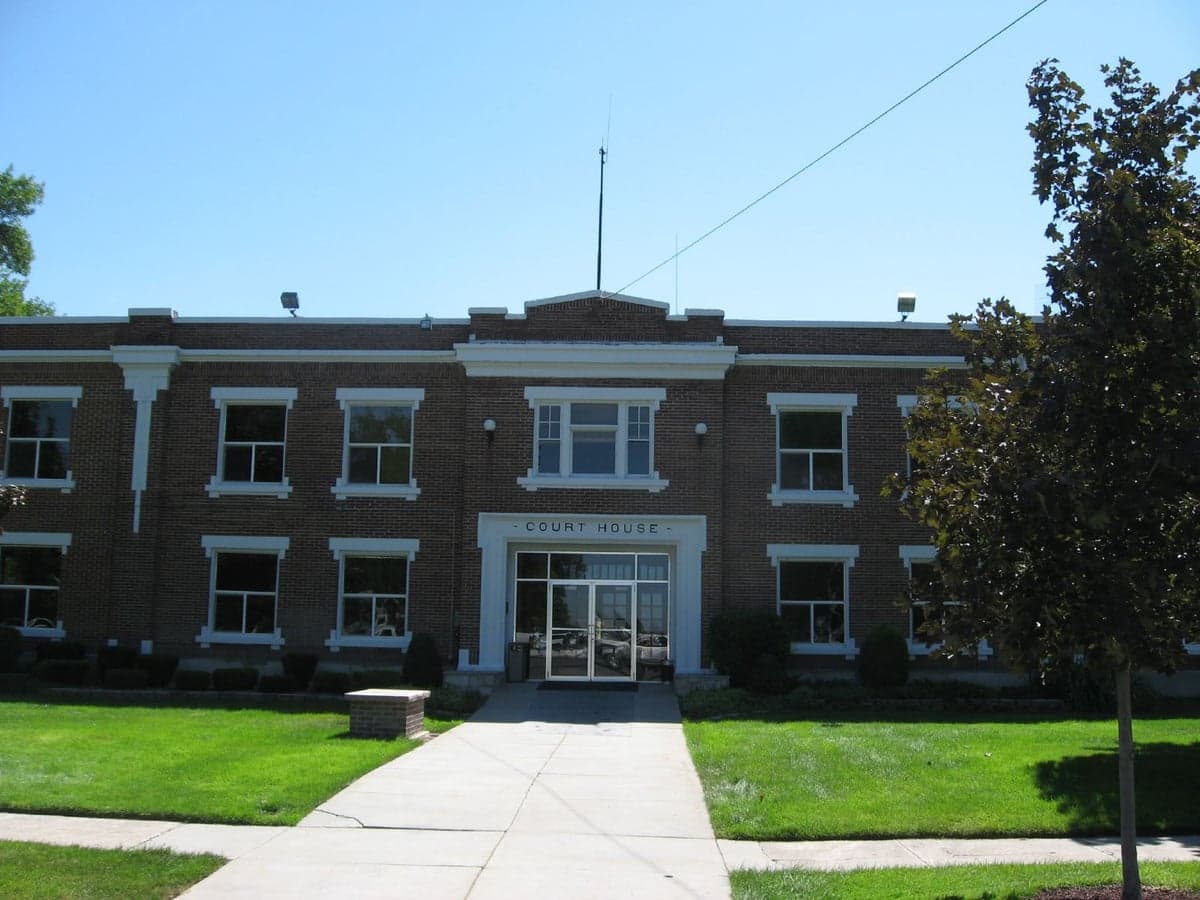
Photo: Wikipedia
Personal Sovereignty in Power County
Moderate friction. Expect trade-offs in some aspect of personal liberty and independence.
What does Personal Sovereignty tell us?
Personal Sovereignty measures your capacity for self-reliance and independence with minimal government friction. Higher scores mean fewer barriers between you and the way you want to live... but it assumes you have the space you need and good neighbors.
What does this tell us?
Personal Sovereignty measures your capacity for self-reliance and independence with minimal government friction. Higher scores mean fewer barriers between you and the way you want to live... but it assumes you have the space you need and good neighbors.
State Policy
Energy independence: Importer (25% of energy produced in-state)
Personal Liberty
Homesteading

Personal Liberty Analysis
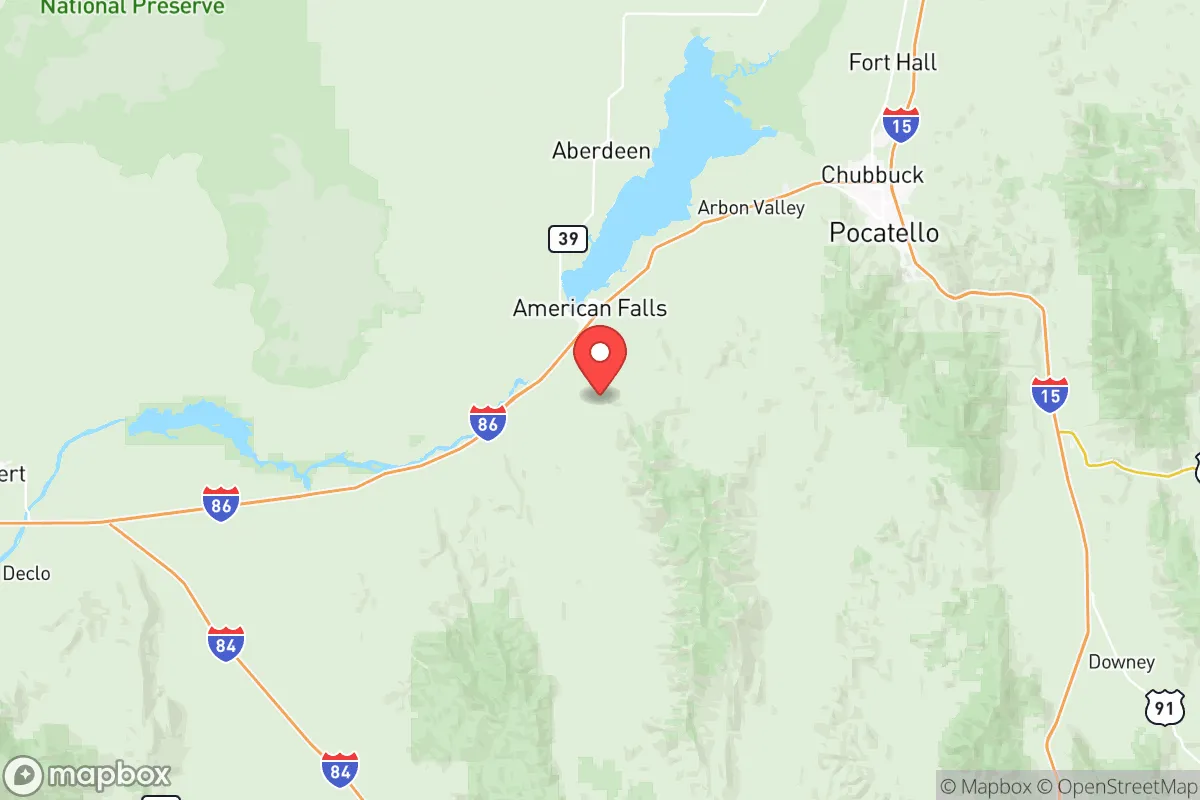
Power County, Idaho, offers one of the most robust environments for personal sovereignty in the Intermountain West, largely because its rural character and conservative governance have kept state-level overreach at arm’s length. Unlike the increasingly regulated corridors of Boise or Ketchum, Power County residents in towns like American Falls, Arbon Valley, and Rockland operate under a county commission that consistently votes against expanding zoning codes, adopting state-mandated land-use restrictions, or enforcing nuisance ordinances that would limit self-reliant activities. The practical result is a place where a family can store a year’s worth of food, keep livestock on a standard residential lot, and carry a firearm without a permit—all without drawing the attention of code enforcement or law enforcement. For the prepper or survivalist weighing a move, Power County represents a rare pocket where the default assumption is freedom, not permission.
Tax burden and regulatory posture: how Power County compares to Idaho’s more restrictive areas
Idaho’s state-level tax climate is already favorable—no corporate or personal income tax, a flat 6% sales tax, and property taxes that average about 0.69% of assessed value—but Power County’s local posture amplifies those advantages. The county’s property tax rate is among the lowest in the state, with the average effective rate hovering around 0.55% as of 2025, meaning a $300,000 home carries an annual tax bill of roughly $1,650. Compare that to Ada County (Boise), where the same home would cost nearly $2,400. More importantly, Power County’s commissioners have repeatedly rejected proposals to adopt the Idaho Building Code’s more restrictive energy-efficiency amendments, and the county planning department maintains a light touch on accessory structures. In American Falls, the county seat, you can build a detached workshop, a root cellar, or a greenhouse without a permit as long as it stays under 200 square feet and doesn’t connect to public utilities. In Rockland and Arbon Valley, the unincorporated areas have no building permit requirement at all for owner-occupied dwellings under 1,000 square feet. This regulatory posture means fewer bureaucratic hurdles for anyone looking to establish a self-sufficient homestead without the delays and fees that plague more populated counties.
Self-defense and gun law specifics: what permitless carry and castle doctrine mean in practice
Idaho is a constitutional carry state, meaning no permit is required to carry a concealed firearm for anyone 18 or older who can legally possess a gun. Power County’s sheriff’s office, led by a conservative sheriff who publicly opposes any additional firearm restrictions, interprets this law broadly. In practice, this means you can carry openly or concealed in American Falls, Arbon, and Rockland without fear of local ordinances overriding state law—the county has no preemption-busting municipal codes. The state’s castle doctrine is equally strong: there is no duty to retreat anywhere you are lawfully present, and the use of deadly force is presumed justified if an intruder has unlawfully entered your home or vehicle. For the prepper, this extends to property defense. While Idaho law doesn’t explicitly cover curtilage in the same way Texas does, Power County juries have historically been sympathetic to homeowners who defend their land. The nearest gun ranges are at the American Falls Gun Club and the Bureau of Land Management (BLM) land just east of Neeley, where you can shoot without range fees or time limits. Magazine capacity, suppressor ownership, and NFA items are all legal under state law, with no county-level restrictions. The only practical limitation is that you must be 21 to purchase a handgun from a dealer, but private sales between adults require no paperwork.
Self-reliance and homesteading viability: lot sizes, zoning, and off-grid feasibility
Power County’s zoning code is a dream for the self-reliant. In unincorporated areas, the minimum lot size for a single-family dwelling is just 1 acre, and there is no maximum lot coverage requirement—you can build as much square footage as your septic system can handle. In Arbon Valley, where many parcels are 5 to 40 acres, you’ll find no HOA covenants, no architectural review boards, and no restrictions on keeping chickens, goats, or even a few head of cattle. Off-grid living is fully feasible: the county does not require connection to municipal water or sewer, and the Idaho Department of Environmental Quality allows composting toilets and greywater systems with a simple permit. Solar panels, wind turbines, and propane generators are common sights. In Rockland, a tiny community of about 200 people, several households are entirely off-grid, relying on solar arrays and well water. The county’s building department does not enforce the International Energy Conservation Code, so you can build with straw bales, earthbags, or timber frame without fighting for variances. The only real constraint is that any dwelling must have a minimum of 400 square feet of habitable space—a rule that prevents tiny houses on wheels but still allows for efficient, compact homes. For the prepper looking to stockpile supplies, there are no county-level limits on food storage, ammunition storage, or fuel tanks, though the state fire marshal does require permits for above-ground propane tanks over 1,000 gallons.
Personal liberties: parental rights, medical autonomy, speech, and property
Idaho’s legal framework strongly favors parental rights, and Power County’s school district—the American Falls Joint School District #381—has adopted policies that align with that. Parents can opt their children out of any curriculum they find objectionable without needing to provide a reason, and the district does not enforce mask mandates or vaccine requirements for attendance. Homeschooling is straightforward: you file a one-time affidavit with the county superintendent, and there are no standardized testing requirements, no curriculum approvals, and no home visits. Medical autonomy is similarly broad. Idaho has no state-level vaccine mandate for adults, and the Power County Medical Center in American Falls does not require COVID-19 or flu vaccines for patients. The state’s medical freedom law, passed in 2023, prohibits employers and government entities from discriminating against those who decline vaccination. For the survivalist concerned about government overreach, this means you can refuse any medical treatment without losing your job or your children. Speech and property rights are protected by Idaho’s strong anti-SLAPP statute and its prohibition on red flag laws—the state explicitly forbids any local government from enacting extreme risk protection orders. Property rights are further secured by the Idaho Property Rights Act, which requires the government to compensate landowners for any regulatory taking that reduces property value by more than 20%. In Neeley and Arbon, you’ll find no sign of the kind of HOA or covenant restrictions that plague suburban subdivisions in Boise or Coeur d’Alene.
Overall, Power County ranks among the top 10% of U.S. counties for personal sovereignty, especially when measured against the creeping regulatory state seen in the Pacific Northwest and Front Range. The combination of no income tax, permitless carry, minimal zoning, strong parental rights, and a county commission that actively resists state and federal overreach creates an environment where a family can live largely unbothered by government. For the prepper or conservative individual looking to relocate, the trade-off is distance from major medical centers and supply chains—the nearest Costco is in Pocatello, 45 minutes north—but the freedom from code enforcement, vaccine mandates, and property restrictions is hard to find anywhere else in the lower 48. If you’re serious about self-reliance, Arbon Valley and Rockland offer the most autonomy, while American Falls provides a small-town safety net with the same libertarian ethos.

* Values derived from national, state, county, city and local statistics and may differ in a specific area. Last updated: 2026-05-22T15:39:14.000Z
Narrative content on this page is AI-generated and may contain mistakes. Verify any details that matter before acting on them.
ReloMaps may earn a commission from affiliate links at no extra cost to you.

