Photo: Wikipedia
Demographics of Jefferson County
Affluence Level in Jefferson County
A middle-class area roughly in line with national averages across income, home values, education, and employment.
People of Jefferson County
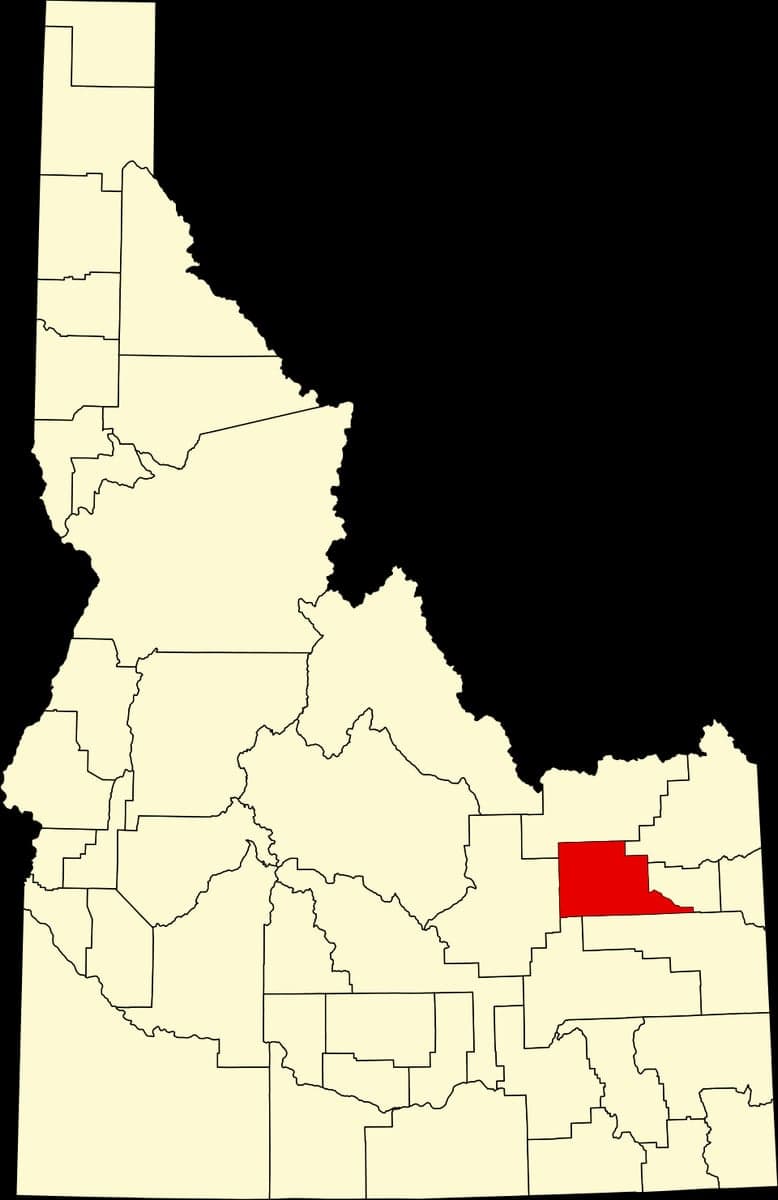
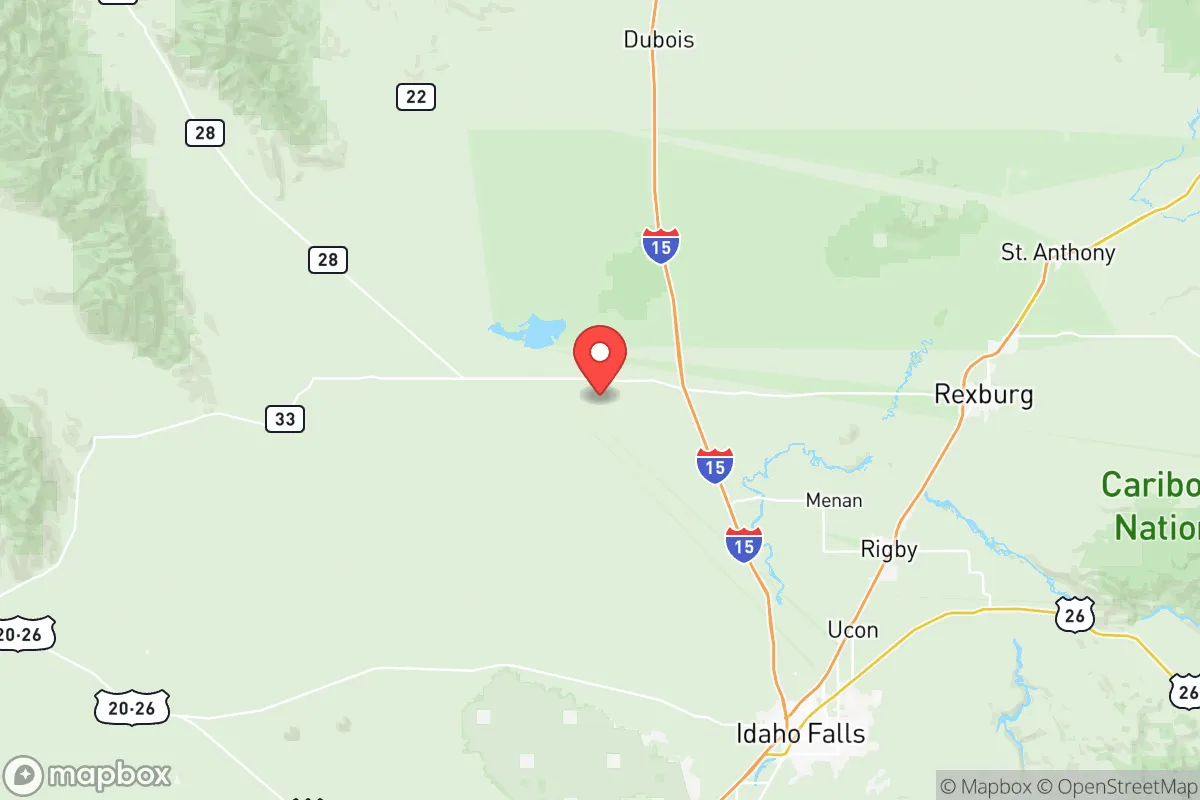
Jefferson County, Idaho, is a predominantly white, rural community of 32,234 residents, characterized by its agricultural roots and a strong sense of local identity. The population is notably homogenous, with 86.1% identifying as white and a modest 10.8% Hispanic presence, while the foreign-born population sits at just 2.7%. This is a place where the legacy of early 20th-century homesteaders and Mormon settlers remains visible in the tight-knit towns of Rigby, Roberts, and Lewisville, and where the county’s growth is driven more by domestic in-migration from other parts of the West than by international diversity.
Settlement & growth (pre-1960)
Before American settlement, the area that is now Jefferson County was part of the traditional territory of the Shoshone and Bannock peoples, who followed the seasonal game and fish runs along the Snake River and its tributaries. The first non-Native presence came with fur trappers in the early 1800s, but permanent settlement did not begin until the Mormon pioneers arrived in the 1860s and 1870s, following Brigham Young’s directive to colonize the Snake River Plain. These settlers, primarily of English, Scandinavian, and Welsh descent, established small farming communities centered on irrigation from the Snake River. The town of Rigby, founded in 1885, became the county seat and a hub for the region’s potato and grain farms. Other early settlements like Roberts (1884) and Lewisville (1883) grew as railroad stops and supply points for the surrounding agricultural land.
The Homestead Act of 1862 and later the Desert Land Act of 1877 drew additional waves of settlers, including a significant number of German-Russian immigrants who arrived in the 1890s and early 1900s. These families, often Mennonite or Lutheran, brought dry-farming techniques that proved essential for the region’s semi-arid climate. They concentrated in the area around Menan and Ririe, where their descendants still form a visible community. The completion of the Oregon Short Line Railroad through the county in the 1880s accelerated growth, allowing farmers to ship potatoes and wheat to distant markets. By 1920, the county’s population had reached roughly 10,000, with the vast majority employed in agriculture or related industries like sugar beet processing at the Garfield sugar factory (now part of the ghost town of Garfield).
The Dust Bowl and Great Depression of the 1930s brought a small but notable influx of “Okies” and “Arkies” — displaced farmers from the Southern Plains — who found work on the region’s irrigated farms. However, Jefferson County’s population remained relatively stable through the mid-20th century, growing slowly to about 15,000 by 1950. The county’s character was defined by its Latter-day Saint (Mormon) majority, its agricultural economy, and its isolation from major urban centers. The town of Hamer, founded as a railroad siding, and Monteview, a farming community, exemplify the small, dispersed settlements that dotted the landscape.
Modern era (post-1965)
The 1965 Hart-Cellar Act, which reshaped U.S. immigration, had a minimal direct impact on Jefferson County. Unlike urban areas or agricultural regions in California and Texas, the county did not experience a wave of new immigrant arrivals. The foreign-born population today is just 2.7%, and the county’s racial composition has remained overwhelmingly white. The most significant demographic shift since 1965 has been the growth of the Hispanic population, which now stands at 10.8%. This growth is largely the result of domestic migration from other parts of the United States, particularly from California and the Southwest, as well as some direct immigration from Mexico. Hispanic residents are concentrated in Rigby and Roberts, where they work in agriculture, food processing, and construction. The county’s Black population (0.1%) and East/Southeast Asian population (0.1%) are negligible, and there is no measurable Indian subcontinent community.
Domestic migration has been the primary driver of population change since the 1990s. The county has attracted families and retirees from more expensive Western states, particularly California, Oregon, and Washington, seeking lower housing costs, a slower pace of life, and a conservative political environment. This in-migration has boosted the population from roughly 19,000 in 1990 to over 32,000 today. The town of Rigby has seen the most growth, with new subdivisions and retail development catering to commuters who work in Idaho Falls (Bonneville County) or at the Idaho National Laboratory. The unincorporated community of Grant has also grown as a bedroom community for Idaho Falls. Suburbanization has been limited, however, as the county lacks the infrastructure and employment base to support dense development; most new housing is on large lots or small acreages.
The college-educated share of the population is 27.2%, slightly below the national average, reflecting the county’s agricultural and blue-collar employment base. The Idaho National Laboratory, located just across the county line in Butte County, is a major employer for college-educated residents, particularly in engineering and technical fields. The county’s cultural identity remains strongly tied to its LDS heritage, with a high rate of church attendance and a family-oriented social structure. The annual Jefferson County Fair in Rigby and the Spud Day celebration in Shelley (neighboring Bingham County) reinforce the agricultural traditions.
The future
Jefferson County is likely to continue growing slowly, driven by domestic in-migration from the West Coast and Mountain West. The population is projected to reach 40,000 by 2040, with most growth concentrated in and around Rigby. The Hispanic share of the population is expected to rise gradually, possibly reaching 15-18% by 2040, as younger Hispanic families have higher birth rates and continued migration from other parts of the U.S. However, the county is not expected to become significantly more diverse in other respects; the white, LDS-majority character will persist. The county is not tribalizing into distinct ethnic enclaves; rather, Hispanic residents are integrating into existing communities, with many attending the same churches and schools as their white neighbors.
The cultural identity of the county is absorbing new arrivals rather than being transformed by them. In-migrants from California and the Pacific Northwest tend to be conservative-leaning and are drawn to the county’s low taxes, gun-friendly laws, and traditional values. The county’s political orientation is solidly Republican, with Donald Trump winning 80% of the vote in 2024. The next 10-20 years will likely see continued suburban-style development around Rigby, with new schools, retail, and light industrial parks, but the county will remain a rural, agricultural community at its core. The biggest challenge will be managing growth while preserving the open space and small-town character that attracts new residents.
For someone moving in now, Jefferson County offers a stable, safe, and culturally cohesive environment with a strong sense of community. It is not a place of rapid demographic change or ethnic diversity, but rather a place where traditional American values and a rural lifestyle are still the norm. The county’s future is one of gradual, managed growth, with its identity firmly rooted in its agricultural and LDS heritage.

* Values derived from national, state, county, city and local statistics and may differ in a specific area. Last updated: 2026-05-09T18:50:34.000Z
Narrative content on this page is AI-generated and may contain mistakes. Verify any details that matter before acting on them.
ReloMaps may earn a commission from affiliate links at no extra cost to you.

