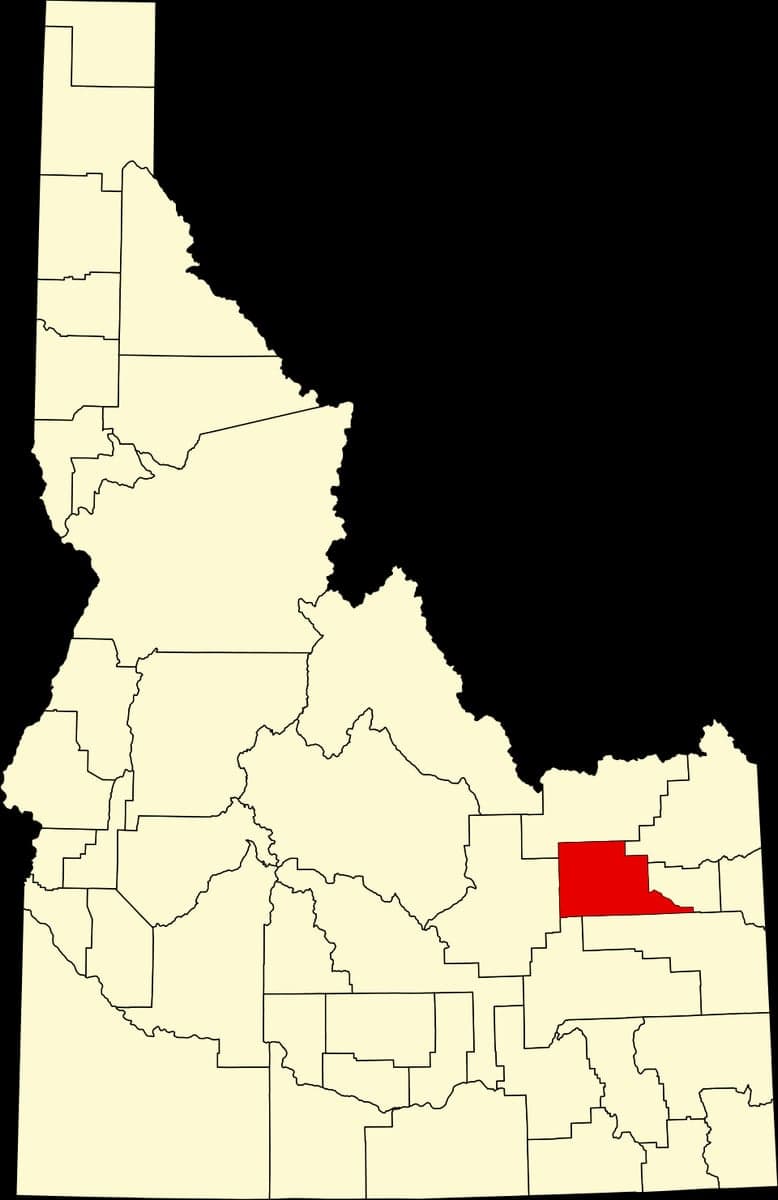
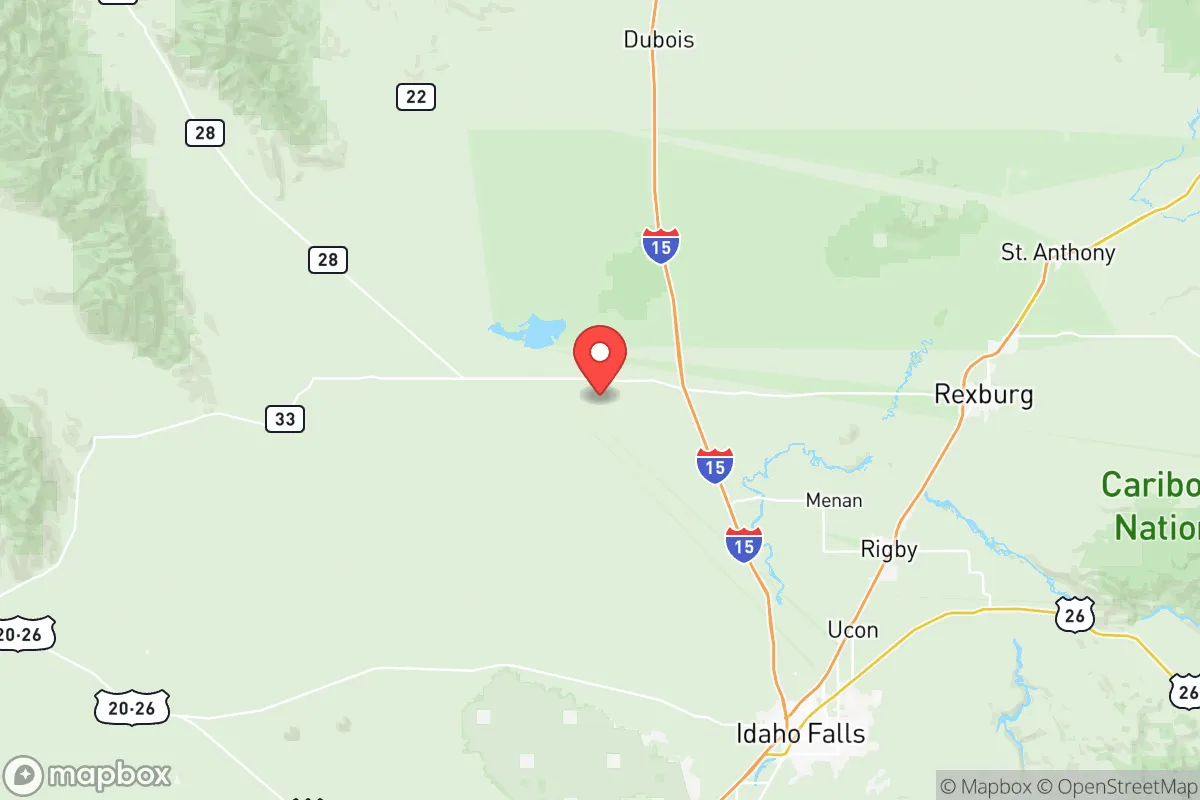
Photo: Wikipedia
Political ClimatePolitical Climate in Jefferson County
Showing district-level results — no local-only data available.
Local Political AnalysisPolitical Analysis of Jefferson County
Jefferson County, Idaho, has long been a rock-solid conservative stronghold, and honestly, it’s one of the last places in the state where you can still breathe free without someone from Boise or D.C. telling you how to live. The Cook PVI sits at R+13, which is solidly Republican, but that number actually undersells just how deep the red runs in the day-to-day life here. When you look at the surrounding state of Idaho as a whole, it’s R+18, so Jefferson County is a bit more purple than the statewide average—but don’t let that fool you. The real story is in the towns: Rigby, the county seat, is about as conservative as it gets, with church potlucks and pickup trucks dominating the culture. But then you’ve got places like Menan and Roberts, where you’ll find a few more independent-minded folks and even a handful of precincts that have flirted with swing status in recent years, especially as new folks move in from California and Oregon. That’s the trend that’s got me worried—the slow creep of progressive ideology into a place that used to be a sure bet for traditional values.
How it compares
Compared to Idaho’s R+18 statewide, Jefferson County’s R+13 might look like it’s leaning a little more toward the center, but that’s mostly because of a few pockets of resistance. The town of Lewisville, for example, has seen some new development and a younger crowd that’s a bit more open to progressive ideas, while Ririe, out east, is still as red as they come—think 80%+ Republican in most elections. The real contrast is with the state’s liberal strongholds like Boise or Moscow; Jefferson County doesn’t have that kind of urban progressive energy at all. What you’ve got here is a rural, agricultural community where the Second Amendment is a given, property rights are sacred, and the idea of government overreach—whether it’s vaccine mandates, land-use restrictions, or school curriculum battles—gets met with serious pushback. The state of Idaho overall has been trending redder in recent years, but Jefferson County is holding the line, even if a few precincts in Rigby and Menan are showing signs of shifting left as the population grows.
What this means for residents
For folks living here, the political climate means you can generally expect local government to stay out of your business. The county commission and school board are dominated by conservatives who prioritize low taxes, local control, and traditional family values. That’s a big deal when you see other parts of the country—and even parts of Idaho—getting bogged down in progressive policies like DEI initiatives or climate action plans that just add red tape. But there’s a growing concern: as more people move in from out of state, especially into subdivisions around Rigby, you’re starting to see a few more votes for candidates who talk about “diversity” and “equity” in ways that sound an awful lot like government overreach. The 2024 election saw a couple of precincts in Menan flip to a more moderate stance, and that’s a warning sign. If you value personal freedoms—like the right to homeschool your kids, carry a firearm without a permission slip, or run your farm without EPA bureaucrats breathing down your neck—Jefferson County is still a good bet, but you’ve got to keep an eye on those local elections.
Culturally, Jefferson County is distinct from the rest of Idaho in a few key ways. The LDS Church has a strong influence here, which tends to reinforce conservative social values, but it also means there’s a strong sense of community and neighborly support that you don’t always find in the more libertarian-leaning parts of the state. Policy-wise, you’ll see a lot of pushback against any kind of regional planning or zoning that might infringe on property rights—something that’s a hot-button issue in places like Teton Valley but less so here. The long-term trajectory depends on who moves in next. If the newcomers are folks fleeing progressive states for the same reasons you are, we’ll be fine. But if they bring their old voting habits with them, Jefferson County could start looking a lot more like the places they left behind. For now, it’s still a place where you can live free, but you’ve got to stay engaged to keep it that way.

State Political ClimatePolitical Climate in Idaho
State Political AnalysisPolitical Environment in the State
Idaho is one of the most reliably conservative states in the country, with a Cook Partisan Voting Index of R+18, meaning it votes about 18 points more Republican than the national average in presidential elections. The state has been on a steady rightward trajectory for the past two decades, driven by a combination of native-born conservative culture and an influx of migrants from deep-blue states like California, Oregon, and Washington who are explicitly seeking lower taxes, less regulation, and a more traditional social environment. While the Treasure Valley around Boise has seen some suburban moderation, the overall political landscape remains deeply red, with the state legislature and governor’s office consistently advancing a robust conservative agenda.
Urban vs. rural divide
The political map of Idaho breaks down along a clear urban-rural axis, but with a twist: the state’s largest metro area, Boise (Ada County), is actually the most politically competitive region. Ada County voted for Trump by about 12 points in 2020, down from 18 points in 2016, reflecting the influx of moderate professionals and tech workers. However, the surrounding counties—Canyon, Gem, Payette, and Washington—are deeply red, often voting 70-80% Republican. The real conservative strongholds are the rural north and east: Bonner County (north of Coeur d’Alene) and Boundary County (on the Canadian border) are among the most Republican counties in the nation, routinely voting 80%+ for GOP candidates. The Panhandle region, including Coeur d’Alene and Sandpoint, has seen an influx of conservative refugees from Washington and Oregon, further solidifying its red tilt. Meanwhile, the Magic Valley (Twin Falls, Jerome) and Eastern Idaho (Idaho Falls, Rexburg) are solidly conservative, driven by agricultural interests and the heavy influence of Brigham Young University-Idaho in Rexburg, which anchors a strong LDS cultural conservatism. The only blue dots are small college towns like Moscow (home to the University of Idaho) and Boise State University’s immediate vicinity, but these are negligible in statewide elections.
Policy environment
Idaho’s policy environment is aggressively pro-business and pro-liberty in the traditional sense. The state has a flat income tax rate of 5.8% (down from 6.5% in 2023), no corporate income tax on pass-through entities, and a sales tax of 6% that exempts groceries. Property taxes are relatively low, with a median effective rate of about 0.7%, though they vary by county. The regulatory posture is light: there is no state-level occupational licensing for many trades, and the state has a “right-to-farm” law that protects agricultural operations from nuisance lawsuits. Education policy is a flashpoint: the state has a robust school choice movement, with a $50 million “Empower Idaho” education savings account program launched in 2023 that allows parents to use public funds for private school tuition, homeschooling materials, or tutoring. However, the state also passed a controversial “Parents’ Bill of Rights” (HB 93) in 2023, which requires schools to notify parents of any curriculum changes related to sexuality or gender identity and prohibits instruction on sexual orientation or gender identity in grades K-3. Healthcare policy is limited: Idaho has not expanded Medicaid under the ACA (though voters passed a ballot initiative in 2018 that the legislature partially implemented), and the state has some of the most restrictive abortion laws in the nation, with a near-total ban (HB 370) that took effect in 2023, allowing exceptions only for rape, incest, or to save the mother’s life. Election laws are strict: voter ID is required, same-day registration is not allowed, and the state has a closed primary system for Republicans. The legislature also passed a law in 2023 banning ranked-choice voting statewide, a preemptive move against progressive electoral reforms seen in other states.
Trajectory & freedom
Idaho is becoming more free in several key areas, but with some concerning caveats. On the positive side for conservatives, the state has expanded gun rights significantly: in 2023, the legislature passed a “constitutional carry” law (HB 124) allowing permitless carry of concealed firearms for anyone 18 or older who can legally possess a gun. The state also passed a “Second Amendment Preservation Act” (SB 1308) in 2022 that prohibits state and local law enforcement from enforcing federal gun laws that violate the Idaho Constitution—a direct challenge to federal overreach. Property rights were strengthened with the “Private Property Protection Act” (HB 220) in 2023, which requires the state to compensate landowners if a regulation reduces their property value by more than 20%. On the freedom front, the state has also resisted federal vaccine mandates and COVID-19 restrictions more aggressively than most, with a 2021 law (SB 1137) banning vaccine passports and a 2022 law (HB 515) prohibiting employers from requiring COVID-19 vaccines as a condition of employment. However, there are worrying signs of government overreach in the name of “conservatism”: the state’s strict abortion ban has no exceptions for rape or incest (only life of the mother), which some libertarians see as an overreach of government into personal medical decisions. Additionally, the state’s “library materials” law (HB 314) passed in 2023 allows parents to challenge and remove books they deem “harmful to minors,” which has led to some censorship debates in local libraries. The trajectory is toward more individual liberty in economic and Second Amendment areas, but with increasing government involvement in social and medical matters.
Civil unrest & political movements
Idaho has a history of organized political movements on both sides, but the most visible are on the right. The state is a hub for the “constitutionalist” and “sovereign citizen” movements, particularly in the Panhandle and rural counties like Bonner and Boundary. The “Idaho Freedom Foundation” is a powerful conservative think tank that has successfully pushed for tax cuts, school choice, and anti-vaccine legislation. On the left, protests have been smaller but notable: the “Boise State University” campus saw Black Lives Matter protests in 2020 that drew about 1,000 people, and there have been periodic demonstrations at the state capitol over abortion rights. Immigration politics are relatively quiet, as Idaho has a small foreign-born population (about 6%), but the state has passed laws (like HB 585 in 2023) requiring law enforcement to cooperate with federal immigration authorities. There is no sanctuary city movement of any significance. Election integrity controversies have been minimal, as the state’s voting system is widely trusted by conservatives. The most visible flashpoint for a new resident would be the “library wars” in places like Meridian and Nampa, where parents have clashed with school boards over LGBTQ-themed books and curriculum. Overall, the political climate is stable but with a palpable sense of cultural tension, especially in the growing suburbs of the Treasure Valley.
Projection
Over the next 5-10 years, Idaho will likely become more conservative in its policy environment, but with a growing internal tension between traditional conservatives and the new wave of “freedom-minded” migrants. The demographic shift is significant: the state grew by 18% between 2010 and 2020, and the pace has accelerated since 2020, with many newcomers from California, Oregon, and Washington. These migrants tend to be more libertarian than traditionalist—they want low taxes and gun rights but may be less enthusiastic about social restrictions like book bans or strict abortion laws. This could lead to a split within the Republican Party between the “MAGA” wing (dominant in rural areas) and a more “suburban moderate” wing (growing in Ada and Canyon counties). The state’s population is projected to reach 2.5 million by 2030 (up from 1.9 million in 2020), with most growth in the Treasure Valley. This will likely push the state’s politics toward a more pragmatic conservatism, similar to what has happened in Texas’s suburban counties. However, the rural areas will retain disproportionate power through the state legislature’s apportionment, so don’t expect any major leftward shift. A new resident moving in now should expect to find a state that remains deeply red but with an increasingly lively debate about what “conservatism” means—whether it’s about economic freedom and gun rights or about social regulation and cultural enforcement.
For a conservative-leaning individual or family considering relocation, Idaho offers a strong alignment with traditional values, low taxes, and a high degree of personal freedom in areas like gun ownership and education choice. The state is a safe bet for those who want to escape high-tax, high-regulation blue states, but be aware that the cultural landscape is not monolithic—the Treasure Valley is becoming more diverse and politically moderate, while the rural areas remain staunchly traditional. If you’re looking for a place where your values are the norm and the government stays out of your business, Idaho is one of the best bets in the country. Just be prepared for a growing population and the inevitable growing pains that come with it.
* Values derived from national, state, county, city and local statistics and may differ in a specific area. Last updated: 2026-05-09T18:50:34.000Z
Narrative content on this page is AI-generated and may contain mistakes. Verify any details that matter before acting on them.
ReloMaps may earn a commission from affiliate links at no extra cost to you.

