Photo: Wikipedia
Political ClimatePolitical Climate in Ho-Ho-Kus, NJ
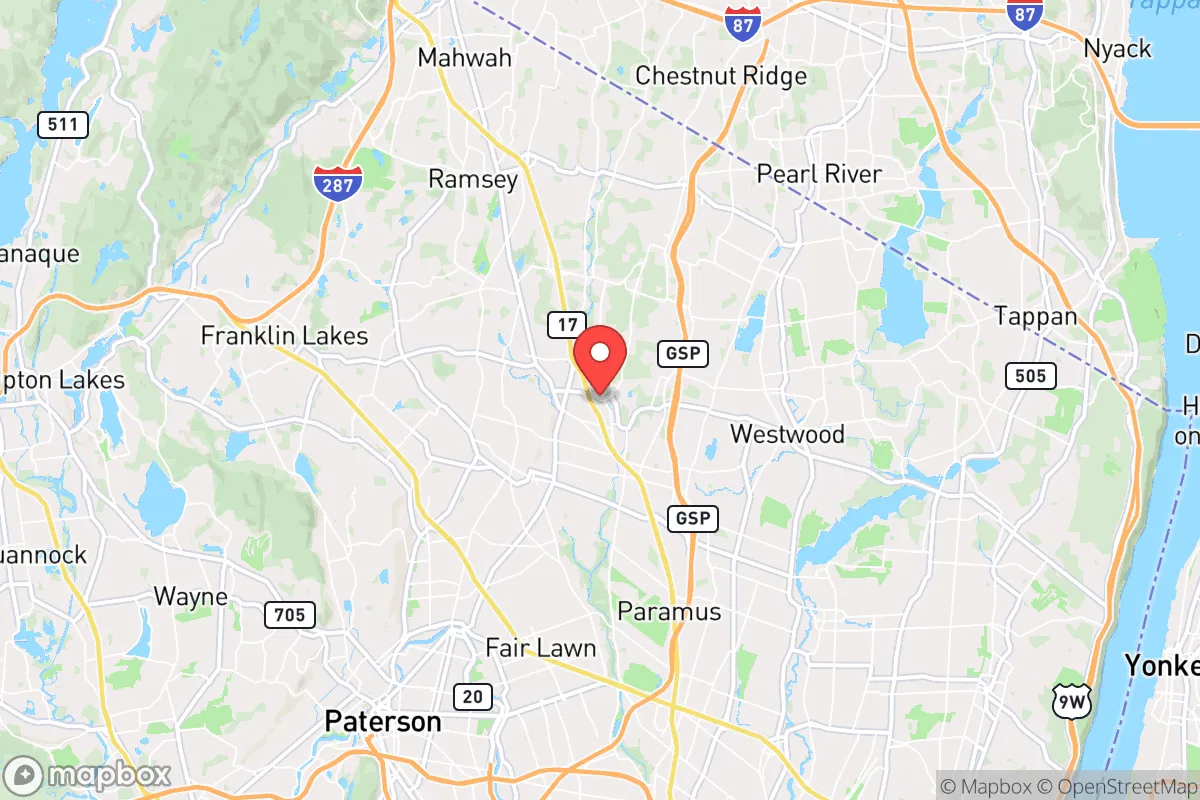
District shown is the primary district for this city’s centroid. Cities may span multiple districts.
Political rankings in New Jersey
- Most Conservative Cities in New Jersey
- Most Liberal Cities in New Jersey
- Best Conservative-Leaning Towns in the Northeast
- Best Conservative-Leaning Towns in the Mid-Atlantic
- Safest Liberal-Leaning Towns on the East Coast
- Safest Conservative-Leaning Towns on the East Coast
- Most Affordable Liberal-Leaning Small Towns in the U.S.
- Safest Liberal-Leaning Cities in the U.S.
- Most Conservative Counties in New Jersey
- Most Liberal Counties in New Jersey
Local Political AnalysisPolitical Analysis of Ho-Ho-Kus, NJ
Ho-Ho-Kus has long been a quiet outlier in Bergen County’s political landscape. While the county as a whole trends reliably blue, this borough of roughly 4,200 people has historically leaned more moderate-to-conservative, especially in local races. The Cook Partisan Voting Index (PVI) for the area is D+2, meaning it’s only slightly more Democratic than the national average. That’s a noticeably more balanced tilt than New Jersey’s statewide PVI of D+5, and it reflects a community where you’ll find a real mix of registered Republicans, independents, and Democrats living side by side. Over the past decade, the shift has been gradual but real — younger families moving in from places like Ridgewood and Montclair have nudged the needle leftward, but the old-guard fiscal conservatism still has deep roots here.
How it compares
Compared to New Jersey as a whole, Ho-Ho-Kus is a more politically competitive place. The state’s D+5 PVI means Democrats hold a solid structural advantage in statewide elections — think Senate races and gubernatorial contests — but Ho-Ho-Kus’s D+2 rating puts it closer to a toss-up district. In practice, this means the borough often votes for Republican candidates in local and county races, even as it splits tickets for higher offices. For example, in the 2021 gubernatorial election, Ho-Ho-Kus gave Republican Jack Ciattarelli a higher share of the vote than Bergen County as a whole did, while still backing Democrat Phil Murphy in the same race. Nearby towns like Ridgewood (D+7) and Glen Rock (D+6) are more uniformly Democratic, while Waldwick (R+3) and Allendale (R+4) tilt the other way. Ho-Ho-Kus sits right in the middle of that spectrum, making it a bellwether of sorts for the region’s shifting suburban mood.
What this means for residents
For conservative residents, Ho-Ho-Kus offers a rare pocket where their views aren’t drowned out. Local government tends to be pragmatic and business-friendly, with a focus on keeping property taxes in check — a perennial concern in New Jersey. You’ll see Republican candidates regularly win seats on the borough council, and conservative voices have a real seat at the table in school board and planning board discussions. For liberal residents, the environment is still welcoming, just more contested. Progressive initiatives — like affordable housing mandates or climate action plans — often face tougher scrutiny here than in neighboring Ridgewood or Glen Rock. But the growing number of Democratic-leaning newcomers means those conversations are happening more frequently. The practical upshot is that neither side gets everything it wants, which forces compromise. That can frustrate activists on both ends, but it also keeps the community from veering into the kind of partisan gridlock you see in more polarized suburbs.
Culturally, Ho-Ho-Kus retains a distinct small-town identity that transcends party lines. The annual Ho-Ho-Kus Fire Department carnival, the Fourth of July parade, and the tight-knit school community are points of pride for everyone, regardless of how they vote. Policy-wise, the borough’s moderate lean shows up in its approach to development — it’s cautious about overbuilding but open to smart growth, like the recent redevelopment of the train station area. If you’re a conservative, you’ll appreciate the fiscal discipline and local control. If you’re a liberal, you’ll find enough like-minded neighbors to feel heard, especially as the area’s demographics continue to evolve. The trajectory is toward a slightly bluer future, but at a pace slow enough that the old Ho-Ho-Kus character isn’t getting erased. It’s a place where your vote genuinely counts — and where your neighbor’s yard sign might not match yours, but you’ll still wave hello at the post office.

State Political ClimatePolitical Climate in New Jersey
State Political AnalysisPolitical Environment in the State
New Jersey has a solid Democratic lean at the state level, with a Cook PVI of D+5, but that number hides a much more complicated reality than you’d find in a deep-blue state like Massachusetts or California. The state has drifted leftward over the last 20 years, driven largely by the suburbanization of North Jersey and the growth of the New York City commuter belt, but it still has a strong, organized Republican minority and a surprising number of ancestrally conservative pockets. For a conservative-leaning relocator, the state isn’t a lost cause — it’s a place where you can find your tribe, but you have to know where to look and what trade-offs you’re making on taxes and regulations.
Urban vs. rural divide
The political map of New Jersey is a classic three-way split: the urban core, the suburban ring, and the rural south and northwest. The Democratic strongholds are the dense, transit-oriented cities — Newark, Jersey City, Paterson, and Trenton — which together produce massive vote margins for Democrats. These cities are heavily minority, union-heavy, and reliably blue by 30-40 points. The suburbs of North Jersey, particularly Bergen, Essex, and Hudson counties, have shifted left over the past decade as college-educated professionals have moved in and the old Italian and Irish Catholic voting blocs have aged out. Monmouth and Middlesex counties are now competitive but trending blue, especially in towns closer to the coast and the Turnpike. The Republican base is concentrated in the rural and exurban areas: Sussex, Warren, Hunterdon, and Salem counties are reliably red, and Ocean County (home to the massive retirement community of Lakewood) is one of the most Republican counties in the Northeast. Morris and Somerset counties are the classic swing suburbs — they used to be reliably red, but have moved toward the center, with Morris still leaning slightly Republican and Somerset now a toss-up. The 2021 gubernatorial race showed this divide clearly: Jack Ciattarelli, the Republican, won Ocean County by 30 points and Sussex by 25, but lost the state by 3 points because he couldn’t crack the suburban firewall in Bergen and Essex.
Policy environment
New Jersey’s policy environment is defined by high taxes, heavy regulation, and a strong public-sector union presence. The state has the highest property taxes in the country, with an average effective rate around 2.3%, and a progressive income tax that tops out at 10.75% for income over $1 million. There is no sales tax on clothing and some groceries, but the state sales tax is 6.625%. The regulatory posture is business-unfriendly by national standards — the state has a complex permitting process, strong environmental regulations (especially under the DEP), and a high minimum wage that hit $15.13 in 2024 and is indexed to inflation. Education policy is dominated by the teachers’ union (NJEA), which is one of the most powerful political forces in the state; per-pupil spending is among the highest in the nation, but outcomes vary wildly by district. Healthcare is heavily regulated, with a strong individual mandate and a state-based exchange under the ACA. Election laws are relatively liberal: no-excuse mail-in voting is permanent, early voting is available for 9 days, and same-day registration is not allowed (registration closes 21 days before an election). The state has a Democratic trifecta as of 2025, but the legislature is more moderate than the governor’s office — the Senate President, Nicholas Scutari, is a union-backed moderate, and the Assembly has a handful of conservative Democrats who sometimes break with the party on fiscal issues.
Recent policy direction
Over the past five years, New Jersey has moved decisively left on several fronts, but with notable exceptions. On gun and self-defense law, the state passed a sweeping carry-killer law in 2022 (the “Gun Safety Act”) that effectively banned carry in most public places, including parks, libraries, and private businesses unless the owner explicitly allows it. This law is being challenged in federal court, but as of 2025, it remains in effect. On parental and education rights, the state has moved in the opposite direction of Florida and Texas: the Department of Education has issued guidance requiring schools to affirm transgender students’ identities without parental notification, and the state passed a law in 2022 banning school districts from requiring parental notification of a student’s gender identity. This is a live issue in many suburban school board races. On speech and privacy, the state has a strong anti-SLAPP law and a data privacy law (the New Jersey Data Privacy Act) that took effect in 2024, giving residents the right to opt out of data collection. On medical and bodily autonomy, abortion is fully legal up to viability, and the state passed a law in 2022 (the Freedom of Reproductive Choice Act) that codified Roe protections and expanded access to advanced practice clinicians. On property rights, the state has a strong eminent domain framework, but the biggest issue is the property tax system itself — there is no statewide cap on annual increases, though many towns have local caps. On taxation, the state has not passed any major tax cuts since 2020, when it temporarily reduced the sales tax from 6.625% to 6.125% (it later reverted). The voting and ballot access landscape is stable: no voter ID law, automatic voter registration at the DMV, and mail-in ballots are sent to all active voters automatically.
Civil unrest & political movements
New Jersey has a history of organized political activism on both sides, but it’s generally less volatile than states like Oregon or Pennsylvania. The Black Lives Matter protests in 2020 were large in Newark and Jersey City, but mostly peaceful. The state has a strong immigration rights movement, and it is a sanctuary state — the 2017 “Immigrant Trust Directive” prohibits state and local law enforcement from cooperating with ICE detainers unless a criminal warrant is issued. This has been a flashpoint in towns like Freehold and Elizabeth, where local police have pushed back against the directive. On the right, the New Jersey Second Amendment Society is a well-organized activist group that has successfully sued the state over gun laws multiple times, including the 2022 carry law. The parental rights movement has been active in school board races in Morristown, Montclair, and Ridgewood, where conservative parents have organized against LGBTQ-inclusive curriculum and mask mandates. There is no serious secession or nullification movement in New Jersey — the state is too small and too economically integrated with New York and Pennsylvania. Election integrity controversies have been minimal; the state uses paper ballots with a voter-verified paper audit trail, and there have been no major fraud scandals since the 2013 “Bridgegate” incident, which was about political retaliation, not election fraud.
Projection
Over the next 5-10 years, New Jersey is likely to become slightly more Democratic, but not dramatically so. The demographic trends are clear: the state’s population is aging, and the young, college-educated voters moving into the suburbs of Jersey City and Hoboken are overwhelmingly liberal. At the same time, the rural and exurban areas are aging and losing population, which will shrink the Republican base. However, the state’s high cost of living is a brake on in-migration — New Jersey lost population for three consecutive years (2020-2023) before stabilizing, and the people leaving are disproportionately middle-income families who might have voted Republican. The wild card is the Asian American vote, which is growing fast in towns like Edison and Parsippany; this group leans Democratic but is not monolithic, and could shift if the party moves too far left on education or taxes. The most likely scenario is a slow, steady leftward drift, with the state becoming D+6 or D+7 by 2030, but with the Republican Party remaining competitive in local races in the northwest and shore counties. A new resident moving in now should expect the state to remain a high-tax, high-regulation environment with a strong Democratic tilt, but with enough local variation to find a community that fits their values — especially if they’re willing to live in a red county like Sussex or Ocean and commute to a job in the blue suburbs.
For a conservative-leaning relocator, the bottom line is this: New Jersey is not a red state, and it’s not trending red. But it is a state where you can live a comfortable life if you pick your town carefully, accept the high property taxes as the price of good schools and infrastructure, and engage in local politics to protect your interests. The state’s gun laws are restrictive, its education system is progressive, and its tax burden is heavy — but the job market is strong, the schools are excellent in many districts, and the proximity to New York and Philadelphia is unmatched. If you’re looking for a place where you can be left alone, raise a family, and not feel like a political outlier, you can find that in Hunterdon County or Sussex County. Just don’t expect the state government to be on your side.
* Values derived from national, state, county, city and local statistics and may differ in a specific area. Last updated: 2026-11-09T05:52:53.000Z
Narrative content on this page is AI-generated and may contain mistakes. Verify any details that matter before acting on them.
ReloMaps may earn a commission from affiliate links at no extra cost to you.

