
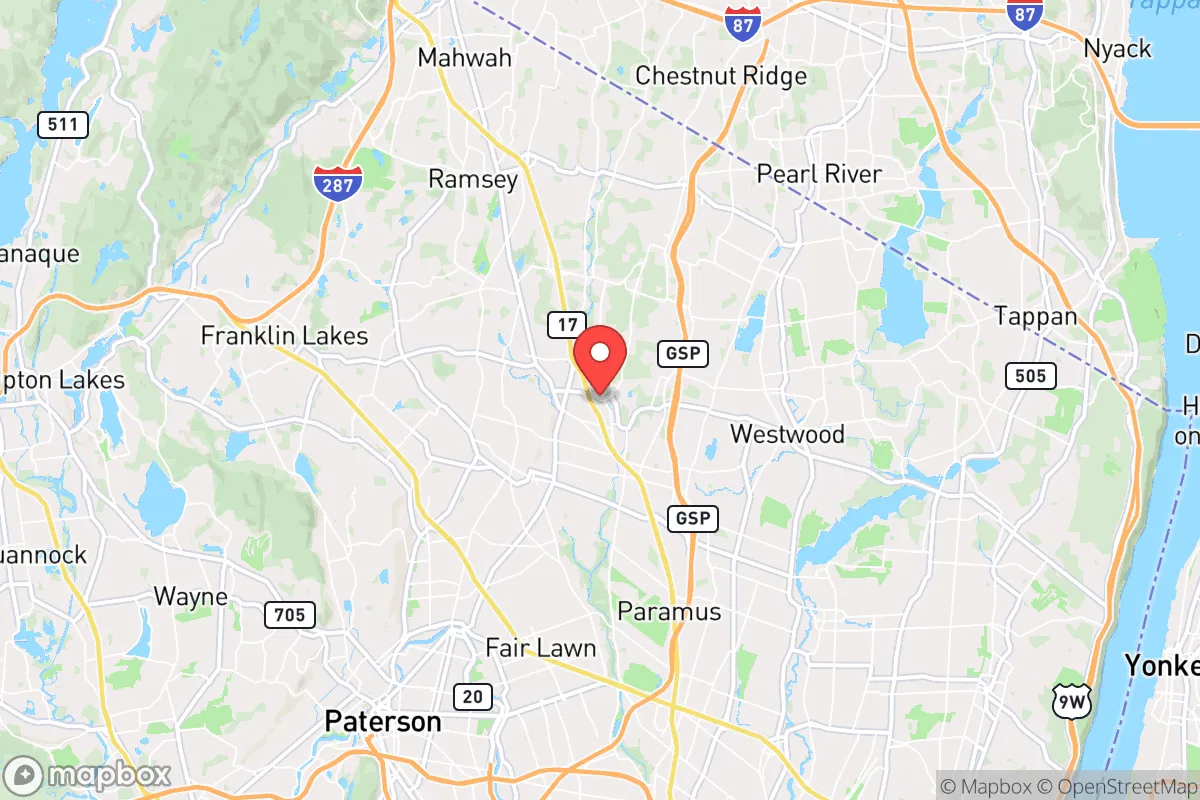
Photo: Wikipedia
Personal Sovereignty in Ho-Ho-Kus, NJ
Viable for self-reliance. Generally workable, though some barriers may limit total independence.
What does Personal Sovereignty tell us?
Personal Sovereignty measures your capacity for self-reliance and independence with minimal government friction. Higher scores mean fewer barriers between you and the way you want to live... but it assumes you have the space you need and good neighbors.
What does this tell us?
Personal Sovereignty measures your capacity for self-reliance and independence with minimal government friction. Higher scores mean fewer barriers between you and the way you want to live... but it assumes you have the space you need and good neighbors.
State Policy
Energy independence: Importer (17% of energy produced in-state)
Personal Liberty
Homesteading

Personal Liberty Analysis
Ho-Ho-Kus, New Jersey, presents a complex environment for personal sovereignty, where a high degree of local autonomy in daily life is counterbalanced by one of the nation's most assertive state-level regulatory and tax regimes. For a relocation-minded individual or family prioritizing independence, the borough offers a tight-knit, low-crime community with strong property rights and a hands-off local government, but operates squarely within New Jersey's framework of strict gun laws, high property taxes, and extensive state oversight. The net effect is a trade-off: significant personal freedom in community and family matters, constrained by a heavy state-level footprint that limits certain forms of self-reliance and self-defense.
Tax burden and regulatory posture: How New Jersey's framework shapes local autonomy
The most immediate constraint on personal sovereignty in Ho-Ho-Kus is the state's tax and regulatory environment. New Jersey consistently ranks among the highest in the nation for property taxes, and Ho-Ho-Kus is no exception. The borough's effective property tax rate hovers around 2.1% of assessed value, meaning a home valued at $800,000 carries an annual tax bill of roughly $16,800. This is a significant fixed cost that directly reduces disposable income and the financial freedom to invest in personal projects, education, or savings. The state also imposes a progressive income tax with a top marginal rate of 10.75% on income over $1 million, and a sales tax of 6.625% (with some exemptions). For a conservative-leaning audience, this represents a substantial transfer of personal resources to government programs, limiting the ability to direct one's own spending.
On the regulatory side, New Jersey is known for its extensive permitting and environmental oversight. While Ho-Ho-Kus's local government is relatively small and accessible—the borough council meets monthly and residents can often speak directly with officials—state-level regulations heavily influence everything from home renovations (requiring permits for even modest structural changes) to land use. The state's Department of Environmental Protection (DEP) has broad authority over wetlands, waterways, and tree removal, which can complicate property improvements. For a homeowner looking to add a deck, a shed, or a fence, expect a permitting process that is more involved than in many other states. This regulatory density is a double-edged sword: it protects property values and environmental quality, but it also reduces the speed and ease with which a property owner can exercise control over their own land.
Self-defense and gun law specifics: Navigating New Jersey's strict firearm framework
For those prioritizing the right to self-defense, Ho-Ho-Kus sits in a state with some of the most restrictive gun laws in the country. New Jersey requires a Firearms Purchaser Identification Card (FPID) to purchase any long gun or handgun, and a separate Permit to Purchase a Handgun for each handgun transaction. The process involves fingerprinting, background checks, references, and a waiting period. Carrying a handgun in public requires a Permit to Carry (PTC), which, following the 2022 Bruen decision, is now issued on a "shall-issue" basis, but the application process remains onerous, requiring a multi-hour training course, a psychological evaluation, and a demonstration of "justifiable need" that is still interpreted narrowly by many local police chiefs. In practice, obtaining a carry permit in Bergen County, where Ho-Ho-Kus is located, is difficult and time-consuming, often taking six months or more.
The borough itself is a low-crime area—Ho-Ho-Kus consistently reports zero violent crimes in many years and very few property crimes—so the practical need for a firearm for home defense is minimal. However, the legal environment means that any firearm ownership requires significant bureaucratic effort. Magazine capacity is limited to 10 rounds, and certain types of firearms (e.g., AR-15s with certain features) are classified as "assault firearms" and are heavily restricted or banned. For a family that values the ability to defend themselves without government permission, this is a significant limitation. The local police department is responsive and professional, but the state's legal framework clearly prioritizes a restrictive approach to civilian firearm ownership.
Self-reliance and homesteading viability: Lot sizes, zoning, and off-grid feasibility
Ho-Ho-Kus offers moderate potential for self-reliance, but it is not a homesteading destination. The borough is a suburban bedroom community with lot sizes typically ranging from 0.25 to 1 acre. While some larger properties exist near the Saddle River, the majority of homes sit on quarter-acre lots with established landscaping. Zoning is primarily residential, with strict regulations on accessory structures, livestock, and commercial activity. Keeping chickens is generally permitted with a permit and setback requirements, but larger livestock like goats or pigs is not allowed in most zones. Vegetable gardens are common and unrestricted, but the small lot sizes limit any serious food production.
Off-grid living is effectively impossible within the borough. Ho-Ho-Kus is fully connected to municipal water, sewer, and electric grids. The state's building codes require connection to these utilities for any habitable structure. Solar panels are permitted and increasingly common, but net metering rules are state-regulated and have become less favorable in recent years. Rainwater collection for outdoor use is generally allowed, but using it for indoor potable water is prohibited by health codes. For a family seeking true self-sufficiency—growing most of their own food, generating their own power, and living independently of municipal systems—Ho-Ho-Kus is not a viable option. However, for those who want a manageable suburban property where they can garden, compost, and reduce their reliance on grocery stores without going fully off-grid, the borough is workable.
Personal liberties: Parental rights, medical autonomy, speech, and property
In the realm of personal liberties, Ho-Ho-Kus reflects a mix of local conservatism and state-level progressivism. Parental rights are generally respected in the local school system, the Ho-Ho-Kus School District (serving K-8), which is small and responsive to community input. The school board is elected and meetings are public, allowing parents direct influence over curriculum and policies. However, New Jersey state law mandates comprehensive sex education and anti-discrimination policies that some conservative parents may find intrusive. Opt-out provisions exist but require active parental action.
Medical autonomy is heavily regulated at the state level. New Jersey has a vaccine mandate for school attendance (with medical and religious exemptions available, though religious exemptions have been narrowed in recent years). The state also has a medical marijuana program, but recreational use is legal and regulated. For those seeking alternative medical treatments or vaccine exemptions, the legal landscape is challenging. Speech and assembly rights are protected under the First Amendment, and Ho-Ho-Kus has no local ordinances restricting political expression. Property rights are strong in the sense that the borough has no rent control and few landlord-tenant restrictions beyond state law, but the high property taxes and extensive permitting process mean that owning property comes with significant ongoing costs and bureaucratic obligations.
Overall, personal sovereignty in Ho-Ho-Kus is best understood as a trade-off between local community freedom and state-level constraint. The borough itself is a safe, well-managed, and neighborly place where residents have a real voice in local governance and enjoy a high quality of life. However, the state of New Jersey imposes a heavy tax burden, strict gun laws, and extensive regulations that limit certain forms of self-reliance and personal autonomy. For a conservative-leaning individual or family who values community stability, good schools, and low crime above maximum personal independence, Ho-Ho-Kus offers a comfortable and secure environment. For those who prioritize minimal government interference, the right to carry firearms without bureaucratic hurdles, or the ability to live off-grid, the borough—and New Jersey as a whole—will feel restrictive. It is a place where personal sovereignty is exercised within a well-defined legal framework, not in spite of it.

* Values derived from national, state, county, city and local statistics and may differ in a specific area. Last updated: 2026-11-09T05:52:53.000Z
Narrative content on this page is AI-generated and may contain mistakes. Verify any details that matter before acting on them.
ReloMaps may earn a commission from affiliate links at no extra cost to you.

