Photo: Wikipedia
Political ClimatePolitical Climate in Hightstown, NJ
District shown is the primary district for this city’s centroid. Cities may span multiple districts.
Political rankings in New Jersey
- Most Conservative Cities in New Jersey
- Most Liberal Cities in New Jersey
- Best Conservative-Leaning Towns in the Northeast
- Best Conservative-Leaning Towns in the Mid-Atlantic
- Safest Liberal-Leaning Towns on the East Coast
- Safest Conservative-Leaning Towns on the East Coast
- Most Affordable Liberal-Leaning Small Towns in the U.S.
- Safest Liberal-Leaning Cities in the U.S.
- Most Conservative Counties in New Jersey
- Most Liberal Counties in New Jersey
Local Political AnalysisPolitical Analysis of Hightstown, NJ
Hightstown’s political climate mirrors the state as a whole — it’s a solidly Democratic-leaning borough with a Cook PVI of D+5, exactly matching New Jersey’s statewide D+5 rating. That means in presidential elections, Hightstown typically votes about five points more Democratic than the national average, putting it in the same blue-leaning category as the rest of the Garden State. But don’t let the single number fool you: Hightstown’s politics feel more moderate and locally focused than the hyper-partisan suburbs closer to New York or Philadelphia. The borough’s small size — just over 5,000 residents — means local elections often hinge on school board decisions and zoning disputes, not national culture wars.
How it compares
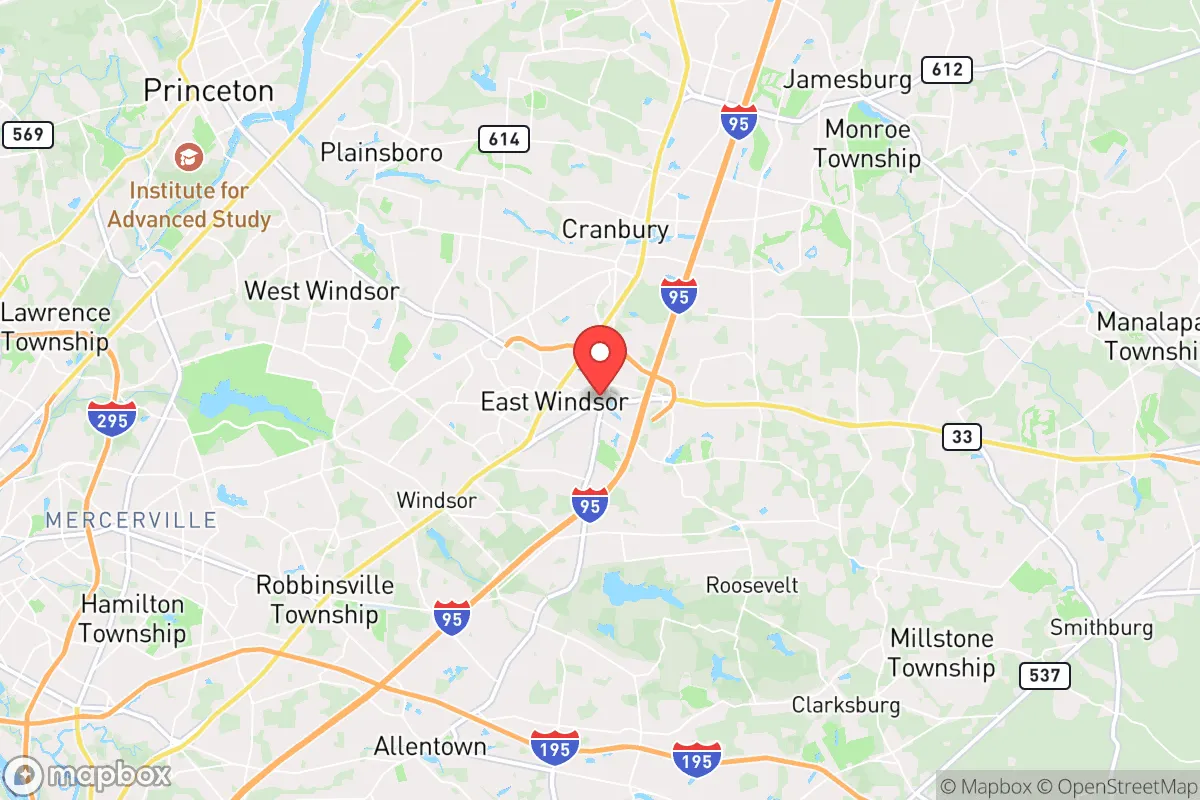
Hightstown’s D+5 PVI puts it right in the middle of New Jersey’s political spectrum. For context, nearby Princeton (D+18) and Trenton (D+25) are far more liberal, while surrounding Mercer County towns like Robbinsville and East Windsor lean more conservative — Robbinsville voted about 55% Republican in the 2024 presidential race. Head a few miles south to Allentown or Millstone Township, and you’ll find reliably red precincts that break 60% Republican. So Hightstown acts as a kind of political bridge: it’s blue enough to feel comfortable for progressive residents, but not so deep blue that conservatives feel isolated. The borough’s voting patterns have shifted leftward over the past decade — in 2016, Hillary Clinton won Hightstown by about 15 points; by 2020, Biden’s margin grew to roughly 20 points. That trajectory mirrors New Jersey’s broader suburban shift toward Democrats, especially among college-educated voters and younger families moving in from more expensive areas.
What this means for residents
For liberal residents, Hightstown offers a reliably progressive local government — the borough council has been Democratic-controlled for years, and issues like affordable housing, environmental sustainability, and public transit improvements get consistent attention. You’ll find active Democratic clubs and regular canvassing events. For conservative residents, the picture is more nuanced. You won’t feel like a pariah — many neighbors are fiscal conservatives who vote Republican in state races — but you’ll likely be in the minority in local elections. That said, Hightstown’s small-town character means personal relationships often trump party labels. The annual Hightstown Harvest Fair and the borough’s tight-knit downtown scene foster a “live and let live” atmosphere. Property taxes, a perennial hot-button issue in New Jersey, are a unifying concern: both liberal and conservative residents grumble about the roughly 2.5% effective tax rate, which is slightly above the Mercer County average.
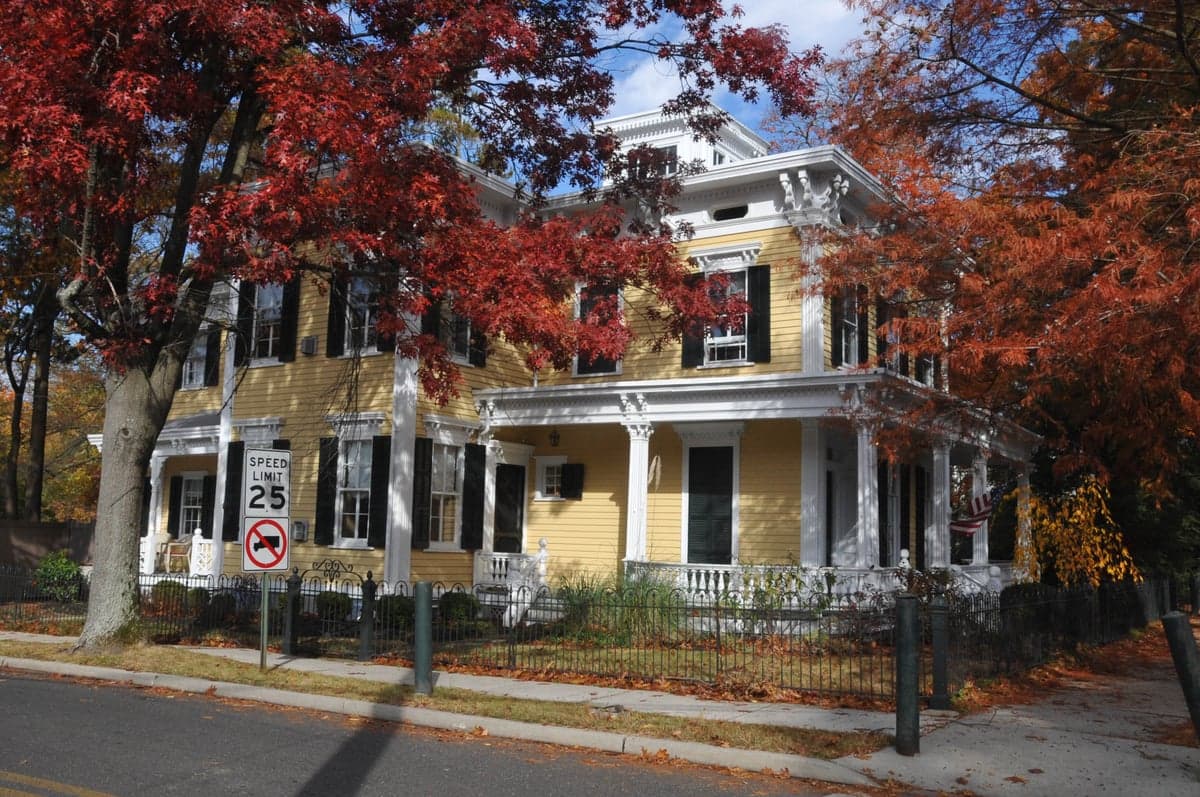
Culturally, Hightstown stands out for its historic downtown and walkable layout — a rarity in car-dependent central New Jersey. The borough has a notable Hispanic community (about 20% of the population) and a growing number of young professionals drawn by the nearby train station on the NJ Transit Northeast Corridor line. Policy-wise, Hightstown has embraced some progressive initiatives like a complete streets program and a community garden, but it’s avoided the more aggressive zoning changes seen in Princeton or Montclair. The local school district, East Windsor Regional, serves a diverse student body and tends to avoid the explosive board meetings that plague some neighboring districts. Looking ahead, expect Hightstown to stay D+5 or nudge slightly bluer as new development brings in more commuters from New York and Philadelphia. But the borough’s small scale and historic character will likely keep its politics grounded in local concerns rather than national polarization.

State Political ClimatePolitical Climate in New Jersey
State Political AnalysisPolitical Environment in the State
New Jersey is a solidly Democratic state with a Cook PVI of D+5, but that single number masks a much more complicated reality. The state hasn’t voted Republican for president since 1988, yet it’s home to some of the most competitive congressional districts in the country and a long tradition of moderate, deal-making governors. Over the last 10-20 years, the shift has been real but uneven: the northern suburbs and urban cores have moved left, while the southern and western exurbs have drifted right, leaving a state that feels politically split even as its statewide elections tilt blue.
Urban vs. rural divide
The political map of New Jersey is a story of density and distance. The state’s population is concentrated in the northeast corridor, anchored by Newark, Jersey City, and Paterson, which reliably deliver huge Democratic margins. These cities are diverse, union-heavy, and deeply tied to the state’s public-sector workforce. Just a few miles west, places like Morris County and Hunterdon County are reliably Republican, with Hunterdon voting nearly 20 points to the right of the state average in 2024. The Jersey Shore counties — Ocean and Monmouth — are also Republican strongholds, driven by retirees, law enforcement families, and a growing population of ex-New Yorkers. The real battlegrounds are the suburban ring counties like Bergen, Middlesex, and Burlington, where college-educated voters and Asian-American communities have pushed the needle left over the past decade. If you’re moving to New Jersey, your political experience will depend almost entirely on whether you land in a dense urban county or a rural/exurban one.
Policy environment
New Jersey’s policy environment is defined by high taxes and heavy regulation. The state has the highest property taxes in the nation, with an average effective rate around 2.23%, and a progressive income tax that tops out at 10.75% for income over $1 million. Sales tax is 6.625%, but many municipalities add their own local levies. The regulatory posture is business-cautious: environmental rules are strict, land-use approvals are slow, and the state has a strong public-sector union presence that shapes everything from pension funding to school staffing. On education, New Jersey consistently ranks among the top states for K-12 outcomes, but that comes with a price — per-pupil spending is among the highest in the country, and the school funding formula is a perennial source of political conflict between wealthy suburbs and poorer cities. Healthcare is heavily regulated, with the state running its own ACA marketplace and expanding Medicaid early. Election laws are among the most accessible in the country: no-excuse mail-in voting, automatic voter registration at DMVs, and same-day registration during early voting. For a conservative relocator, the policy environment will feel like a headwind on taxes and business freedom, but the schools and infrastructure are genuinely high-quality.
Recent policy direction
Over the past five years, New Jersey has moved decisively left on several fronts. In 2022, the state passed a sweeping gun law that requires a permit to purchase a handgun, bans .50 caliber rifles, and limits magazine capacity to 10 rounds. It also eliminated the "justifiable need" requirement for carry permits after the Bruen decision, but then passed a law restricting where guns can be carried — including bars, parks, and private property without explicit permission. On education and parental rights, the state has been a flashpoint: in 2023, the governor signed a law requiring school districts to adopt policies that affirm LGBTQ+ students, and the state board of education has resisted efforts to mandate parental notification of a child’s gender identity changes. On medical and bodily autonomy, New Jersey has some of the strongest protections in the country: abortion is codified into state law, and the state has a "shield law" protecting providers who prescribe abortion pills to patients in states where it’s banned. Property rights are constrained by the state’s Mount Laurel doctrine, which requires municipalities to provide their "fair share" of affordable housing, often leading to court-ordered development. On voting, the state expanded mail-in voting permanently after the pandemic and now allows 10 days of early in-person voting. For a conservative, the recent direction is clearly toward more regulation, higher taxes, and expanded individual rights on social issues — but the state has not gone as far as New York or California on rent control or energy mandates.
Civil unrest & political movements
New Jersey has a history of organized political activism on both sides. The state was a major site of the 2020 Black Lives Matter protests, with large marches in Newark and Trenton, and the movement has had lasting policy effects — the state passed police reform legislation including a ban on chokeholds and a requirement for independent investigations of officer-involved deaths. On the right, the state has a vocal but smaller conservative activist base, centered around gun rights groups like the New Jersey Second Amendment Society and anti-tax organizations like the New Jersey Taxpayers Association. Immigration politics are a constant flashpoint: New Jersey is a sanctuary state, with a 2018 executive order limiting state cooperation with federal immigration enforcement, and several cities — including Newark and Jersey City — have explicitly declared themselves sanctuary cities. This has led to periodic confrontations with ICE and a steady stream of local news coverage about immigration raids and resistance. Election integrity has been a minor but persistent issue, with Republican activists raising concerns about mail-in ballot security, though no major fraud has been proven. The state also saw a brief secession-adjacent movement in 2020, when some conservative counties — including Ocean and Monmouth — floated the idea of joining Pennsylvania, though it never gained serious traction. For a new resident, the political atmosphere is less about street-level unrest and more about the constant hum of legislative and legal battles over taxes, schools, and guns.
Projection
Over the next 5-10 years, New Jersey is likely to stay blue but become more internally polarized. The demographic trends favor Democrats: the state’s growing Asian-American and Hispanic populations lean left, and the suburban college-educated voters who have shifted toward Democrats are not likely to reverse course. At the same time, the state’s high cost of living is driving some conservative-leaning families to lower-tax states like Florida and Texas, which could further concentrate the remaining population in blue-leaning areas. The wild card is the state’s fiscal health: pension obligations and property tax burdens are unsustainable, and a future governor — whether Democrat or Republican — will eventually have to make painful cuts or raise taxes further, which could trigger a backlash. For a conservative moving in now, expect to live in a state where your vote for president won’t matter, but your local elections — for county commissioner, school board, and state legislature — will be highly competitive and consequential. For a liberal, the state will continue to be a policy laboratory, pushing further on climate, housing, and social equity, but always constrained by the reality of high costs and a skeptical electorate in the suburbs.
For a new resident, the bottom line is this: New Jersey is a high-tax, high-service state where your political experience will be shaped more by your municipality than by the state as a whole. If you live in Hunterdon County, you’ll have Republican representation and low crime, but you’ll still pay some of the highest property taxes in the country. If you live in Newark, you’ll have Democratic representation and access to transit and culture, but you’ll deal with higher crime and underfunded schools. The state works well for people who can afford it and who align with its regulatory and social priorities. For conservatives, it’s a place where you can live comfortably if you choose your town carefully and stay engaged in local politics. For liberals, it’s a place where your values are reflected in state law, but you’ll pay a premium for it. Either way, New Jersey is not a place for political indifference — the debates are real, the stakes are high, and the taxes are always coming due.
* Values derived from national, state, county, city and local statistics and may differ in a specific area. Last updated: 2026-11-17T05:48:30.000Z
Narrative content on this page is AI-generated and may contain mistakes. Verify any details that matter before acting on them.
ReloMaps may earn a commission from affiliate links at no extra cost to you.

