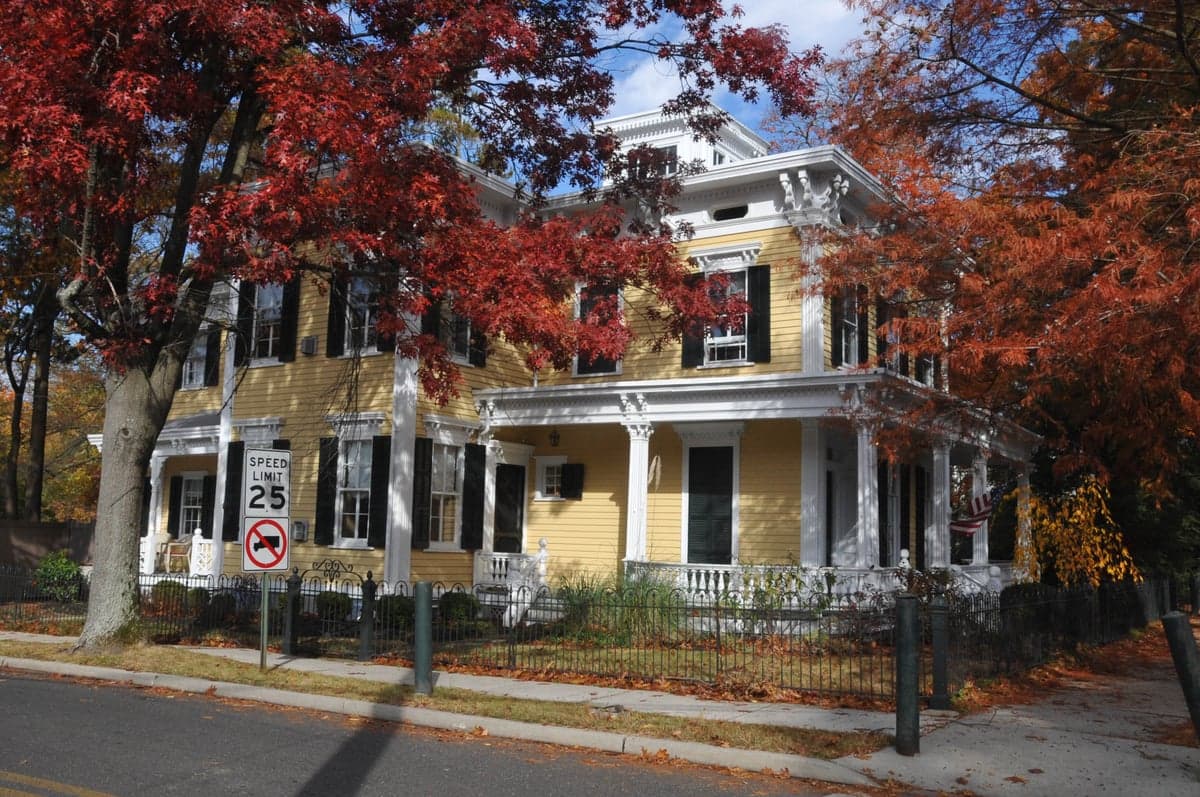
Photo: Wikipedia
Personal Sovereignty in Hightstown, NJ
Viable for self-reliance. Generally workable, though some barriers may limit total independence.
What does Personal Sovereignty tell us?
Personal Sovereignty measures your capacity for self-reliance and independence with minimal government friction. Higher scores mean fewer barriers between you and the way you want to live... but it assumes you have the space you need and good neighbors.
What does this tell us?
Personal Sovereignty measures your capacity for self-reliance and independence with minimal government friction. Higher scores mean fewer barriers between you and the way you want to live... but it assumes you have the space you need and good neighbors.
State Policy
Energy independence: Importer (17% of energy produced in-state)
Personal Liberty
Homesteading

Personal Liberty Analysis
Hightstown, New Jersey, presents a nuanced personal sovereignty environment for those prioritizing autonomy and self-reliance, shaped heavily by the state's broader regulatory and tax framework. While New Jersey is not known for a light-touch governance style, Hightstown itself offers a moderate, community-oriented setting where individual freedoms are exercised within a structured legal landscape. For conservative-leaning individuals and families, the key trade-offs involve higher taxes and stricter state-level regulations balanced against local community control, strong property rights, and a stable legal environment for self-defense and family autonomy.
Tax burden and regulatory posture in Hightstown
New Jersey consistently ranks among the highest in the nation for combined state and local tax burden, and Hightstown is no exception. The effective property tax rate in Mercer County hovers around 2.3% of assessed home value, which is significantly above the national average of roughly 1.1%. For a median-priced home in Hightstown (approximately $350,000), that translates to annual property taxes near $8,000. The state income tax is progressive, with rates from 1.4% to 10.75% for top earners, and the sales tax is 6.625%. This fiscal posture reflects a high-service, high-regulation state government that funds robust public schools, infrastructure, and social programs. For a relocation audience, the regulatory environment is heavy-touch: zoning is strict, building permits are required for most modifications, and environmental regulations (e.g., NJDEP oversight on wetlands and stormwater) can delay or increase costs of property improvements. However, Hightstown's small-town character means local officials are often accessible, and the borough's zoning code allows for reasonable home-based businesses and accessory apartments, offering some flexibility within the state's framework.
Self-defense and gun law specifics in New Jersey
New Jersey has some of the most restrictive gun laws in the United States, which directly impacts personal sovereignty in self-defense. The state requires a Firearms Purchaser Identification Card (FPID) for long guns and a separate permit for each handgun purchase, with a 30-day waiting period between handgun purchases. Concealed carry is legal but heavily regulated: applicants must demonstrate a "justifiable need" beyond general self-defense, though the 2022 Supreme Court decision in NYSRPA v. Bruen has prompted ongoing legal challenges to this standard. As of 2026, New Jersey's carry permit process remains cumbersome, requiring background checks, fingerprinting, a training course, and a demonstrated specific threat. Magazine capacity is limited to 10 rounds, and "assault weapons" are broadly defined and banned. For Hightstown residents, this means self-defense options are constrained compared to states with constitutional carry. However, home defense with a legally owned firearm is permitted, and the borough has no additional local gun ordinances beyond state law. The practical reality is that responsible gun ownership is possible but requires significant administrative effort and legal awareness.
Self-reliance and homesteading viability in Hightstown
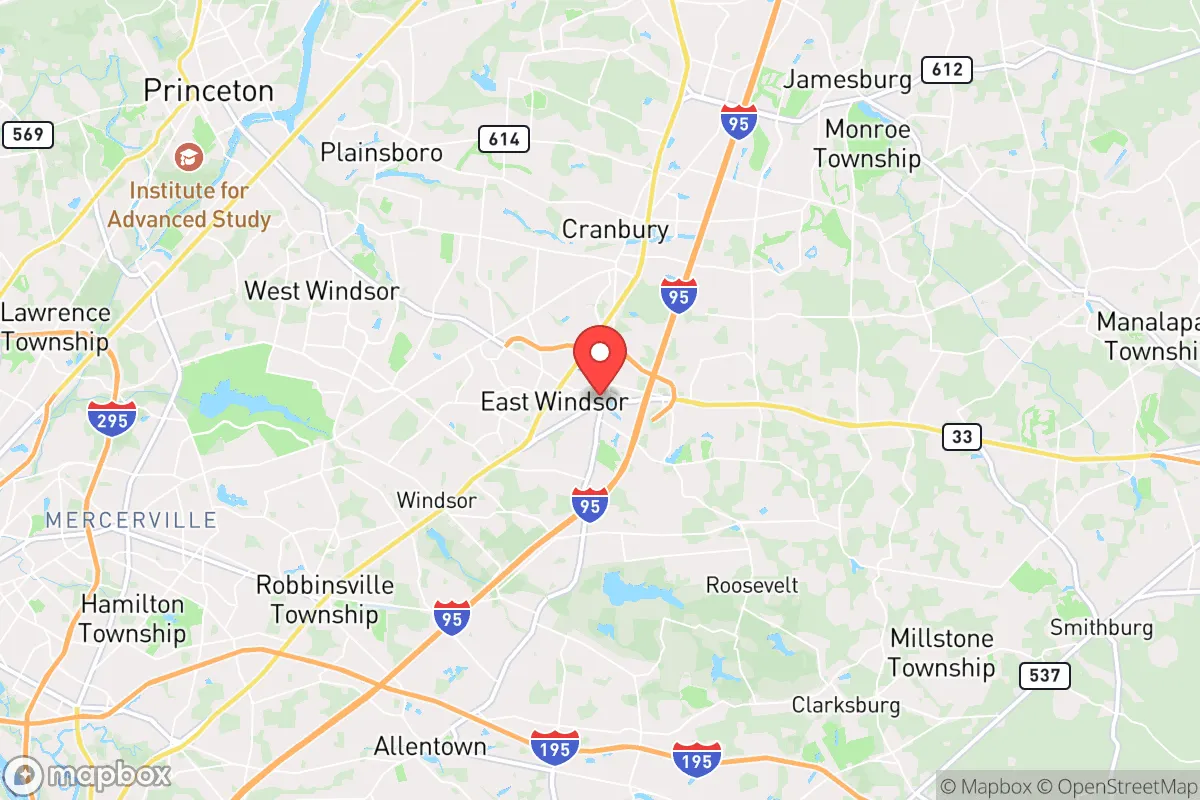
Hightstown's suburban character limits large-scale homesteading, but small-scale self-reliance is feasible. Typical residential lot sizes in the borough range from 0.1 to 0.5 acres, with some larger parcels in the surrounding East Windsor and Mercer County areas. Zoning permits backyard chickens (hens only, no roosters) with a permit, and vegetable gardens are unrestricted. Rainwater collection is allowed for non-potable uses, though the state's water rights laws are relatively strict—capturing significant runoff may require a permit. Off-grid living is not practical within Hightstown's municipal limits: the borough requires connection to public water and sewer systems, and building codes mandate grid-tied electrical service. Solar panels are permitted and encouraged, with net metering available, but full energy independence is not achievable under current codes. For those seeking more land, nearby rural areas in western Mercer County or neighboring Monmouth County offer 1-5 acre parcels where well and septic systems are possible, though still subject to NJDEP oversight. The regulatory environment for homesteading is moderate: the state's Right to Farm Act protects agricultural activities, but Hightstown's residential zones are not designated as agricultural, limiting livestock and commercial farming.
Personal liberties in Hightstown: parental rights, medical autonomy, speech, and property
Parental rights in New Jersey are generally strong, with state law affirming parents' authority over their children's education, healthcare, and upbringing. The state does not mandate specific curricula that override parental opt-out rights, and Hightstown's school district (East Windsor Regional) allows parents to review instructional materials. Homeschooling is legal with a simple notification process and no standardized testing requirements, offering significant autonomy for families. Medical autonomy is more constrained: New Jersey has a vaccine mandate for school attendance (with medical and religious exemptions available), and the state's public health emergency powers are broad. However, the state also has robust medical freedom protections, including a law prohibiting discrimination against those who decline vaccination for religious reasons. Speech and assembly rights are fully protected under the First Amendment, and Hightstown has no local ordinances restricting political expression or public gathering. Property rights are well-defined: eminent domain is limited to public use with just compensation, and the state's "fair housing" laws prevent discriminatory zoning but also impose inclusionary housing requirements on new developments. For a conservative audience, the key concern is the state's regulatory reach into medical decisions and education, but Hightstown's local governance is relatively hands-off in daily life.
Overall, personal sovereignty in Hightstown is best described as structured freedom—the state provides a dense legal framework that limits some individual choices (especially in taxation, self-defense, and off-grid living) while protecting others (property rights, parental authority, and speech). For relocation, the trade-off is clear: you gain access to high-quality public services, a stable community, and proximity to major employment centers (Princeton, Trenton, New York City) but accept higher costs and regulatory compliance. Compared to states like Texas or Florida, Hightstown offers less autonomy in self-defense and taxation; compared to neighboring Pennsylvania, it has stricter gun laws and higher property taxes but similar parental rights and homesteading flexibility. For families and individuals who value community stability and are willing to navigate a regulated environment, Hightstown provides a reasonable balance of personal liberty and collective responsibility.

* Values derived from national, state, county, city and local statistics and may differ in a specific area. Last updated: 2026-11-17T05:48:30.000Z
Narrative content on this page is AI-generated and may contain mistakes. Verify any details that matter before acting on them.
ReloMaps may earn a commission from affiliate links at no extra cost to you.

