Photo: Wikipedia
Demographics of Hightstown, NJ
Affluence Level in Hightstown, NJ
An upper-middle-class area. Household wealth, education levels, and homeownership run ahead of national benchmarks.
People of Hightstown, NJ
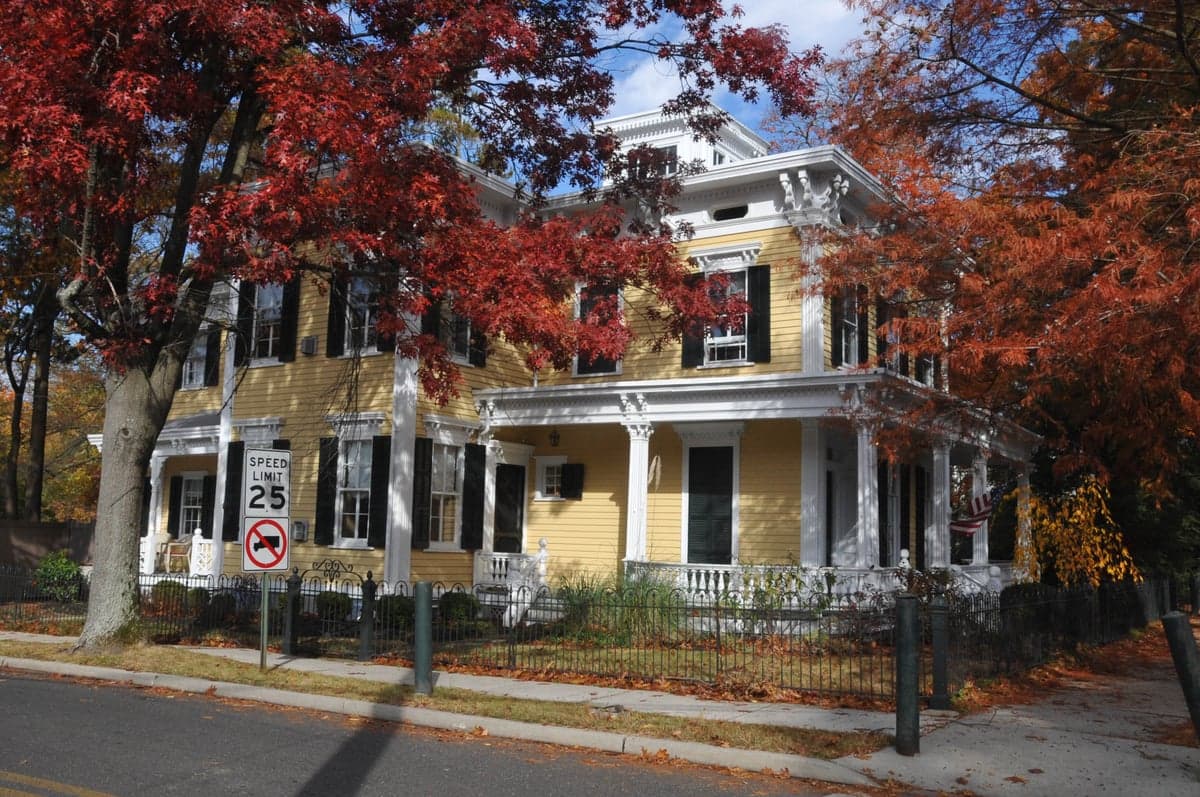
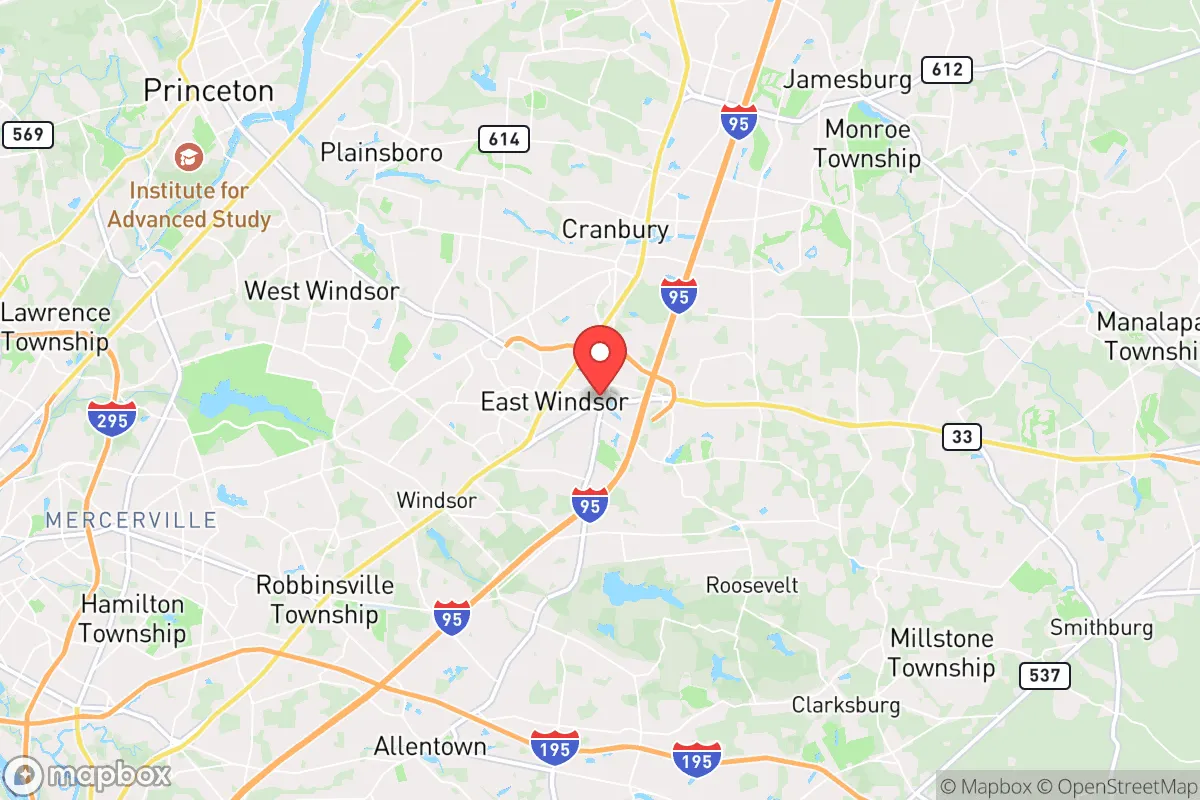
Today, Hightstown, New Jersey, is a compact, densely settled borough of 5,869 residents that blends historic small-town character with significant ethnic diversity. Its population is roughly 54.5% White, 33.6% Hispanic, 5.9% Black, 2.6% East/Southeast Asian, and 2.3% Indian (subcontinent), with 14.7% foreign-born and 36.7% college-educated. The community retains a distinct identity as a former mill town and railroad stop, where older, single-family homes in walkable neighborhoods sit alongside newer immigrant-owned businesses along Main Street and Mercer Street. For a relocation audience, Hightstown offers a tight-knit, family-oriented atmosphere with a noticeably higher density and diversity than surrounding rural Mercer County towns.
How the city was settled and grew
Hightstown’s original population was drawn by water power and transportation. Founded in the early 1700s along Rocky Brook, the settlement grew around gristmills and sawmills, with the arrival of the Camden & Amboy Railroad in the 1830s turning it into a regional shipping point. The earliest residents were English and Dutch farmers and millers, who built the core of what is now the Historic District — a concentration of 19th-century homes along Main Street, Stockton Street, and Franklin Street. By the late 1800s, Irish and German immigrants arrived to work in the mills and on the railroad, settling in modest worker cottages in the South Hightstown area near the tracks. A smaller wave of Italian immigrants followed in the early 1900s, clustering around the North Hightstown neighborhood near the former Hightstown Silk Mill. These groups established the borough’s Catholic and Protestant church communities, many of which remain active today. The population peaked around 4,000 by 1950, then stabilized as the mills closed and the economy shifted toward commuting to Trenton and Princeton.
Modern era (post-1965)
The post-1965 immigration reforms reshaped Hightstown’s population more dramatically than any earlier wave. Hispanic migration — primarily from Puerto Rico, Mexico, and later Central America — began in the 1970s, drawn by low-cost rental housing and jobs in warehousing, landscaping, and food processing along the Route 130 corridor. This community concentrated in the West Hightstown area, particularly around Ward Street and Rogers Avenue, where older multi-family homes were converted into affordable rentals. By 2020, Hispanic residents made up over a third of the borough’s population, and Spanish-language storefronts and churches now anchor that neighborhood. A smaller but notable influx of East/Southeast Asian families (primarily Chinese and Korean) began in the 1990s, settling in the East Hightstown section near the Peddie School campus, drawn by the school’s international reputation and proximity to Princeton’s tech economy. Indian (subcontinent) families, many employed in healthcare and IT, arrived more recently, dispersing across the borough but with a visible cluster in the Hightstown Meadows subdivision off Monmouth Road. The White population, while still a majority, has aged in place in the Historic District and North Hightstown, with younger White families often priced out by rising home values.
The future
Hightstown’s population is trending toward greater diversity and modest growth. The Hispanic share is projected to rise toward 40% by 2035, driven by continued migration and higher birth rates, while the White share is declining as older residents move out or pass away. The East/Southeast Asian and Indian populations are expected to grow slowly, limited by the borough’s small housing stock and lack of large new subdivisions. New development is concentrated in the Hightstown Crossing area, a former industrial site near the railroad station being rezoned for mixed-use townhomes, which may attract younger professionals and commuters. The borough’s cultural identity is becoming more distinctly bicultural — English and Spanish are both common in public spaces, and the annual Hightstown Hispanic Festival draws regional attendance. For a relocating family or individual, Hightstown offers a stable, walkable community with good schools (Hightstown High School is part of the East Windsor Regional district) and a lower cost of entry than nearby Princeton, but with the trade-off of smaller lots and older housing stock.
Hightstown is becoming a denser, more Hispanic-influenced borough that retains its historic New England-style core. For someone moving in now, the area offers a genuine small-town feel with real ethnic diversity, a strong sense of local identity, and proximity to both the Princeton job market and the Route 130 industrial corridor. The population is stable but slowly diversifying, and the next decade will likely see continued infill development and a gradual shift toward a majority-minority community.

* Values derived from national, state, county, city and local statistics and may differ in a specific area. Last updated: 2026-11-17T05:48:30.000Z
Narrative content on this page is AI-generated and may contain mistakes. Verify any details that matter before acting on them.
ReloMaps may earn a commission from affiliate links at no extra cost to you.

