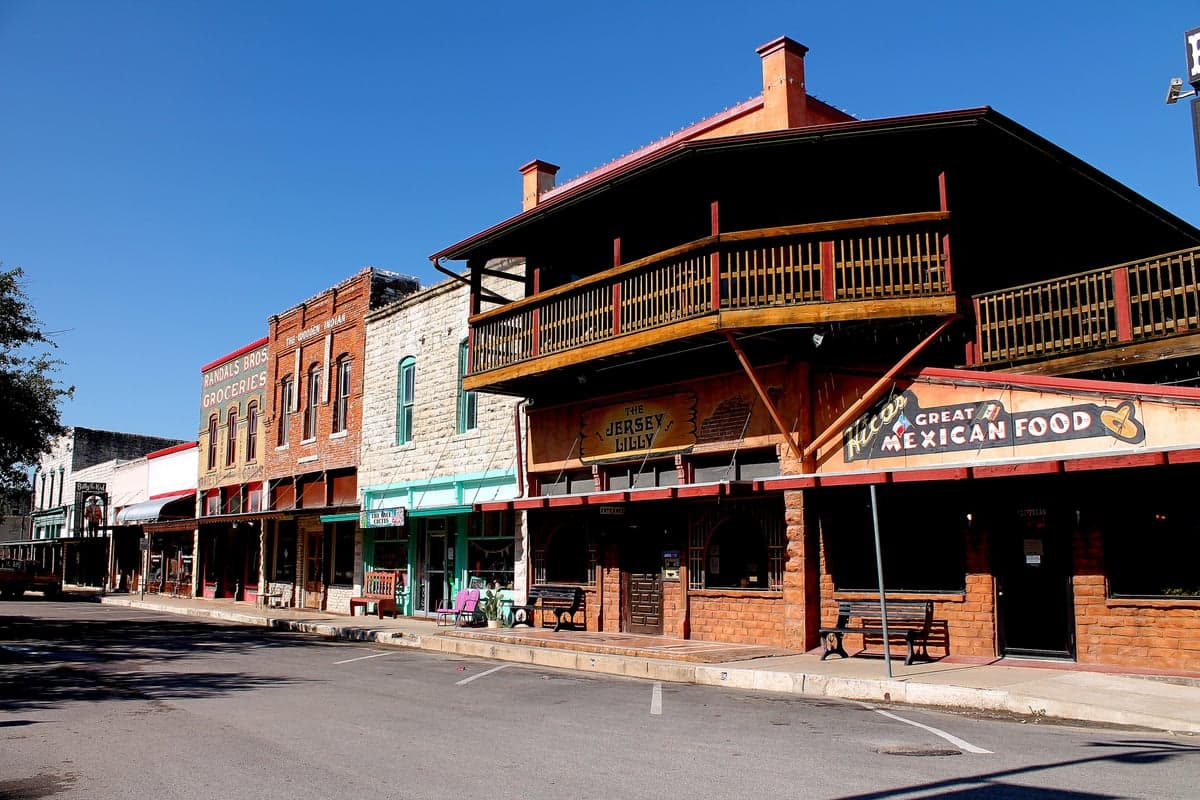
Photo: Wikipedia
Strategic Assessment of Hico, TX
Workable tactical position. Some exposure to population density or targets, but generally defensible in a crisis.
What does the Strategic Assessment tell us?
Our Strategic Assessment grades tactical survivability of an area. Major population centers, military targets, fallout zones, natural disasters, and border exposure all drive risk — lower exposure means a more defensible position in a crisis.
This is heavily inspired by Joel Skousen's Strategic Relocation book. Highly recommended you checkout the book ($)What does this tell us?
Our Strategic Assessment grades tactical survivability of an area. Major population centers, military targets, fallout zones, natural disasters, and border exposure all drive risk — lower exposure means a more defensible position in a crisis.
This is heavily inspired by Joel Skousen's Strategic Relocation book. Highly recommended you checkout the book ($)Strategic Pillars
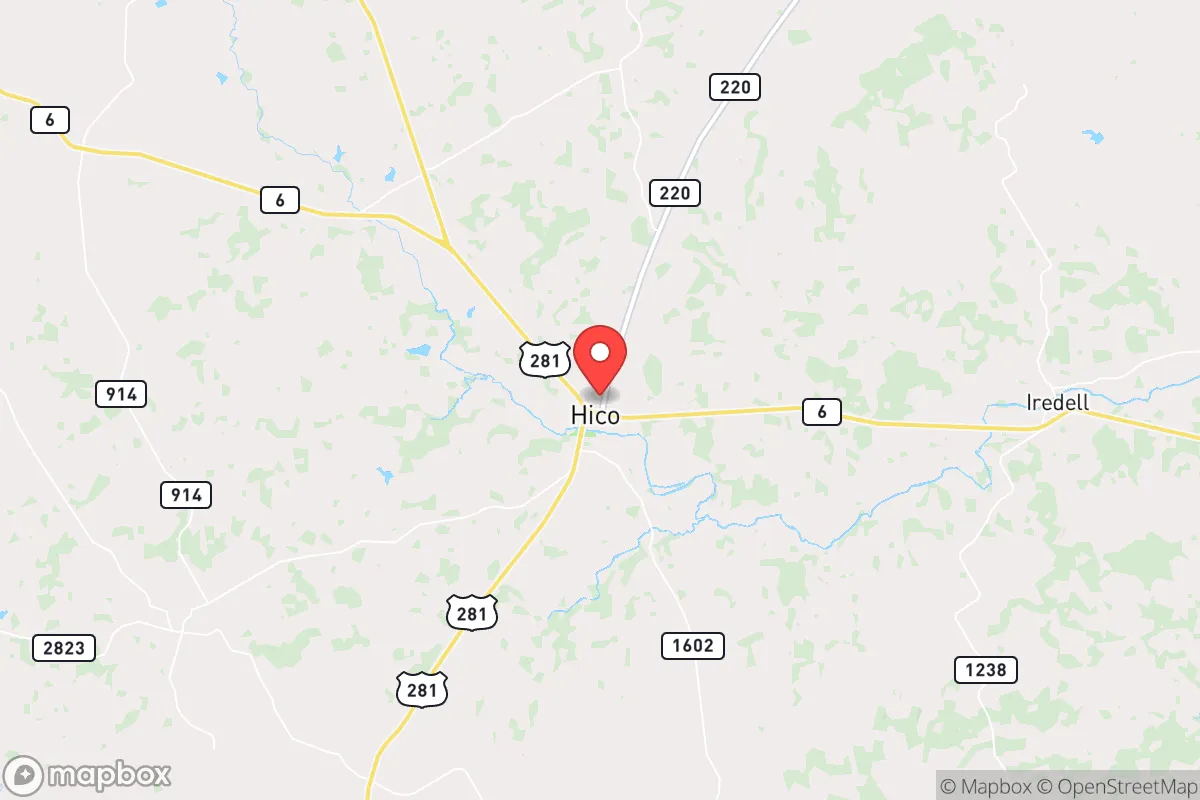
Key Distances
Regional Safe Places
Below is our recommended "safe zones" in Texas and the surrounding area based on our strategic heuristics. For most people, it's unrealistic to live in a “safe zone” full-time due to work, family or other personal reasons. They tend to be more rural. However, many of these areas are perfect for second homes and retreat properties that double as a vacation home or even a short-term rental.

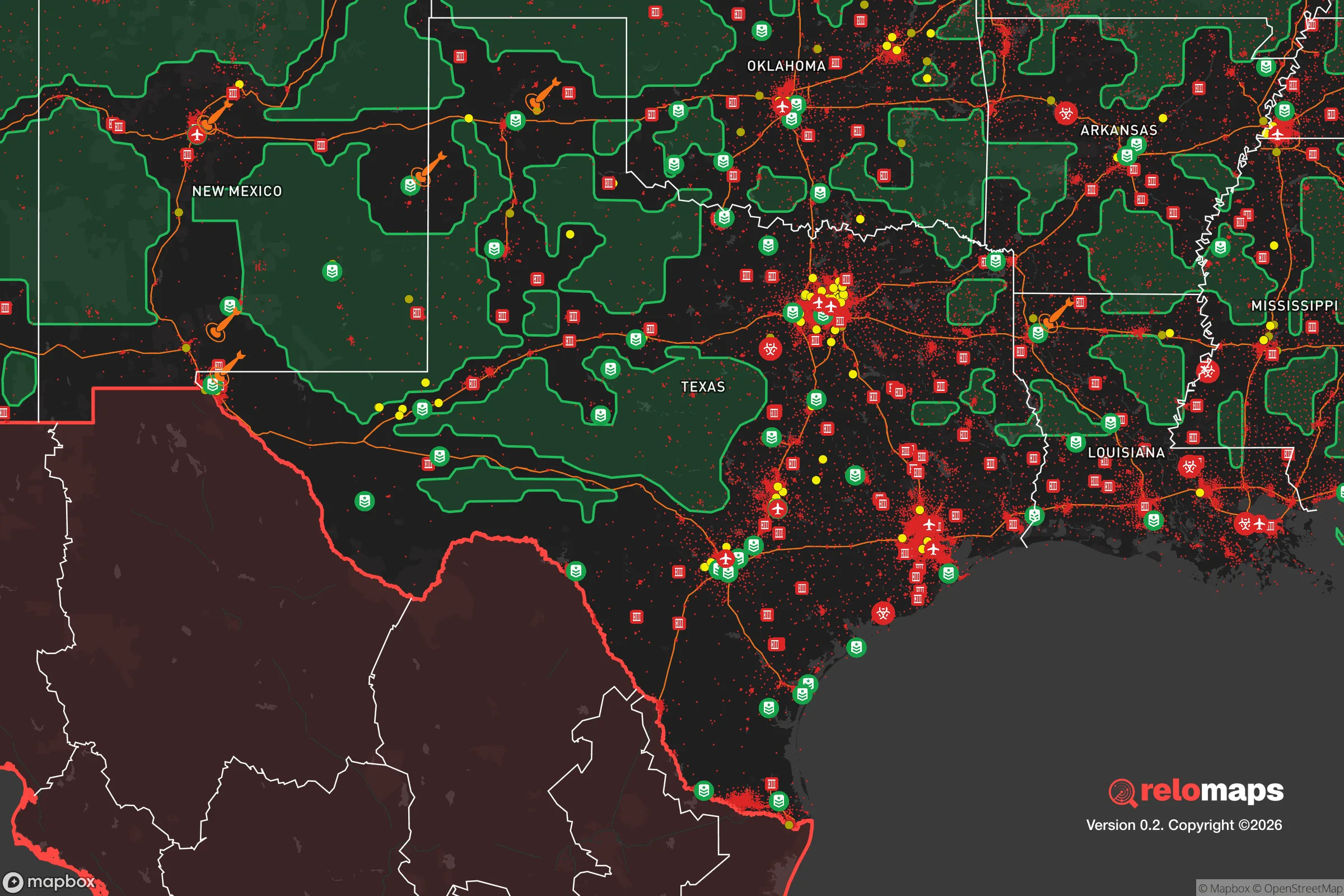


Important Note: For informational purposes only. This does not mean nothing bad ever happens in the green zones. Please use common sense. This is based on public data and modeled with AI. We tried to take a conservative approach but mistakes happen. We update this regularly as new information becomes available.
Solar Generator Recommendations
Backup power matters more here than in safer locations. We've picked three solar generators across budgets and capacity tiers — start with the budget unit if you only need a few essentials, or step up if you want to run a fridge and HVAC for days at a time.
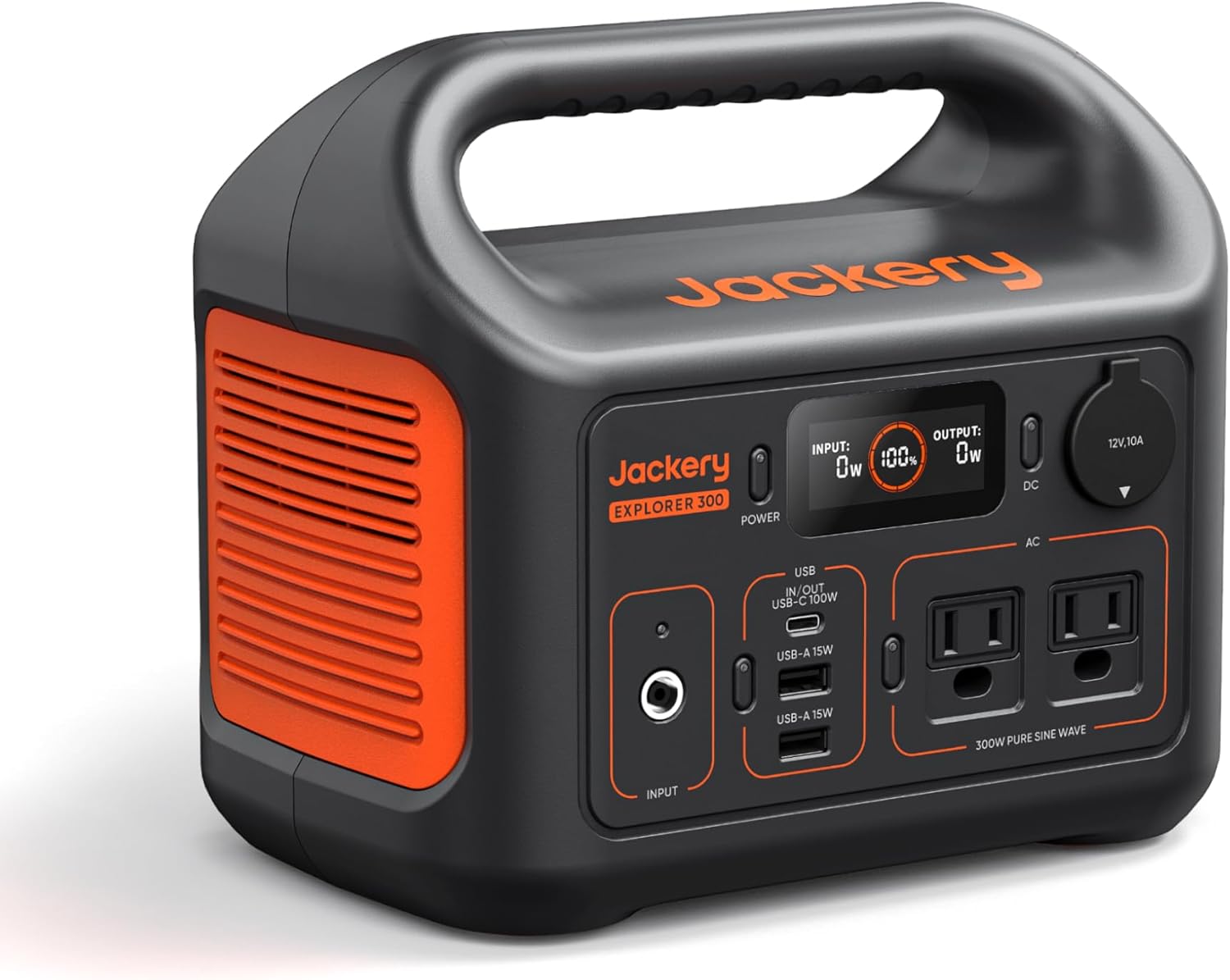
Jackery Portable Power Station Explorer 300
Budget OptionPower on the Go: Weighing only 11 lbs, it's convenient to set up and store with book-sized foldable solar panels

BLUETTI Portable Power Station AC180
Designed for both indoor and outdoor scenarios, AC180 is highly capable as it has a robost capacity and continuous output power.

EF ECOFLOW DELTA Pro Ultra Power Station
Upgraded PickEcoFlow DELTA Pro Ultra is a whole-home energy system designed to grow with your family. Integrated with the Smart Home Panel 2, it scales to meet your evolving energy needs — keeping your home powered, intelligent, and secure through every stage of life.
We earn a commission, at no additional cost to you.
Strategic Assessment Analysis
Hico, Texas, sits in a sweet spot for resilience-minded relocators: far enough from major metropolitan targets to avoid the worst of a regional disruption, yet close enough to real infrastructure that isolation never becomes a liability. Roughly 75 miles southwest of Fort Worth and about 100 miles from Dallas, this Hamilton County town of around 1,400 people offers a strategic position that balances rural self-sufficiency with practical access to supply chains and medical care. For someone thinking seriously about disaster readiness, Hico's location on the eastern edge of the Texas Hill Country provides a defensible, resource-rich base that most urban refugees simply cannot reach on foot.
Geographic position and natural advantages for long-term security
Hico's topography is its first line of defense. The town sits at the transition zone where the rolling prairies of North Texas give way to the limestone hills and spring-fed creeks of the Hill Country, an area historically valued for its reliable water, moderate climate, and natural cover. The surrounding terrain — a mix of oak-juniper woodlands, ranchland, and low limestone escarpments — offers natural concealment and multiple egress routes that a flat, open prairie town would lack. The Bosque River runs just east of town, and the Leon River watershed is within easy reach, providing surface water sources that complement the region's groundwater aquifers.
Elevation here averages around 1,100 to 1,300 feet, which keeps Hico cooler than the lowland metros in summer and less prone to the flash flooding that plagues areas closer to the Gulf. The climate is broadly favorable: hot, dry summers and mild winters, with an average annual rainfall around 30 inches — enough to support cistern collection and small-scale agriculture without the humidity-related mold and pest problems of East Texas. The soils, while rocky in places, are workable for orchards, vineyards, and livestock pasture, and the region has a long ranching history that means local knowledge of animal husbandry and land management is readily available from neighbors.
Critically, Hico is not adjacent to any single point of failure. It is roughly 40 miles from Stephenville, 35 from Brownwood, and 30 from Granbury — each a modest regional hub with hospitals, hardware stores, and agricultural supply outlets. That distributed network means a disruption in any one town does not sever Hico's access to essentials. The town itself sits at the junction of U.S. Highway 281 and State Highway 6, two major north-south and east-west corridors that remain passable in most scenarios and provide multiple alternate routes toward Waco, Abilene, or the Hill Country interior.
Risk profile: exposure to natural hazards and proximity to strategic targets
No location in Texas is entirely free of natural risk, and Hico's main exposures are weather-related rather than geological. The area sits in the southern edge of Tornado Alley, and Hamilton County experiences occasional severe thunderstorm outbreaks, particularly in spring. The March 2013 tornado that struck nearby Granbury, killing six people, is a reminder that the region can produce violent, fast-moving storms. Hico itself has not suffered a direct tornado hit in recent decades, but the risk is real and should inform shelter planning — a below-ground safe room or reinforced interior closet is a prudent investment, not an extravagance.
Wildfire is a secondary concern, especially in drought years when the juniper and grass fuels dry out. The 2011 Texas drought, the worst on record, saw numerous wildfires across the Hill Country, and rural properties with heavy brush should maintain defensible space. Flooding is less of a threat here than downstream communities, but low-water crossings on the Bosque and its tributaries can become impassable during intense rain events, temporarily cutting off some rural routes.
On the man-made risk side, Hico's distance from strategic targets is its greatest asset. The Dallas-Fort Worth metroplex, with its major military installations (Naval Air Station Joint Reserve Base Fort Worth, the former Carswell Air Force Base), defense contractors like Lockheed Martin, and critical transportation hubs, is a plausible target in a conflict scenario. Hico sits far enough outside the blast and fallout zones of those targets — roughly 75 to 100 miles downwind depending on prevailing winds — that a relocator here would avoid the immediate catastrophe zone. Fallout risk is not zero, but the prevailing westerly and southerly winds typically carry airborne particulates away from Hico toward the northeast, and the distance provides meaningful time for sheltering in place during the first 48 hours after an event. The town is also far from the Gulf Coast's hurricane landfall zones, the nuclear plant at Glen Rose (about 50 miles northeast), and the chemical corridor along the Houston Ship Channel.
Practical resilience: food, water, energy, and defensibility for a relocator
For a family or individual serious about self-sufficiency, Hico offers a workable baseline. Water is the first consideration, and the region's groundwater is generally good quality, though well depths vary from 100 to 400 feet depending on the formation. The Trinity Aquifer underlies the area, and most rural properties can access it with a drilled well. Rainwater harvesting is also viable given the 30-inch annual rainfall, and many Hill Country residents combine well water with cistern storage for redundancy. Municipal water in Hico comes from the city's wells and is treated and reliable, but a rural property with its own well and a 2,500-gallon cistern provides genuine independence.
Food resilience is strong. Hamilton County is ranch country — cattle, goats, and hay are the dominant agricultural products — and the local economy is built around agriculture in a way that makes food security a community norm rather than a niche interest. The Hico Farmers Market operates seasonally, and the surrounding county has multiple producers of beef, eggs, honey, and vegetables. For a relocator, the practical implication is that barter networks and local food sources are accessible, and the climate supports year-round cool-season gardening plus warm-season crops like tomatoes, peppers, and melons. The Bosque River corridor provides hunting opportunities for deer and feral hogs, the latter being a genuine nuisance species that doubles as a protein source.
Energy resilience is moderate and improving. The Texas grid's vulnerabilities were exposed in the February 2021 winter storm, when ERCOT's failures left millions without power for days. Hico is served by the Hamilton County Electric Cooperative, a member-owned utility that has invested in grid hardening and local generation capacity. Still, a relocator should plan for outages of 3 to 7 days as a baseline. Solar is viable — the region averages over 200 sunny days per year — and propane is widely available for heating and cooking. Wood-burning fireplaces are common in older homes, and the surrounding juniper and oak woodlands provide ample fuel. For defensibility, the town's small size and rural character mean that neighbors know each other, and the ranching culture fosters a self-reliant, armed, and community-oriented population. The Hamilton County Sheriff's Office has a visible presence, but the practical reality is that in a prolonged disruption, local mutual aid networks — not distant government services — will be the first line of support.
The overall strategic picture for Hico is favorable for the resilience-minded relocator. It offers the rare combination of genuine rural self-sufficiency potential, meaningful distance from high-value targets, and enough proximity to regional infrastructure that everyday life remains convenient. The trade-offs are real: limited local employment, a long drive for specialized medical care, and the need to invest in your own water, power, and shelter hardening. But for someone who wants to be prepared without living in a bunker, Hico delivers a defensible, resource-rich position in one of Texas's most historically self-reliant regions. It is not a fortress — it is a working ranch town with good bones, good water, and good neighbors, which in a crisis is worth more than any stockpile.

* Values derived from national, state, county, city and local statistics and may differ in a specific area. Last updated: 2026-10-28T12:01:16.000Z
Narrative content on this page is AI-generated and may contain mistakes. Verify any details that matter before acting on them.
ReloMaps may earn a commission from affiliate links at no extra cost to you.

