Photo: Wikipedia
Demographics of Hico, TX
Affluence Level in Hico, TX
A middle-class area roughly in line with national averages across income, home values, education, and employment.
People of Hico, TX
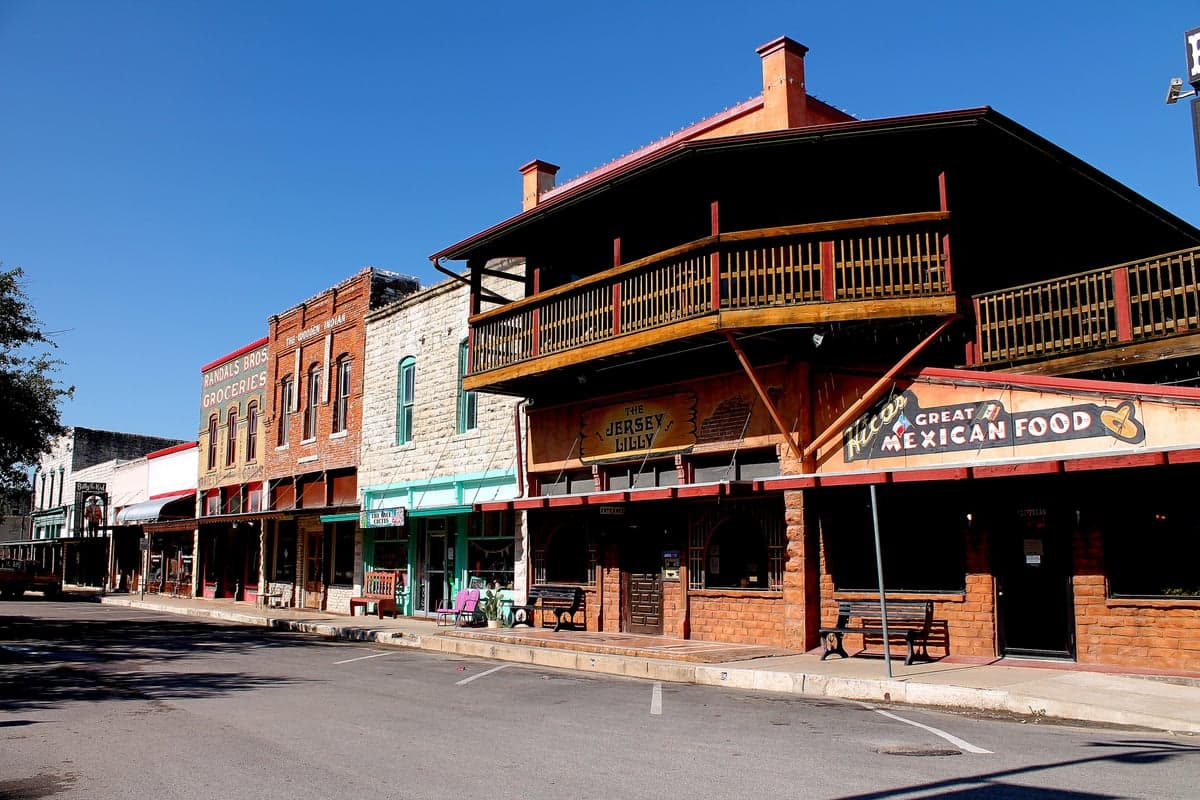
Hico, Texas, is a small Hamilton County community of roughly 1,806 residents whose identity is rooted in its Anglo-American pioneer heritage, with a modest but growing Hispanic presence. The city remains predominantly white (84.3%) and native-born, with a foreign-born share of just 4.4%, reflecting its rural, land-based economy and limited immigration pressure. Its distinctive markers are a strong Baptist-Protestant culture, a ranching and oil heritage, and a self-conscious preservation of its "Old West" character, including its famous claim as the final resting place of outlaw Billy the Kid.
How the city was settled and grew
Hico was founded in 1880 as a stop on the Gulf, Colorado and Santa Fe Railway, which drove the first major population wave of Anglo-American homesteaders from the Upper South and Midwest. The original settlers were drawn by cheap blackland prairie soil and open range for cattle, and they built the town's first commercial district along what is now Pecan Street and the surrounding blocks of the Old Town Hico neighborhood. A second wave arrived in the 1890s and 1900s as cotton farming expanded, filling the East Side Addition with tenant farmers and small merchants, while the West Hico area grew around the railroad depot with stockyards and feed stores. The discovery of oil in nearby Hamilton County in the 1910s brought a third, smaller wave of speculators and roughnecks, who settled in modest frame houses along the North Railroad Street corridor. By 1930, the population peaked near 2,500, and the city's ethnic character was almost entirely white, native-born Protestant, with a small number of Black families concentrated in the Southside Flats area near the old cotton gin.
Modern era (post-1965)
After the 1965 Hart-Cellar Act, Hico saw virtually none of the immigration waves that transformed larger Texas cities. The foreign-born share today is just 4.4%, and the city's East/Southeast Asian population is a negligible 0.3%, with no Indian-subcontinent residents recorded. Instead, the post-1965 story is one of domestic out-migration and selective in-migration. As cotton mechanization eliminated farm jobs, the population fell from its 1930 peak to under 1,500 by 1980, and the Old Town Hico district lost its commercial vitality. The modern era brought a slow trickle of retirees and telecommuters from the Dallas–Fort Worth metroplex, drawn by cheap land and the town's preserved 19th-century streetscape; these newcomers have concentrated in the newer Oak Ridge Estates subdivision on the city's north edge. The Hispanic share has grown from near zero in 1990 to 9.1% today, driven by a small number of migrant farmworker families who settled permanently in the Southside Flats and East Side Addition neighborhoods, working in the area's remaining cattle and hay operations. The Black population, at 5.6%, is largely descended from the original Southside Flats families and has remained stable in numbers but is aging, with younger Black residents leaving for larger cities.
The future
Hico's population is projected to remain stable or grow only slightly over the next decade, with the city's 19.6% college-educated rate and aging demographic profile suggesting continued out-migration of young adults. The Hispanic share is likely to continue its slow climb, potentially reaching 12–14% by 2040, as existing families grow and a few new migrant workers settle, primarily in the Southside Flats and East Side Addition areas. The white population will continue to age in place, with the Oak Ridge Estates and West Hico neighborhoods absorbing most new retirees and remote workers. The city's cultural identity is likely to remain firmly Anglo-Texan, with the Billy the Kid legend and the annual Hico Rodeo anchoring a heritage-tourism economy, but the growing Hispanic community is beginning to add a bilingual layer to local churches and the Hamilton County school system. The next 20 years will likely see a slightly more diverse, slightly older population, with the city's character defined less by new arrivals than by who stays and who leaves.
For someone moving to Hico today, the bottom line is that this is a stable, culturally conservative, and overwhelmingly native-born community where the past is a living presence. The population is not diversifying rapidly, and the city's future depends on retaining its existing families and attracting a modest stream of remote workers and retirees. Newcomers will find a place where the Old Town district is the social and commercial heart, where the Southside Flats and East Side Addition retain their historic working-class character, and where the pace of change is measured in decades, not years.

* Values derived from national, state, county, city and local statistics and may differ in a specific area. Last updated: 2026-10-28T12:01:16.000Z
Narrative content on this page is AI-generated and may contain mistakes. Verify any details that matter before acting on them.
ReloMaps may earn a commission from affiliate links at no extra cost to you.

