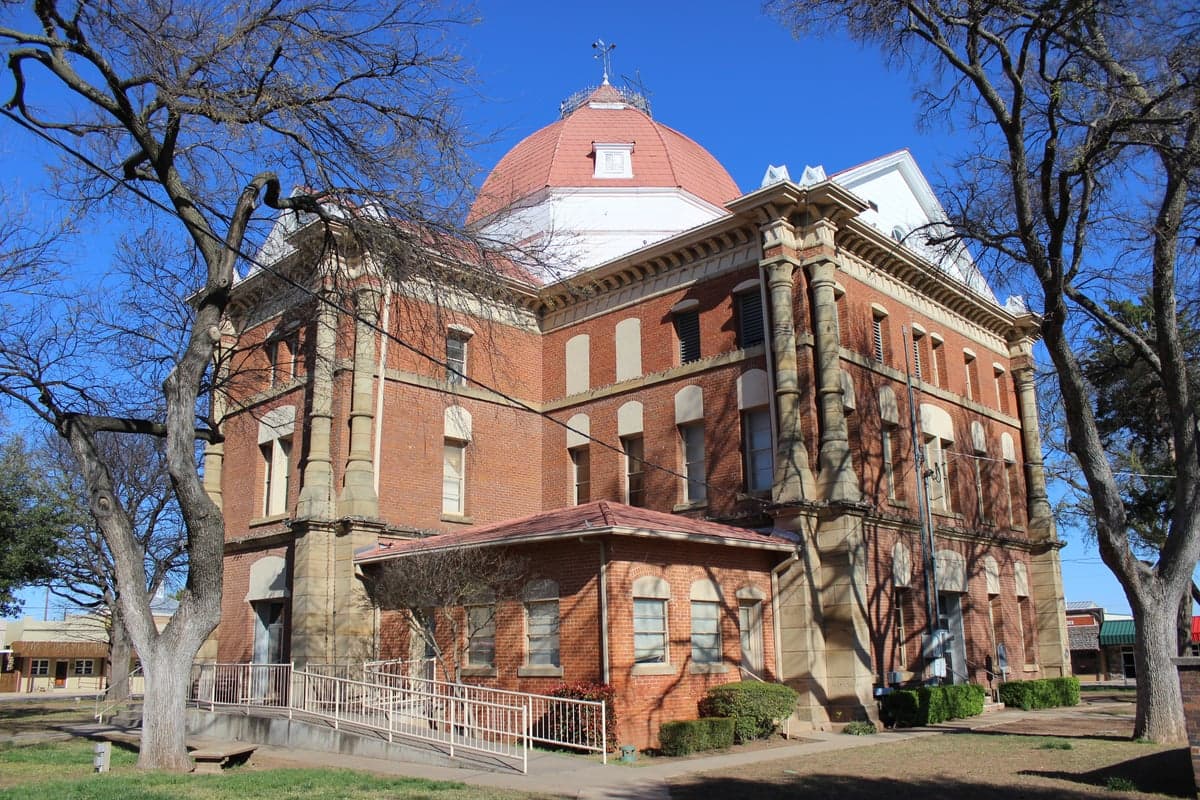
Photo: Wikipedia
Political ClimatePolitical Climate in Henrietta, TX
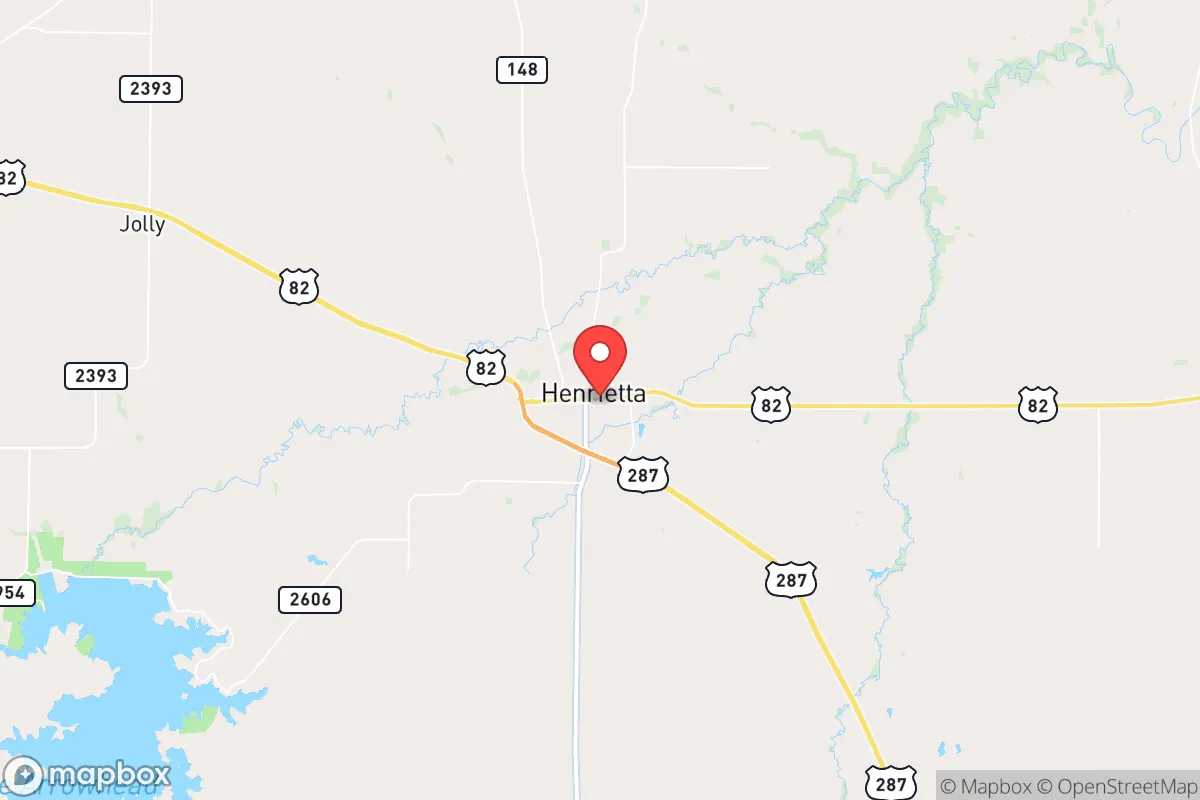
District shown is the primary district for this city’s centroid. Cities may span multiple districts.
Local Political AnalysisPolitical Analysis of Henrietta, TX
Henrietta is about as solidly Republican as a small Texas town gets, and it’s been that way for as long as anyone can remember. The Cook PVI for the area clocks in at R+24, which is a full 20 points more conservative than the state of Texas as a whole (R+4). In practical terms, that means in a typical election, you’re looking at a 70-75% Republican vote share here, while the state overall might be closer to 55-60%. The trajectory hasn’t budged much either—if anything, the rural parts of Clay County have gotten a little redder over the last decade as the suburbs of Dallas-Fort Worth have pushed the state’s overall politics slightly toward the center. Henrietta itself hasn’t followed that trend; it’s stayed deep red.
How it compares
Compared to Texas as a whole, Henrietta is a political outlier in the same way many small North Texas towns are. The state’s R+4 rating reflects a competitive balance in places like the Dallas suburbs, Harris County, and the I-35 corridor, where you’ll find a mix of libertarian-leaning independents, moderate Republicans, and a growing Democratic base. Henrietta doesn’t have any of that. The nearest city that offers a real political contrast is Wichita Falls, about 25 miles north, which leans Republican but with a slightly more moderate streak—think R+12 or so, thanks to a larger military and college population. Drive an hour south to the outer edges of the DFW metroplex, like Denton or even Decatur, and you’ll start seeing more split-ticket voting and younger, more diverse electorates. Here in Henrietta, the local Democratic Party is essentially nonexistent; you’d be hard-pressed to find a yard sign for a Democrat in a general election.
What this means for residents
For conservative residents, the political climate is comfortable and affirming. Local policy reflects their values: the county is a Second Amendment sanctuary, the school board leans traditional, and property taxes, while not low by Texas standards, are kept in check by a general distrust of government expansion. For liberal residents, the reality is more isolating. There’s no local Democratic club, no progressive advocacy group to speak of, and social conversations often assume a shared conservative worldview. That said, most folks here are neighborly in a live-and-let-live way—politics doesn’t come up at the grocery store unless you bring it up. The bigger practical effect is on representation: Henrietta’s voice in Austin and Washington is reliably conservative, so liberal residents won’t see their policy preferences reflected at any level of government.
Culturally, the political lean shows up in small but noticeable ways. The local newspaper, the Henrietta Independent, covers national politics sparingly, but when it does, the editorial stance is conservative. The annual Clay County Pioneer Reunion and Rodeo is a big deal here, and it’s the kind of event where you’ll see more American flags than campaign signs—patriotism is the shared language, not partisanship. Gun culture is strong but low-key; most people hunt or shoot recreationally, and the idea of restrictive gun laws is a non-starter. For someone moving here from a blue state or a purple city, the biggest adjustment wouldn’t be the voting booth—it’d be the quiet assumption that everyone around you thinks the same way about politics. That’s not hostile, but it can feel a little insular if you’re used to more ideological diversity in your daily life.

State Political ClimatePolitical Climate in Texas
State Political AnalysisPolitical Environment in the State
Texas has been a reliably Republican state for the past three decades, with a Cook Partisan Voting Index of R+4, but that label masks a dramatic and ongoing transformation. The state hasn't voted for a Democratic presidential candidate since Jimmy Carter in 1976, yet the margin of victory has shrunk from 16 points in 2012 to just under 6 points in 2020, driven by explosive growth in the urban crescent from Dallas-Fort Worth down through Austin to Houston and San Antonio. What you're really looking at is a state where the old solid-red coalition of rural conservatives and suburban moderates is being reshuffled by millions of new arrivals, creating a political environment that feels more competitive and unpredictable than at any point in the last 30 years.
Urban vs. rural divide
The political geography of Texas is brutally simple: the big cities are blue, the rural areas are deep red, and the suburbs are the battleground. The Democratic strongholds are concentrated in the major metros — Harris County (Houston) alone holds more Democratic voters than the entire state of Oklahoma, while Dallas County, Travis County (Austin), and Bexar County (San Antonio) consistently deliver margins of 15 to 40 points for Democrats. El Paso, isolated in the far west, is a reliably Democratic outpost. Meanwhile, the rural Panhandle around Lubbock and Amarillo, the East Texas piney woods, and the vast West Texas ranching counties routinely vote 70-80% Republican. The real story, though, is the suburbs: Collin County north of Dallas, once a Republican fortress, has shifted from +40 R in 2004 to about +15 R in 2024, while Fort Bend County southwest of Houston flipped to Democratic control in 2018 and hasn't looked back. The fast-growing exurbs like Comal County (north of San Antonio) and Montgomery County (north of Houston) remain deeply red, but they're absorbing so many new residents that their internal politics are becoming more contested at the local level.
Policy environment
Texas operates under a conservative policy framework that has been remarkably stable for decades, with no state income tax, weak labor unions, and a regulatory climate that prioritizes business expansion. Property taxes are high — among the top five in the nation — because there's no income tax to offset them, and the state relies heavily on sales tax and local property assessments to fund services. The education landscape is defined by school choice expansion, with the 2023 passage of a universal education savings account program that lets families use state funds for private or homeschool expenses, though it remains tied up in court challenges. Healthcare policy is marked by the state's refusal to expand Medicaid under the Affordable Care Act, leaving roughly 18% of the population uninsured, the highest rate in the country. Election laws have tightened significantly: the 2021 Senate Bill 1 restricted mail-in voting, added ID requirements, and limited drive-through and 24-hour voting options, changes that were justified as security measures and criticized as suppression by opponents. The state also maintains a permitless carry law for handguns, passed in 2021, and has some of the nation's strongest protections for property owners against eminent domain abuse.
Recent policy direction
The last five years have seen Texas lurch decisively to the right on cultural and social issues while maintaining its traditional pro-business posture. The 2021 abortion trigger law, which took effect after Dobbs, banned the procedure from conception with narrow exceptions, and the state has since passed laws creating a private enforcement mechanism that allows citizens to sue anyone who performs or aids an abortion. On gun rights, the 2021 permitless carry law eliminated the requirement for a license to carry a handgun in public, making Texas one of the largest states with constitutional carry. Parental rights in education were strengthened through the 2023 "Parental Bill of Rights," which requires schools to notify parents about curriculum changes and medical services, while the 2021 law restricting how race and gender can be taught in public schools has reshaped classroom discussions statewide. Property rights saw a boost with the 2023 law limiting the ability of homeowners associations to restrict certain uses of residential property, and the state has aggressively pursued water rights and mineral rights protections against federal overreach. On privacy and surveillance, Texas passed a 2023 law banning the use of facial recognition technology by government agencies without a warrant, and the 2024 age verification law for adult websites has been challenged in court as a free speech issue. Voting access remains a flashpoint: the 2021 election law overhaul added new ID requirements for mail ballots and banned 24-hour polling places, while the state has also passed laws making it easier to challenge voter registrations, a move that has drawn both praise for integrity and criticism for potential intimidation.
Civil unrest & political movements
Texas has been a stage for some of the most visible political confrontations in the country over the past decade. The 2020 protests in Austin over police brutality drew tens of thousands of demonstrators and led to a city council vote to cut the police budget, which was later partially restored after a backlash. The border politics of the state have become a national flashpoint: Governor Greg Abbott's Operation Lone Star, launched in 2021, deployed state troopers and National Guard to the border, bused migrants to Democratic-led cities, and installed razor wire and buoys in the Rio Grande, leading to ongoing legal battles with the Biden administration. The "secession" rhetoric, while not a serious political movement, has been a recurring theme — the Texas Nationalist Movement has pushed for a referendum on independence, but polling consistently shows support below 20%. Election integrity controversies have been intense: the 2020 and 2022 cycles saw widespread claims of fraud from Republican activists, though no court cases have proven systemic issues, and the state's 2021 law was a direct response to those concerns. Immigration politics dominate daily life in border cities like El Paso and Brownsville, where residents navigate a constant federal-state tension, while interior cities like Dallas and Houston have seen sanctuary city debates that have largely been resolved in favor of local cooperation with federal authorities.
Projection
Over the next five to ten years, Texas is likely to become more politically competitive at the statewide level while remaining firmly Republican in its legislative and policy direction. The demographic trends are clear: the state is growing by about 1,000 people per day, and a significant portion of those new arrivals are coming from blue states like California and New York, bringing more moderate or liberal voting habits. The Hispanic population, which makes up about 40% of the state, is not monolithic — South Texas border counties that once voted 60-70% Democratic have shifted 10-15 points toward Republicans since 2016, while urban Hispanic voters in Houston and Dallas remain solidly Democratic. The suburban shift toward Democrats that accelerated after 2016 appears to have plateaued, but the underlying demographic changes — younger, more diverse, more educated — suggest continued pressure on Republican margins in the suburbs. The state's political leadership is likely to remain conservative, but the margin of control will narrow, forcing Republicans to either moderate on some issues or rely on increasingly aggressive gerrymandering and voting restrictions to maintain power. A new resident moving in today should expect a state that remains culturally and politically conservative at the state level, but where local politics vary dramatically — a move from Austin to Lubbock is a move between two different countries politically, and that gap is only widening.
For someone relocating to Texas, the practical takeaway is that your day-to-day political experience will depend almost entirely on where you land. If you're conservative, you'll find a state government that reflects your values on taxes, guns, education, and regulation, and you'll be able to live in suburbs or rural areas where those views are the overwhelming norm. If you're liberal, you'll find vibrant, growing cities where your politics are the majority at the local level, but you'll be living under a state government that is actively hostile to many of your priorities — and that tension is unlikely to change soon. The bottom line is that Texas is a big, diverse, and politically dynamic state where the only safe prediction is that the next decade will look different from the last one, and the direction of that change is still being written by the people moving in right now.
* Values derived from national, state, county, city and local statistics and may differ in a specific area. Last updated: 2026-08-04T15:41:15.000Z
Narrative content on this page is AI-generated and may contain mistakes. Verify any details that matter before acting on them.
ReloMaps may earn a commission from affiliate links at no extra cost to you.

