Photo: Wikipedia
Demographics of Henrietta, TX
Affluence Level in Henrietta, TX
A middle-class area roughly in line with national averages across income, home values, education, and employment.
People of Henrietta, TX
The people of Henrietta, Texas, today number 3,143, forming a predominantly White (85.0%) community with a small but established Hispanic population (6.2%) and a notable East/Southeast Asian presence (2.1%) for a town of its size in North Texas. The city’s foreign-born share is exceptionally low at 0.9%, reflecting a population that is overwhelmingly native-born and multigenerational. Henrietta’s identity is rooted in its role as the Clay County seat, with a character that blends agricultural heritage with a steady, family-oriented civic life centered on the courthouse square and local schools.
How the city was settled and grew
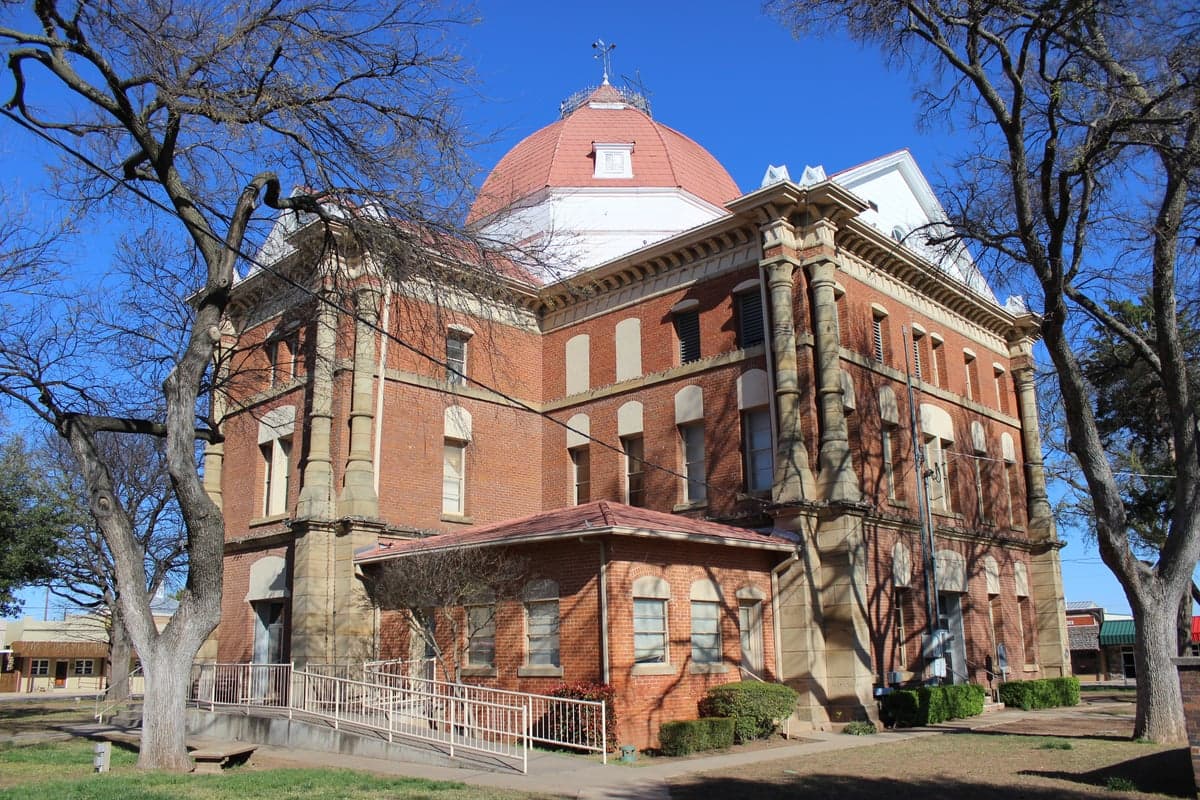
Henrietta was founded in 1857 as the county seat of Clay County, named after the wife of a railroad official. The original settlers were primarily Anglo-American farmers and ranchers drawn by the fertile bottomlands of the Red River and the promise of land grants under Texas’s preemption laws. The arrival of the Fort Worth and Denver City Railway in 1882 transformed Henrietta into a regional shipping hub for cotton, cattle, and grain, attracting a wave of merchants, blacksmiths, and laborers. The historic Courthouse Square district became the commercial and social heart of the town, built by these early Anglo settlers and their descendants. A small but distinct African American community formed in the South Henrietta neighborhood, centered around the area near present-day Highway 287, where Black families worked as farmhands, railroad laborers, and domestic workers. By the early 1900s, a modest influx of Mexican laborers arrived to work the cotton fields and railroad maintenance yards, settling in what became known as Barrio Chico, a small enclave along the railroad tracks on the town’s west side. The population peaked around 3,500 in the 1920s and then stabilized, as the agricultural economy mechanized and younger generations began moving to larger cities.
Modern era (post-1965)
After the 1965 Immigration and Nationality Act, Henrietta saw very little direct immigration. The foreign-born share remains below 1%, and the town did not experience the post-1965 diversification seen in larger Texas cities. Instead, the modern demographic story is one of domestic stability and slow suburbanization. The Northside addition, developed in the 1970s and 1980s, attracted middle-class families—overwhelmingly White—seeking newer homes on larger lots, drawing population away from the older Courthouse Square district. The Hispanic population, which had been concentrated in Barrio Chico, began dispersing into other parts of town by the 1990s, though the neighborhood still retains a cultural anchor in the form of a small Catholic mission. The Black population, which was never large, declined from roughly 8% in 1950 to 3.1% today, as many families moved to Wichita Falls or the Dallas-Fort Worth metroplex for broader economic opportunities. The East/Southeast Asian community (2.1%) is a very recent phenomenon, largely composed of a handful of families who moved to Henrietta for work at the Clay County Memorial Hospital or at nearby manufacturing plants in Wichita Falls; they are scattered across newer subdivisions like Oak Creek Estates rather than forming a distinct ethnic enclave.
The future
Henrietta’s population is projected to remain stable or grow very slowly, with the Texas Demographic Center estimating a modest increase to roughly 3,300 by 2040. The population is becoming slightly more diverse, driven primarily by natural increase among the Hispanic community and the slow in-migration of East/Southeast Asian professionals in healthcare and education. The White share is expected to decline gradually from 85% toward the low 80s, but the town will remain overwhelmingly non-Hispanic White for the foreseeable future. New residential development is concentrated in the East Henrietta corridor along Highway 82, where a few small subdivisions are attracting families from Wichita Falls seeking lower property taxes and a quieter lifestyle. The cultural identity of Henrietta is evolving from a purely agricultural community toward a bedroom-community role for Wichita Falls and, to a lesser extent, the Dallas-Fort Worth exurbs. The Courthouse Square district is seeing a modest revitalization with locally owned shops and a brewery, but the town’s social fabric remains deeply rooted in church, school, and county fair traditions.
For someone moving in now, Henrietta offers a stable, low-diversity community with a strong sense of local identity and very low crime. The population is aging slightly—the median age is 41—but the school system and new subdivisions are drawing younger families. The town is not becoming a multicultural hub, but it is slowly absorbing a thin layer of professional diversity. New residents will find a place where neighbors know each other, the pace is slow, and the biggest change in the last fifty years has been the arrival of a Dollar General and a new gas station on the highway.

* Values derived from national, state, county, city and local statistics and may differ in a specific area. Last updated: 2026-08-04T15:41:15.000Z
Narrative content on this page is AI-generated and may contain mistakes. Verify any details that matter before acting on them.
ReloMaps may earn a commission from affiliate links at no extra cost to you.

