Photo: Wikipedia
Political ClimatePolitical Climate in Helotes, TX
District shown is the primary district for this city’s centroid. Cities may span multiple districts.
Local Political AnalysisPolitical Analysis of Helotes, TX
Helotes sits at roughly R+7 in the Cook Partisan Voting Index, making it a reliably conservative enclave on San Antonio's northwest edge — noticeably redder than Bexar County as a whole, which has drifted toward Democrats in recent cycles, but not as deep-red as the Hill Country towns further out like Boerne or Bulverde. The city's politics have tracked its growth: what was a small German-heritage community of a few thousand in the 1990s is now a suburb of roughly 10,000, and each new subdivision off Bandera Road and Scenic Loop has added a mix of San Antonio transplants, military families tied to Joint Base San Antonio–Lackland, and longtime residents who remember when Helotes was mostly farmland and the Old Town festival drew the whole county.
How it compares to Texas overall
Texas has no single Cook PVI rating because the index is calculated for jurisdictions that report presidential results as a unit — the state's size and diversity make one number misleading. In practice, Helotes' R+7 puts it in the same band as many suburban Texas cities that vote comfortably Republican at the local level while splitting tickets further up the ballot. Compare it to its neighbors: Boerne and the rest of Kendall County vote considerably more Republican, while San Antonio proper — just a few miles south — is solidly Democratic and sends Democrats to Congress and the Legislature. Helotes sits in the middle of that gradient, which is exactly why local races here often feel less ideological than the state-level contests above them.
What this means for residents
For conservative residents, Helotes' lean means local government — City Council, the mayor's office, zoning and development decisions — generally reflects small-government, low-density instincts, and the city has a history of resisting aggressive annexation and dense development. For liberal residents, the practical reality is that Helotes is a place where you can live comfortably but where your vote at the local level rarely decides outcomes; the more meaningful political action tends to happen at the county and state level, or in San Antonio races if you're close to the city limits. Either way, the day-to-day political texture here is less about national fights and more about growth: traffic on Bandera Road, water and utility capacity, school bond elections in Northside ISD, and how much commercial development Old Town can absorb without losing its character.
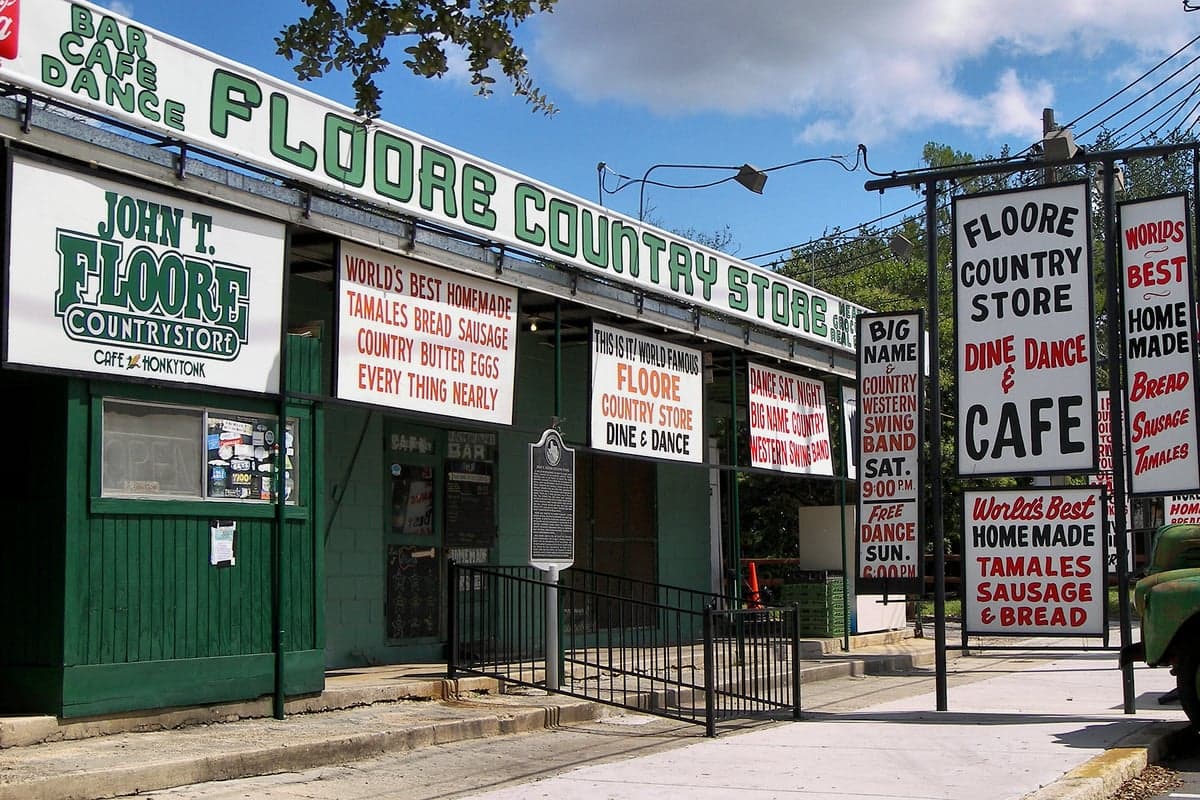
The cultural distinction worth knowing: Helotes has long cultivated an identity as a small town with a strong civic streak — the annual Cornyval festival, the John T. Floore's Country Store music venue that has hosted everyone from Willie Nelson to Texas country up-and-comers, and a general suspicion of anything that feels like San Antonio creeping north. That identity cuts across party lines more than people expect. Looking ahead, the trajectory is likely continued Republican lean at the local level, but with a slowly narrowing margin as younger families and San Antonio commuters move in — the same pattern playing out in suburbs across Texas. The near-term reality is stability; the long-term question is whether Helotes can keep its small-town political culture intact as the growth that made it attractive keeps arriving.

State Political ClimatePolitical Climate in Texas
State Political AnalysisPolitical Environment in the State
Texas is a Republican-leaning state that has not elected a Democrat to statewide office since 1994, and Donald Trump carried it by roughly 5.6 points in 2024 — the closest presidential margin in the state since 1996, down from a 9-point spread in 2012 and 16 points in 2004. The coalition that keeps it red is a durable one: rural and exurban voters, white evangelicals, the fast-growing suburbs of Dallas–Fort Worth and Houston, plus a meaningful share of Hispanic voters in South Texas and the Rio Grande Valley. The long arc is less "safe red state" than "red state with a narrowing but real buffer," and the last three cycles have made that distinction the central fact of Texas politics.
Urban vs. rural divide: which metros pull which way
The map splits cleanly along metro lines. Austin (Travis County) and Houston (Harris County) are the Democratic engines, with Harris flipping blue in 2016 and staying there; Dallas County has voted Democratic in every presidential race since 2008. El Paso is reliably blue and heavily Hispanic. San Antonio's Bexar County is competitive but leans Democratic. Against that, the Republican base is the small cities and open country — Lubbock, Amarillo, Abilene, Tyler, Waco, and the entire Panhandle and East Texas piney woods — where margins of 40-plus points are routine. The real battleground is the suburbs: Collin County (Plano, Frisco, McKinney) and Denton County north of Dallas, and Fort Bend County southwest of Houston, are among the fastest-growing counties in America and have been trending Democratic at the top of the ticket even as down-ballot Republicans hold on. Fort Bend is now one of the most politically competitive counties in the state. The practical read: the cities and inner suburbs are blue, the exurbs and everything beyond are deep red, and the fight is over the ring in between.
Policy environment: taxes, regulation, schools, and health care
Texas has no state income tax, funding government through a 6.25% state sales tax (up to 8.25% with local add-ons) and one of the highest property tax burdens in the country — though the 2023 legislature passed a major homestead exemption increase and rate compression that has eased the pinch for many homeowners. The regulatory posture is light by national standards, which is a large part of why California companies keep relocating to Austin, Dallas, and Houston. On education, the state runs a large public system plus a robust charter sector, and the 2023–2025 sessions pushed toward education savings accounts (school vouchers), a long-sought conservative priority. Health care is a mixed picture: Texas has not expanded Medicaid under the Affordable Care Act, giving it the highest uninsured rate in the nation, which matters for anyone weighing employer-based coverage. Election law tightened after 2021's SB 1, which added ID requirements for mail ballots and new restrictions on assistance to voters.
Recent policy direction: the laws a relocator should actually know
The last several sessions have moved Texas decisively in a socially conservative direction, and the specifics matter more than the label. On guns and self-defense, permitless carry (HB 1927, 2021) lets most adults carry a handgun without a license, and the state has no waiting period. On parental and education rights, the state has restricted instruction on gender and sexuality in early grades and expanded parental review of curriculum and library materials. On abortion, the 2022 trigger law bans the procedure with narrow medical exceptions, and subsequent legislation has pushed to restrict travel and medication access — the single most consequential policy divide for many movers. On immigration enforcement, SB 4 (2023) attempted state-level arrest authority for illegal entry, though it has been tied up in federal courts. On voting, SB 1 and later audits have tightened procedures. On property rights, the state has moved to limit local zoning and permitting overreach, and on speech and privacy, Texas has been active in suing social media platforms over content moderation while also passing data-privacy legislation. The through-line: lower taxes and lighter business regulation paired with active social conservatism.
Civil unrest and political movements
Texas has visible, organized politics on both sides. The right is anchored by the Texas GOP's biennial platform — which has at times included calls for a referendum on secession — and by figures like Governor Greg Abbott, Attorney General Ken Paxton, and Lieutenant Governor Dan Patrick, who have made immigration enforcement and election integrity signature issues. The left is concentrated in Austin, where protests over abortion, gun policy, and immigration are routine, and in the organizing networks around Beto O'Rourke's near-miss 2018 Senate run. Immigration is the most visible flashpoint: Operation Lone Star has put state troopers and National Guard along the border, and busing of migrants to northern cities has kept the issue in national headlines. Local "sanctuary" policies are effectively barred — the 2017 SB 4 law requires local cooperation with federal immigration enforcement. A new resident will notice the politics most in Austin's activist culture, in border-region tension, and in the omnipresence of election-season advertising.
Projection: what the next decade looks like
The realistic trajectory is continued Republican control of statewide offices with a shrinking buffer. In-migration is the wild card: the people moving to Texas for jobs and lower taxes skew somewhat conservative, which helps the GOP, but the state's Hispanic population growth and the diversification of suburbs like Fort Bend and Collin County pull the other way. Expect the suburbs to keep deciding statewide races, expect the Legislature to stay socially conservative on abortion and education, and expect property tax relief and school choice to remain the dominant fiscal fights. A Democratic statewide win by the mid-2030s is plausible but not the base case; a competitive, expensive, turnout-driven state is the base case.
For a new resident, the bottom line is that Texas delivers low taxes, light regulation, and strong job growth alongside a conservative social and legal climate that is not going to soften soon. If you lean right, you will find the policy environment broadly aligned and the culture comfortable outside the urban cores. If you lean left, you can find like-minded communities in Austin, Houston, Dallas, and El Paso, but you should go in clear-eyed about abortion law, gun law, and the uninsured rate. Either way, pick your county deliberately — the difference between Collin County and a rural county 90 minutes away is larger than the difference between most states.
* Values derived from national, state, county, city and local statistics and may differ in a specific area. Last updated: 2026-11-03T01:41:49.000Z
Narrative content on this page is AI-generated and may contain mistakes. Verify any details that matter before acting on them.
ReloMaps may earn a commission from affiliate links at no extra cost to you.

