Photo: Wikipedia
Political ClimatePolitical Climate in Haslet, TX
District shown is the primary district for this city’s centroid. Cities may span multiple districts.
Inherited from parent state — no local data available.
Local Political AnalysisPolitical Analysis of Haslet, TX
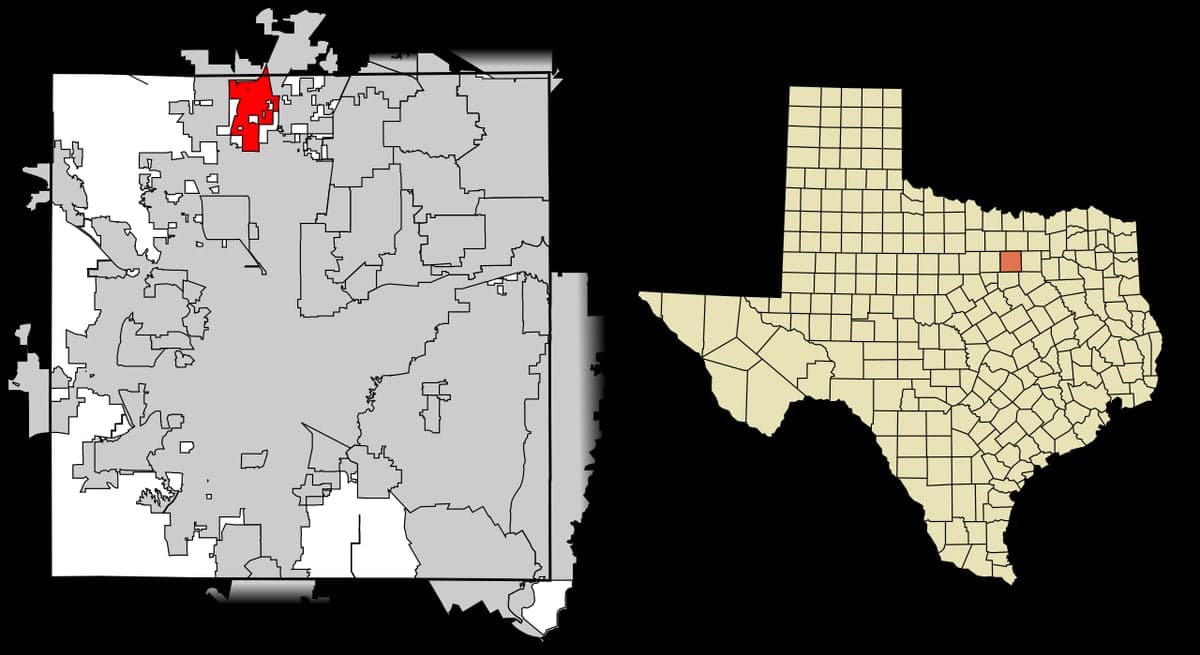
Haslet, Texas, leans solidly conservative, reflecting the broader political character of the fast-growing corridor between Fort Worth and the Texas Motor Speedway. The town sits in Tarrant County, which has been trending purple in recent cycles—Trump won it by just 2 points in 2020 after a 9-point margin in 2016—but Haslet itself remains a reliably red pocket. You won't find much political hand-wringing at the local coffee shop; the community's growth has been driven by families and commuters who value low taxes, space, and a hands-off government approach. If you're looking for a place where the Fourth of July parade is a bigger deal than any campaign sign, that's Haslet.
How it compares
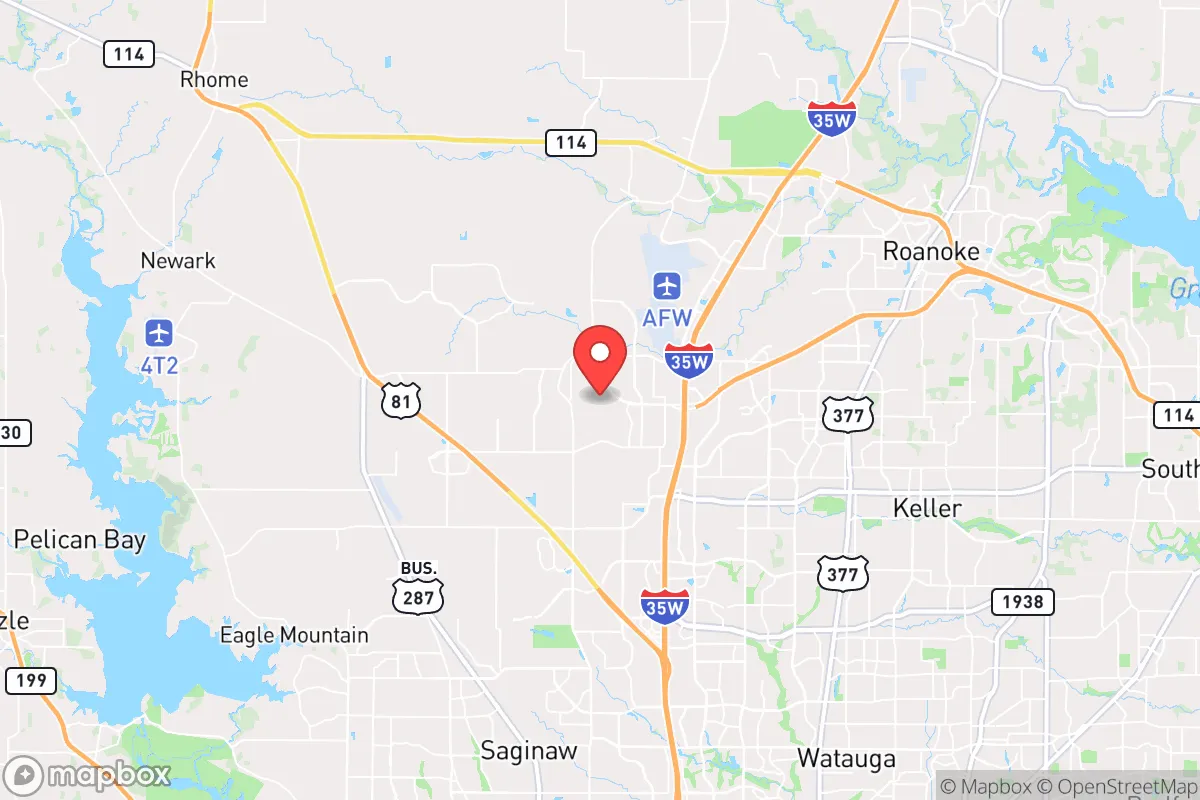
Compared to Texas as a whole, Haslet is more uniformly conservative than the state's urban centers but less intensely partisan than the deep-red rural counties to the west. The Cook PVI for Texas is not calculated at the state level, but statewide results give a clear picture: in 2024, Trump carried Texas by roughly 14 points. Haslet's precincts typically run 10 to 15 points more Republican than that, putting it in line with suburbs like Keller and Southlake. Drive 15 minutes east into Fort Worth proper, and you'll hit precincts that vote Democratic by double digits. Head west into Wise County, and you'll find even deeper red territory where Democratic candidates barely register. Haslet sits in that comfortable middle ground—conservative but not isolated, with enough proximity to a major city to keep things from feeling like a political bubble.
What this means for residents
For conservative residents, Haslet offers a local government that aligns with their values without much friction. The city council and school board races tend to be low-drama affairs, and tax policy stays focused on keeping rates competitive with neighboring suburbs. For liberal residents, the reality is more about finding your people in nearby Fort Worth or Denton, both of which have active Democratic clubs and progressive community groups. You won't face hostility in Haslet—most folks are neighborly regardless of party—but you'll likely drive 20 minutes for a candidate meet-and-greet that matches your politics. The practical upshot is that local policy stays predictable: zoning favors single-family homes, the police department is well-funded, and there's little appetite for new social programs or density-boosting development.
One cultural distinction worth noting: Haslet's rapid growth has brought in newcomers from blue states, which has nudged the local conversation slightly. You'll hear more talk about traffic management and school capacity than about national politics. The town's identity is still rooted in its agricultural past—the annual Haslet Founders Day celebration draws a crowd that's more interested in barbecue than ballot boxes. For the foreseeable future, expect Haslet to remain a reliably conservative suburb where the biggest political fights are about road bonds and water rates, not culture wars.

State Political ClimatePolitical Climate in Texas
State Political AnalysisPolitical Environment in the State
Texas has been a solidly Republican state for the past three decades, but the margin has been shrinking. In 2024, Donald Trump carried the state by about 9 points, down from 11 points in 2020 and 16 points in 2012. The dominant coalition remains a mix of rural conservatives, suburban moderates, and evangelical voters, but explosive growth in the urban crescent—from Dallas-Fort Worth down through Austin to San Antonio and Houston—is steadily shifting the electorate. The state is not flipping blue anytime soon, but it is becoming more competitive, especially in the suburbs that once anchored Republican dominance.
Urban vs. rural divide
The political map of Texas is a study in contrasts. The big metros—Houston, Dallas, San Antonio, and especially Austin—vote reliably Democratic. In 2024, Harris County (Houston) went for Kamala Harris by about 15 points, while Travis County (Austin) gave her a 40-point margin. Meanwhile, the vast rural stretches of West Texas, the Panhandle, and East Texas are deeply Republican. Lubbock County voted +40 for Trump, and rural counties like Hemphill and Roberts in the Panhandle routinely deliver 90% Republican margins. The real battleground is the suburbs. Collin County (north of Dallas) was once a Republican stronghold but has shifted from +30 in 2012 to about +12 in 2024. Fort Bend County (southwest of Houston) flipped to Biden in 2020 and stayed blue in 2024. The political future of Texas will be decided in places like Frisco, McKinney, and Sugar Land—fast-growing, diverse suburbs where educated professionals are pulling the state toward the center.
Policy environment
Texas has no state income tax, which remains the single biggest policy draw for relocators. The trade-off is higher property taxes and a heavy reliance on sales tax. The regulatory posture is famously business-friendly, with minimal zoning in many cities and a right-to-work labor environment. On education, the state funds schools largely through local property taxes, leading to wide disparities between wealthy and poor districts. The school voucher debate is ongoing; in 2023, Governor Greg Abbott pushed a private school choice bill that failed in the House but is expected to return. Healthcare policy is defined by the state's refusal to expand Medicaid under the Affordable Care Act, leaving roughly 1.5 million Texans in the coverage gap. Election laws tightened after 2020 with Senate Bill 1, which added ID requirements for mail-in voting and restricted drive-through and 24-hour voting options. The state also has some of the strictest abortion laws in the country, with a near-total ban after six weeks and no exceptions for rape or incest.
Recent policy direction
The last few legislative sessions have pushed Texas sharply to the right on several fronts. In 2021, the state passed permitless carry (HB 1927), allowing most adults to carry a handgun without a license or training. In 2023, the legislature banned gender-affirming care for minors (SB 14) and passed a law requiring public school libraries to remove books deemed "sexually explicit" (HB 900). On property rights, Texas has strong eminent domain protections, but the lack of statewide zoning means local control varies wildly. Privacy and surveillance are relatively light—there is no state-level data privacy law comparable to California's, though a Texas Data Privacy and Security Act was signed in 2023 with a narrower scope. On voting, the state has added more polling places in rural areas while reducing them in some urban counties, a trade-off that has drawn lawsuits. The overall direction is toward more parental control in education, fewer gun restrictions, and a continued hands-off approach to business regulation.
Civil unrest & political movements
Texas has seen its share of political flashpoints. The 2020 protests in Austin over George Floyd's death were among the largest in the country, and the city's police budget became a recurring local fight. On the right, the "constitutional sheriff" movement has gained traction in rural counties, with sheriffs in places like Smith County and Montgomery County publicly refusing to enforce certain state or federal gun laws. Immigration remains the hottest-button issue. The state launched Operation Lone Star in 2021, deploying state troopers and National Guard to the border, and busing migrants to Democratic-led cities like New York and Chicago. Governor Abbott has also pushed for a state-level immigration enforcement law (SB 4) that would allow Texas police to arrest people suspected of entering the country illegally—currently tied up in court. Secession talk flares up periodically, especially after contentious federal elections, but it remains fringe rhetoric with no serious legislative movement. Election integrity controversies have been persistent since 2020, with Republican officials in counties like Harris and Tarrant facing pressure from activists to audit results, though no widespread fraud has been found.
Projection
Over the next five to ten years, Texas will continue to trend purple, but the shift will be slow and uneven. The in-migration from California and other blue states is real—about 1,000 people move to Texas per day—but many of them are conservatives or moderates fleeing high taxes and crime, not progressive activists. The suburbs will be the key: if places like Collin County and Fort Bend County continue their leftward drift, statewide races will become genuinely competitive. However, the rural vote is not shrinking as fast as some assume, and the state's Republican legislature is likely to keep drawing congressional maps that protect incumbents. A new resident moving in now should expect a state that remains conservative on fiscal and cultural issues but is increasingly divided along geographic and demographic lines. The political fights will get louder, but the fundamental policy direction—low taxes, light regulation, and cultural conservatism—is unlikely to change dramatically in the next decade.
For someone relocating to Texas, the practical takeaway is this: your experience of the state's politics will depend heavily on where you live. In Austin or Houston, you'll find a blue city with progressive local policies and a vocal activist scene. In Lubbock or Tyler, you'll find a deeply conservative community where the state's Republican tilt feels natural. The suburbs are the middle ground, where politics is becoming more contested and where the state's future is being written. If you're conservative, you'll find a state that largely aligns with your values and is actively legislating in that direction. If you're liberal, you'll find strongholds of like-minded people and a state government that often feels adversarial, but also a growing political movement that is slowly gaining ground. Either way, Texas rewards those who know their local landscape.
* Values derived from national, state, county, city and local statistics and may differ in a specific area. Last updated: 2026-10-29T12:43:11.000Z
Narrative content on this page is AI-generated and may contain mistakes. Verify any details that matter before acting on them.
ReloMaps may earn a commission from affiliate links at no extra cost to you.

