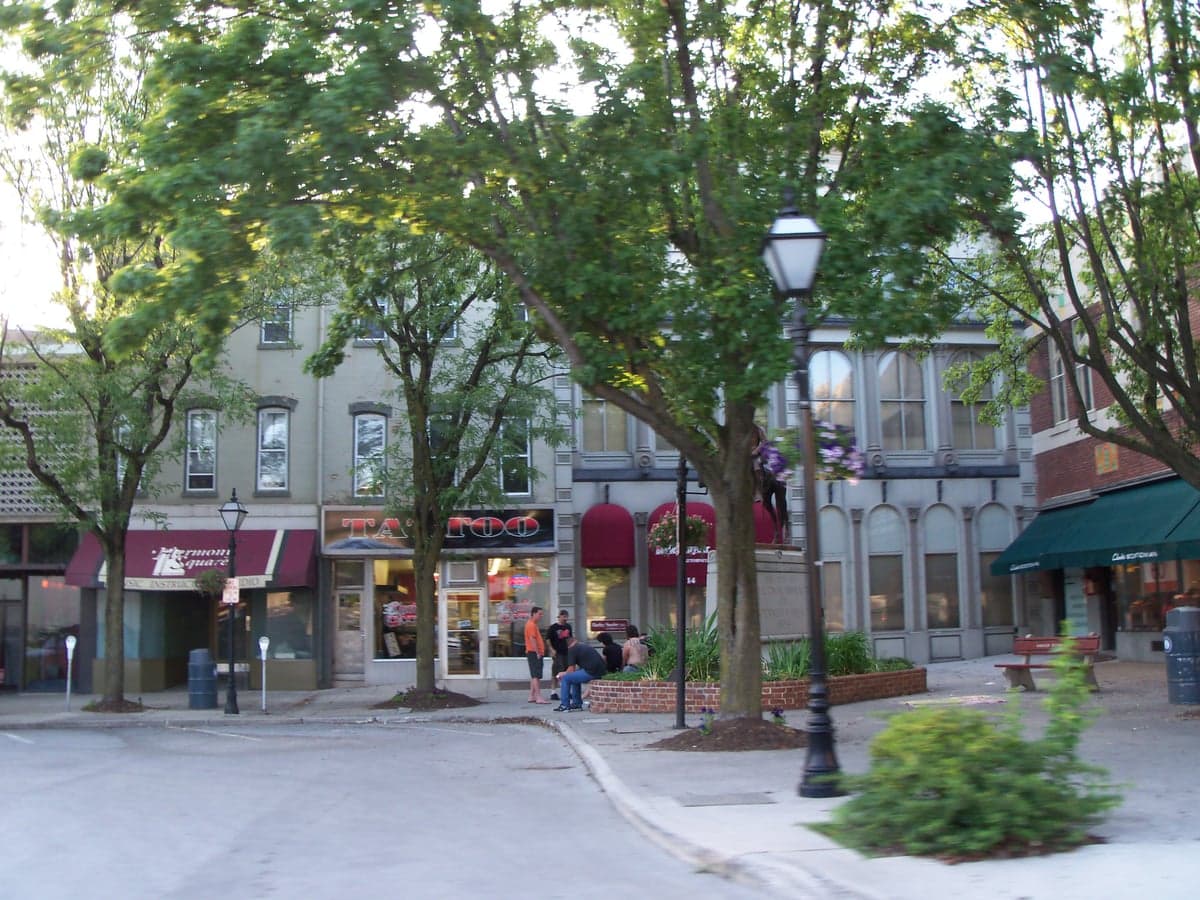
Photo: Wikipedia
Political ClimatePolitical Climate in Hanover, PA
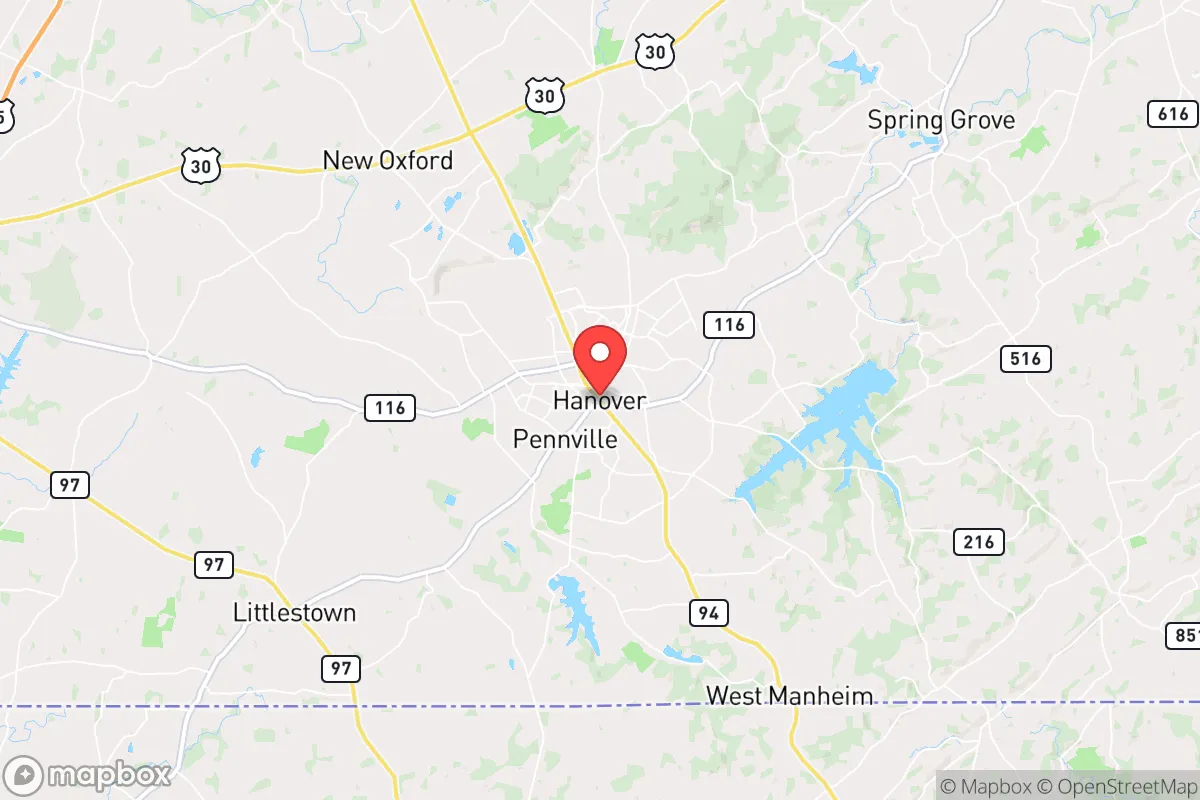
District shown is the primary district for this city’s centroid. Cities may span multiple districts.
Local Political AnalysisPolitical Analysis of Hanover, PA
Hanover, Pennsylvania, sits solidly in the red column, with a Cook PVI of R+11 that reflects a deeply rooted conservative tradition. This isn't a place that flips on a dime; the area has long been a stronghold for folks who value personal responsibility, limited government, and the right to live your life without a bunch of bureaucratic red tape. While you'll see some shifts in the bigger towns nearby, Hanover itself has held the line, and most of us who've been around a while see that as a good thing.
How it compares
Drive 20 minutes east to York, and you'll feel a different political breeze—it's more of a purple-to-blue tilt, especially in the city proper, where progressive policies on things like zoning and local taxes have crept in. Head west to Gettysburg, and you get a mix, with the college crowd pushing a more liberal agenda, but the surrounding Adams County still leans conservative. Hanover, though? It's the anchor. We don't have the same pressure from big-city transplants or university activism. Our politics are more about common-sense local governance—keeping property taxes reasonable, protecting Second Amendment rights, and pushing back on state-level mandates that feel like overreach. The contrast is stark: while York debates things like sanctuary city policies or new bike lanes that nobody asked for, Hanover's council meetings are about keeping the streets safe and the budget balanced.
What this means for residents
For the folks living here, the R+11 lean translates into a daily life with fewer headaches from government overreach. You're not going to see the kind of zoning fights or mask mandates that plague more progressive areas. The local school board, for instance, has been pretty good about keeping curriculum focused on fundamentals and parental rights, not pushing social experiments. Property taxes are manageable compared to what you'd pay in York County's more liberal pockets, and there's a general trust that your local reps aren't going to sell you out to some state or federal agenda. That said, we're not immune to the national trends—you'll see some younger families moving in from places like Baltimore or D.C., and they sometimes bring ideas about "equity" or "inclusion" that sound nice on paper but usually mean more rules and higher costs. The long-term concern is that if we don't stay vigilant, those outside influences could chip away at the freedoms we've taken for granted.
Culturally, Hanover still feels like a place where your word is your bond and the community looks out for each other without needing a government program to do it. The big policy distinction here is a strong resistance to any kind of regional consolidation—like merging school districts or sharing tax bases with more liberal areas. We've seen what that does to places like Harrisburg, and nobody wants that. The vibe is: we'll handle our own problems, thank you very much. If you're looking for a place where you can run a small business without a dozen permits, keep your kids out of ideological fights in the classroom, and not have the government breathing down your neck about how you heat your home or what you drive, Hanover is still that spot. But keep an eye on the next few election cycles—if the progressive wave that's washing over the rest of the state starts lapping at our doorstep, we'll need to push back harder than ever.

State Political ClimatePolitical Climate in Pennsylvania
State Political AnalysisPolitical Environment in the State
Pennsylvania is a true battleground state, and if you’re looking at it from a conservative perspective, the picture is mixed. The state leans slightly Democratic in statewide elections—think 2020 where Biden won by just over 80,000 votes out of nearly 7 million cast—but its political soul is deeply divided. Over the last 20 years, the old industrial strongholds have been shifting: Philadelphia and its suburbs have become reliably blue, while the vast rural and exurban areas have hardened into red. The result is a state that feels like two different countries, and the trajectory over the last decade has been one of slow, grinding polarization, with the conservative vote concentrated in the middle and west, but losing ground in the southeast.
Urban vs. rural divide
The political map of Pennsylvania is a textbook case of the urban-rural split. Philadelphia and its collar counties—Montgomery, Delaware, Chester, and Bucks—are the engine of the Democratic vote. In 2020, Philadelphia County alone gave Biden over 600,000 votes, more than the entire Republican margin in many rural counties combined. Meanwhile, the vast interior is solidly Republican. Lancaster County, once a swing area, now votes +15 to +20 points Republican. York and Adams counties are similarly red. The real battlegrounds are the old industrial towns like Erie, Scranton, and Allentown—places that were once union Democrat but have drifted right on cultural issues. Erie County flipped from Obama to Trump in 2016 and then back to Biden in 2020, showing just how volatile these areas are. The Pittsburgh metro area is a microcosm: Allegheny County is blue, but the surrounding counties—Westmoreland, Butler, Washington—are deep red. If you’re a conservative looking for like-minded neighbors, you’ll find them in the central and western parts of the state, but you’ll be living in a state where the cities control the legislature and the governor’s mansion more often than not.
Policy environment
Pennsylvania’s policy environment is a mixed bag for conservatives. The state has a flat income tax of 3.07%, which is relatively low and hasn’t changed much, but property taxes are among the highest in the nation—averaging around 1.5% of home value. There’s no sales tax on groceries or clothing, but the state sales tax is 6%. On regulation, Pennsylvania is not a free-market paradise. It has a strong regulatory posture on energy, especially natural gas drilling in the Marcellus Shale, where the state imposes an impact fee that has been criticized as a de facto tax. Education policy is a flashpoint: the state has a massive funding disparity between wealthy suburban districts and rural ones, and the governor has pushed for more state control. Election laws are a sore spot for conservatives. The state’s mail-in voting law, Act 77, was passed with bipartisan support in 2019 but has been a source of controversy ever since, with no voter ID requirement for mail ballots. The state Supreme Court, which is Democratic-controlled, has issued several rulings that conservatives see as overreach, including extending the mail ballot deadline in 2020. Healthcare is heavily regulated, with the state expanding Medicaid under the Affordable Care Act and maintaining a strong insurance mandate. For a conservative, the policy environment feels like a tug-of-war: low taxes in some areas, but high property taxes and a regulatory state that often leans left.
Trajectory & freedom
On the freedom front, Pennsylvania is trending in a concerning direction for conservatives. The biggest flashpoint is the Second Amendment. In 2022, the state legislature passed a bill to allow permitless carry, but Governor Josh Shapiro vetoed it. Meanwhile, Philadelphia and Pittsburgh have enacted their own local gun ordinances, which the state Supreme Court has upheld in some cases, eroding preemption. On parental rights, the state has seen a push for “LGBTQ+ inclusive” curriculum in schools, with the Department of Education issuing guidance that conservatives view as undermining parental authority. Medical autonomy took a hit during COVID: the state imposed some of the longest-lasting emergency orders in the country, including a mask mandate for schools that lasted into 2022. Property rights are relatively strong, but the state’s zoning laws in urban areas can be restrictive. On taxation, there’s been no movement toward a flat tax reduction, and the state’s inheritance tax remains in place, hitting family farms and businesses. The overall trajectory is one of slow erosion of personal liberty, with the state government expanding its reach into education, health, and gun rights, while the legislature fights a rearguard action that often gets vetoed.
Civil unrest & political movements
Pennsylvania has seen its share of political turbulence. The 2020 election aftermath was intense, with protests in Philadelphia over ballot counting and a massive “Stop the Steal” rally in Harrisburg. The state was ground zero for election integrity debates, with the legislature holding hearings and the state Supreme Court making controversial rulings. On the left, there have been large protests in Philadelphia and Pittsburgh for racial justice and abortion rights, with the latter becoming a major issue after the Dobbs decision. Immigration politics are less visible than in border states, but Philadelphia is a sanctuary city, which has caused friction with the state government. There’s a growing secessionist sentiment in the rural parts of the state, with some counties passing resolutions to join a hypothetical “Greater Idaho” or simply demanding more autonomy from the Philadelphia-dominated state government. This isn’t just talk—in 2021, several counties in northern Pennsylvania passed resolutions calling for a constitutional convention to rebalance power. The most visible flashpoint for a new resident would be the constant political advertising: Pennsylvania is a perennial swing state, so you’ll see non-stop attack ads during election season, and the culture war is fought out in school board meetings and county commissioner races.
Projection
Looking ahead 5-10 years, the trend is not favorable for conservatives. The Philadelphia suburbs are continuing to shift left as they become more diverse and educated, and the old industrial towns are shrinking. The rural areas are aging and losing population, while the cities and their suburbs are growing. In-migration patterns are mixed: some conservatives are moving to the rural areas for lower costs, but the overall flow is toward the southeast. The state’s electoral votes are likely to remain competitive, but the Democratic advantage in the urban centers is growing. The legislature will remain Republican-controlled for the near term due to gerrymandering, but the governor’s office is likely to stay Democratic. This means a continued stalemate on most conservative priorities, with the governor vetoing any major reforms on guns, taxes, or education. The most realistic projection is that Pennsylvania becomes a blue-leaning swing state, where conservatives can win some local races but are locked out of statewide power. If you move here now, expect to live in a state where your vote matters in presidential elections but where the cultural and policy direction is slowly moving left.
For a conservative considering a move, the bottom line is this: Pennsylvania offers a low flat income tax and a strong economy in certain regions, but you’ll be paying high property taxes and dealing with a state government that is increasingly progressive on social issues. If you’re looking for a place where your values are reflected in state policy, you’ll find more alignment in the rural counties, but you’ll be fighting an uphill battle against the urban centers. The state is not a lost cause, but it’s not a safe haven either. You’ll need to be politically engaged, especially at the local level, to protect your freedoms. If you’re okay with that fight, Pennsylvania can be a good home. If you want a state that’s already solidly red, you might look elsewhere.
* Values derived from national, state, county, city and local statistics and may differ in a specific area. Last updated: 2026-04-19T10:23:21.000Z
Narrative content on this page is AI-generated and may contain mistakes. Verify any details that matter before acting on them.
ReloMaps may earn a commission from affiliate links at no extra cost to you.

