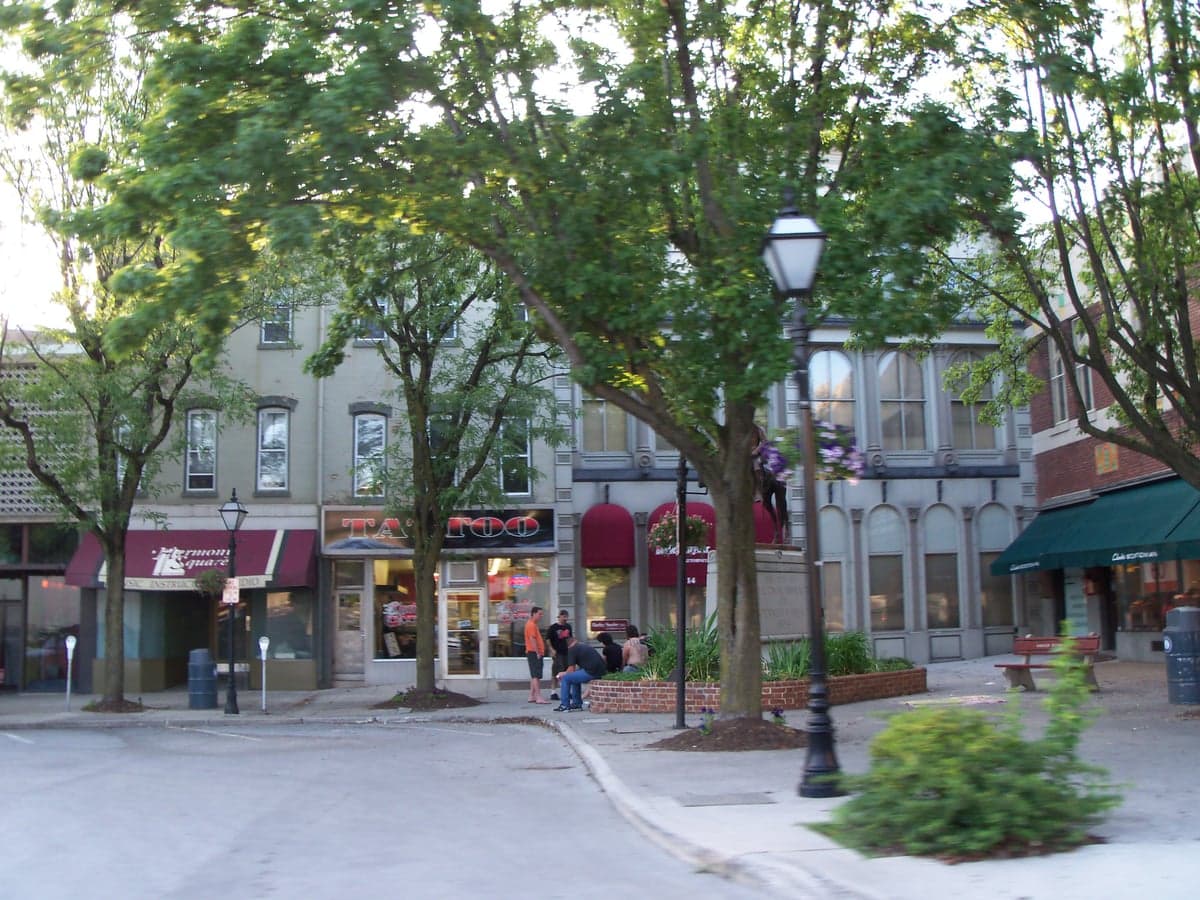
Photo: Wikipedia
Strategic Assessment of Hanover, PA
Multiple tactical vulnerabilities. Population density, target proximity, or disaster risk are likely compounding. A retreat property and exit planning is required.
What does the Strategic Assessment tell us?
Our Strategic Assessment grades tactical survivability of an area. Major population centers, military targets, fallout zones, natural disasters, and border exposure all drive risk — lower exposure means a more defensible position in a crisis.
This is heavily inspired by Joel Skousen's Strategic Relocation book. Highly recommended you checkout the book ($)What does this tell us?
Our Strategic Assessment grades tactical survivability of an area. Major population centers, military targets, fallout zones, natural disasters, and border exposure all drive risk — lower exposure means a more defensible position in a crisis.
This is heavily inspired by Joel Skousen's Strategic Relocation book. Highly recommended you checkout the book ($)Strategic Pillars

Key Distances
Regional Safe Places
Below is our recommended "safe zones" in Pennsylvania and the surrounding area based on our strategic heuristics. For most people, it's unrealistic to live in a “safe zone” full-time due to work, family or other personal reasons. They tend to be more rural. However, many of these areas are perfect for second homes and retreat properties that double as a vacation home or even a short-term rental.
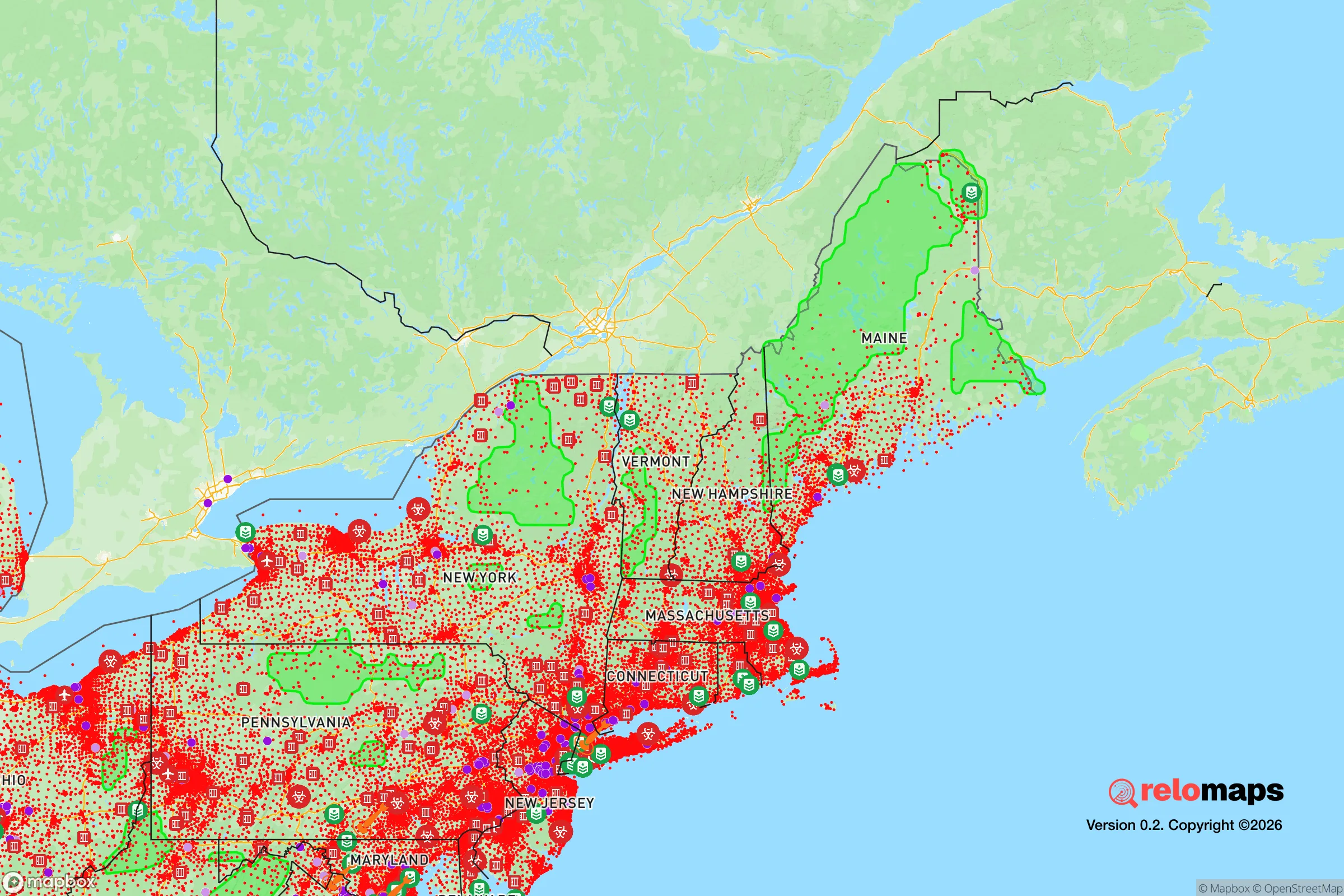
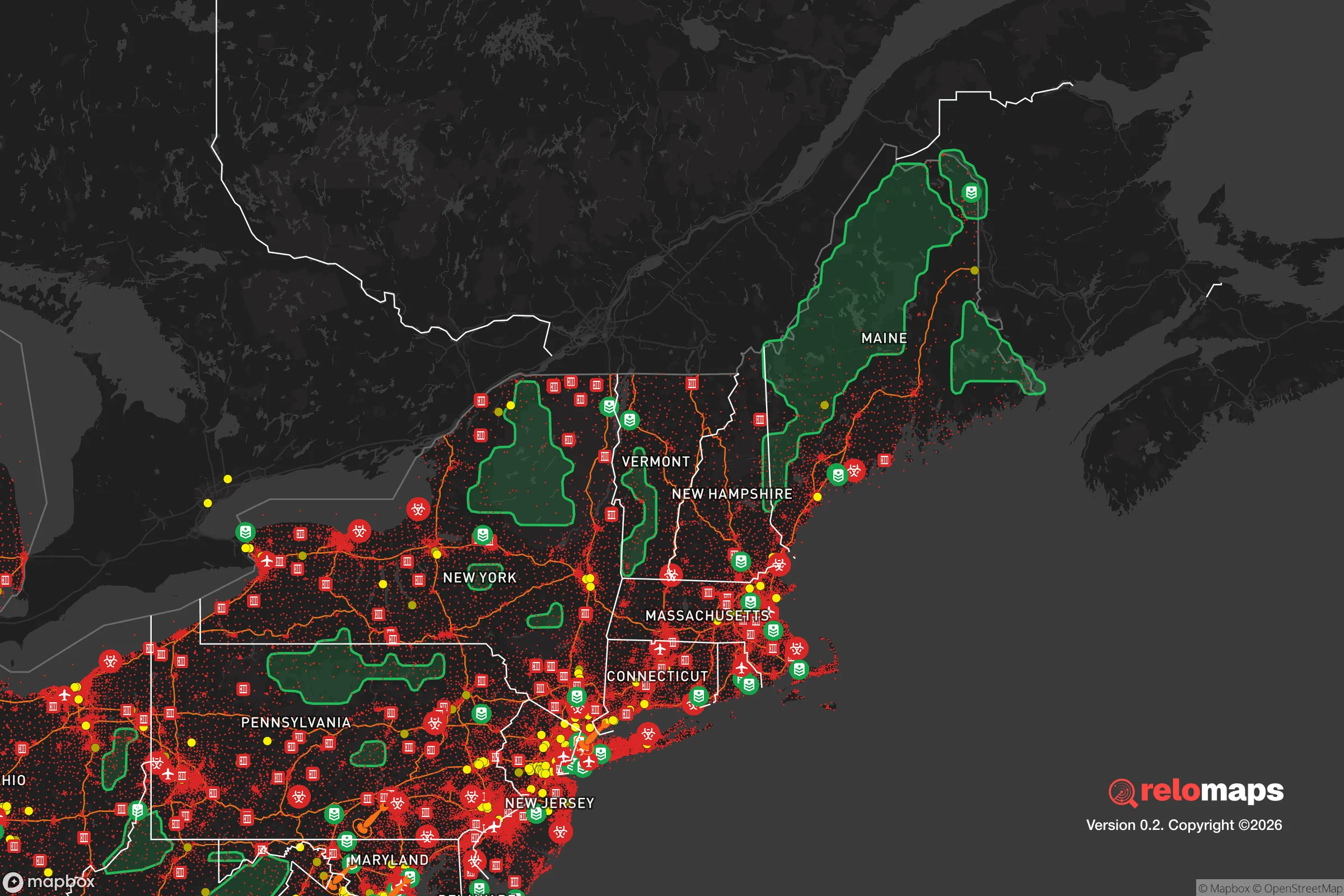


Important Note: For informational purposes only. This does not mean nothing bad ever happens in the green zones. Please use common sense. This is based on public data and modeled with AI. We tried to take a conservative approach but mistakes happen. We update this regularly as new information becomes available.
Solar Generator Recommendations
Backup power matters more here than in safer locations. We've picked three solar generators across budgets and capacity tiers — start with the budget unit if you only need a few essentials, or step up if you want to run a fridge and HVAC for days at a time.

Jackery Portable Power Station Explorer 300
Budget OptionPower on the Go: Weighing only 11 lbs, it's convenient to set up and store with book-sized foldable solar panels

BLUETTI Portable Power Station AC180
Designed for both indoor and outdoor scenarios, AC180 is highly capable as it has a robost capacity and continuous output power.

EF ECOFLOW DELTA Pro Ultra Power Station
Upgraded PickEcoFlow DELTA Pro Ultra is a whole-home energy system designed to grow with your family. Integrated with the Smart Home Panel 2, it scales to meet your evolving energy needs — keeping your home powered, intelligent, and secure through every stage of life.
We earn a commission, at no additional cost to you.
Strategic Assessment Analysis
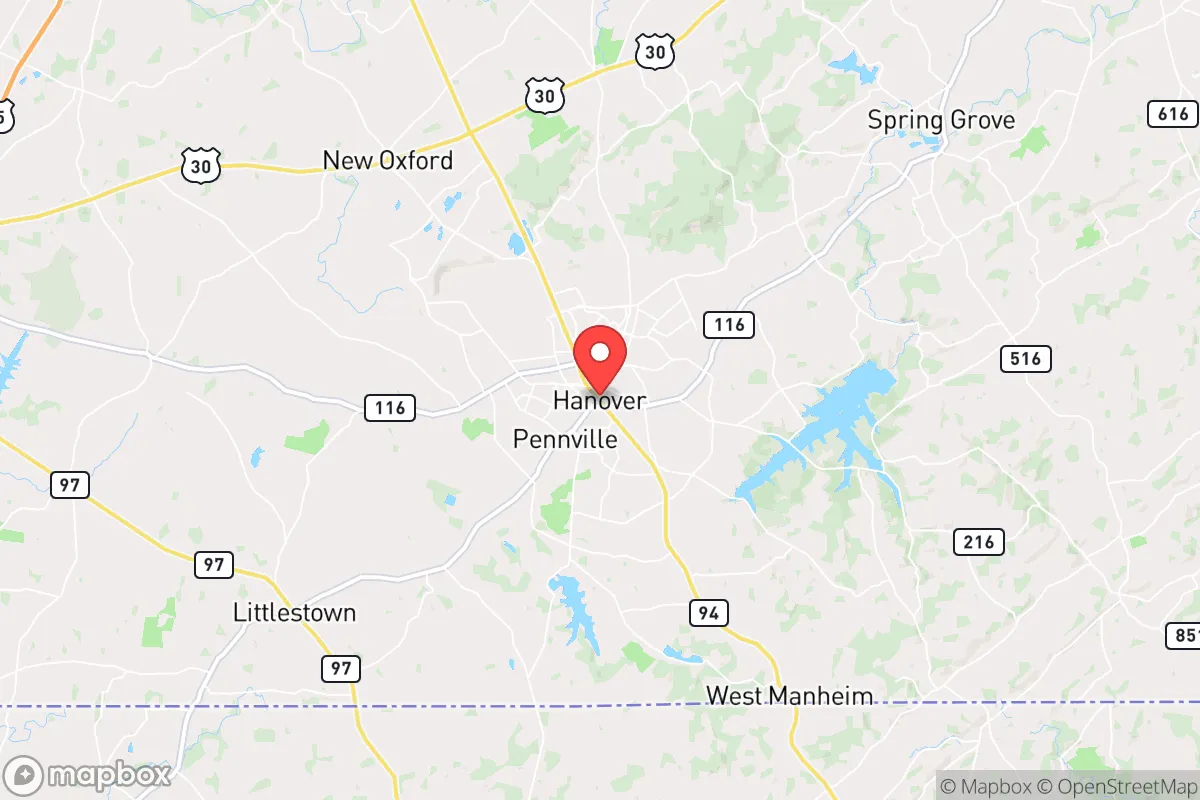
Hanover, Pennsylvania, sits in a sweet spot that few relocators fully appreciate until they map out the concentric rings of risk around the Eastern Seaboard. Roughly 20 miles southwest of York and 30 miles northwest of Baltimore, this Adams County town of about 16,000 people offers a rare combination: it's close enough to major employment and medical infrastructure to be practical, yet far enough from the dense urban cores to avoid the worst of what a cascading collapse, civil unrest, or a mass casualty event would bring. The area's resilience isn't accidental—it's rooted in a geography that has historically made it a strategic crossroads, and that same positioning works in your favor today if you're thinking in terms of bug-out routes, supply chains, and community cohesion.
Geographic position and natural advantages for long-term security
Hanover's location in the Piedmont region, just east of the Blue Ridge Mountains, gives it a layered defensive profile. The town itself sits in a valley with rolling hills to the north and south, providing natural terrain that slows movement and creates observation points. Unlike flatter areas to the east, this undulating landscape makes large-scale forced entry more difficult and gives residents with even basic situational awareness a tactical advantage. The area is also outside the 50-mile blast and fallout danger zone of any major city, including Baltimore, Washington D.C., and Philadelphia—all of which are within 60 to 90 miles. In a nuclear exchange scenario, that distance matters enormously. Prevailing winds from the west would carry fallout away from Hanover in most weather patterns, and the local topography would further disperse and dilute any airborne contaminants that did drift this way.
Water is the first thing any prepper looks for, and Hanover delivers. The town sits near the headwaters of the Gunpowder River and is within easy reach of the Susquehanna River to the east and the Potomac watershed to the south. Multiple smaller creeks and springs dot the countryside, and groundwater in this region is generally reliable at depths of 50 to 150 feet. For a relocator willing to drill a well or negotiate access to a spring, water independence is achievable without extreme expense. The local aquifer is recharged by moderate annual rainfall of around 40 inches, spread evenly enough to avoid the prolonged droughts that plague the Southwest. Agricultural land surrounds Hanover on all sides, with working farms producing corn, soybeans, dairy, and poultry within a 10-mile radius. In a prolonged disruption, that local food production capacity is a tangible asset—not a theoretical one.
Risks, exposures, and proximity to fallout-relevant landmarks
No honest strategic assessment ignores the downsides, and Hanover has them. The most obvious is the Three Mile Island nuclear plant, located about 35 miles northeast near Middletown, PA. While the plant has been permanently shut down since 2019, the spent fuel remains on site in dry cask storage. A deliberate attack or catastrophic failure at that facility could release radiation that, depending on wind direction, might reach the Hanover area within hours. The risk is low but not zero, and it's worth noting that the plant sits upwind of Hanover in typical weather patterns. A second concern is the proximity to Interstate 83 and US Route 30, both of which run within a few miles of town. In a mass evacuation scenario from Baltimore or Washington, these roads would become clogged with panicked civilians, potentially turning Hanover into a choke point or a target for those fleeing the cities. The town's position as a regional commercial hub also means it has a Walmart, a Lowe's, and several grocery distribution centers—assets in normal times, but potential flashpoints during civil unrest when supplies run low.
There's also the matter of the Gettysburg National Military Park, just 10 miles west. While historically significant, the park and its surrounding tourist infrastructure draw hundreds of thousands of visitors annually. In a national emergency, that transient population could become a liability—stranded tourists with no local knowledge, competing for the same resources as residents. The nearby Camp David presidential retreat, roughly 25 miles south in Thurmont, MD, is another wildcard. In a crisis, the security perimeter around that facility would expand dramatically, potentially closing roads and restricting movement in a wide radius that could reach into southern Adams County. None of these are dealbreakers, but they're factors a serious relocator needs to account for in their planning.
Practical resilience for a relocator: food, water, energy, and defensibility
For the individual or family looking to establish a sustainable foothold, Hanover's practical advantages are substantial. Local food production is not a niche hobby here—it's the economic backbone of the county. Adams County ranks among Pennsylvania's top agricultural producers, with over 1,200 farms covering more than 150,000 acres. That means you can buy directly from farmers at roadside stands, join a CSA, or barter for eggs and produce without relying on supermarket supply chains. The county's agricultural extension office and local granges offer workshops on canning, butchering, and seed saving—skills that are increasingly valuable in an unstable world. For those with land, the growing season runs from April to October, and the soil is fertile enough to support a serious garden or small orchard.
Energy resilience is more mixed. The local grid is served by Met-Ed, a FirstEnergy subsidiary, and outages are common during winter storms and summer thunderstorms. However, natural gas is widely available in the town and surrounding suburbs, which means a dual-fuel generator or a simple gas stove can keep you cooking and heating when the lights go out. Solar potential is moderate—the region gets about 200 sunny days per year, less than the Southwest but enough for a well-designed off-grid system with battery storage. Wood heating is also viable, with plenty of hardwood forests within a 20-minute drive for those willing to cut and split their own. Defensibility-wise, Hanover's layout is a mixed bag. The downtown area is dense and walkable, with narrow streets that could be barricaded if necessary, but the suburban sprawl to the north and east is more exposed. The ideal setup for a prepper would be a property on the rural fringe—something with a long driveway, a well, and a view of the approaches—within 10 minutes of town for supply runs.
The overall strategic picture for a conservative relocator
Hanover offers something increasingly rare in the mid-Atlantic: a community that still operates with a degree of self-reliance and mutual aid that hasn't been entirely eroded by modern dependency. The local culture leans conservative, with a strong Lutheran and Catholic heritage, a visible veteran population, and a general distrust of overreach from Harrisburg or Washington. That's not a political talking point—it's a practical reality that translates into neighbors who know how to hunt, fix machinery, and organize without waiting for FEMA. The town's small size means you can actually get to know your local officials, your sheriff's deputies, and your fire company volunteers. In a crisis, those relationships are worth more than any stockpile. The downsides are real—proximity to evacuation routes, the spent fuel at TMI, and the tourist draw of Gettysburg—but they're manageable with good intelligence and a solid plan. For a relocator who values strategic depth, agricultural sustainability, and a community that hasn't forgotten how to take care of itself, Hanover deserves a serious look. It's not a fortress, but it's a damn sight better than most places within a two-hour drive of the capital.

* Values derived from national, state, county, city and local statistics and may differ in a specific area. Last updated: 2026-04-19T10:23:21.000Z
Narrative content on this page is AI-generated and may contain mistakes. Verify any details that matter before acting on them.
ReloMaps may earn a commission from affiliate links at no extra cost to you.

