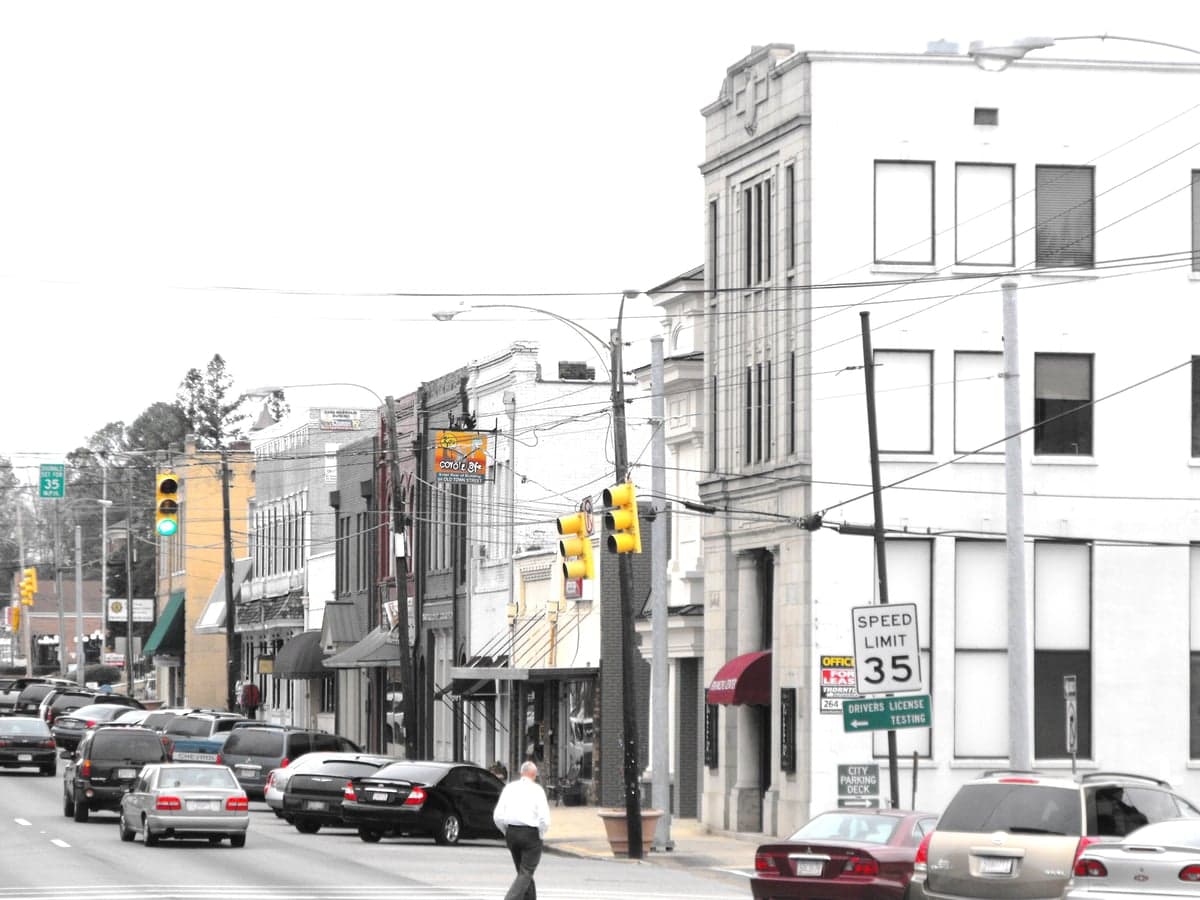
Photo: Wikipedia
Strategic Assessment of Guntersville, AL
Workable tactical position. Some exposure to population density or targets, but generally defensible in a crisis.
What does the Strategic Assessment tell us?
Our Strategic Assessment grades tactical survivability of an area. Major population centers, military targets, fallout zones, natural disasters, and border exposure all drive risk — lower exposure means a more defensible position in a crisis.
This is heavily inspired by Joel Skousen's Strategic Relocation book. Highly recommended you checkout the book ($)What does this tell us?
Our Strategic Assessment grades tactical survivability of an area. Major population centers, military targets, fallout zones, natural disasters, and border exposure all drive risk — lower exposure means a more defensible position in a crisis.
This is heavily inspired by Joel Skousen's Strategic Relocation book. Highly recommended you checkout the book ($)Strategic Pillars

Key Distances
Regional Safe Places
Below is our recommended "safe zones" in Alabama and the surrounding area based on our strategic heuristics. For most people, it's unrealistic to live in a “safe zone” full-time due to work, family or other personal reasons. They tend to be more rural. However, many of these areas are perfect for second homes and retreat properties that double as a vacation home or even a short-term rental.
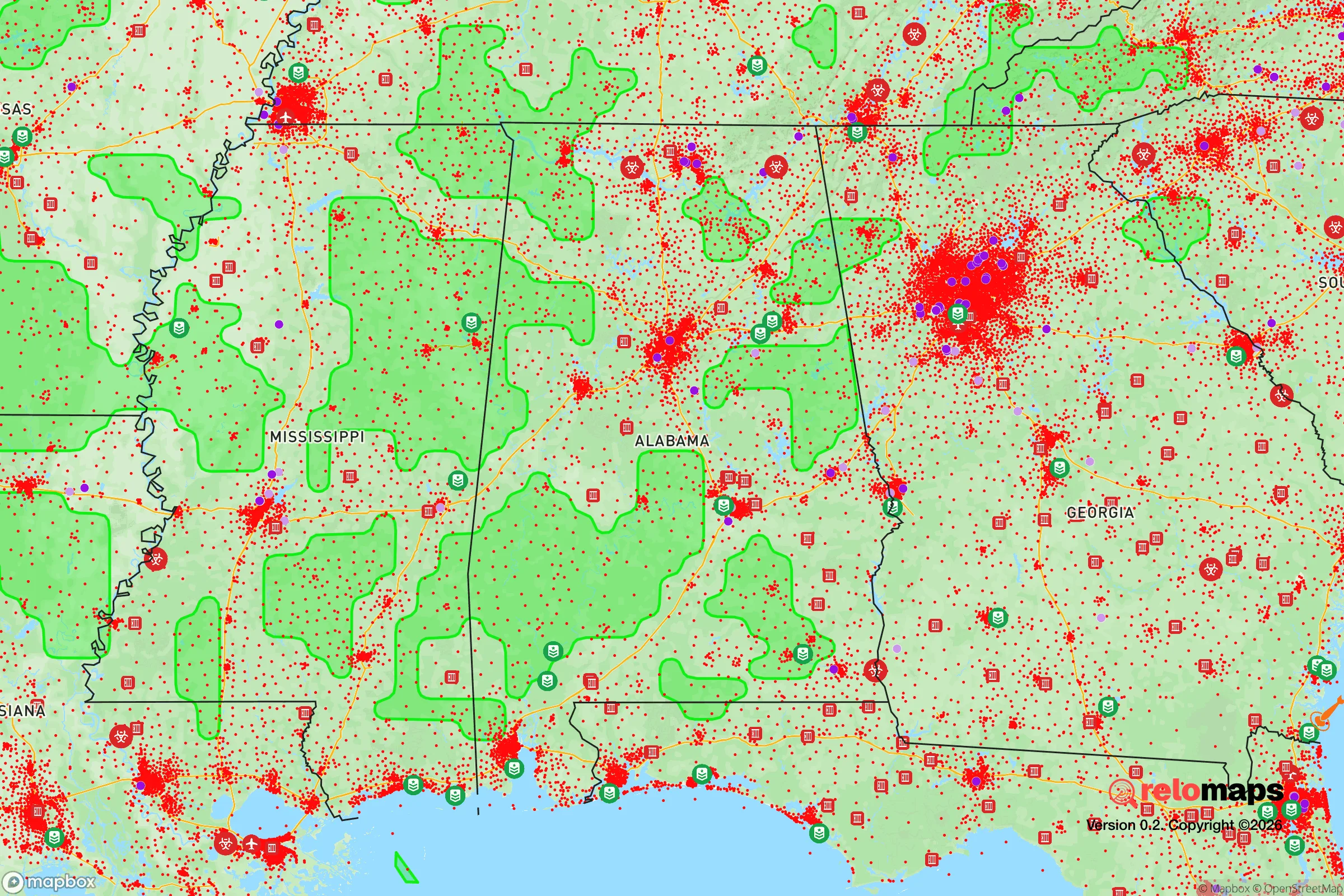
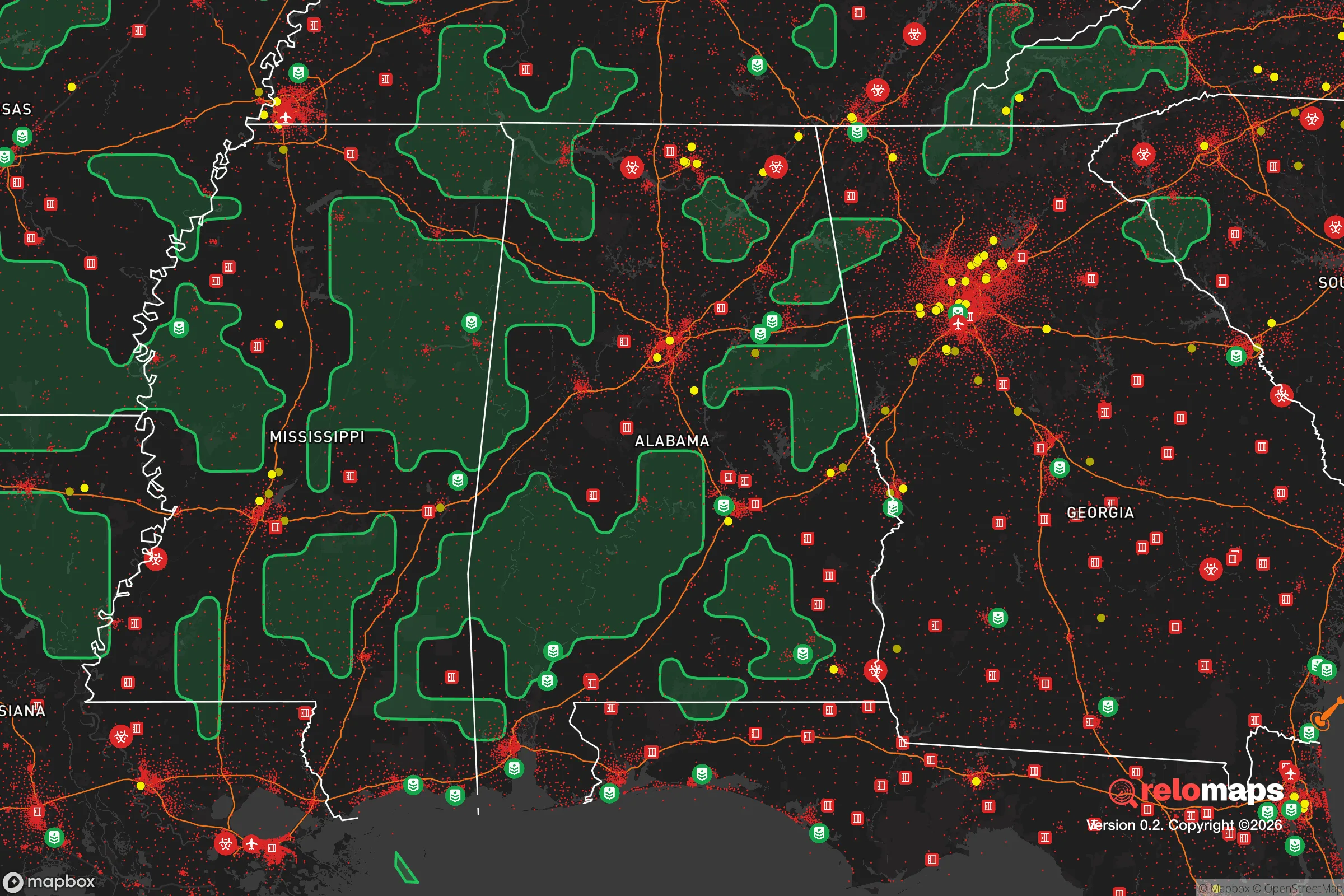


Important Note: For informational purposes only. This does not mean nothing bad ever happens in the green zones. Please use common sense. This is based on public data and modeled with AI. We tried to take a conservative approach but mistakes happen. We update this regularly as new information becomes available.
Solar Generator Recommendations
Backup power matters more here than in safer locations. We've picked three solar generators across budgets and capacity tiers — start with the budget unit if you only need a few essentials, or step up if you want to run a fridge and HVAC for days at a time.

Jackery Portable Power Station Explorer 300
Budget OptionPower on the Go: Weighing only 11 lbs, it's convenient to set up and store with book-sized foldable solar panels

BLUETTI Portable Power Station AC180
Designed for both indoor and outdoor scenarios, AC180 is highly capable as it has a robost capacity and continuous output power.

EF ECOFLOW DELTA Pro Ultra Power Station
Upgraded PickEcoFlow DELTA Pro Ultra is a whole-home energy system designed to grow with your family. Integrated with the Smart Home Panel 2, it scales to meet your evolving energy needs — keeping your home powered, intelligent, and secure through every stage of life.
We earn a commission, at no additional cost to you.
Strategic Assessment Analysis
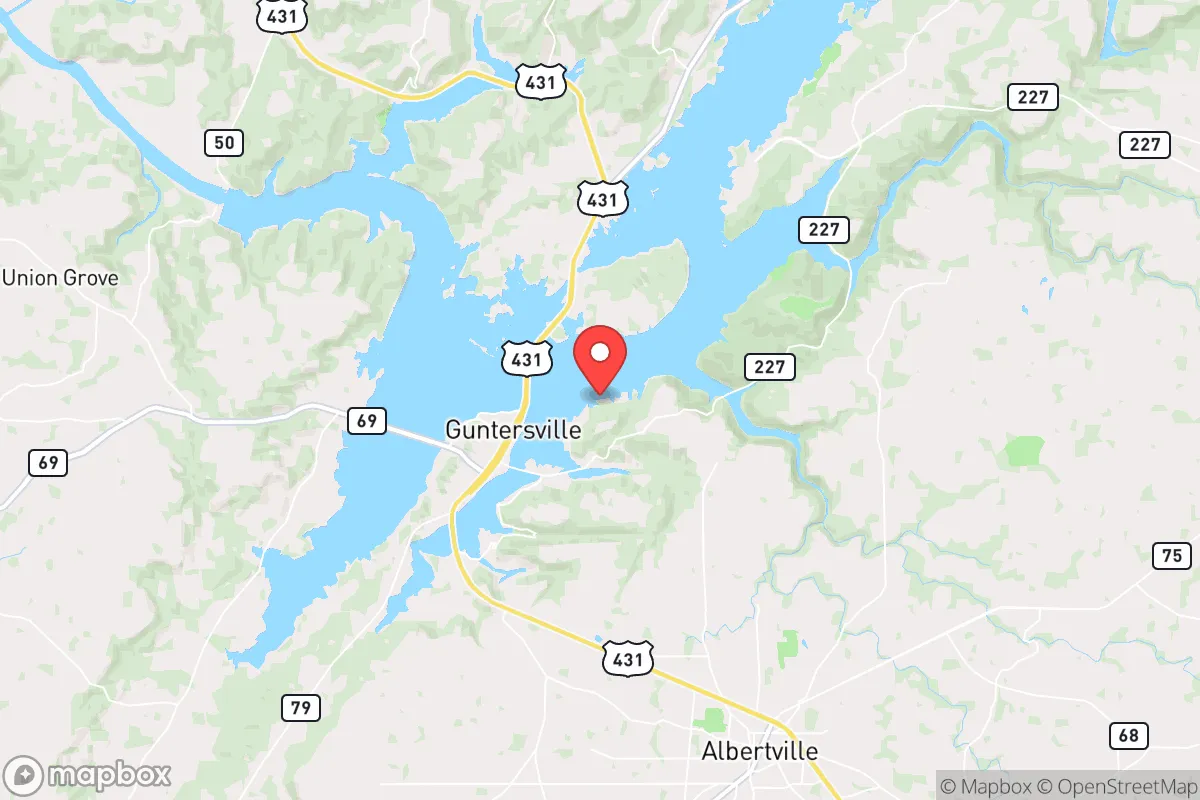
Guntersville, Alabama, occupies a strategic position in the Tennessee River Valley that offers a compelling blend of natural defensibility and resource abundance for the disaster-conscious relocator. Its location roughly 90 miles north of Birmingham and 40 miles south of the Tennessee state line places it within a moderate buffer zone from major metropolitan targets, while the surrounding Appalachian foothills and the 69,000-acre Lake Guntersville provide both geographic insulation and a robust local food-and-water economy. For a single individual or family weighing long-term self-sufficiency, the area presents a solid baseline of resilience, though it is not without exposure to specific risks that demand honest assessment.
Geographic position and natural advantages for long-term security
Guntersville sits at the southern edge of the Cumberland Plateau, where the Tennessee River widens into Lake Guntersville, the largest lake in Alabama. This topography creates a natural funnel: the river valley is flanked by ridges and hills that limit approach corridors, making the town more defensible than open-terrain locations. The lake itself is a dual asset—it provides a massive freshwater reservoir (over 900 miles of shoreline) and a ready source of fish and irrigation water, critical for any extended disruption of supply chains. The surrounding Marshall County is heavily forested, with mixed hardwoods and pines that offer cover, firewood, and building materials. Soils in the river bottoms are fertile enough for small-scale market gardening, and the growing season runs roughly 210 days, from late March to early November. For a relocator, this means the land can support subsistence agriculture without the extreme heat stress of deeper southern Alabama or the shorter seasons of the upper Midwest. The area's elevation (averaging 650 feet above sea level) also reduces flood risk relative to the Gulf Coast, though low-lying lakeside properties do face periodic inundation from TVA dam releases.
Risks, exposures, and proximity to fallout-relevant landmarks
No strategic assessment is honest without weighing the downsides. Guntersville's primary vulnerability is its proximity to two major infrastructure corridors: Interstate 65 runs 20 miles west, and U.S. Highway 431 cuts through town itself. In a national emergency, these routes would become chokepoints for refugee flow and potential military movement. The town is also 45 miles from Huntsville, home to Redstone Arsenal and NASA's Marshall Space Flight Center—a high-value target in any conflict scenario involving strategic assets. While 45 miles provides a meaningful buffer against blast effects (a 10-kiloton airburst would cause severe damage only within a 2-mile radius), fallout patterns depend on wind direction. Prevailing winds in the Tennessee Valley are from the southwest, meaning a strike on Huntsville could push radioactive debris toward Guntersville if conditions align. Similarly, the Browns Ferry Nuclear Plant, located 30 miles northwest near Athens, Alabama, is a potential source of radiological release—though its containment structures are hardened, any major incident would require evacuation or sheltering based on plume modeling. Natural risks are more predictable: the area lies in a moderate seismic zone (the New Madrid fault system is 200 miles northwest), and tornadoes are a genuine seasonal threat. Marshall County averages 10-12 tornado warnings per year, and the April 2011 super outbreak produced an EF-5 that devastated nearby Hackleburg. For a relocator, this means a reinforced safe room or basement is not optional—it is a baseline requirement.
Practical resilience for a relocator: food, water, energy, and defensibility
On the practical front, Guntersville scores well for self-sufficiency. The lake provides an essentially unlimited water source, but treatment is necessary—boiling or filtration (e.g., Berkey or Sawyer systems) is straightforward given the low sediment load of TVA-managed water. Groundwater wells are viable in most of the county, with typical depths of 100-200 feet yielding 10-20 gallons per minute; a hand pump or solar-powered submersible can ensure off-grid access. Food resilience is strong: the area supports year-round deer hunting (white-tailed deer populations are dense), and Lake Guntersville is one of the top bass fisheries in the Southeast, with crappie, catfish, and bream as reliable protein sources. Local agriculture includes cattle, poultry (Marshall County is a top-10 Alabama producer), and row crops like corn and soybeans. The Guntersville Farmers Market operates May through October, and several local farms offer CSA shares. For long-term storage, the climate is humid (average 70% relative humidity), so root cellaring requires dehumidification or ventilation—a dry basement or buried shipping container works better than a traditional cellar. Energy resilience is moderate: the Tennessee Valley Authority grid is reliable, but outages from ice storms or thunderstorms are common (2-3 per year lasting 4-12 hours). Solar potential is decent—the area averages 4.5 peak sun hours per day—and net metering is available through TVA, though policies can shift. Propane is widely available for backup generation, and wood heating is practical given the forest cover. Defensibility is aided by the terrain: the lake creates a natural barrier to the east and south, and the ridge lines to the north and west provide elevated vantage points. However, the town's population of roughly 8,500 swells with tourists during summer and fishing tournaments, which could complicate security in a crisis. A relocator should prioritize a property with a single access road, good sightlines, and a defensible perimeter—ideally on the lake's eastern shore, where development is sparser.
The overall strategic picture for Guntersville is one of moderate-high resilience with specific caveats. Its natural advantages—abundant water, fertile soil, defensible terrain, and a moderate climate—make it a strong candidate for a relocator prioritizing self-sufficiency over urban convenience. The proximity to Huntsville and major transport corridors introduces real but manageable risks, particularly regarding fallout exposure and refugee flow. A serious prepper would want to harden a property against tornadoes, secure a reliable off-grid water source, and establish a network of local suppliers before any crisis. For the single individual or family willing to invest in those preparations, Guntersville offers a realistic foundation for long-term security in an uncertain future—without the isolation or resource scarcity of more remote mountain or desert locations. It is not a fortress, but it is a defensible, productive piece of ground in a region that has historically weathered disruption better than most.

* Values derived from national, state, county, city and local statistics and may differ in a specific area. Last updated: 2026-09-16T22:27:58.000Z
Narrative content on this page is AI-generated and may contain mistakes. Verify any details that matter before acting on them.
ReloMaps may earn a commission from affiliate links at no extra cost to you.

