
Photo: Wikipedia
Demographics of Guntersville, AL
Affluence Level in Guntersville, AL
A middle-class area roughly in line with national averages across income, home values, education, and employment.
People of Guntersville, AL
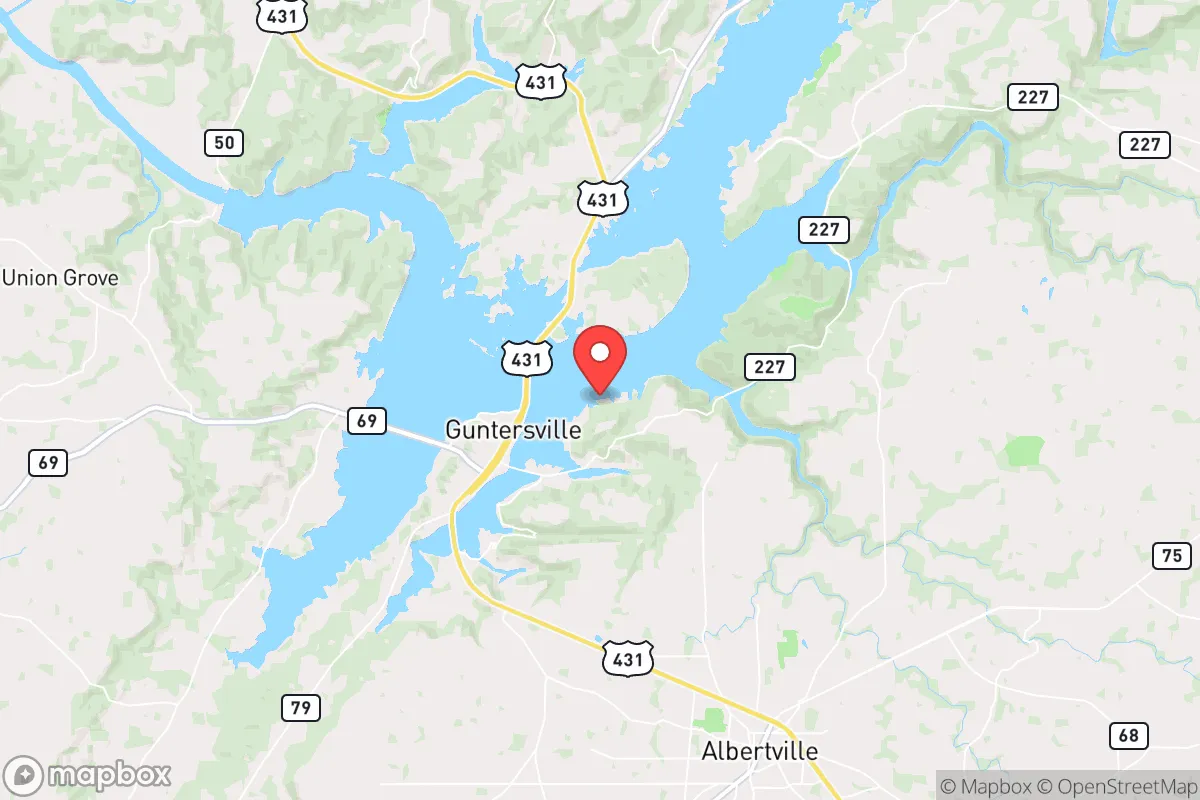
The people of Guntersville, Alabama, today number 8,771 and form a community that is predominantly white (79.9%) with a significant Black minority (10.4%) and small Hispanic (2.7%) and Asian (0.4%) populations. The city’s character is rooted in its lakeside setting on Lake Guntersville, a strong sense of local heritage, and a population that is slightly more college-educated (33.2%) than the state average. With a foreign-born share of just 1.0%, Guntersville remains one of Alabama’s least ethnically diverse cities, a fact that shapes its cultural identity as a close-knit, historically rooted Southern community.
How the city was settled and grew
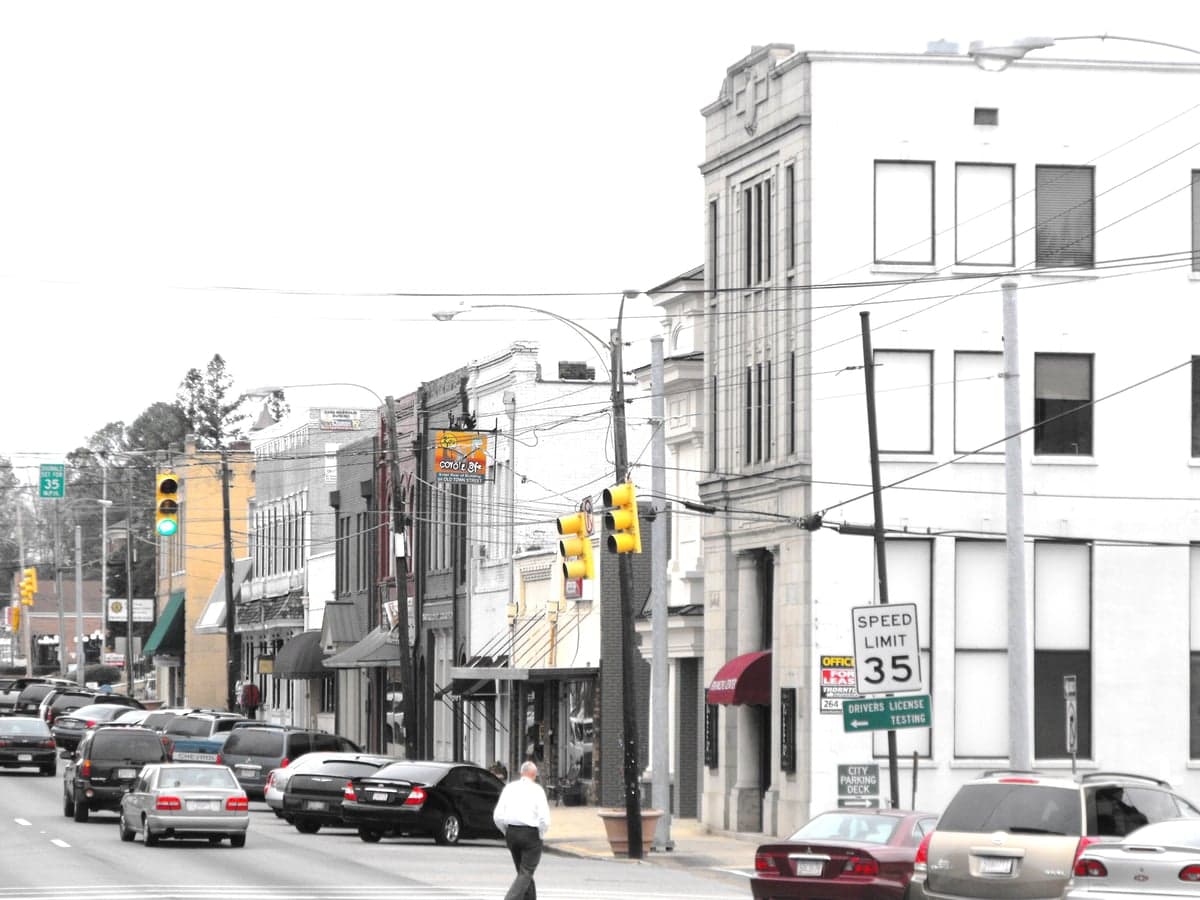
Guntersville’s population history begins with its founding in the early 19th century as a river town on the Tennessee River. The original settlers were primarily Scots-Irish and English farmers drawn by the fertile river bottomlands and the promise of cotton agriculture. The arrival of the railroad in the 1850s transformed the small settlement into a regional trading hub, attracting merchants and craftsmen who built homes in what is now the Historic Downtown Guntersville district, where many of the original 19th-century structures still stand. The post-Civil War era saw a modest influx of freed Black families who established a community in the South Guntersville area, near the riverfront, working as laborers on the docks and in the cotton gins. The early 20th century brought a new wave of growth with the construction of the Guntersville Dam in the 1930s, which created Lake Guntersville and spurred a tourism and fishing economy. This period drew workers from across the rural South, many of whom settled in the Lakeview and Claysville neighborhoods, areas that remain predominantly working-class and white today.
Modern era (post-1965)
After the 1965 Hart-Cellar Act, Guntersville saw virtually no increase in foreign-born immigration, a pattern consistent with inland Alabama. The city’s demographic shifts since the 1970s have been driven almost entirely by domestic migration. The completion of the Tennessee-Tombigbee Waterway and the expansion of local manufacturing—particularly in boat building and metal fabrication—attracted white families from rural Appalachia and the Deep South. These newcomers concentrated in newer subdivisions like Wyeth Mountain Estates and Honeycomb, areas developed on the city’s northern and eastern edges. The Black population, which had been stable at around 12-15% since the 1950s, declined slightly to 10.4% by 2020, as younger Black residents moved to larger cities like Huntsville or Birmingham for broader job opportunities. The Hispanic population, while still small at 2.7%, began to grow in the 2000s, with families settling in the South Guntersville area and working in the poultry processing plants and construction trades. The East/Southeast Asian community (0.4%) and Indian community (0.4%) are tiny and largely composed of professionals employed at local manufacturing firms or in healthcare, with no distinct ethnic enclave.
The future
Guntersville’s population is projected to grow slowly, driven by retirees and remote workers drawn to the lake lifestyle and by spillover from Huntsville’s booming economy, located about 40 miles north. The city is becoming slightly more diverse, with the Hispanic share expected to rise to 4-5% by 2035, primarily through natural increase and continued labor migration. The Black population is likely to remain stable or decline slightly as younger generations continue to leave for larger metros. New residential development is concentrated in master-planned communities like Guntersville Shores and Lake Guntersville Estates, which are attracting affluent white newcomers from out of state. These developments are largely self-contained and have limited interaction with the older, more established neighborhoods. The cultural identity of the city is evolving from a purely local, lake-town character to a more amenity-oriented destination, but the population remains overwhelmingly native-born and Southern in its social and political outlook.
For someone moving in now, Guntersville offers a stable, predominantly white, and culturally conservative community with a strong sense of place centered on the lake. The city is becoming more affluent and slightly more diverse, but the pace of change is slow, and newcomers will find a population that values tradition, outdoor recreation, and a slower pace of life. The key neighborhoods to consider are the historic downtown district for walkability, the lakefront subdivisions for water access, and the South Guntersville area for more affordable housing and a longer-established community feel.

* Values derived from national, state, county, city and local statistics and may differ in a specific area. Last updated: 2026-09-16T22:27:58.000Z
Narrative content on this page is AI-generated and may contain mistakes. Verify any details that matter before acting on them.
ReloMaps may earn a commission from affiliate links at no extra cost to you.

