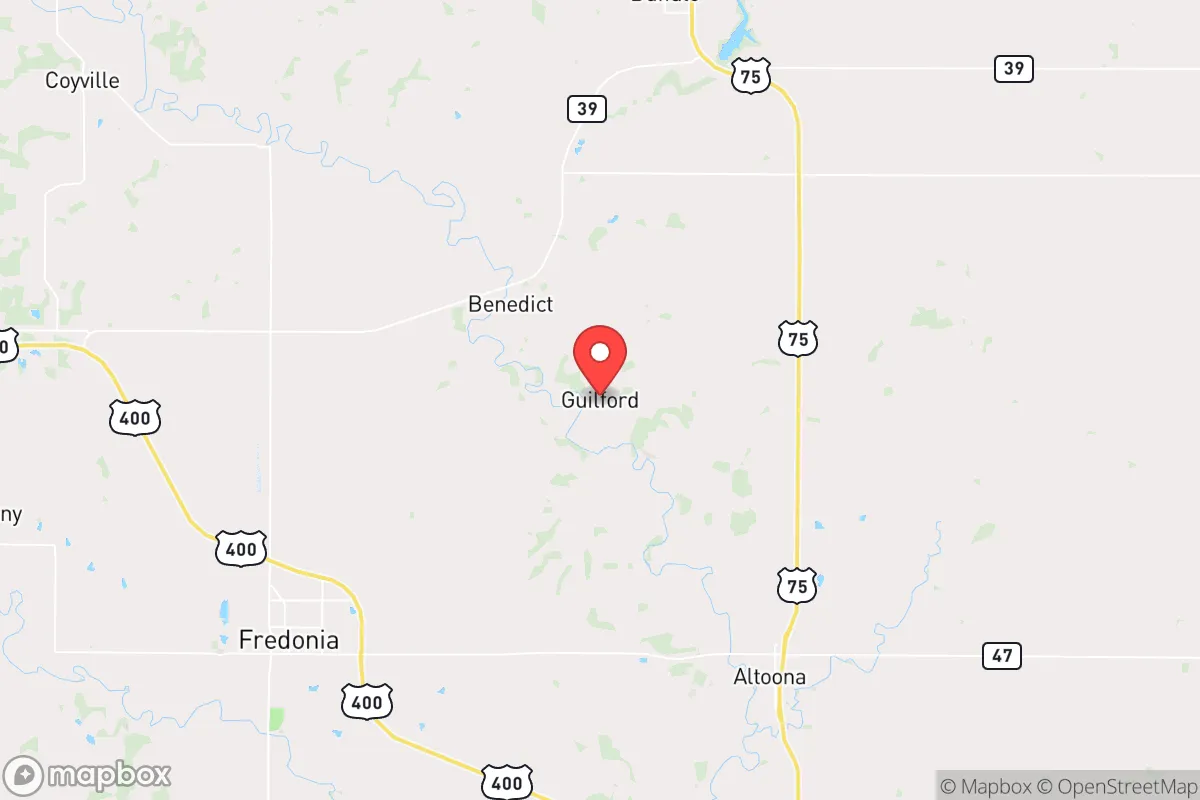
Strategic Assessment of Guilford, KS
Strong survivability profile. Good buffer from population centers, with manageable environmental and tactical risks.
What does the Strategic Assessment tell us?
Our Strategic Assessment grades tactical survivability of an area. Major population centers, military targets, fallout zones, natural disasters, and border exposure all drive risk — lower exposure means a more defensible position in a crisis.
This is heavily inspired by Joel Skousen's Strategic Relocation book. Highly recommended you checkout the book ($)What does this tell us?
Our Strategic Assessment grades tactical survivability of an area. Major population centers, military targets, fallout zones, natural disasters, and border exposure all drive risk — lower exposure means a more defensible position in a crisis.
This is heavily inspired by Joel Skousen's Strategic Relocation book. Highly recommended you checkout the book ($)Strategic Pillars

Key Distances
Regional Safe Places
Below is our recommended "safe zones" in Kansas and the surrounding area based on our strategic heuristics. For most people, it's unrealistic to live in a “safe zone” full-time due to work, family or other personal reasons. They tend to be more rural. However, many of these areas are perfect for second homes and retreat properties that double as a vacation home or even a short-term rental.
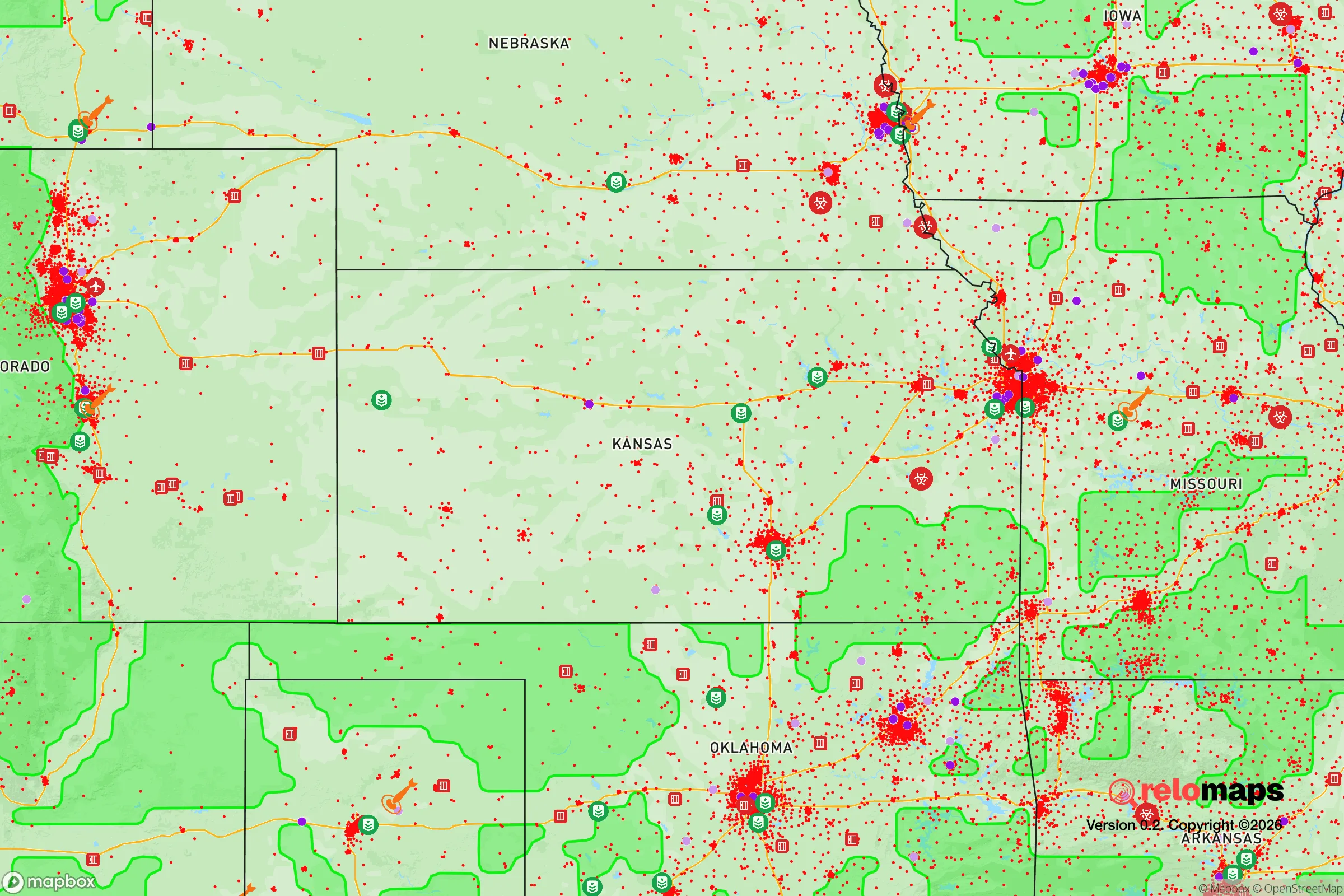
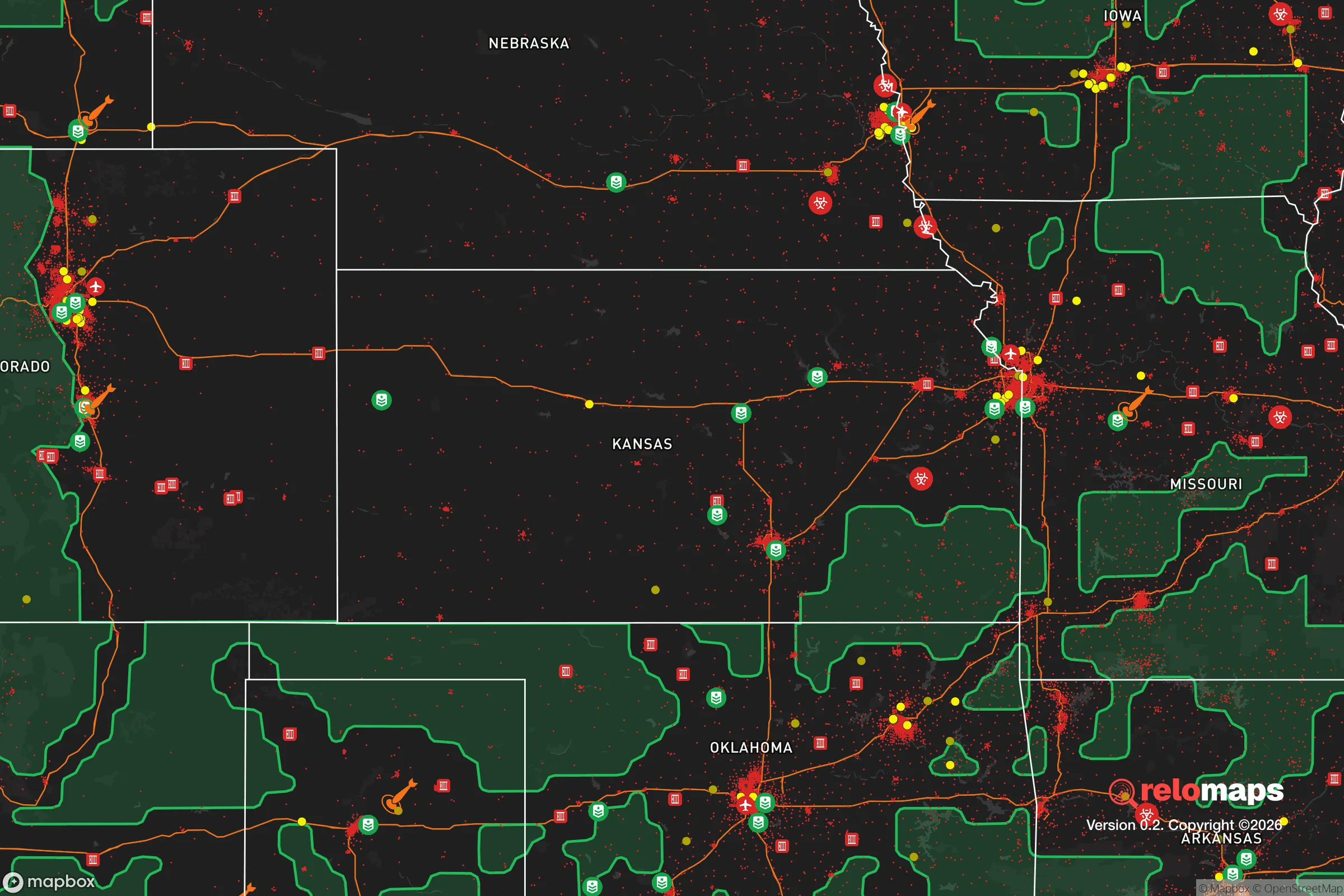


Important Note: For informational purposes only. This does not mean nothing bad ever happens in the green zones. Please use common sense. This is based on public data and modeled with AI. We tried to take a conservative approach but mistakes happen. We update this regularly as new information becomes available.
Solar Generator Recommendations
Backup power matters more here than in safer locations. We've picked three solar generators across budgets and capacity tiers — start with the budget unit if you only need a few essentials, or step up if you want to run a fridge and HVAC for days at a time.

Jackery Portable Power Station Explorer 300
Budget OptionPower on the Go: Weighing only 11 lbs, it's convenient to set up and store with book-sized foldable solar panels

BLUETTI Portable Power Station AC180
Designed for both indoor and outdoor scenarios, AC180 is highly capable as it has a robost capacity and continuous output power.

EF ECOFLOW DELTA Pro Ultra Power Station
Upgraded PickEcoFlow DELTA Pro Ultra is a whole-home energy system designed to grow with your family. Integrated with the Smart Home Panel 2, it scales to meet your evolving energy needs — keeping your home powered, intelligent, and secure through every stage of life.
We earn a commission, at no additional cost to you.
Strategic Assessment Analysis
Guilford, Kansas, offers a compelling strategic profile for those prioritizing disaster readiness and self-sufficiency, largely due to its position within a sparsely populated agricultural corridor that sits at a meaningful distance from major metropolitan targets. Located in Wilson County, roughly 90 miles southeast of Wichita and 120 miles north of Tulsa, Oklahoma, the area benefits from low population density—the county itself has fewer than 8,000 residents—while still maintaining practical access to regional supply chains and medical facilities in Chanute (about 25 miles east) and Parsons (30 miles southeast). This balance of remoteness and accessibility forms the foundation of Guilford's resilience appeal, though a clear-eyed assessment reveals both genuine strengths and notable vulnerabilities that any relocator should weigh carefully.
Geographic position and natural advantages for long-term stability
Guilford sits within the Osage Cuestas region of southeastern Kansas, a landscape of rolling hills and wooded valleys that provides more topographic variety than the flat plains to the west. This terrain offers modest but meaningful defensive advantages, including natural drainage patterns, scattered tree cover for concealment, and numerous creek bottoms that can support small-scale water collection. The area lies outside the primary tornado alley corridor that cuts through central Kansas, though severe weather remains a seasonal reality. Wilson County averages about 60 tornado warnings per year, but direct strikes are infrequent, and the hilly terrain can disrupt storm formation compared to the open plains. The region's underlying geology includes the Cherokee Group coal measures and limestone formations, which provide decent groundwater potential—a critical factor for long-term water independence. Average annual precipitation of roughly 40 inches supports dryland agriculture without heavy irrigation, and the growing season of approximately 190 days allows for reliable food production. The Verdigris River and Fall River systems run within 15-20 miles, offering additional surface water resources, though access rights and seasonal variability require careful planning.
Risk exposure and proximity to fallout-relevant landmarks
The most significant risk factor for Guilford is its position relative to potential man-made threats, particularly given the area's location within the broader Wichita-Tulsa corridor. McConnell Air Force Base near Wichita, which hosts KC-135 Stratotankers and is a designated forward operating location for nuclear-capable B-52s, sits roughly 90 miles northwest—outside the immediate blast zone for most scenarios but within a fallout plume radius depending on wind patterns. The Neosho River valley, which runs through Wilson County, could channel airborne contaminants in certain meteorological conditions. Additionally, the Wolf Creek Generating Station, Kansas's only nuclear power plant, is located about 60 miles northeast near Burlington; while its safety record is solid, any major incident there would place Guilford within the 50-mile ingestion exposure pathway zone. On the natural hazard side, the area faces moderate seismic risk from the Nemaha Ridge fault system, though significant earthquakes are rare. Flooding along the Verdigris and Fall Rivers presents a periodic concern, particularly for low-lying properties near creek beds. The region's industrial agriculture base means pesticide drift and groundwater nitrate contamination are chronic, low-level risks that require well testing and filtration investments. For the relocator thinking in terms of worst-case scenarios, Guilford's primary vulnerability is its position within a 100-mile radius of multiple potential targets, though its low population density and lack of critical infrastructure within the immediate vicinity reduce the likelihood of being a direct target.
Practical resilience: food, water, energy, and defensibility
Guilford's practical resilience profile is mixed but leans positive for those willing to invest in infrastructure. Water availability is the strongest asset: the region's shallow aquifers, particularly the Ozark Plateau aquifer system, can support private wells at depths of 50-150 feet with reasonable yields of 10-30 gallons per minute. Rainwater catchment is viable given the 40-inch annual precipitation, and surface water from the Verdigris River system provides a backup option with proper treatment. Food production potential is excellent: Wilson County's agricultural base means fertile soil, established seed suppliers in Chanute and Fredonia, and a local farming community that still practices traditional methods. The growing season supports corn, soybeans, wheat, and a wide variety of garden vegetables, while the wooded areas provide game such as white-tailed deer, wild turkey, and squirrel. Local livestock operations mean access to cattle, pigs, and poultry for those establishing small-scale animal husbandry. Energy independence is achievable but requires upfront investment: the region receives about 215 sunny days per year, making solar viable with battery storage, though winter cloud cover can reduce output for days at a time. Wind resources are moderate—average speeds around 12 mph—sufficient for small turbines but not ideal for primary generation. Wood heating is practical given the forested acreage, and propane delivery is reliable in normal times. Defensibility is moderate: the rolling terrain and scattered tree lines provide natural cover and choke points, but the lack of natural barriers like rivers or mountains means a determined threat could approach from multiple directions. The nearest law enforcement presence is the Wilson County Sheriff's Office in Fredonia, about 12 miles west, with response times in rural areas typically running 15-30 minutes. The local population skews older and conservative, with a strong hunting culture that means firearms ownership is common—a social factor that contributes to community self-defense capability but also requires careful neighbor relations.
The overall strategic picture for Guilford is one of moderate resilience with specific trade-offs. Its strengths lie in water availability, agricultural potential, and low population density that reduces competition for resources during disruptions. Its weaknesses center on proximity to multiple potential man-made threat vectors and the lack of extreme geographic barriers that would make it truly defensible. For the relocator who is serious about preparedness and willing to invest in well drilling, solar infrastructure, and food storage systems, Guilford offers a viable base of operations at a price point far below comparable properties in the Mountain West or Upper Midwest. The area is best suited for someone who wants rural self-sufficiency without complete isolation—a strategic compromise that acknowledges risk while leveraging genuine natural advantages. As with any relocation decision, the key is matching the area's specific profile to your own threat model and preparedness timeline, rather than assuming any single location offers complete safety.

* Values derived from national, state, county, city and local statistics and may differ in a specific area. Last updated: 2026-09-27T19:25:33.000Z
Narrative content on this page is AI-generated and may contain mistakes. Verify any details that matter before acting on them.
ReloMaps may earn a commission from affiliate links at no extra cost to you.

