
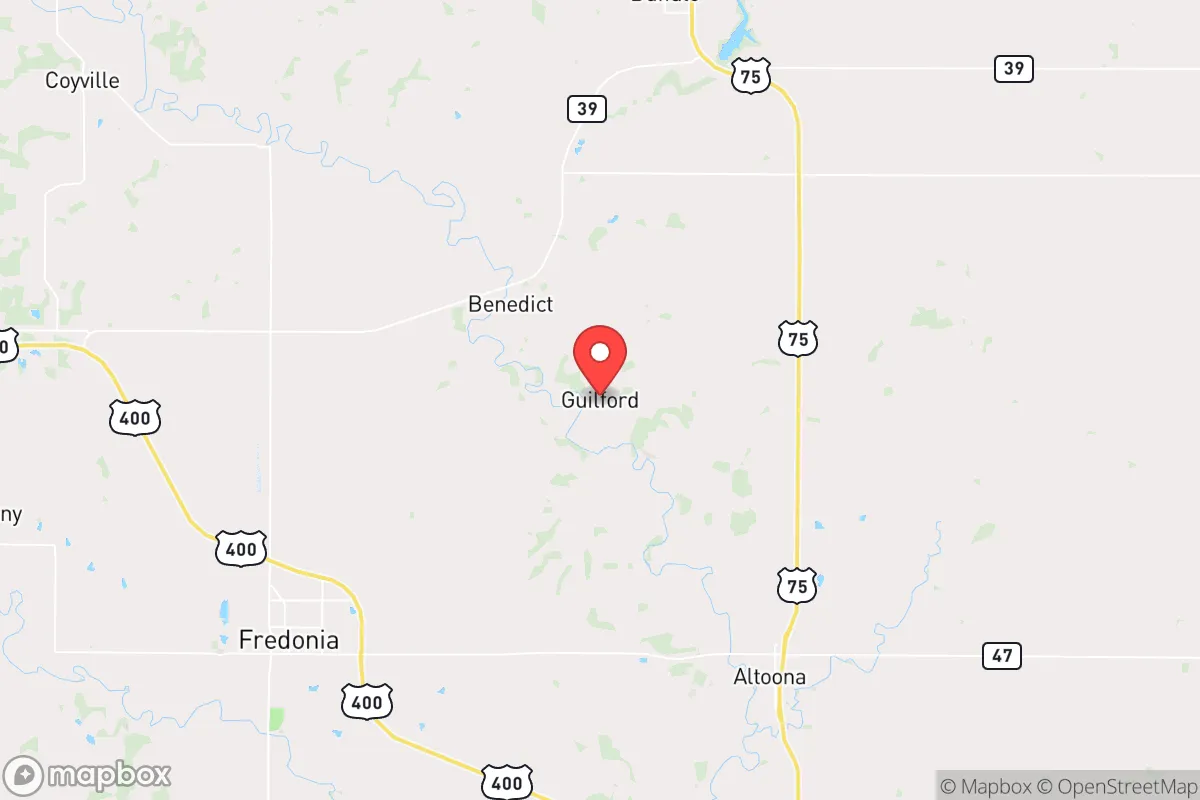
Quality of Life in Guilford, KS
Above-average quality of iife. The area offers a reasonable cost of living, decent mobility, and a mix of neighborhood amenities.
What does Quality of Life tell us?
Quality of Life blends cost of living, nearby amenities, socioeconomic signals, and neighborhood character. City-level scores represent the whole municipality; individual neighborhoods can differ.
What does this tell us?
Quality of Life blends cost of living, nearby amenities, socioeconomic signals, and neighborhood character. City-level scores represent the whole municipality; individual neighborhoods can differ.
Cost of Living
40% below national average
The Real Cost of Living in Guilford, KS for 2026
| Tier | Individual | Family (4) |
|---|---|---|
| Survival | $16k | $31k |
| Comfortable | $29k | $43k |
| Luxury | $91k+ | $141k+ |
| Elite (Top 5%) | $155k+ | $241k+ |
117%
* median rent and top-5% income substituted from state-level data — local Census figures unavailable for small populations
The Area Signal
A metric tracking the socioeconomic signals of the area.
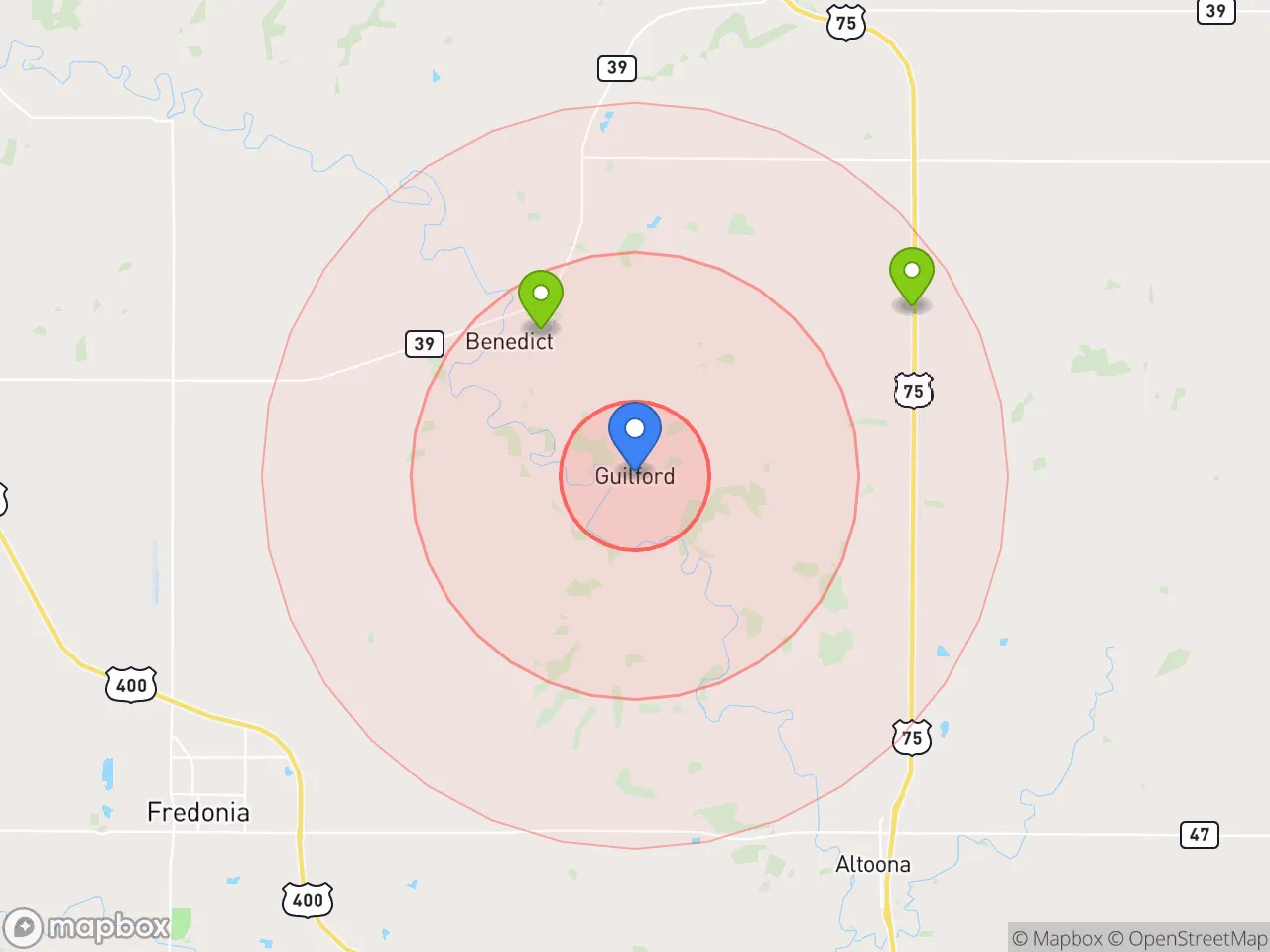
Limited data for this area
Limited data for this area
Hobbies
Explore the areaGroceries
0 within 10 miles
Gas
1 within 10 miles
Hospital
3 within 20 miles
Airport
MCI — Kansas City International
Post Office
USPS — Yates Center, KS
Critical Amenities
Quality-of-Life Analysis
Guilford, Kansas, presents a distinctive quality-of-life profile defined by extreme affordability and a quiet, rural character. With a cost of living index of just 60—far below the national average of 100—the area attracts residents seeking financial breathing room, including retirees on fixed incomes, remote workers, and families priced out of larger Kansas cities. The population is small and tight-knit, with a demographic mix that leans older, reflecting a community where neighbors know each other and daily life moves at a deliberate, unhurried pace.
Cost of living, housing, and affordability compared to nearby areas
Guilford’s housing market is among the most affordable in the state, with a median home value of just $52,000—a fraction of the Kansas median of roughly $200,000 and dramatically lower than the Kansas City metro area’s $300,000-plus. This low entry point allows buyers to own a home outright or with a minimal mortgage, freeing income for other priorities. Median rent, at $1,029 per month, is more moderate relative to home prices but still undercuts rents in nearby Pittsburg (around $1,200) and Joplin, Missouri (roughly $1,100). The average commute of 19.8 minutes is notably short, reflecting the area’s rural layout and limited traffic congestion; most residents drive to work in Guilford itself or to smaller surrounding towns, avoiding the long-distance commutes common in suburban Kansas City. Property taxes remain low by national standards, and overall utility costs track below state averages, further stretching household budgets.
Local amenities, schools, and what daily life feels like
Daily life in Guilford centers on self-reliance and community connection. The town has a small grocery store, a handful of local businesses, and basic services, but residents typically drive 15–20 minutes to Pittsburg (population 20,000) for major shopping, healthcare, and entertainment. Pittsburg State University provides cultural events, a public library system, and a regional hospital. The local school district, part of USD 250, serves a small student body with low student-to-teacher ratios, though advanced coursework and extracurricular options are more limited than in larger districts. Outdoor life revolves around the nearby Neosho River and Crawford State Park, offering fishing, hiking, and camping. The social rhythm is defined by church gatherings, volunteer fire department events, and school sports—a pace that appeals strongly to those seeking to escape the noise and cost of urban living.
Guilford is best suited for individuals and families who prioritize financial freedom and a slower, more predictable daily routine over urban amenities and career density. Retirees, remote workers with stable internet (fiber is available in parts of the area), and tradespeople who work locally will find the low cost of housing and short commutes transformative. Those who require frequent dining-out options, robust public transit, or a fast-paced social scene will likely feel constrained. For the right resident, however, Guilford offers a rare combination of near-zero housing debt potential and genuine small-town community that is increasingly hard to find in modern Kansas.

Crime in Guilford, KS
Crime rates similar to the national median for U.S. locations.
Violent CrimeViolent Crime Analysis
Property CrimeProperty Crime Analysis
Crime Analysis
Guilford, Kansas, presents a crime landscape that warrants careful consideration, particularly for those relocating from or comparing it to safer suburban environments. The city's violent crime rate stands at 450.9 incidents per 100,000 residents, while property crime occurs at a rate of 1,821.7 per 100,000. These figures place Guilford in a category where residents face a notably higher risk of victimization compared to many other communities in the state and nation.
Crime in context
When measured against national benchmarks, Guilford's crime rates are significantly elevated. The violent crime rate of 450.9 per 100,000 is roughly 23% higher than the U.S. average, while the property crime rate of 1,821.7 per 100,000 is approximately 15% above the national figure. Compared to the rest of Kansas, which typically reports lower violent crime rates, Guilford stands out as a higher-risk area. This disparity is often linked to the broader challenges facing communities within large metropolitan regions, where progressive judicial philosophies can lead to lenient sentencing and reduced incarceration rates. In such environments, offenders may face minimal consequences, increasing the likelihood of repeat offenses and emboldening criminal activity. This systemic approach, while intended to reduce prison populations, often results in more criminals remaining on the streets, directly compromising public safety and justice for victims.
What residents experience
For those living in Guilford, the statistical risk translates into tangible daily concerns. Property crime, including burglary, theft, and motor vehicle theft, is the most common threat, affecting approximately 1 in 55 residents annually. This means that home and vehicle security are not optional but essential considerations. Violent crime, while less frequent, impacts roughly 1 in 222 residents each year, encompassing offenses like assault, robbery, and homicide. The presence of a progressive district attorney's office in the broader metro area can exacerbate these issues, as policies that prioritize offender rehabilitation over public protection may lead to reduced police effectiveness and slower judicial responses. Residents often report feeling that the justice system is not adequately deterring crime, creating an atmosphere of unease and prompting many to invest in security systems, neighborhood watch programs, and community advocacy for tougher enforcement.
Neighborhood-level variation in Guilford is significant, with areas closer to the city's core and major transit corridors typically experiencing higher crime densities. Conversely, outlying residential subdivisions and communities with active homeowners' associations often report lower incident rates. Prospective residents are strongly advised to consult local police department crime maps and speak with current residents in specific neighborhoods to gauge real-world safety conditions before making a move. The overall safety picture in Guilford is one where proactive personal security measures and community engagement are not just recommended but necessary for a secure daily life.
* Values derived from national, state, county, city and local statistics and may differ in a specific area. Last updated: 2026-09-27T19:25:33.000Z
Narrative content on this page is AI-generated and may contain mistakes. Verify any details that matter before acting on them.
ReloMaps may earn a commission from affiliate links at no extra cost to you.

