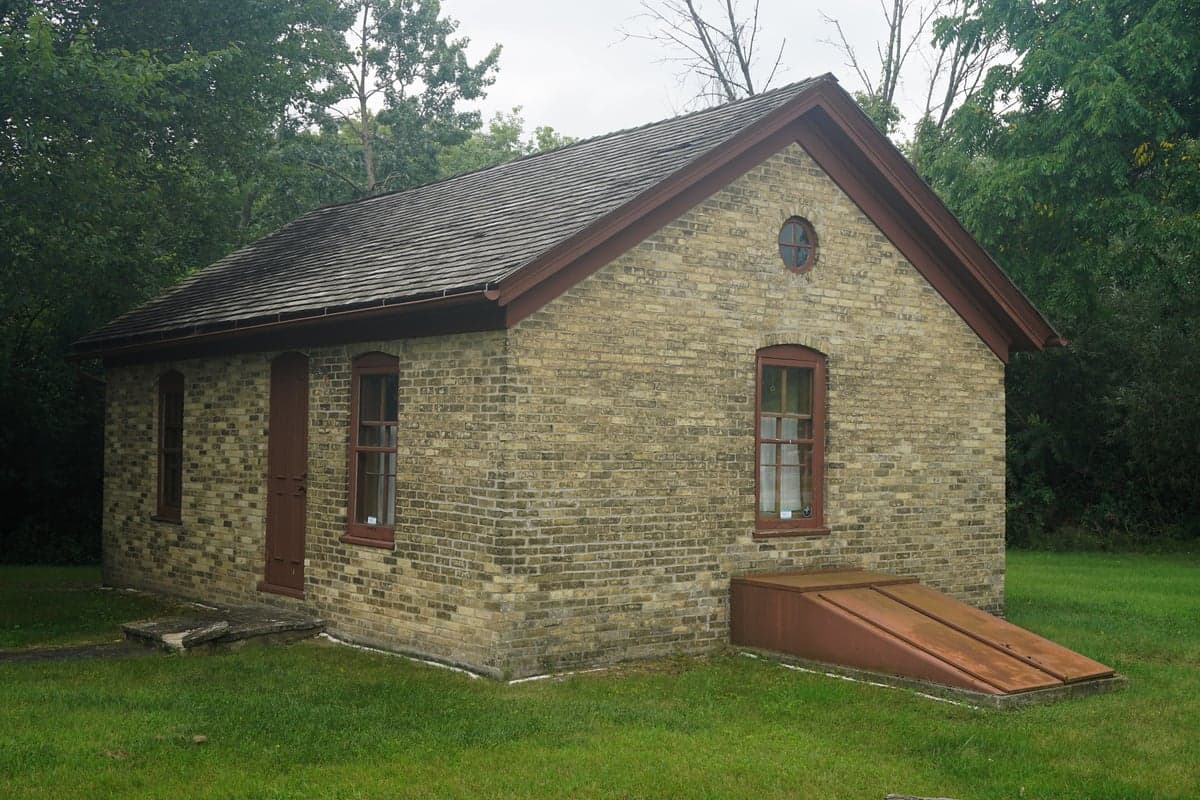
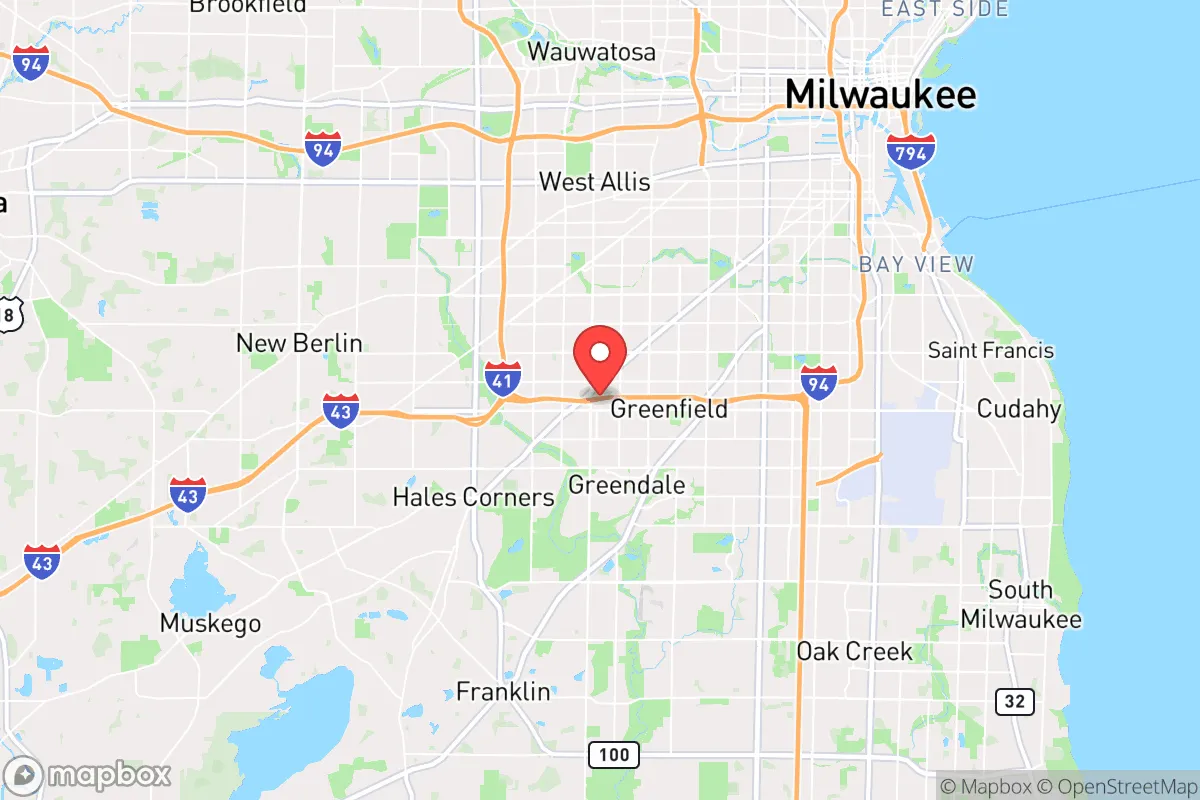
Photo: Wikipedia
Strategic Assessment of Greenfield, WI
Multiple tactical vulnerabilities. Population density, target proximity, or disaster risk are likely compounding. A retreat property and exit planning is required.
What does the Strategic Assessment tell us?
Our Strategic Assessment grades tactical survivability of an area. Major population centers, military targets, fallout zones, natural disasters, and border exposure all drive risk — lower exposure means a more defensible position in a crisis.
This is heavily inspired by Joel Skousen's Strategic Relocation book. Highly recommended you checkout the book ($)What does this tell us?
Our Strategic Assessment grades tactical survivability of an area. Major population centers, military targets, fallout zones, natural disasters, and border exposure all drive risk — lower exposure means a more defensible position in a crisis.
This is heavily inspired by Joel Skousen's Strategic Relocation book. Highly recommended you checkout the book ($)Strategic Pillars

Key Distances
Regional Safe Places
Below is our recommended "safe zones" in Wisconsin and the surrounding area based on our strategic heuristics. For most people, it's unrealistic to live in a “safe zone” full-time due to work, family or other personal reasons. They tend to be more rural. However, many of these areas are perfect for second homes and retreat properties that double as a vacation home or even a short-term rental.
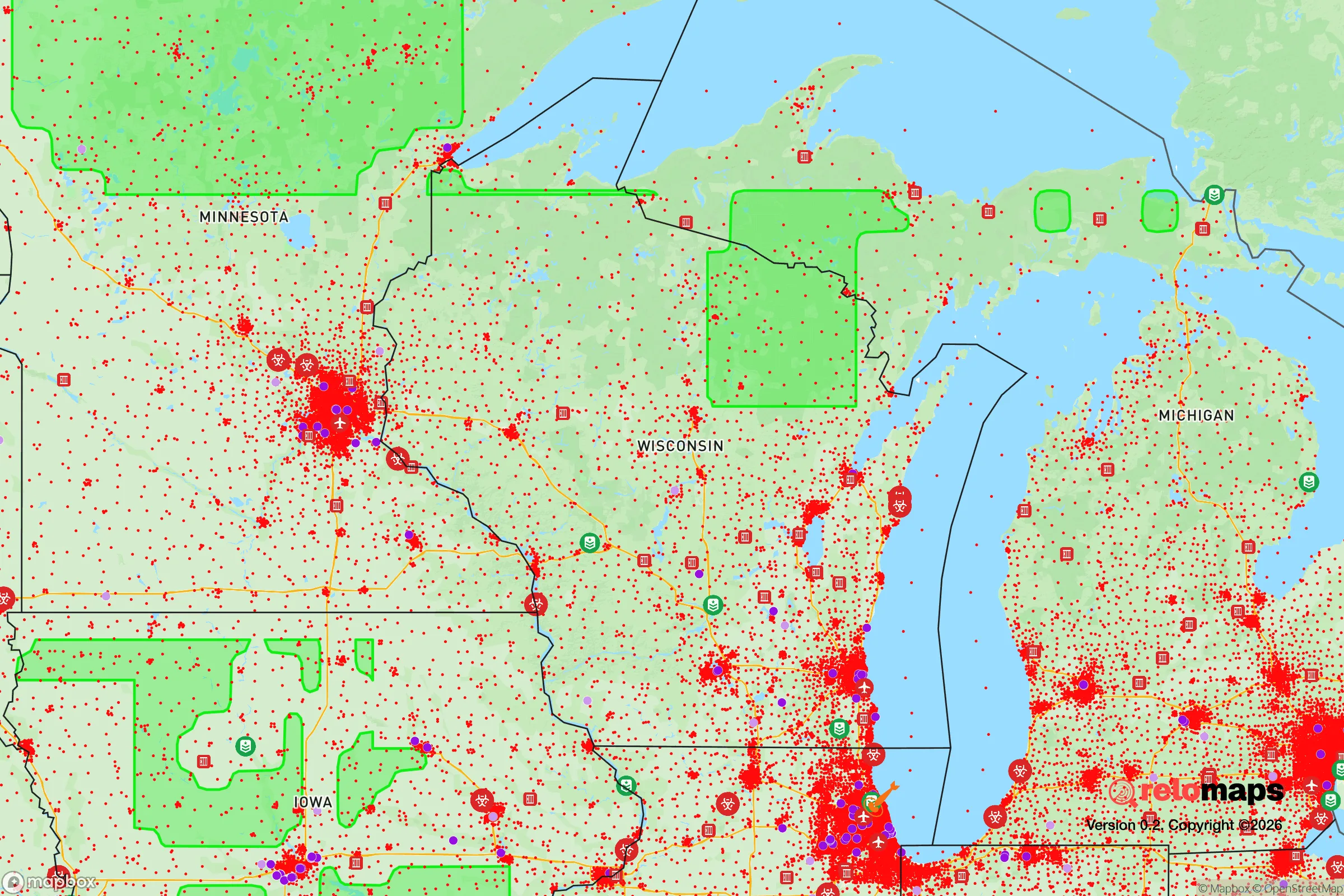
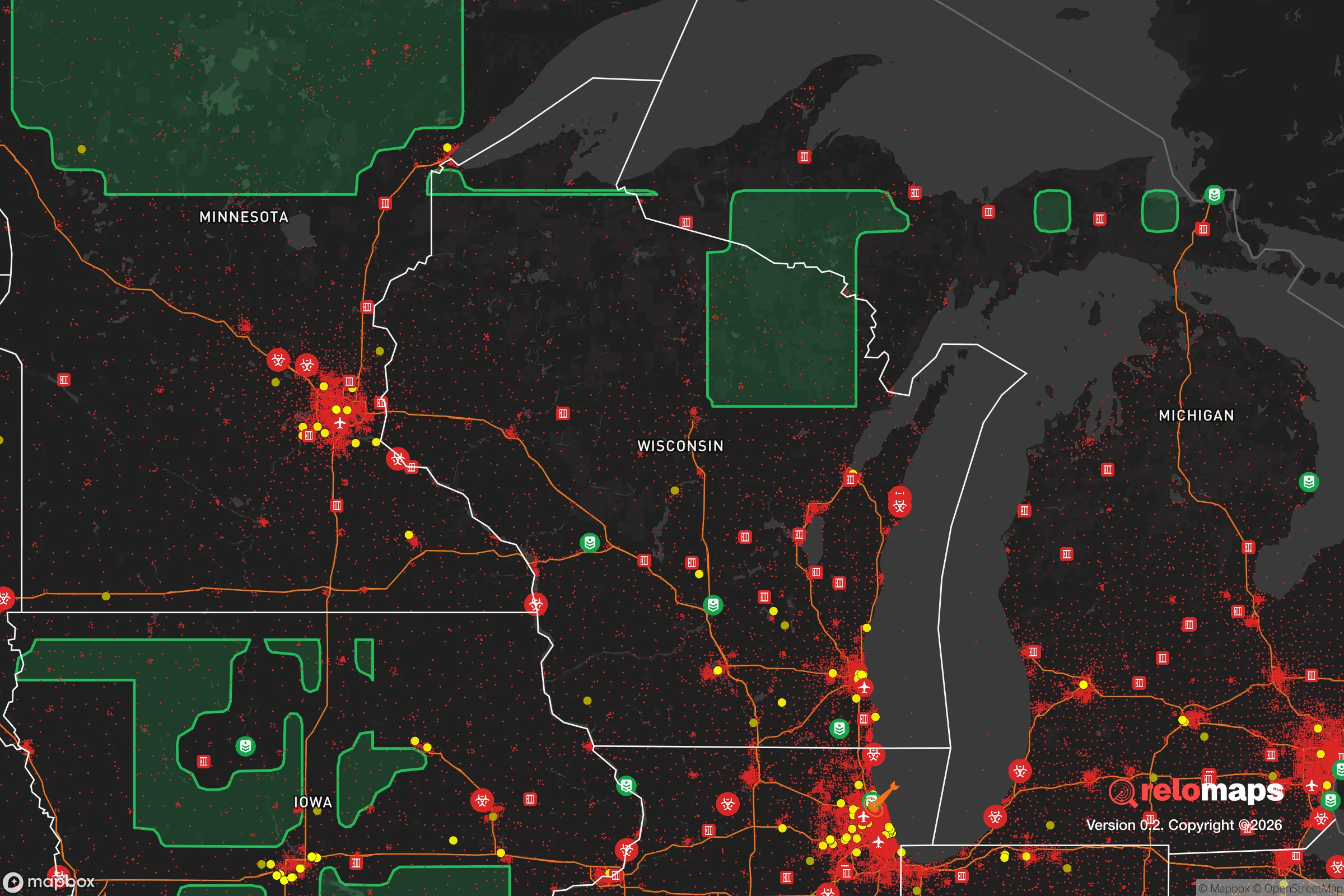


Important Note: For informational purposes only. This does not mean nothing bad ever happens in the green zones. Please use common sense. This is based on public data and modeled with AI. We tried to take a conservative approach but mistakes happen. We update this regularly as new information becomes available.
Solar Generator Recommendations
Backup power matters more here than in safer locations. We've picked three solar generators across budgets and capacity tiers — start with the budget unit if you only need a few essentials, or step up if you want to run a fridge and HVAC for days at a time.

Jackery Portable Power Station Explorer 300
Budget OptionPower on the Go: Weighing only 11 lbs, it's convenient to set up and store with book-sized foldable solar panels

BLUETTI Portable Power Station AC180
Designed for both indoor and outdoor scenarios, AC180 is highly capable as it has a robost capacity and continuous output power.

EF ECOFLOW DELTA Pro Ultra Power Station
Upgraded PickEcoFlow DELTA Pro Ultra is a whole-home energy system designed to grow with your family. Integrated with the Smart Home Panel 2, it scales to meet your evolving energy needs — keeping your home powered, intelligent, and secure through every stage of life.
We earn a commission, at no additional cost to you.
Strategic Assessment Analysis
Greenfield, Wisconsin, sits in a precarious strategic position that demands a clear-eyed assessment. While its location within Milwaukee County offers immediate access to resources, it also places you squarely in the crosshairs of risks that a survivalist or prepper mindset cannot ignore. The city’s resilience is fundamentally compromised by its proximity to a major urban center, a major interstate (I-894/I-43), and a regional airport (Milwaukee Mitchell International Airport), all of which are high-probability targets for civil unrest, supply chain disruptions, or mass casualty events. For a conservative-leaning individual or family seeking a buffer from the chaos of a collapsing system, Greenfield presents a mixed bag: it’s not a complete write-off, but it demands a heavy investment in mitigation strategies.
Geographic position and natural advantages for a prepper
Greenfield’s geography is a double-edged sword. On the plus side, it sits on relatively flat, well-drained land in southeastern Wisconsin, with access to the Root River and several smaller creeks. These water sources, while not pristine, could be tapped for emergency filtration if the municipal supply is compromised. The area’s proximity to Lake Michigan—roughly 10 miles east—provides a massive, reliable freshwater reservoir, though accessing it during a crisis would require a vehicle and a plan to avoid the likely congestion on I-94 and Highway 100. The local climate is temperate, with cold winters that can serve as a natural deterrent to unprepared looters or transient populations, but also a challenge for off-grid heating. The soil is decent for small-scale gardening, and the city’s numerous parks (like Konkel Park and the Greenfield Park) offer green space that could be repurposed for community gardens or foraging in a prolonged emergency. However, the natural advantages are muted by the fact that Greenfield is a dense, built-up suburb—not a rural retreat. You’re not going to find deep forests, defensible terrain, or isolation here. The best you can say is that it’s a staging ground, not a final destination.
Risks, exposures, and proximity to fallout-relevant landmarks
The risks here are substantial and should give any serious prepper pause. Greenfield is less than 5 miles from Milwaukee Mitchell International Airport, a major transportation hub that, in a crisis, could become a focal point for military activity, refugee flows, or a target for a coordinated attack. The city is also bisected by I-894 and I-43, major arteries that would be choked with evacuees during a disaster, turning Greenfield into a bottleneck rather than a safe haven. The General Mitchell International Airport is also a known point of interest for any scenario involving an EMP or cyberattack on aviation infrastructure. Additionally, the city is within a 20-mile radius of the Milwaukee Metropolitan Sewerage District’s Jones Island treatment plant and the We Energies power plants along the lakefront—both potential targets for sabotage or accidental release. The proximity to the Milwaukee VA Medical Center and Froedtert Hospital is a double-edged sword: medical access is good, but these facilities would be overwhelmed in a mass casualty event, drawing crowds and potential violence. For a conservative relocator, the biggest red flag is the dense urban population of Milwaukee County (over 900,000 people). In a collapse scenario, Greenfield would be on the front line of urban exodus, with little natural barrier to slow the flow of desperate people heading west or south.
Practical resilience for a relocator: food, water, energy, and defensibility
If you’re determined to make Greenfield work, you need a hard-nosed plan for self-sufficiency. Food security is the weakest link. The city has no significant agricultural land within its borders; you’re reliant on grocery stores (Sendik’s, Pick ‘n Save) that would empty within hours of a crisis. A serious prepper would need to establish a robust pantry, a greenhouse, and relationships with local farmers in surrounding counties (Waukesha, Washington) for bulk purchases. Water is slightly better: the municipal supply comes from Lake Michigan, but a grid failure would cut that off. A deep well is not an option for most homes due to urban zoning, so you’d need to stockpile at least 50 gallons per person and invest in high-quality filters (Berkey, Sawyer) for the Root River or rainwater collection. Energy resilience is a challenge. The grid is reliable day-to-day, but a prolonged outage (from a cyberattack or solar flare) would leave you in the dark. Solar panels are feasible on most roofs, but HOA restrictions in some Greenfield neighborhoods could be a hurdle. A backup generator with a 50-100 gallon propane tank is a must, but remember that fuel supplies will be contested. Defensibility is the hardest sell. Greenfield is a grid of suburban streets with no natural chokepoints. Your best bet is a home on a corner lot with clear sightlines, reinforced doors, and a basement that can serve as a safe room. Neighborhood watch and mutual aid groups are your only real defense against looting or home invasions. The city’s police force is competent but would be stretched thin in a crisis. For a single individual or a family, the practical takeaway is that Greenfield requires a high level of preparation and a low expectation of community resilience—you’re largely on your own.
The overall strategic picture for Greenfield is one of calculated risk. It is not a survivalist paradise, nor is it a complete dead zone. For a conservative relocator who values proximity to employment (the city has a strong manufacturing and logistics base) and medical infrastructure, but is willing to invest heavily in home hardening, food storage, and off-grid capabilities, it can serve as a temporary base. However, the long-term outlook is grim if you’re betting on a major societal disruption. The city’s location within the Milwaukee metro area means it will be a pressure point during any crisis—a place where the urban and suburban collide. If your goal is to ride out a storm and then relocate to a more defensible rural property (say, in the Driftless Region of Wisconsin or the Upper Peninsula), Greenfield could work as a launchpad. But if you’re looking for a place to dig in for the long haul, the risks of being near a major airport, interstate, and dense population center outweigh the benefits. My honest advice: use Greenfield as a stepping stone, not a final destination. Build your skills, stock your supplies, and have a bug-out plan that takes you north or west within the first 48 hours of a major event. The city’s resilience is a facade—it’s comfortable now, but fragile when the system cracks.

* Values derived from national, state, county, city and local statistics and may differ in a specific area. Last updated: 2026-04-21T10:31:17.000Z
Narrative content on this page is AI-generated and may contain mistakes. Verify any details that matter before acting on them.
ReloMaps may earn a commission from affiliate links at no extra cost to you.

