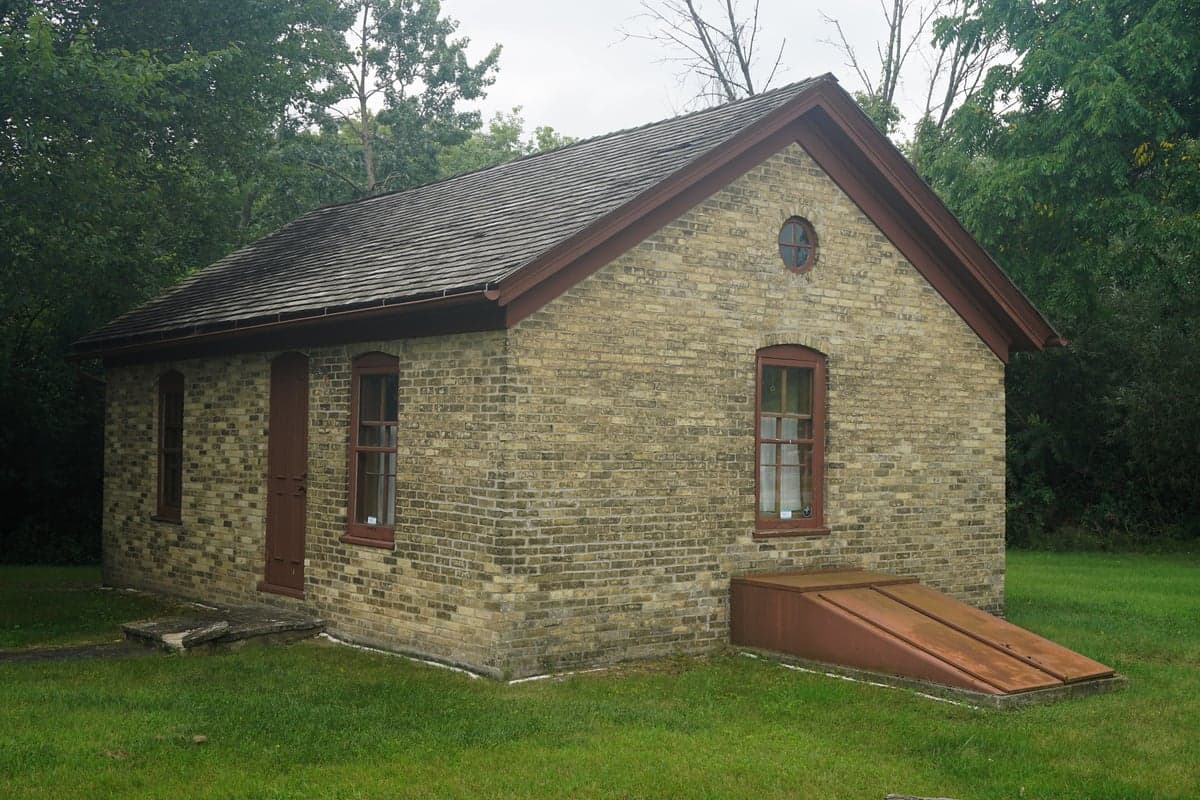
Photo: Wikipedia
Personal Sovereignty in Greenfield, WI
Moderate friction. Expect trade-offs in some aspect of personal liberty and independence.
What does Personal Sovereignty tell us?
Personal Sovereignty measures your capacity for self-reliance and independence with minimal government friction. Higher scores mean fewer barriers between you and the way you want to live... but it assumes you have the space you need and good neighbors.
What does this tell us?
Personal Sovereignty measures your capacity for self-reliance and independence with minimal government friction. Higher scores mean fewer barriers between you and the way you want to live... but it assumes you have the space you need and good neighbors.
State Policy
Energy independence: Importer (15% of energy produced in-state)
Personal Liberty
Homesteading

Personal Liberty Analysis
Greenfield, Wisconsin offers a notably above-average environment for personal sovereignty compared to many Midwestern suburbs, but it sits within a state that has increasingly assertive state-level controls. For the survivalist or prepper-minded individual, the city provides a solid foundation of local autonomy—particularly in property rights and self-defense—while requiring careful navigation of state-imposed tax burdens and regulatory frameworks. The key is understanding where Greenfield’s local governance ends and Madison’s reach begins, as the balance of power between city hall and the state capitol directly impacts your ability to live free from government overreach.
Tax burden and regulatory posture: how much the state takes and controls
Wisconsin’s tax climate is a mixed bag for those prioritizing financial sovereignty. The state imposes a progressive income tax with rates ranging from 3.54% to 7.65% in 2026, which is moderate compared to high-tax states like California or New York but still a significant bite for earners in the upper brackets. Property taxes in Greenfield are notably high—the effective rate hovers around 2.1% of assessed value, among the highest in the Milwaukee metro area. For a $300,000 home, that’s roughly $6,300 annually, a figure that can strain a prepper’s budget for land, supplies, or alternative energy investments. Sales tax is a relatively low 5.6% (state plus Milwaukee County), but the city’s regulatory posture is generally business-friendly, with fewer local licensing hurdles than neighboring Milwaukee proper. However, state-level regulations on everything from well water testing to building codes can feel intrusive. The Wisconsin Department of Natural Resources (DNR) has broad authority over land use, wetlands, and waste disposal, which directly impacts any off-grid or homesteading plans. For the sovereignty-minded, the tax burden is manageable if you’re earning well, but the regulatory creep from state agencies is a persistent concern.
Self-defense and gun law specifics: what you can carry and where
Wisconsin is a shall-issue state for concealed carry, meaning Greenfield residents can obtain a permit without demonstrating a special need—just pass a background check and complete a training course. The state preempts local gun ordinances, so Greenfield cannot impose its own bans or restrictions beyond state law. This is a critical win for personal sovereignty: open carry is legal without a permit, and concealed carry with a permit is straightforward. Stand-your-ground laws are in effect, with no duty to retreat in any place you have a legal right to be. Castle doctrine protections apply to your home and vehicle. However, there are limitations. The state bans possession of machine guns and short-barreled rifles without federal tax stamps, and private sales between individuals do not require a background check—but that’s a state-level gap, not a local one. For the prepper, Greenfield’s gun laws are solid but not exceptional; you can defend yourself and your property without excessive government interference, but you’ll still need to navigate federal NFA restrictions. The local police department is generally supportive of lawful gun ownership, but the political climate in Milwaukee County leans left, so expect occasional friction at the county level over things like gun show regulations or storage requirements.
Self-reliance and homesteading viability: lot sizes, zoning, and off-grid feasibility
Greenfield is a dense, older suburb with typical lot sizes ranging from 6,000 to 10,000 square feet—enough for a substantial garden and small livestock like chickens, but not for larger animals or significant acreage. The city’s zoning code permits backyard chickens (hens only, no roosters) with a permit, and vegetable gardens are unrestricted. However, off-grid living faces serious obstacles. The city requires connection to municipal water and sewer systems, so drilling a well or installing a septic system is not an option for most properties. Solar panels are allowed but must comply with building codes and homeowner association rules if applicable. Rainwater collection is legal but limited to 10,000 gallons per year per property under state DNR rules, which is restrictive for serious self-sufficiency. For the prepper, Greenfield is a compromise: you can grow food and keep some animals, but you’re still tied to the grid and municipal services. True off-grid homesteading requires moving to rural areas of Waukesha or Washington counties, where lot sizes of 1-5 acres are common and well/septic systems are standard. Greenfield is best viewed as a base for urban preparedness—stockpiling, gardening, and community networking—rather than a full self-reliance retreat.
Personal liberties: parental rights, medical autonomy, speech, and property
Wisconsin has strong protections for parental rights, including a 2023 law that requires school districts to notify parents of any changes to a student’s health or emotional well-being—a direct counter to policies in states like California that allow schools to withhold information. This is a major plus for sovereignty-minded parents. Medical autonomy is more mixed. Wisconsin does not have a state-level vaccine mandate for adults, but COVID-era restrictions in Milwaukee County were aggressive, including mask mandates and business closures that Greenfield had to follow due to county jurisdiction. The state does not have a right-to-try law for terminally ill patients, but it does allow for medical marijuana under a limited program (only for severe conditions like cancer or PTSD). Free speech protections are robust under both the U.S. and Wisconsin constitutions, and the city has no local ordinances restricting political speech or assembly. Property rights are generally strong, but the city’s zoning board has authority over land use changes, and variances can be difficult to obtain for non-standard structures like shipping container homes or underground bunkers. For the prepper, the biggest threat to personal liberties is the potential for county-level overreach during emergencies—Milwaukee County’s health department has a history of imposing broad restrictions that Greenfield residents must follow, even if the city itself is more conservative.
Overall, Greenfield offers a solid B-grade for personal sovereignty when compared to other Milwaukee suburbs. It outperforms cities like Milwaukee or Madison, where local gun bans and progressive policies are more aggressive, but it falls short of rural Wisconsin counties like Washington or Ozaukee, where property taxes are lower, lot sizes are larger, and county-level overreach is minimal. For the survivalist or prepper who values self-defense, parental rights, and a relatively business-friendly local government, Greenfield is a viable choice—provided you accept the trade-offs of higher taxes, municipal utility dependence, and the risk of county-level emergency powers. The smart move is to treat Greenfield as a hub for community and resources while maintaining a secondary retreat property in a less regulated area for true off-grid capability. The state’s overall trajectory toward centralized control is concerning, but Greenfield’s local governance remains a pocket of relative freedom for those willing to stay vigilant and engaged.

* Values derived from national, state, county, city and local statistics and may differ in a specific area. Last updated: 2026-04-21T10:31:17.000Z
Narrative content on this page is AI-generated and may contain mistakes. Verify any details that matter before acting on them.
ReloMaps may earn a commission from affiliate links at no extra cost to you.

