
Political ClimatePolitical Climate in Gonzales, TX
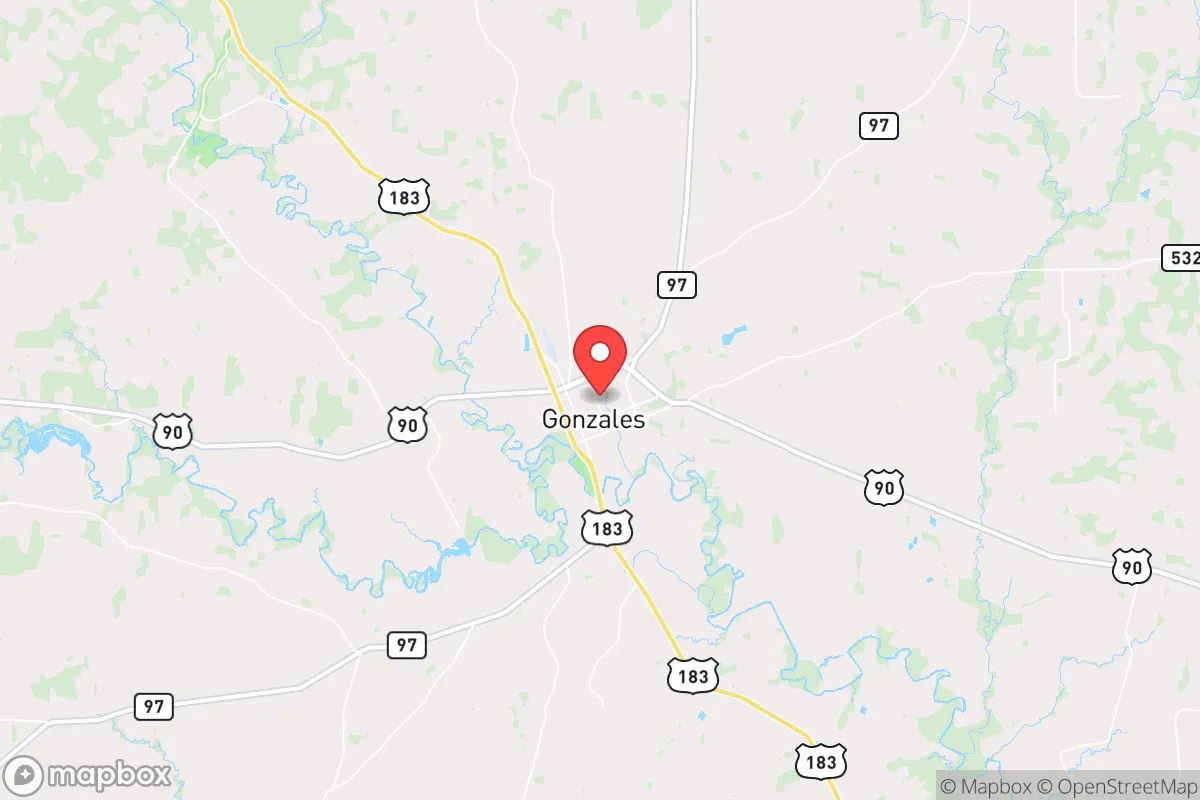
District shown is the primary district for this city’s centroid. Cities may span multiple districts.
Local Political AnalysisPolitical Analysis of Gonzales, TX
Gonzales has long been a reliably conservative community, and that hasn't changed much over the years. The area carries a Cook Partisan Voting Index of R+7, meaning it votes about seven points more Republican than the national average, and that’s been pretty consistent through the last few election cycles. You’ll see a lot of "Gonzales Proud" signs and American flags, and the local politics tend to reflect that—county commissioners, school board members, and state reps from this district usually run as Republicans and win without much drama. The trajectory here is steady red, though like a lot of small Texas towns, you get some independent streaks on local issues, especially when it comes to property rights or school funding.
How it compares
Compared to the state of Texas as a whole, Gonzales is a bit more conservative than the average. Texas overall has a Cook PVI that’s also Republican-leaning, but it’s a much bigger, more diverse place—think Houston, Dallas, Austin, and the Rio Grande Valley all pulling in different directions. Gonzales, by contrast, is a small town in a rural county where the politics are more uniform. If you drive 30 minutes north to Lockhart or Luling, you’ll find similar conservative leanings, but head an hour west toward San Marcos or Austin, and the political climate flips dramatically—those are blue dots in a red state. So while Gonzales fits comfortably within Texas’s overall Republican tilt, it’s more consistently red than the state as a whole, which has to balance urban and suburban voters who are increasingly split.
What this means for residents
For conservative residents, this political climate means their values are well-represented in local government and most state-level elections. You’ll find that local ordinances, school policies, and county decisions tend to align with traditional conservative views—things like low taxes, Second Amendment rights, and a focus on law and order. For liberal residents, life here is still perfectly fine day-to-day, but you might feel like a minority voice in local politics. There aren’t many progressive candidates on the ballot, and issues like environmental regulation or social programs don’t get much traction in public meetings. That said, Gonzales isn’t a place where people get into heated political arguments at the grocery store—most folks are neighborly and keep politics to themselves. The practical effect is that if you’re conservative, you’ll feel at home; if you’re liberal, you’ll likely find your political engagement through state or national issues rather than local ones.
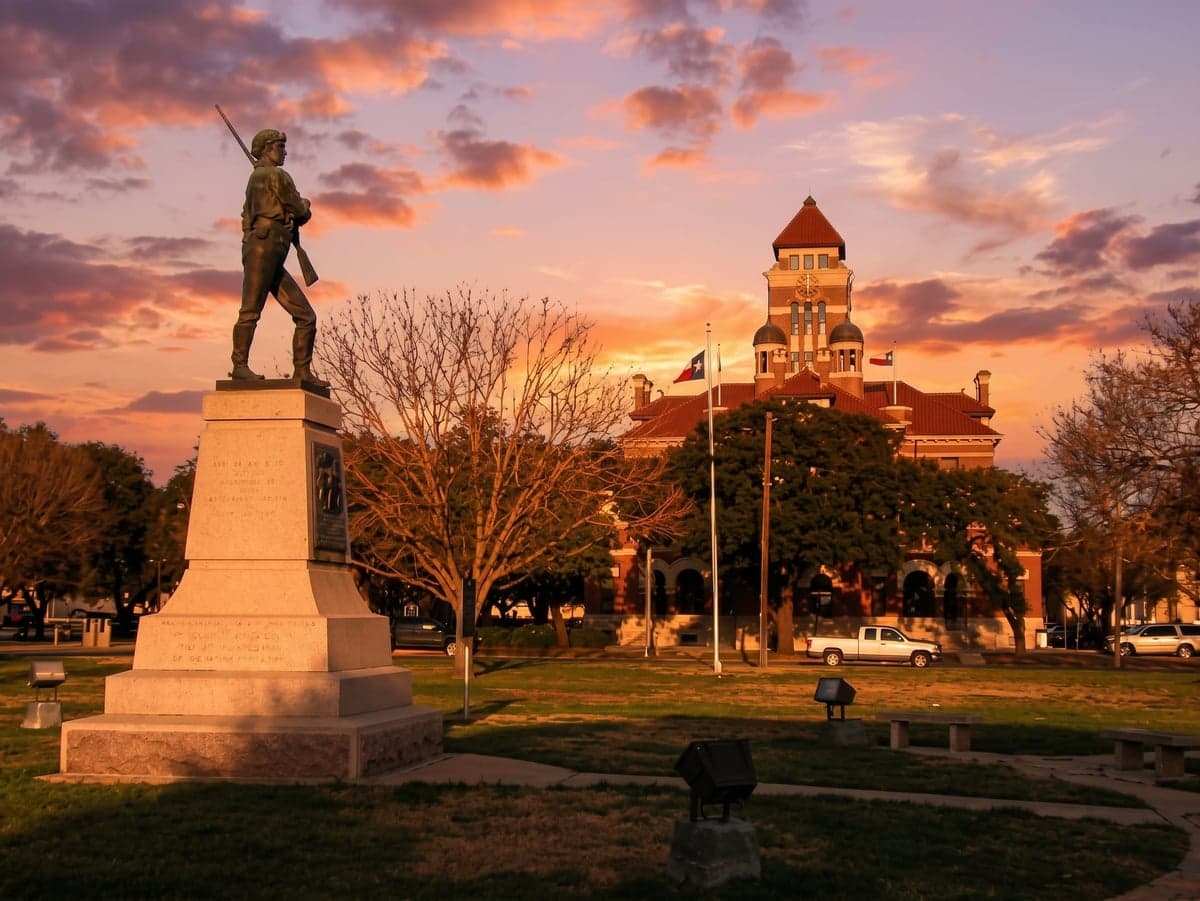
Culturally, Gonzales has a few distinctions that set it apart from bigger Texas cities. The town is famously the "Lexington of Texas" for the 1835 "Come and Take It" cannon incident, and that independent, frontier spirit still shows up in local attitudes—people here value self-reliance and are skeptical of government overreach, whether it’s from Austin or Washington. Policy-wise, you’ll see that reflected in things like minimal zoning regulations, a strong sheriff’s office presence, and a school district that emphasizes traditional values. There’s also a noticeable lack of the kind of rapid development you see in places like Kyle or Buda, so the political climate here is more about maintaining what’s been working rather than adapting to big changes. For anyone moving here, the takeaway is simple: Gonzales is a place where the politics are predictable, the pace is slow, and the community expects you to respect the local way of doing things.

State Political ClimatePolitical Climate in Texas
State Political AnalysisPolitical Environment in the State
Texas has been a reliably Republican state for the past three decades, but the margin has been shrinking. In 2024, Donald Trump won the state by roughly 9 points, down from 11 points in 2020 and 16 points in 2012. The dominant coalition remains a mix of rural conservatives, suburban moderates, and a growing number of Hispanic voters who have shifted rightward, but the Democratic base in the major metros — especially Houston, Dallas, San Antonio, and Austin — has grown fast enough to make the state a genuine battleground at the presidential level by 2028 or 2032. For a relocator, this means you’re moving into a state that is still solidly red in statewide offices (Governor, Senate, Supreme Court) but where local control varies wildly from one county to the next.
Urban vs. rural divide
The political map of Texas is a story of three distinct zones. The big four metros — Houston (Harris County), Dallas-Fort Worth (Dallas and Tarrant counties), San Antonio (Bexar County), and Austin (Travis County) — are all Democratic strongholds. Harris County, the third-most populous county in the US, went for Biden by 13 points in 2020 and Harris by 11 in 2024. Travis County (Austin) is the bluest in the state, voting nearly 75% Democratic. Meanwhile, the vast rural and exurban areas — places like the Panhandle around Lubbock and Amarillo, East Texas around Tyler and Longview, and the Hill Country west of San Antonio — vote 70-80% Republican. The real action is in the suburbs that ring the metros. Collin County (north of Dallas) was once a GOP fortress but has shifted from +30 R in 2012 to +15 R in 2024. Fort Bend County (southwest of Houston) flipped to Democratic in 2018 and has stayed there. For a new resident, your political experience will depend heavily on whether you land in a dense urban core, a fast-growing suburb, or a small town.
Policy environment
Texas has no state income tax, which is the single biggest policy draw for conservative relocators. Property taxes are high to compensate — the average effective rate is about 1.6%, among the highest in the nation — but there is no state-level property tax; it’s all local. The regulatory posture is famously business-friendly: no state-level minimum wage above the federal $7.25, no state-level paid leave mandate, and a right-to-work law that bans union security agreements. Education policy is dominated by the school choice debate. In 2023, Governor Abbott pushed a universal school voucher bill that failed in the House, but a narrower version passed in 2025, allowing Education Savings Accounts for students with disabilities and those in low-performing districts. Healthcare is a mixed bag: Texas has the highest uninsured rate in the country (about 17%), having refused Medicaid expansion under the ACA. Abortion is effectively banned after about six weeks under the 2021 Heartbeat Act and the 2022 trigger law, with no exceptions for rape or incest. Election laws have tightened: the 2021 SB 1 restricted mail-in voting, added ID requirements, and banned 24-hour and drive-through voting. For a conservative, this environment feels like a haven of limited government and traditional values. For a liberal, it can feel like a state that prioritizes business over people and restricts personal freedoms.
Recent policy direction
The last five years have seen Texas move decisively to the right on several fronts. On gun rights, the 2021 permitless carry law (HB 1927) allows any adult who can legally own a firearm to carry it openly or concealed without a license. On parental rights and education, the 2023 “Parental Bill of Rights” (HB 900) requires schools to get parental consent before students can access library materials deemed “sexually explicit,” and the 2021 law banning critical race theory in public schools (SB 3) remains in effect. On speech and privacy, the 2023 law (HB 20) prohibits social media platforms from moderating content based on viewpoint, though it’s tied up in court. On medical and bodily autonomy, the near-total abortion ban is the most restrictive in the country, and the 2023 law (SB 14) bans gender-affirming care for minors. Property rights are strong: Texas has no state-level zoning in unincorporated areas, and the 2017 “takings” law (HB 2910) requires compensation for regulations that reduce property value by more than 25%. On voting, the 2021 SB 1 made Texas one of the hardest states to vote in by mail, though in-person early voting remains generous (two weeks). For a relocator weighing liberties, the trade-off is clear: Texas maximizes gun rights, property rights, and parental control, but minimizes abortion access, union power, and voting convenience.
Civil unrest & political movements
Texas has seen its share of political flashpoints. The 2020 Black Lives Matter protests in Austin, Dallas, and Houston were large and occasionally violent, leading to a state law (HB 9 in 2021) that makes it a felony to bail out protesters accused of rioting. Immigration politics are a constant: Governor Abbott’s Operation Lone Star, launched in 2021, has deployed thousands of National Guard troops to the border, bused migrants to Democratic-led cities, and installed razor wire along the Rio Grande. The state is currently in a legal standoff with the Biden administration over border enforcement, with Abbott asserting Texas has the right to defend itself under the “invasion” clause of the Constitution. Secession rhetoric flares up periodically — the Texas Nationalist Movement pushes for a 2026 referendum — but it remains a fringe position with no serious political traction. Election integrity controversies have been persistent: the 2020 election saw lawsuits over drive-through voting in Harris County, and the 2022 primary was marred by a software glitch in 80 counties. For a new resident, the most visible sign of political tension is the constant presence of border security checkpoints south of San Antonio and the occasional migrant bus arriving in Austin or Dallas.
Projection
Over the next 5-10 years, Texas is likely to become more competitive but not flip outright. The key demographic driver is in-migration: roughly 1,000 people move to Texas every day, and they are disproportionately young, diverse, and moderate. The suburbs of Dallas-Fort Worth and Houston are trending left, while the rural vote is shrinking. The Hispanic vote is the wild card: Trump improved his share among Texas Hispanics from 35% in 2016 to 45% in 2024, and if that trend continues, the GOP can hold off a blue wave. But if the Democratic coalition in the metros keeps growing, a presidential flip by 2032 is plausible. Statewide offices will remain Republican for the foreseeable future because of gerrymandered legislative maps and the power of rural districts. For a relocator, the practical takeaway is that Texas will remain a low-tax, business-friendly, culturally conservative state for at least another decade, but the political conversation will get louder and more polarized as the margins tighten.
Bottom line for a new resident: If you’re conservative, you’ll find a state that largely governs the way you vote — low taxes, strong gun rights, parental control in schools, and a government that pushes back on federal authority. If you’re liberal, you’ll find a state where your vote matters more than it used to, where your city council and county government have real power, and where you’ll need to navigate a state-level policy environment that is often hostile to your values. Either way, Texas is a state where local control is real — your experience in Austin will be completely different from your experience in Lubbock. Pick your county carefully.
* Values derived from national, state, county, city and local statistics and may differ in a specific area. Last updated: 2026-10-06T19:11:35.000Z
Narrative content on this page is AI-generated and may contain mistakes. Verify any details that matter before acting on them.
ReloMaps may earn a commission from affiliate links at no extra cost to you.

