Demographics of Gonzales, TX
Affluence Level in Gonzales, TX
A below-average socioeconomic profile. Incomes, home values, and educational attainment trail the U.S., with higher poverty and unemployment.
People of Gonzales, TX
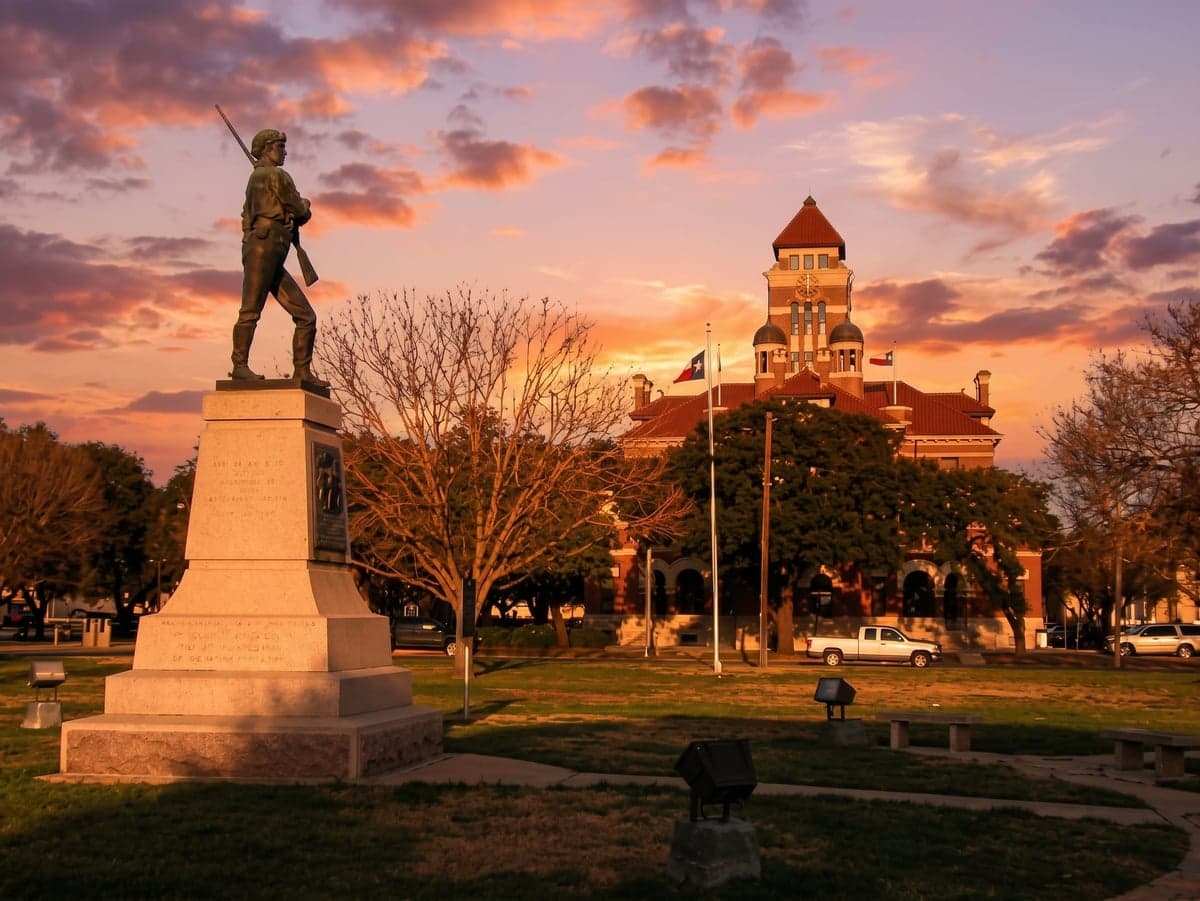
The people of Gonzales, Texas, today form a predominantly Hispanic community (60.3%) with a significant White minority (30.1%) and a notable Black population (8.7%), creating a cultural identity rooted in ranching, agriculture, and small-town resilience. With a population of 7,180 and a low college attainment rate of 10.8%, the city retains a working-class character shaped by generations of Tejano families, German settlers, and African American descendants of the Reconstruction era. The foreign-born share stands at 7.8%, reflecting steady but modest immigration, primarily from Mexico. Gonzales is known as the "Birthplace of Texas Independence," and its people carry a strong sense of historical pride, evident in the preservation of landmarks like the Gonzales Memorial Museum and the annual Come and Take It festival.
How the city was settled and grew
Gonzales was founded in 1825 as the capital of the Green DeWitt Colony, one of the earliest Anglo-American settlements in Mexican Texas. The original population consisted of Anglo-American families from the southern United States, drawn by land grants under the Mexican government. These settlers, known as the "Old Three Hundred" families, established the Historic Downtown District along St. Joseph Street, where the famous "Come and Take It" cannon was defended in 1835. After Texas independence, German immigrants arrived in the 1840s and 1850s, settling in the German Hill Country area west of downtown, where they built farms and established the region's cattle industry. African Americans came to Gonzales after the Civil War, many as freedmen seeking land and work on cotton plantations; they concentrated in the East Side neighborhood around Water Street, where the historic St. James Baptist Church (founded 1870) still stands. Mexican-American families began arriving in the early 20th century, drawn by railroad construction and agricultural labor, forming the Barrio de los Mexicanos (now known as the Southside) along Highway 183. By 1950, the population was roughly 60% White, 25% Hispanic, and 15% Black, with a small but established German-American community.
Modern era (post-1965)
After the 1965 Hart-Cellar Act, immigration from Mexico increased, and Gonzales's Hispanic population grew steadily, rising from about 35% in 1970 to 60.3% today. This wave settled primarily in the Southside and the newer Westwood Addition subdivision, built in the 1980s and 1990s to accommodate growing families. The White population declined from roughly 50% in 1970 to 30.1% today, as younger Anglo residents moved to larger cities like San Antonio and Austin for employment. The Black population remained stable at around 8-9%, concentrated in the East Side and the North Gonzales area near the old cotton gin. The Asian population (East/Southeast Asian) is negligible at 0.8%, and the Indian-subcontinent population is 0.0%, reflecting limited immigration from those regions. The foreign-born share of 7.8% is lower than the Texas average (17.1%), indicating that most Hispanic growth comes from U.S.-born families rather than new arrivals. The college-educated share of 10.8% is well below the state average (31.5%), reflecting the city's reliance on agriculture, manufacturing, and service jobs rather than knowledge-economy employment.
The future
Gonzales's population is projected to remain stable or grow slowly, with the Hispanic share continuing to increase gradually, potentially reaching 65-70% by 2040. The White population will likely continue a slow decline, while the Black share is expected to hold steady. New residential development is concentrated in the Westwood Addition and the Lone Tree Creek subdivision, a master-planned community built in the 2010s that attracts families seeking affordable housing within commuting distance of San Antonio (75 miles) and Austin (85 miles). The city's cultural identity is evolving from a historically Anglo-dominated narrative toward a more inclusive Tejano heritage, with bilingual signage appearing in downtown businesses and the annual Gonzales County Fair featuring both rodeo and conjunto music. However, the low college attainment rate and limited job growth in professional sectors may constrain in-migration of younger, educated residents. The city is unlikely to become significantly more diverse in the near term, as Asian and Indian communities remain absent, and the foreign-born share is not rising.
For someone moving in now, Gonzales offers a deeply rooted, working-class community with a strong sense of history and a predominantly Hispanic cultural fabric. The city is becoming more Tejano in character, but remains affordable and family-oriented, with a slower pace of change than the booming suburbs of San Antonio and Austin. New arrivals will find a place where neighbors know each other, property taxes are relatively low, and the "Come and Take It" spirit still defines the local identity.

* Values derived from national, state, county, city and local statistics and may differ in a specific area. Last updated: 2026-10-06T19:11:35.000Z
Narrative content on this page is AI-generated and may contain mistakes. Verify any details that matter before acting on them.
ReloMaps may earn a commission from affiliate links at no extra cost to you.

