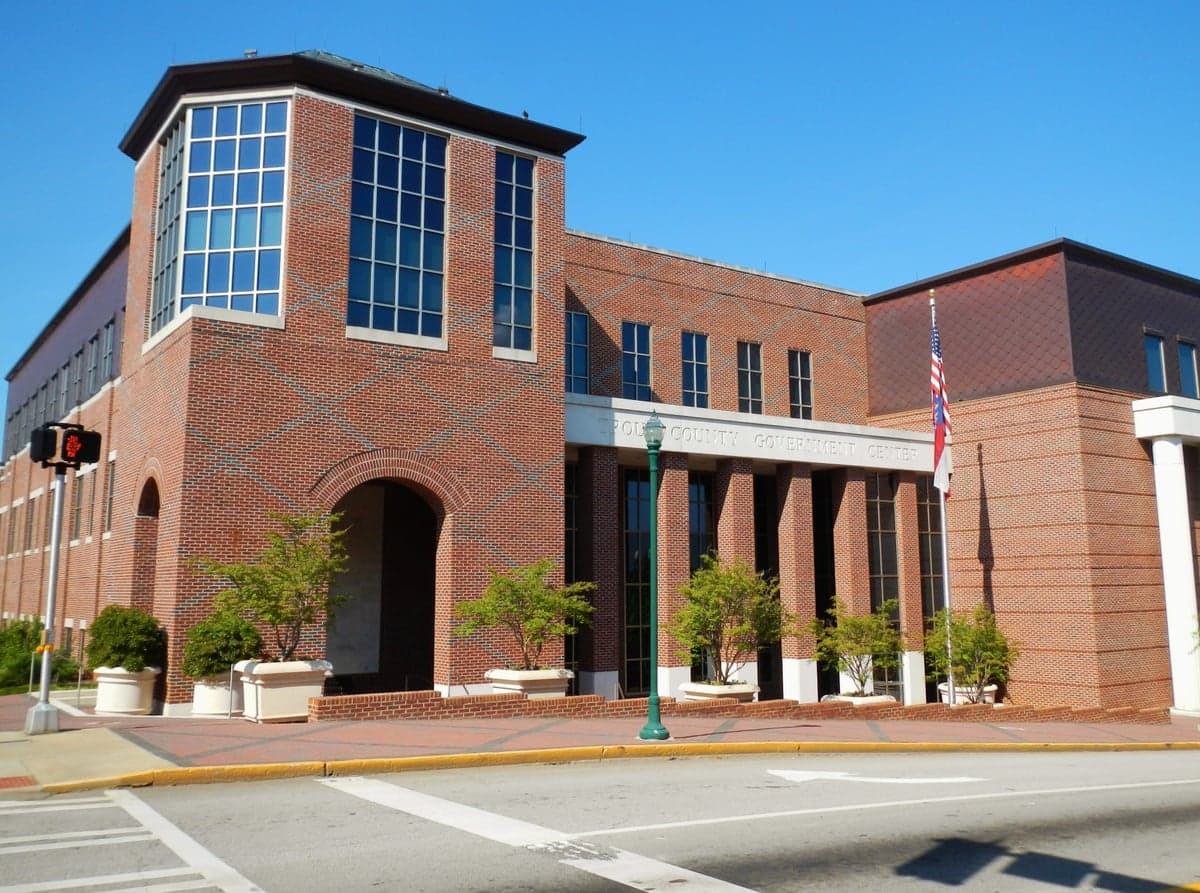
Photo: Wikipedia
Demographics of Troup County
Affluence Level in Troup County
A below-average socioeconomic profile. Incomes, home values, and educational attainment trail the U.S., with higher poverty and unemployment.
People of Troup County
Troup County, Georgia, is home to 69,821 residents, a population defined by its deep-rooted Black and White Southern heritage, with a small but growing Hispanic and Asian presence. The county seat of LaGrange anchors a community that is 54.2% White, 36.5% Black, and 4.4% Hispanic, with a notably low foreign-born population of just 3.0%. This is a place where the legacy of the Old South and the industrial New South meet, creating a distinct cultural identity that is both traditional and quietly diversifying. For those moving in, Troup County offers a slower pace of life with a clear sense of local history, though its demographic profile remains less diverse than the national average.
Settlement & growth (pre-1960)
Long before European settlers arrived, the land that is now Troup County was part of the ancestral territory of the Creek (Muscogee) Nation. The Creeks established numerous towns and villages along the Chattahoochee River, using the fertile floodplains for agriculture and the river for trade. The area remained under Creek control until the 1820s, when the state of Georgia aggressively pushed for Native removal through a series of treaties and land lotteries. The Creek people were forcibly displaced in the 1820s and 1830s, clearing the way for white settlement.
The first major wave of American settlers arrived in the late 1820s and 1830s, primarily Scots-Irish and English yeoman farmers from the Piedmont regions of Virginia, North Carolina, and South Carolina. They were drawn by the Georgia Land Lottery of 1827, which offered cheap, fertile land in the newly formed Troup County. These early settlers established small farms and the first towns, including LaGrange (the county seat, founded 1828), West Point (a key river trading post), and Hogansville (a railroad town). The economy was almost entirely agricultural, centered on cotton, and the region quickly became part of the Black Belt, where plantation slavery took hold.
By the 1840s and 1850s, the county's population was already heavily shaped by the forced migration of enslaved African Americans. These individuals, brought primarily from the Upper South (Virginia, Maryland, and the Carolinas), made up a large portion of the labor force on the cotton plantations. After the Civil War and Emancipation, many freedmen remained in the county as sharecroppers and tenant farmers, forming the foundation of the Black communities that still exist today in LaGrange, West Point, and rural areas like Mountville and Long Cane. The post-Reconstruction era saw the imposition of Jim Crow laws, which cemented racial segregation and limited economic opportunities for Black residents for generations.
The late 19th and early 20th centuries brought a new economic force: the textile industry. The arrival of cotton mills in LaGrange and West Point drew both white and Black workers from the surrounding countryside, though the mills were strictly segregated. Companies like the Callaway Mills (founded in LaGrange in the early 1900s) became the dominant employer, transforming the county from a purely agrarian society into a mill town economy. This industrial base kept the population relatively stable through the Great Depression and World War II, even as the Great Migration saw many Black Southerners leave for Northern cities. The county's population remained overwhelmingly native-born, with very little foreign immigration during this period.
Modern era (post-1965)
The post-1965 era in Troup County has been defined more by domestic migration and suburbanization than by the international immigration that reshaped much of the United States. The 1965 Hart-Cellar Act had a minimal direct impact here; the county's foreign-born population remains just 3.0%, far below the national average. The small immigrant communities that do exist are primarily Hispanic (4.4% of the total population) and East/Southeast Asian (1.3%), with a separate Indian-subcontinent population of 1.1%. These groups have largely settled in LaGrange, where they work in manufacturing, healthcare, and the service industry, but they have not formed large, concentrated ethnic enclaves.
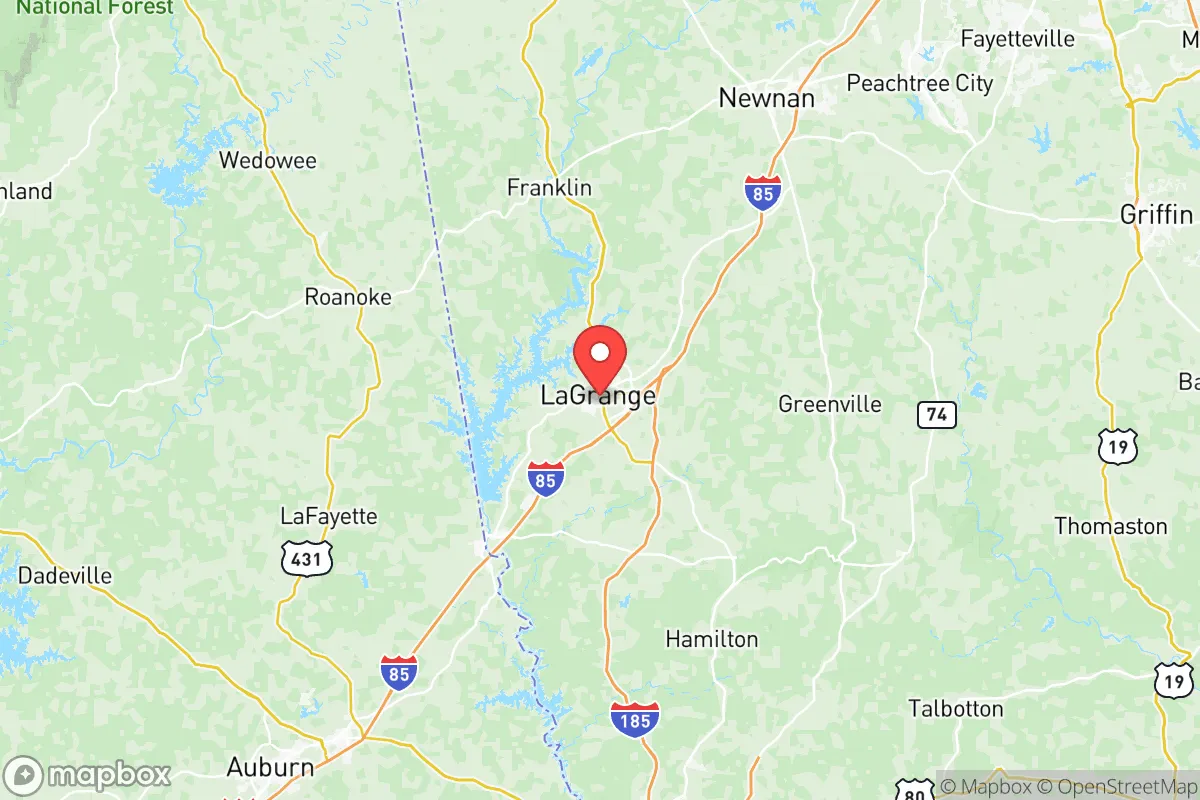
The most significant demographic shift since 1965 has been the gradual suburbanization of the county, driven by its proximity to the Atlanta metropolitan area. Located about 70 miles southwest of downtown Atlanta, Troup County has become a bedroom community for commuters seeking lower housing costs and a quieter lifestyle. This has brought an influx of white and Black middle-class families from the Atlanta suburbs, particularly to newer developments around LaGrange and along the I-85 corridor. The county's Black population has remained steady at around 36.5%, reflecting both the deep historical roots of the African American community and some return migration of Black families from the North.
The decline of the textile industry in the late 20th century was a major shock, but the county has partially reinvented itself with a diversified manufacturing base. Major employers like Kia Motors (which opened a massive assembly plant in West Point in 2009) and several automotive suppliers have attracted a new wave of workers, including some Hispanic and Asian immigrants. However, the county's college attainment rate is just 22.5%, reflecting a workforce that remains heavily oriented toward blue-collar and trade jobs. The cultural identity of the county is still strongly rooted in its Southern Protestant heritage, with a conservative political leaning that is typical of the region.
The future
Demographic projections for Troup County suggest a slow but steady increase in diversity over the next 10-20 years. The Hispanic population is expected to grow as the automotive and logistics sectors continue to expand, drawing workers from other parts of Georgia and the Southeast. The East/Southeast Asian and Indian populations, while small, are likely to grow modestly as well, particularly in professional and technical roles tied to the manufacturing base. However, the county is unlikely to see the rapid diversification of major metropolitan areas; its foreign-born share will probably remain below 5-6% for the foreseeable future.
The most notable trend is the continued suburbanization from Atlanta. As housing costs in the metro area rise, more families will look to Troup County for affordable homes and land. This will likely increase the white and Black middle-class population, particularly in LaGrange and along the I-85 corridor near West Point. The county's cultural identity will remain predominantly Southern and conservative, but it may become slightly more politically moderate as new residents bring different perspectives. The challenge for the county will be balancing growth with preserving its small-town character and addressing the economic disparities that persist between its white and Black communities.
For someone moving in now, Troup County represents a stable, affordable, and historically rich community that is slowly opening up to new influences. It is not a place of rapid demographic change, but rather a place where the old Southern fabric is being gently rewoven with new threads. The future points toward a slightly more diverse, more suburban county that retains its core identity as a manufacturing and agricultural hub with a strong sense of place.

* Values derived from national, state, county, city and local statistics and may differ in a specific area. Last updated: 2026-07-03T14:54:38.000Z
Narrative content on this page is AI-generated and may contain mistakes. Verify any details that matter before acting on them.
ReloMaps may earn a commission from affiliate links at no extra cost to you.

