

Photo: Wikipedia
Quality of Life in Henry County
A livable area that tracks near national norms for affordability, walkability, and neighborhood health.
What does Quality of Life tell us?
Quality of Life measures an area by evaluating factors like cost of living, nearby amenities, country club access, airport proximity, socioeconomic signals and neighborhood character. For large states, this is a general average — quality of life can vary dramatically between metro areas, suburbs, and rural communities within the same state.
What does this tell us?
Quality of Life measures an area by evaluating factors like cost of living, nearby amenities, country club access, airport proximity, socioeconomic signals and neighborhood character. For large states, this is a general average — quality of life can vary dramatically between metro areas, suburbs, and rural communities within the same state.
Cost of Living
19% above national average
103%
The Real Cost of Living in Henry County for 2026
| Tier | Individual | Family (4) |
|---|---|---|
| Survival | $25k | $46k |
| Comfortable | $54k | $79k |
| Luxury | $121k+ | $188k+ |
| Elite (Top 5%) | $143k+ | $221k+ |
Quality-of-Life Analysis
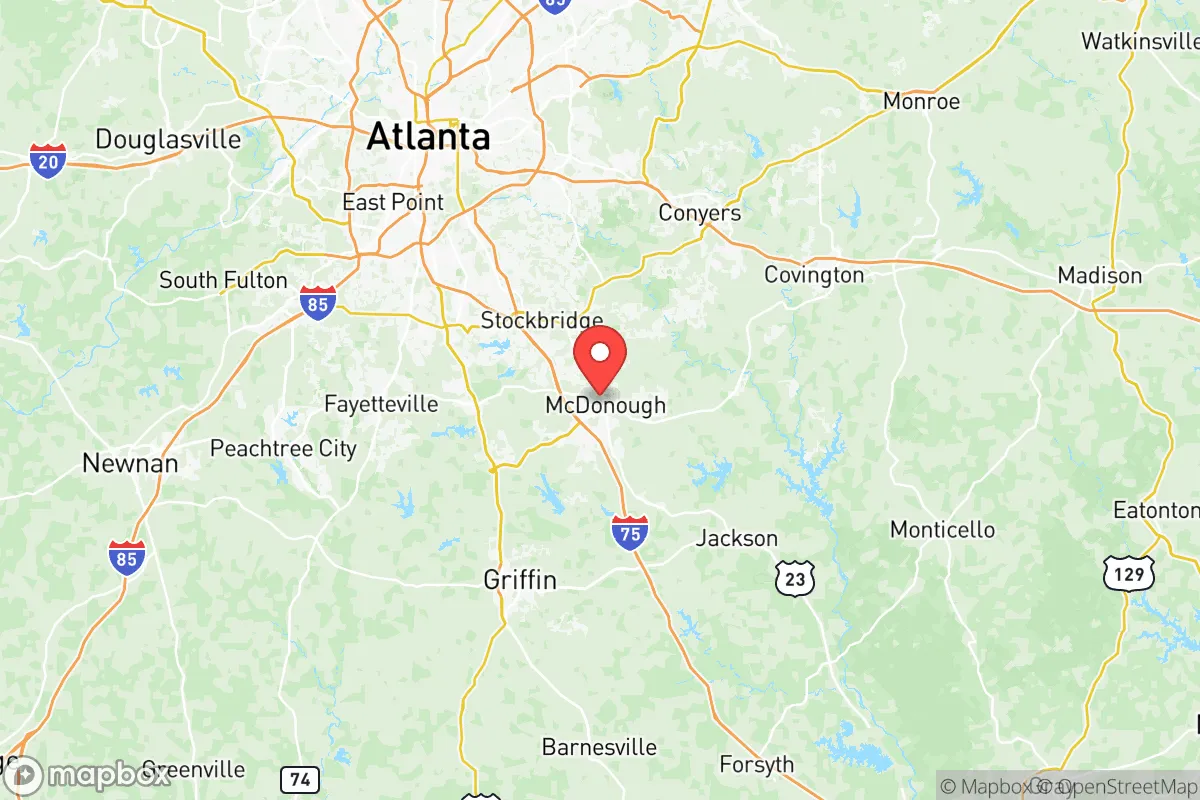
Henry County, Georgia, sits at the southeastern edge of the Atlanta metro area, offering a quality-of-life spectrum that ranges from fast-growing suburban towns like McDonough and Stockbridge to sparsely populated rural communities such as Ola and Flippen. The county draws a broad mix of residents: young families and commuters who need Interstate 75 access to Atlanta jobs, retirees seeking quieter small-town living in Hampton, and landowners who prize acreage and privacy in the county’s eastern and southern unincorporated areas. With a cost-of-living index of 119 (19% above the national average) and an average commute of 33 minutes, living in Henry County generally requires a trade-off between affordability and proximity to urban amenities.
Largest town(s) & population centers
McDonough, the county seat, is the largest population center and the county’s commercial and governmental hub. Daily life revolves around the historic courthouse square, walkable restaurants, and regional retail centers such as the McDonough Village shopping area. New subdivisions and apartment complexes continue to push outward along State Route 20 and 81, making it a primary destination for families relocating from higher-cost suburban counties. Stockbridge sits along the I-75 corridor and is known for its high-density commercial strips—including the Hudson Bridge Road corridor—and the major retail power centers at Jodeco Road. It offers more immediate access to jobs in Clayton County and Hartsfield-Jackson Atlanta International Airport. Locust Grove has grown rapidly around the Tanger Outlets mall and the Locust Grove downtown revitalization, attracting a mix of newer single-family homes and rental townhomes. Hampton retains an authentic small-town feel with a historic main street and the annual Hampton Festival, appealing to residents who want a slower pace but still live within 25 minutes of Atlanta’s southern edge.
Smaller towns & rural pockets
Beyond the main towns, Henry County contains several unincorporated communities and crossroads hamlets that offer distinctly rural lifestyles. Ola, located east of McDonough along State Route 81, is a census-designated place characterized by large-lot homes, horse farms, and small roadside agriculture. Flippen sits at the intersection of High Falls Road and Flippen Road, a classic rural crossroads with a handful of country stores and churches. The Kelleytown area, near the Henry County-Butts County line, runs along the shores of Lake Jackson and provides lakefront properties popular with recreational boaters and anglers. Tussahaw is an unincorporated community in the southern part of the county, near the Ocmulgee River floodplain, where houses sit on multi-acre parcels and cellular service can be inconsistent. These rural pockets lack the commercial density of the towns but offer lower land prices per acre, more space, and a stronger connection to the area’s agricultural history.
Cost & lifestyle range
The cost of living in Henry County varies significantly by location. In McDonough and Stockbridge, a median home value of $277,400 typically buys a 3- to 4-bedroom house in a subdivision with an HOA, with monthly rents averaging $1,538 for a newer two-bedroom apartment. Homes in these areas tend to be on smaller lots (under half an acre) and carry higher property tax rates due to city services. At the opposite end, in rural areas like Ola, Flippen, or Tussahaw, the same median price may purchase a home with 1-5 acres, often with a private well and septic system, and lower overall property taxes because the home is outside any city limits. However, residents in these rural pockets face longer drives to grocery stores, schools, and medical care—many rely on McDonough or Stockbridge for daily needs. The average commute of 33 minutes is a blended figure: residents in Stockbridge may reach downtown Atlanta in 25-30 minutes, while those in Ola or Locust Grove often log 40-50 minutes one-way on I-75 or back roads. Utility costs also diverge—gas and water are widely available in town but may require propane tanks and private wells in rural areas. The lifestyle difference is clear: suburban dwellers prioritize convenience and shorter commutes; rural residents accept distance for land, privacy, and lower monthly carrying costs.
Henry County is best suited for residents who want an Atlanta-adjacent lifestyle without the premium prices of Cobb or Gwinnett counties. Families who value strong public schools (Henry County School System consistently ranks above state averages) and a mix of housing density will find options across the suburban-to-rural continuum. Commuters willing to trade drive time for acreage thrive in the eastern and southern pockets, while those who prefer walkable downtowns and immediate retail access gravitate to McDonough, Stockbridge, or Hampton. The county’s diversity of environments ensures that both first-time home

Crime in Henry County
Generally safer than 56% of comparable U.S. locations.
Violent CrimeViolent Crime Analysis
Property CrimeProperty Crime Analysis
Crime Analysis
Henry County, Georgia, presents a moderate-to-low crime profile relative to both state and national averages, though residents in certain suburban pockets should remain vigilant. With a violent crime rate of 262 per 100,000 residents and a property crime rate of 1,236.6 per 100,000, the county sits noticeably below Georgia’s statewide violent crime rate of roughly 395 per 100,000 and well under the national average of about 380 per 100,000. Property crime in Henry County also undercuts the Georgia average of approximately 2,200 per 100,000, placing it closer to the national rate of roughly 1,950 per 100,000. These figures position Henry County as one of the safer suburban counties in the Atlanta metro region, but crime distribution is not uniform—outlying towns and neighborhoods can differ significantly.
Crime in context
Henry County’s violent crime rate—about one-third lower than Georgia’s average—reflects a jurisdiction that has largely avoided the spikes seen in more urbanized parts of the metro area. By contrast, neighboring Clayton County (with a more progressive district attorney’s office) reports violent crime rates above 500 per 100,000, while Fulton County (Atlanta proper) exceeds 700 per 100,000. Property crime in Henry County, though lower than the state norm, still accounts for the bulk of reported incidents, with larceny-theft and vehicle break-ins the most common complaints. The county’s relatively conservative judicial approach—district attorneys in the Griffin Judicial Circuit, which covers Henry County, have generally emphasized tougher sentencing and accountability—contrasts with the lenient, offender-first policies adopted in some progressive metro-area jurisdictions. Those policies, while sympathetic to perpetrators, have been linked to higher recidivism and more street crime in nearby counties. Henry County’s more balanced approach helps keep its crime figures manageable, but ongoing population growth (the county added roughly 30,000 residents between 2020 and 2025) puts pressure on law enforcement resources and could gradually erode the current safety margin.
What residents experience
Daily life for most Henry County residents is marked by a sense of security that is rare within a 30-minute drive of downtown Atlanta. McDonough, the county seat, sees a concentration of retail-related property crime near the Tanger Outlets and along Highway 155, but violent incidents remain sporadic. Stockbridge, with its mix of older subdivisions and new apartment complexes, has experienced occasional clusters of burglaries and vehicle thefts, though overall rates track below the county average. Hampton and Locust Grove (both smaller towns) report the lowest violent crime rates in the county—often below 150 per 100,000—thanks to tighter-knit communities and a more proactive police presence. However, areas near the I-75 corridor, especially around the Ellenwood border where Henry County meets Clayton, see elevated property crime tied to transient populations and easier highway escape routes. Residents consistently report that most crime is non-confrontational: unlocked cars rifled through overnight, packages stolen from porches. The bigger worry voiced by locals is the potential for “metro Atlanta creep”—the spread of progressive criminal justice policies from Fulton and DeKalb counties into Henry’s own courts. If that shift occurs, many fear the current low rates could follow the trajectory of nearby jurisdictions where recidivism has risen sharply.
Neighborhood-level variation is pronounced and well-documented by local real estate data. The safest enclaves within Henry County are the newer master-planned communities like Heron Bay (south of McDonough) and Flippen (west of Stockbridge), where homeowner associations fund private security patrols and violent crime is nearly nonexistent. Older unincorporated areas near the county’s northern edge—closer to Clayton County—show property crime rates up to 20% higher than the county average. Also notable is the influence of the Towaliga Judicial Circuit, which shares oversight with Butts and Lamar counties and has resisted the progressive sentencing reforms adopted in metro Atlanta’s larger circuits. Residents considering a move to Henry County should examine not just the county-wide stats but the specific police jurisdiction: cities like Hampton and Locust Grove contract separately for law enforcement and consistently outperform unincorporated zones. For those prioritizing safety, avoiding areas directly along the I-75 corridor and choosing a town with its own police department remains the strongest strategy.
* Values derived from national, state, county, city and local statistics and may differ in a specific area. Last updated: 2026-05-22T18:46:41.000Z
Narrative content on this page is AI-generated and may contain mistakes. Verify any details that matter before acting on them.
ReloMaps may earn a commission from affiliate links at no extra cost to you.

