
Photo: Wikipedia
Political ClimatePolitical Climate in Henry County
Showing district-level results — no local-only data available.
Local Political AnalysisPolitical Analysis of Henry County
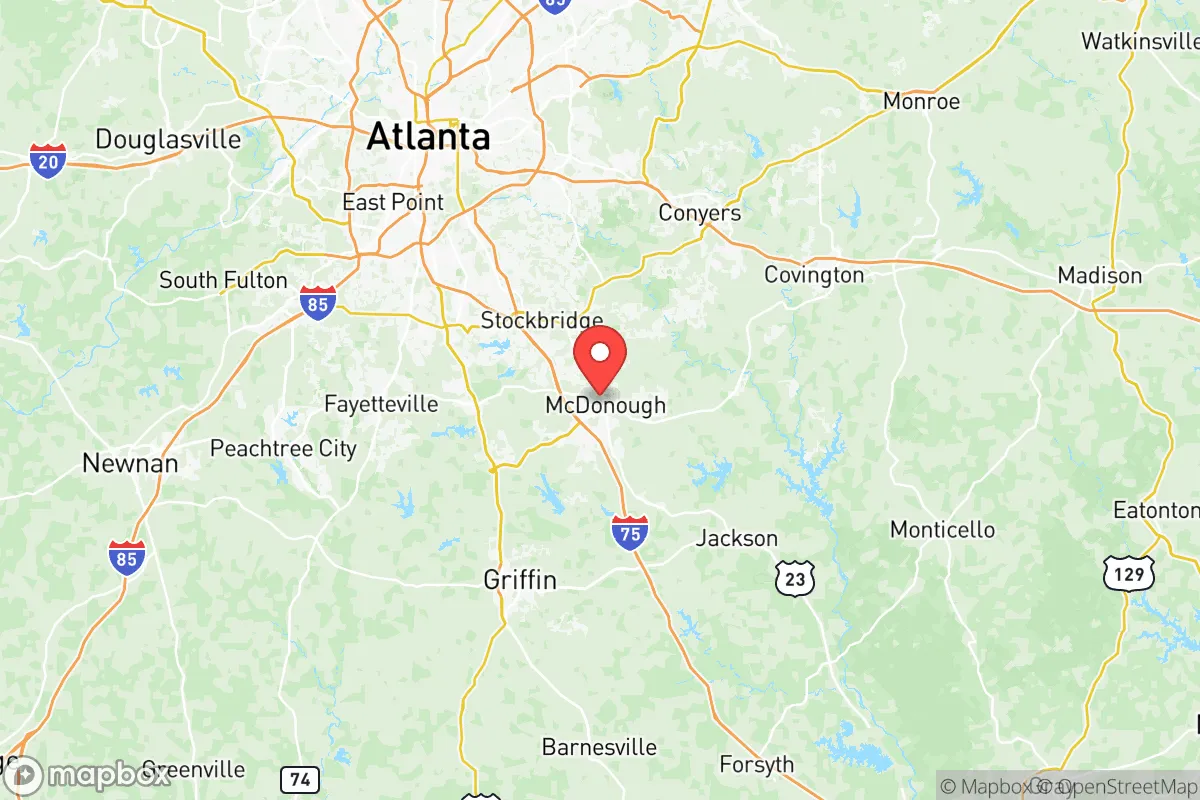
Henry County has long been a reliably conservative stronghold in Georgia, but if you’ve lived here as long as I have, you’ve watched the political ground shift under your feet. The county’s Cook Partisan Voting Index (PVI) of R+11 tells you the baseline is solidly red—much redder than the state’s overall PVI of EVEN—but that number masks a real story of demographic change and cultural tension. Ten years ago, you could drive through McDonough, Stockbridge, or Hampton and feel a uniform, small-town conservative vibe. Today, you’ll see a patchwork: some precincts still vote like it’s 2010, while others—especially around the more suburban, commuter-heavy parts—are starting to look a lot like the metro Atlanta counties to the north. The trajectory is clear: Henry County is still red, but it’s not as deep red as it used to be, and that has folks on both sides paying close attention.
How it compares
The gap between Henry County’s R+11 and Georgia’s EVEN PVI is the whole story in a nutshell. The state as a whole is a true battleground—Atlanta and its close-in suburbs pull it left, while rural and exurban counties pull it right. Henry County sits right in the middle of that tension. In the 2024 election, the county’s rural eastern precincts around Locust Grove and Hampton voted heavily Republican, often by 20-30 points. But the western side, especially parts of Stockbridge that border Clayton County, have seen a steady influx of younger, more diverse families who lean Democratic. The swing precincts are in central McDonough and along the I-75 corridor—places like the Eagles Landing area—where you’ll find a mix of longtime conservative homeowners and newer arrivals who vote more moderately. Compared to the state, Henry County is still a reliable Republican vote in most races, but it’s no longer a lock. The shift is slow, but it’s real, and it’s driven by the same forces that turned Cobb and Gwinnett counties blue over the last decade.
What this means for residents
For those of us who value limited government and personal freedoms, the trend is concerning. The county commission and school board have stayed mostly conservative, but you can feel the pressure building. There’s been a push in recent years to bring in more progressive policies—things like diversity, equity, and inclusion initiatives in the schools, and talk of zoning changes that could restrict property rights. The county’s rapid growth (population jumped from about 204,000 in 2010 to over 250,000 by 2024) means new residents bring new ideas, and not all of them align with the traditional values that made this area a great place to raise a family. If you’re a conservative, you’re still in the majority here, but you can’t take it for granted anymore. You have to stay engaged, show up to commission meetings, and vote in every local election—because the margins are tightening, and the direction of the county hangs in the balance.
One of the biggest cultural distinctions you’ll notice is how Henry County handles the balance between growth and freedom. Unlike some metro Atlanta counties that have embraced heavy-handed regulations on housing, businesses, and even lawn care, Henry County has historically taken a more hands-off approach. That’s changing, though. There’s been talk of stricter sign ordinances, noise regulations, and even a proposed tree protection ordinance that some residents see as government overreach. The county’s tax burden remains relatively low compared to neighboring Clayton or DeKalb, but property assessments have been climbing fast—another sign that the cost of living here is being driven by outside pressures. For now, Henry County is still a place where you can own a gun without a hassle, build a shop on your land, and raise your kids without a lot of bureaucratic interference. But if you’re paying attention, you can see the writing on the wall. The next five to ten years will decide whether this county stays true to its roots or drifts toward the kind of progressive governance that has pushed people out of other parts of the state.

State Political ClimatePolitical Climate in Georgia
State Political AnalysisPolitical Environment in the State
Georgia is a purple state that has inched leftward over the past two decades, but it remains a competitive battleground with a Cook Partisan Voting Index of EVEN — meaning it's almost perfectly split between the two parties. The state swung from reliably Republican in the 2000s to a 2020 presidential flip for Joe Biden, followed by two Senate runoff wins for Democrats in 2021, but Republicans still hold the governor's mansion, the legislature, and most statewide offices. That tension between a growing blue metro core and a still-substantial red rural and suburban base defines every political conversation here today.
Urban vs. rural divide
Georgia's political map is a story of two Georgias. Atlanta's core counties — Fulton, DeKalb, Cobb, Gwinnett — drive the Democratic surge. Fulton alone cast more than 400,000 votes for Biden in 2020, overwhelming rural turnout. Outside the metro, the picture flips hard. Rome, Dalton, Gainesville, and Valdosta anchor deep-red congressional districts where Republicans routinely win by 30-40 points. But even some exurbs are shifting: Marietta and Roswell have moved left, while Columbus and Macon remain moderate swing areas. The rural counties that once gave Republicans comfortable statewide margins are shrinking in population, while the Atlanta suburbs explode with new arrivals from bluer states. That demographic churn is what makes Georgia politically volatile — and why a conservative moving in should pay close attention to where they land.
Policy environment
Georgia's state-level policy leans conservative on most fronts, though not as far right as Alabama or Mississippi. The state has a flat income tax of 5.39% (down from 5.75% in 2023) and a $7.25 minimum wage tied to the federal floor — no state-mandated increase. Property taxes are moderate, with a homestead exemption that homeowners can cap assessment increases. On education, Georgia has a school choice program — the Georgia Promise Scholarship Act (2024) lets students in low-performing districts use state funds for private school or homeschooling. HB 334 (2022) codified parents' rights to review curriculum and opt kids out of sex-ed or controversial materials. Election law is a flashpoint: SB 202 (2021) tightened voter ID for absentee ballots, limited drop boxes, and banned outside groups from handing out food or water to voters in line — reforms proponents called integrity measures and opponents labeled suppression. The state does not have universal mail-in voting, and early voting hours are widely available but vary by county. On the healthcare front, Georgia did not expand Medicaid under the ACA, leaving a coverage gap for about 300,000 adults. The state has a limited "Pathways to Coverage" program with work requirements, but enrollment has been minuscule. For a conservative newcomer, the tax and education policies are friendly; the election system will feel secure if you lean right, restrictive if you don't.
Trajectory & freedom
Georgia has been moving in a mixed direction on personal liberty over the last five years. On gun rights, the trend is positive: the state passed constitutional carry (SB 319) in 2022, allowing permitless concealed carry for legal gun owners. Campus carry was already in place since 2017. These are real wins for Second Amendment advocates. On medical freedom and parental rights, the picture is more complicated. During COVID, Governor Brian Kemp imposed some of the earliest lockdowns in the country and later sued Atlanta over its mask mandate — a mix of overreach and resistance. The state legislature has since passed laws limiting local health officials' ability to close businesses or schools during emergencies (SB 6, 2023). Parental rights in education got a boost with the "Parents' Bill of Rights" mentioned above, but transgender athlete bans (HB 1084, 2022) and gender-affirming care restrictions for minors (SB 140, 2023) have drawn intense court battles. Property rights remain strong: Georgia is a right-to-work state with no state income tax on social security, and homeowners enjoy relatively low regulatory burdens outside Atlanta's zoning code. The net trajectory is toward greater freedom on guns and school choice, but with more government control on emergency powers and healthcare mandates — a tradeoff that depends on what matters most to you.
Civil unrest & political movements
Georgia has seen notable flashpoints. The "Stop Cop City" movement — protests against the Atlanta Public Safety Training Center — turned violent in 2023, with activists firebombing construction equipment and authorities deploying heavy-handed riot response. That conflict exposed deep distrust between left-wing activists and law enforcement, and it's still simmering. Election integrity remains a live issue: after the 2020 election, the state underwent three recounts, including a full hand recount, all affirming Biden's win. But Republican activists remain skeptical, and groups like the Georgia Election Integrity Coalition continue to push for stricter voter roll maintenance. On the right, MAGA-aligned movements are strong in rural counties, with regular "Let Freedom Ring" rallies in Dalton and Gainesville. On the left, Stacey Abrams' Fair Fight organization remains active and well-funded. Immigration politics are intense: Georgia's HB 87 (2011) was a copycat of Arizona's SB 1070, allowing police to check immigration status during lawful stops — parts were struck down, but the state has since passed additional restrictions on sanctuary policies. No county in Georgia is a formal "sanctuary", but progressive DA's in Fulton and DeKalb have refused to cooperate with ICE in certain contexts. A newcomer will notice the political energy is high everywhere — yard signs, bumper stickers, and local news coverage of school board and county commission races is intense.
Projection
Over the next 5-10 years, Georgia will likely become more competitive, not less. In-migration from blue states continues to fill the Atlanta suburbs, and those newcomers tend to vote Democratic. The 2024 election results (still pending at the time of writing) will set the tone — but even if Republicans hold, the margins will tighten. Rural counties will continue to lose population share, while exurban counties like Forsyth, Cherokee, and Hall (Gainesville) are growing but still reliable red. The wildcard is the black electorate: if Democratic turnout in Atlanta's core slips, Republicans can win statewide — as they did in 2022 for governor and secretary of state. Conservative newcomers moving to Georgia should expect a polarized, high-information environment where their vote genuinely matters. The state will not become Texas or Florida overnight, but the policy direction — especially on taxes, guns, and school choice — is likely to remain conservative as long as Republicans hold the legislature. The risk is a Democratic wave in a presidential year that flips the governor's mansion or the legislature, which would bring a sharp left turn on voting laws, healthcare, and possibly taxes. A decade from now, the state could look more like a midwestern battleground: close, contested, and consequential.
For someone moving to Georgia today, practical takeaways: choose your county carefully — your local representation and tax burden vary wildly. Outside the Atlanta core, you'll find lower crime, conservative schools, and a generally pro-freedom regulatory climate. Inside the metro, you'll face higher property taxes, more localized progressive policies, and the possibility of broader leftward shifts. Engage in local politics early; your school board and county commission race matters more here than in a solid red state. Georgia rewards active citizenship — it's not a state where you can coast. If you value personal liberty, school choice, and gun rights, there are few better places to plant roots. Just understand that the fight to keep it that way is ongoing, and your arrival shifts the balance one way or the other.
* Values derived from national, state, county, city and local statistics and may differ in a specific area. Last updated: 2026-05-22T18:46:41.000Z
Narrative content on this page is AI-generated and may contain mistakes. Verify any details that matter before acting on them.
ReloMaps may earn a commission from affiliate links at no extra cost to you.

