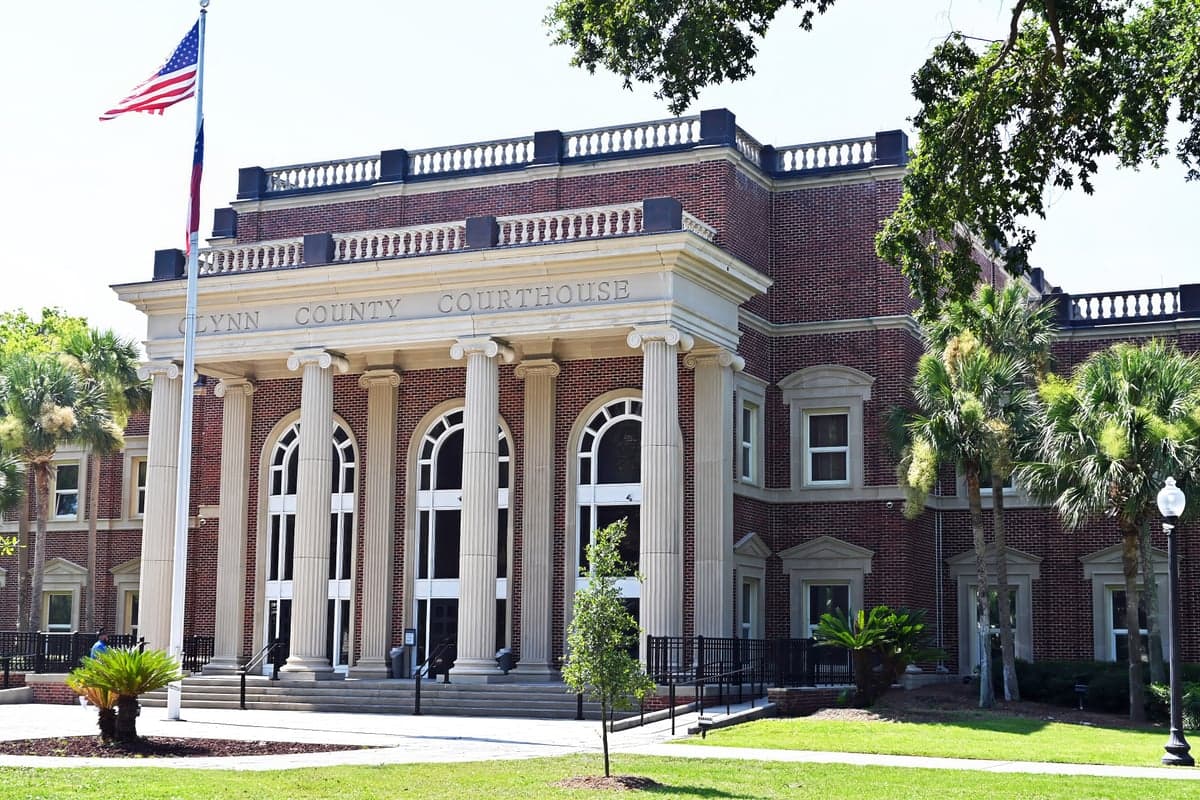

Photo: Wikipedia
Political ClimatePolitical Climate in Glynn County
Showing district-level results — no local-only data available.
Local Political AnalysisPolitical Analysis of Glynn County
Glynn County, Georgia, has long been a reliably conservative area, and the numbers back that up with a Cook PVI of R+8, meaning it votes about 8 points more Republican than the nation as a whole. But if you’ve lived here as long as I have, you know it’s not a monolith. The county’s political lean is solidly red, but the trajectory is getting a little more complicated, especially as new folks move in from places like Atlanta or out of state. The coastal vibe and the Port of Brunswick bring a mix of people, and that’s starting to show up in local elections and precinct-level results.
How it compares to Georgia as a whole
Georgia itself is a classic swing state now—it went for Biden in 2020 by a razor-thin margin and has been trending purple ever since. Glynn County, by contrast, is still a Republican stronghold, but it’s not as deep red as some of the rural counties to the west. The comparison is stark: while the state as a whole is being pulled left by the Atlanta metro area, Glynn County’s politics are more rooted in traditional values, limited government, and a skepticism of federal overreach. The R+8 PVI here means you’re looking at a county that consistently backs GOP candidates for president and Senate, but local races can be tighter. For instance, the city of Brunswick itself leans more moderate-to-blue, especially in precincts around the historic downtown and the historically Black neighborhoods like the “Old Town” area. Meanwhile, the unincorporated areas—places like St. Simons Island, Country Club Estates, and the stretch out towards Darien—are reliably red. The swing precincts tend to be in the more suburban parts of the county, like the area around Glynn Place Mall, where newer subdivisions attract a mix of retirees and young families who might split their tickets.
What this means for residents
For folks who value personal freedoms and want to keep government out of their lives, Glynn County is still a pretty good place to be. You won’t see the kind of progressive overreach you’d find in, say, Athens or Decatur. The county commission and school board have generally resisted woke ideology, keeping things like critical race theory out of classrooms and maintaining a common-sense approach to zoning and business regulations. But there’s a growing concern among long-time residents that the influx of new people—especially from blue states—is slowly shifting the local culture. You can see it in the push for more density on St. Simons Island and the occasional fight over things like mask mandates or vaccine passports. The real worry is that if the trend continues, Glynn County could start to look more like Savannah or Charleston, where progressive policies have eroded local control and driven up costs. For now, though, the county’s conservative majority holds the line, and most folks here still believe in minding your own business and keeping the government out of your backyard.
Culturally, Glynn County has a distinct identity that sets it apart from the rest of Georgia. The coastal lifestyle here is more laid-back, with a strong emphasis on hunting, fishing, and outdoor recreation. Politically, that translates into a fierce independence—people here don’t like being told what to do, whether it’s by Atlanta or Washington. The county’s policy distinctions are subtle but real: lower property taxes than the state average, a right-to-work environment that keeps unions weak, and a general reluctance to adopt state-mandated housing or environmental regulations that would infringe on private property rights. If you’re looking for a place where you can live your life without a bunch of bureaucratic nonsense, Glynn County is still that place. But keep an eye on those precinct maps—the future might look a little different than the past.

State Political ClimatePolitical Climate in Georgia
State Political AnalysisPolitical Environment in the State
Georgia has shifted from solid red to a pure battleground over the last 20 years, with Atlanta’s explosive growth and in-migration from blue states flipping the state for Biden in 2020 and then back to Trump by just 0.2% in 2024. Republican control of the legislature and all statewide offices remains, but the Atlanta metro — especially Fulton, DeKalb, Gwinnett, and Cobb counties — now delivers enough Democratic votes to make every statewide race a nail-biter. If you’re moving here, you’re walking into a state where the political center of gravity is tug-of-war between a leftward-lurching urban core and a deeply conservative interior that still holds the levers of power.
Urban vs. rural divide
Georgia’s political map is basically two countries. The Atlanta crescent — Fulton, DeKalb, Clayton, and increasingly Cobb and Gwinnett — votes like a blue state, pushing 70-80% Democratic in many precincts. Savannah (Chatham County) and Athens (Clarke County) are also solidly blue. Augusta and Columbus are purple and trending blue as their urban cores grow and diversify. Meanwhile, Gainesville (Hall County), Rome (Floyd County), Dalton (Whitfield County), and Valdosta (Lowndes County) are reliably red. The real story is the exurbs: Forsyth County, Cherokee County, and Paulding County were deep red bastions a decade ago but are now trending purple as families priced out of Atlanta move north and west. Rural south Georgia — counties like Terrell, Sumter, and Brooks — is still conservative, but population loss has muted its electoral weight.
Policy environment
Georgia’s state-level policy is solidly pro-freedom for conservatives. The income tax is a flat 5.39%, with a legislatively mandated glide path to 4.49% by 2029. It’s a right-to-work state, meaning no forced union dues, and the regulatory climate is business-friendly. On education, Georgia passed a universal school voucher program in 2024 (SB 233), allowing families to use state funds for private or home school expenses — a major win for parental rights. The Heartbeat Abortion Act (HB 481), signed in 2019 and upheld after Dobbs, bans abortion at roughly six weeks. Election integrity saw SB 202 (2021) tighten voter ID for absentee ballots, restrict drop boxes, and ban partisan groups from handing out food or water to voters in line — commonsense measures that drew relentless national attacks. Local governments, especially Atlanta, have pushed back with progressive ordinances on sanctuary policies and police funding, but state preemption under HB 345 (2020) limits their ability to raise the minimum wage or enact rent control.
Trajectory & freedom
On balance, Georgia’s freedom trajectory is a mixed bag trending in the right direction, with real threats from the metro area. The good: Constitutional carry (SB 319) passed in 2022, removing the permit requirement for law-abiding gun owners. HB 1084 (2022), the “Parents’ Bill of Rights,” ensures transparency in school curricula and prohibits classroom instruction on sexual orientation or gender identity in K-3 — a model for parental rights legislation nationwide. Property rights are strong, with no state income tax increases for over a decade. The bad: Atlanta’s sanctuary-style policies, while limited by state law (HB 87, 2011), still exist in practice — the city restricts police cooperation with ICE, and Biden-appointed U.S. Attorney’s office has signaled it won’t prioritize non-criminal immigration enforcement. Meanwhile, a state push to expand Medicaid under the Affordable Care Act has bipartisan support in the legislature but has been blocked so far by the governor’s office over concerns about long-term fiscal liability — a battle that will likely resurface.
Civil unrest & political movements
Georgia has been a flashpoint for political activism on both sides. The 2020 election integrity controversy in Fulton County (the “State Farm Arena suitcase” video and signature verification disputes) remains a live issue for many conservatives, and SB 202 was a direct response to those concerns. The “Stop Cop City” movement — a left-wing campaign to block the Atlanta Public Safety Training Center — involved violent protests, arson attacks on construction equipment, and the shooting death of an environmental activist by state troopers in 2023, making the facility a national symbol of the culture war over police support. Immigration politics are volatile: Georgia has one of the fastest-growing Hispanic populations in the Southeast, concentrated in the Dalton carpet industry and Atlanta’s suburbs, and while the state has avoided sanctuary cities, local jurisdictions like Clayton County have declared themselves “welcoming communities” — effectively limiting cooperation with federal authorities. Election “audits” and recounts have become a perennial feature of politics here, with activists on both sides constantly challenging processes.
Projection
Over the next 5-10 years, Georgia is likely to get even more competitive before it tips. The Atlanta metro is growing at around 1.5%
* Values derived from national, state, county, city and local statistics and may differ in a specific area. Last updated: 2026-06-06T07:39:50.000Z
Narrative content on this page is AI-generated and may contain mistakes. Verify any details that matter before acting on them.
ReloMaps may earn a commission from affiliate links at no extra cost to you.

