Photo: Wikipedia
Political ClimatePolitical Climate in Cherokee County
Showing district-level results — no local-only data available.
Local Political AnalysisPolitical Analysis of Cherokee County
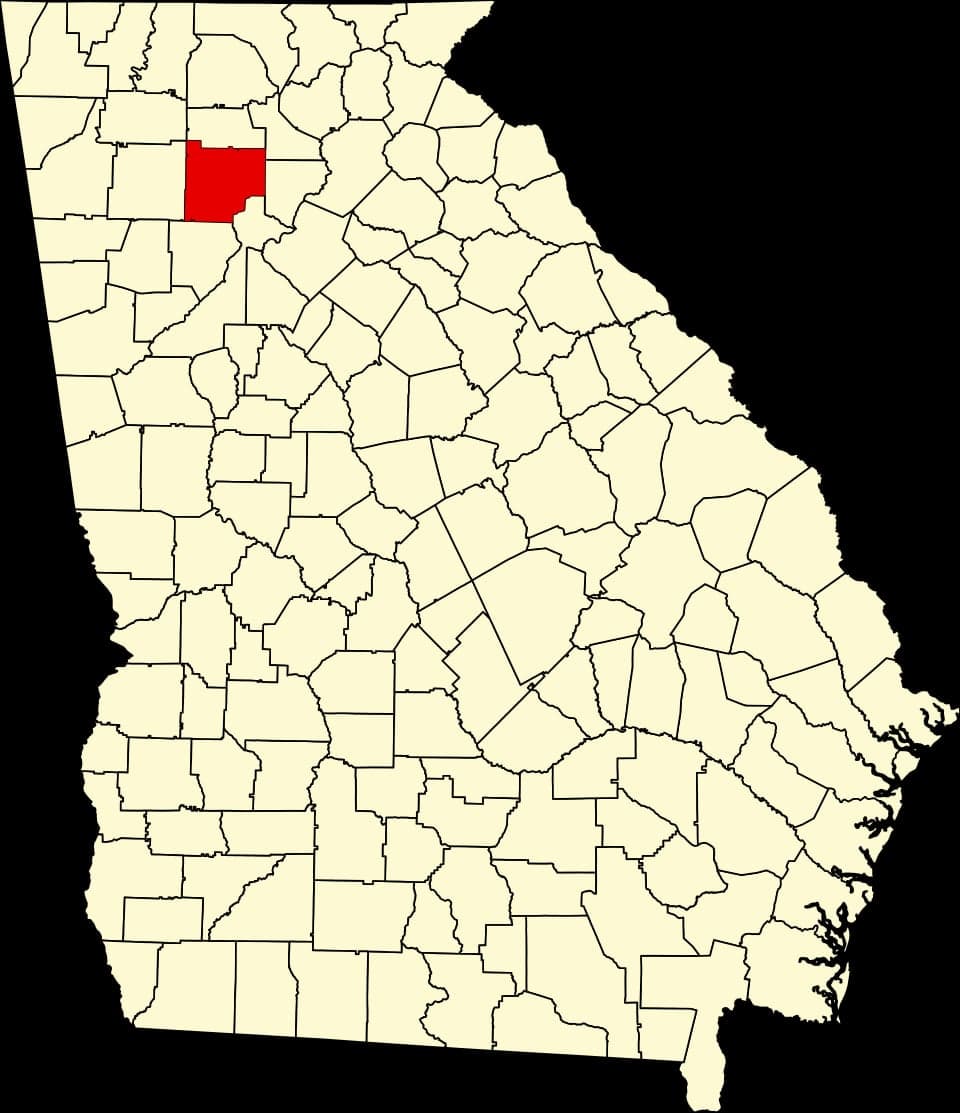
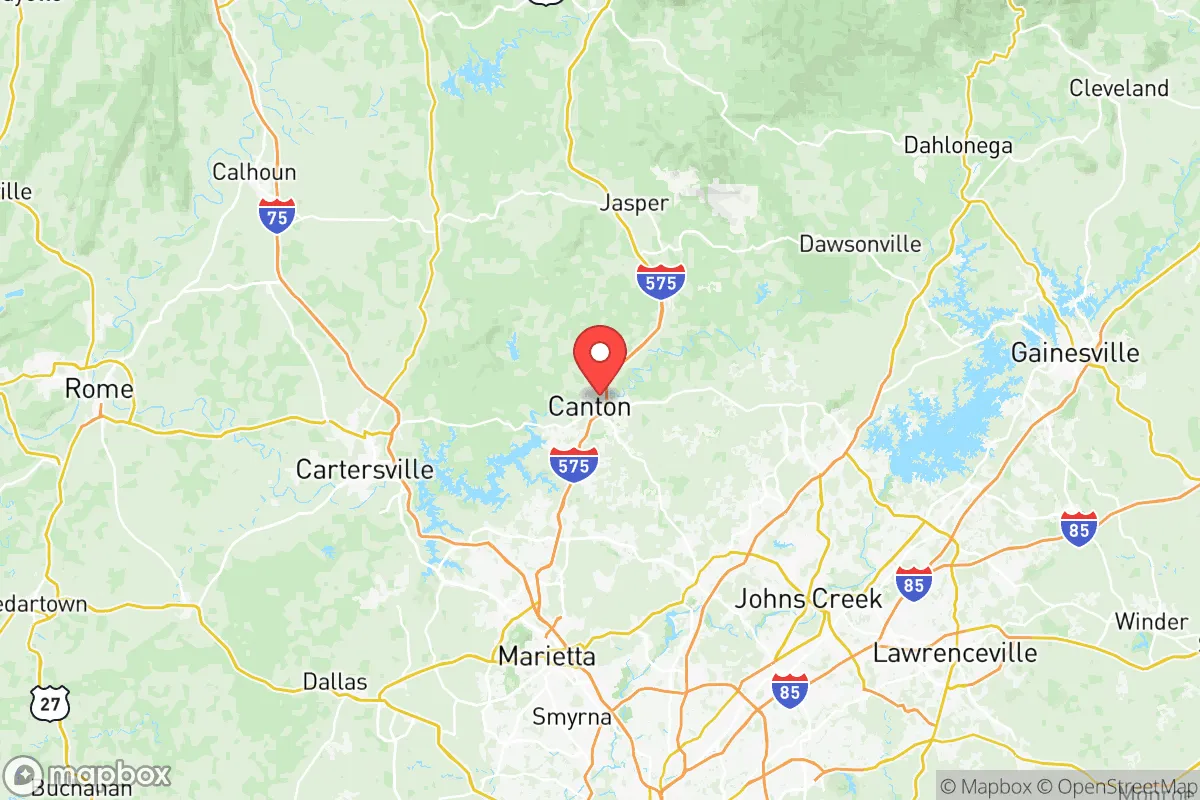
Cherokee County has been a Republican stronghold for as long as anyone can remember — the Cook PVI sits at R+12, meaning it votes about 12 points more Republican than the nation as a whole. But the real story is how that's shifting beneath the surface. Up in the northern hills around Waleska and Ball Ground, you'll find deep-red precincts where Trump won by 60 points or more. But down in Woodstock and along the I-575 corridor, the margins are tightening fast. Woodstock's downtown has turned into a magnet for young families and commuters from Atlanta, and that's brought a noticeable blue tint to what used to be solidly red precincts. Canton, the county seat, still leans Republican but has enough new development that some precincts now swing within 10 points either way. The overall trajectory is a slow purple creep — not a flip, but a real shift.
How it compares
Georgia as a whole has become a genuine swing state — Biden won it in 2020 by 0.2%, and the 2024 race was razor-thin. Cherokee County, however, sits about 12 points to the right of that statewide average. That R+12 rating is a lagging indicator; in 2020, Trump won Cherokee County by 21 points, down from 36 points in 2016. So the county is moving left faster than the state is moving right, but from a much higher baseline. The surrounding metro Atlanta counties — Cobb, Fulton, Gwinnett — have flipped blue entirely, making Cherokee one of the last large Republican holdouts in the region. It's a classic exurban story: the farther you get from the city core, the redder it stays, but the suburban edge is bleeding farther out every election cycle.
What this means for residents
For conservative residents, Cherokee County is still a comfortable place to live. The local school board, county commission, and most municipal governments are reliably Republican. You'll see Trump signs in yards year-round, not just campaign season, and the local GOP is well-organized. For liberal residents, it's a different experience. You're not a pariah, but you're a clear minority. Woodstock is the most progressive pocket — it has a visible LGBTQ+ community, several inclusive businesses, and the city council has some Democratic members. But drive ten minutes north to Holly Springs or Ball Ground, and you're back in deep-red territory where progressive opinions are often kept quiet. The practical effect is that political conversations in Cherokee County tend to stay polite in public but can get heated in private. The county's rapid growth — 30% population increase since 2010 — has brought in people from all over, and that's slowly diluting the old political monoculture.
One cultural distinction that stands out is the role of local churches. Cherokee County has a high density of evangelical congregations, and they remain deeply influential in local politics — school board elections, zoning decisions, even library board appointments. At the same time, the influx of secular and religiously diverse newcomers has created a quiet tension. For instance, Woodstock now has a small but active interfaith council, while Canton's churches still dominate public life. The county also has a strong gun culture — open carry is common, and the county sheriff's office is one of the most pro-Second Amendment in Georgia. But even here, attitudes are slowly shifting: the 2024 election saw a surprising number of pro-gun-safety Republican candidates win local primaries. The bottom line is that Cherokee County is still a conservative place, but it's no longer a monolith. The next decade will determine whether it becomes another Cobb County or holds its red line.

State Political ClimatePolitical Climate in Georgia
State Political AnalysisPolitical Environment in the State
Georgia has transformed from a reliably Republican stronghold into the nation’s most competitive swing state, with a partisan lean that now sits at a razor-thin margin. The state’s dominant coalitions are a rapidly diversifying, highly educated suburban electorate in metro Atlanta, pitted against a deeply conservative, white, rural base across the rest of the state. Over the last 10-20 years, the trajectory has been a steady march leftward at the presidential level—from a 5-point Romney win in 2012 to a 0.2-point Biden win in 2020, followed by a 2-point Trump loss in 2024—while state-level races have remained more conservative, creating a palpable tension between national and local political realities.
Urban vs. rural divide
The political map of Georgia is a story of two Georgias. The Atlanta metro—including Fulton, DeKalb, Cobb, and Gwinnett counties—drives the Democratic coalition, with Fulton and DeKalb delivering margins of over 60 points for Democrats. Gwinnett County, once a Republican bastion, flipped blue in 2016 and now votes Democratic by double digits, driven by a surge of Asian American and Hispanic voters. The city of Atlanta itself is a deep-blue urban core, while its inner-ring suburbs like Decatur and Sandy Springs are reliably liberal. Outside the metro, the state is overwhelmingly red. Rural south Georgia, from Albany to Valdosta, votes Republican by 30-40 points, as do the exurban and mountain counties of north Georgia, like Pickens and Gilmer. The "flip" counties that decided the 2020 and 2024 elections were the fast-growing, diverse suburbs of Atlanta—Cobb, Gwinnett, and Henry—where college-educated white voters and minority populations shifted sharply left. Meanwhile, cities like Savannah and Augusta are blue islands in red seas, but their influence is dwarfed by the Atlanta metro, which now casts nearly 60% of the state’s votes.
Policy environment
Georgia’s policy environment is a mix of low-tax conservatism and cautious, business-friendly regulation. The state has a flat income tax rate of 5.39%, with a scheduled phase-down to 4.99% by 2029, and no estate or inheritance tax. Property taxes are relatively low, with a median effective rate of 0.87%, though they vary widely by county. The regulatory posture is light-touch, particularly for manufacturing and logistics, which has fueled growth in the Savannah port and the I-85 corridor. Education policy is a flashpoint: the state has a robust charter school system and a school choice program (the Georgia Promise Scholarship Act, passed in 2024), but public school funding remains a perennial issue, with per-pupil spending below the national average. Healthcare is a major gap—Georgia is one of ten states that has not expanded Medicaid, leaving roughly 300,000 low-income adults in a coverage gap. Election laws have been a national focus: the 2021 Election Integrity Act (SB 202) added voter ID requirements for absentee ballots, limited drop boxes, and restricted third-party ballot collection, drawing both praise from conservatives and criticism from voting rights groups. For a relocator, the practical takeaway is a state that taxes lightly but provides fewer public services, especially in healthcare and rural infrastructure.
Recent policy direction
Georgia’s recent legislative direction has been a full-spectrum push on conservative priorities, with a particular focus on cultural and liberty issues. In 2024, the state passed a permitless carry law (HB 218), allowing any legal gun owner to carry a concealed firearm without a license, and expanded Stand Your Ground protections. Parental rights were strengthened with the Parents’ Bill of Rights (SB 449), which requires schools to notify parents of any changes to a student’s health or well-being, including gender identity. On education, the state banned teaching of divisive concepts (HB 1084) and restricted transgender athletes from competing in girls’ sports (SB 88). Medical and bodily autonomy saw a sharp turn: Georgia’s 2019 "heartbeat" abortion ban (HB 481) was enforced after the Dobbs decision, banning most abortions after six weeks, with exceptions for rape, incest, and life of the mother. Privacy and surveillance are mixed—Georgia has a broad public records law, but law enforcement access to cell phone data is lightly regulated. Property rights are strong, with no statewide rent control and a conservative eminent domain framework. On voting, the 2021 law tightened ballot access, but early voting hours were expanded in many counties. For a relocator, the direction is clear: Georgia is moving to codify conservative cultural and liberty values, particularly on guns, education, and abortion, while maintaining a business-friendly tax and regulatory climate.
Civil unrest & political movements
Georgia has been a focal point for political movements on both sides. The 2020 election aftermath saw massive protests in Atlanta, including the "Stop the Steal" rally at the state capitol and the "Shut It Down" protests over the election integrity law. The Atlanta metro has seen organized left-wing activism, particularly around voting rights (Stacey Abrams’ Fair Fight Action) and racial justice (the 2020 George Floyd protests in Atlanta were among the largest in the country). On the right, the Georgia Republican Party has been riven by internal battles between establishment and Trump-aligned factions, with the 2022 primary for governor seeing a bitter fight between Brian Kemp and David Perdue. Immigration politics are a live wire: Georgia has no sanctuary city policies, and the 2024 "Secure Georgia" law (SB 180) requires local law enforcement to cooperate with ICE, leading to tensions in immigrant-heavy communities like Clarkston and Doraville. Election integrity remains a flashpoint, with the 2021 law sparking corporate backlash (the MLB moved the 2021 All-Star Game out of Atlanta) and ongoing legal challenges. A new resident would notice the political polarization most in the Atlanta suburbs, where yard signs and bumper stickers are common, and in the rural areas, where Trump flags still fly. The state is not a place of violent unrest, but the political temperature is high, and the divides are visible in everyday life.
Projection
Over the next 5-10 years, Georgia is likely to remain a competitive swing state, but the demographic trends favor a slow leftward drift. The Atlanta metro is growing rapidly, adding over 1 million people between 2010 and 2020, with the majority of new residents being people of color and college-educated whites—both groups that lean Democratic. The rural areas, meanwhile, are losing population and aging, which will shrink the Republican base. However, the state’s Republican legislature is likely to continue drawing congressional and legislative maps that favor them, and the state’s conservative cultural policies may attract new conservative migrants from blue states. The wildcard is the 2026 gubernatorial race and the 2028 presidential election—if Democrats can turn out their base in the suburbs and Atlanta, they could flip the state legislature for the first time since 2004. For a new resident, the projection is a state that will remain politically divided, with a growing urban-suburban liberal coalition and a shrinking but entrenched rural conservative base. The policy environment will likely stay conservative on taxes and regulation, but cultural issues will remain a battleground, with abortion, education, and voting rights at the center.
For a new resident, the bottom line is that Georgia offers a low-tax, business-friendly environment with a conservative cultural tilt, but you will live in a state that is politically contested and polarized. If you are conservative, you will find a state government that largely reflects your values, especially on guns, education, and abortion, but you will be living in a state that is trending blue at the national level. If you are liberal, you will find strong communities in Atlanta and its suburbs, but you will face a state government that is actively working against many of your priorities. The practical takeaway is to choose your location carefully—the political reality of living in Cobb County is very different from living in Lowndes County—and to be prepared for a state where the political fight is ongoing and visible. Georgia is not a place of political peace; it is a place of political energy, and that energy shapes everything from your taxes to your children’s schools to your daily commute.
* Values derived from national, state, county, city and local statistics and may differ in a specific area. Last updated: 2026-07-27T05:14:28.000Z
Narrative content on this page is AI-generated and may contain mistakes. Verify any details that matter before acting on them.
ReloMaps may earn a commission from affiliate links at no extra cost to you.

