
Photo: Wikipedia
Political ClimatePolitical Climate in Garfield, NJ
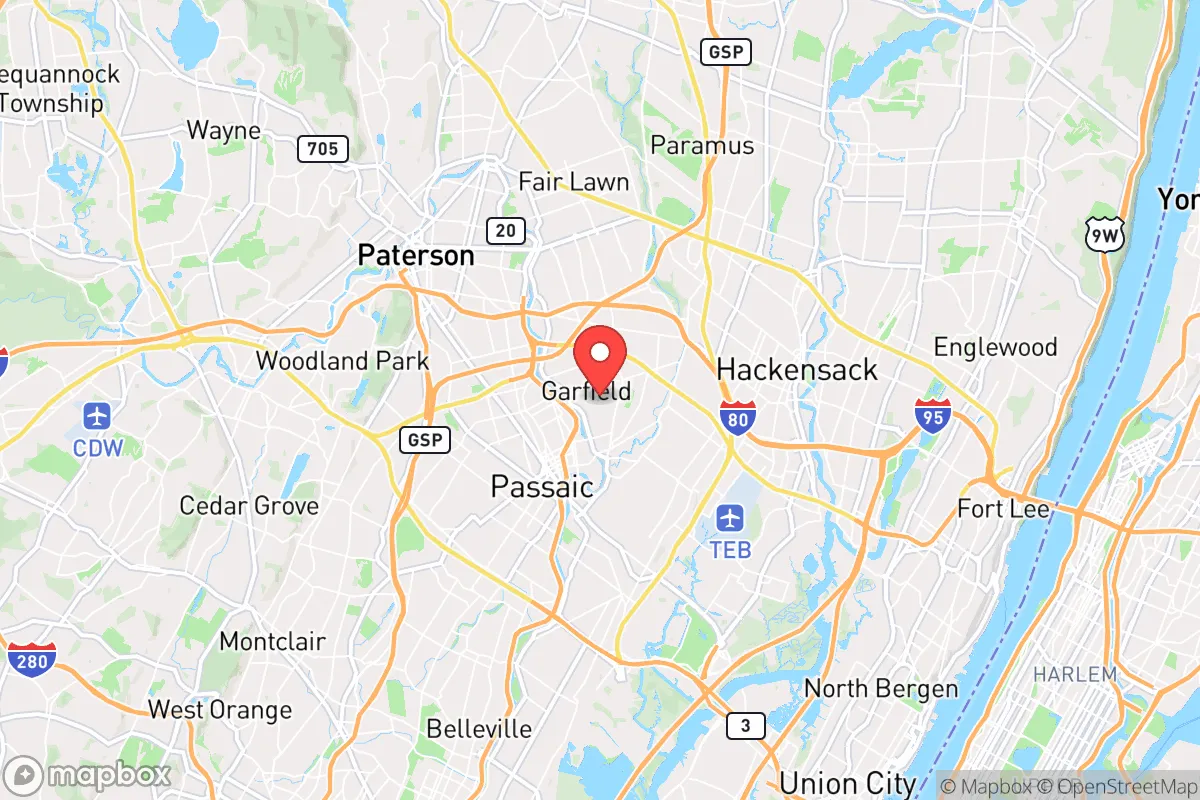
District shown is the primary district for this city’s centroid. Cities may span multiple districts.
Local Political AnalysisPolitical Analysis of Garfield, NJ
Garfield, New Jersey, leans Democratic with a Cook PVI of D+2, but don’t let that number fool you into thinking it’s a progressive stronghold. This city has historically been a working-class, blue-collar community where folks value their independence and don’t take kindly to government overreach. Over the last decade, though, you’ve seen a slow drift leftward, driven by newer residents from nearby urban centers like Paterson and Hackensack, and that’s got some of us longtime locals watching the town council meetings a little closer. The real story here isn’t about party labels—it’s about how much personal freedom you’re willing to trade for the promise of “progress.”
How it compares
Garfield sits in a political sandwich. Head north to Clifton, and you’ll find a more balanced mix of conservatives and moderates, where property rights and local control still get serious respect. Go south to Passaic, and you’re in a heavily Democratic area where progressive policies on housing and zoning have already taken root, often with little pushback. Surrounding Bergen County as a whole has trended blue in presidential races, but Garfield’s D+2 rating actually makes it one of the more moderate spots in the county—especially compared to places like Teaneck or Montclair, which are solidly D+15 or more. That means Garfield still has a fighting chance to resist the kind of top-down mandates that strip away local decision-making, but it’s a fight that’s getting harder every election cycle.
What this means for residents
For the average Garfield resident, the political climate directly affects your wallet and your daily life. The city council has shown a willingness to adopt state-level progressive mandates, like stricter rent control measures and density-boosting zoning changes, which sound good on paper but often mean more bureaucracy and less say for homeowners. Property taxes in Garfield are already among the highest in the state, and every new regulation—whether it’s on short-term rentals, business licenses, or even backyard sheds—adds another layer of cost and hassle. If you value the freedom to use your property as you see fit, or if you run a small business that doesn’t need a dozen permits to change a sign, you’ll want to keep a close eye on who’s running for local office. The trend is toward more government involvement, not less, and that’s a red flag for anyone who remembers when Garfield was a place where you could get things done without a committee meeting.
Cultural and policy distinctions
One thing that still sets Garfield apart is its strong sense of local identity—people here have deep roots, and there’s a resistance to being lumped in with the broader “North Jersey” progressive agenda. You’ll still see American flags on front porches and hear folks grumbling about state mandates on everything from plastic bags to school curriculum. The city’s large Polish and Hispanic communities tend to be socially conservative on family issues, which creates a cultural buffer against the more radical policies you see in neighboring towns. That said, the long-term outlook is concerning: as older residents move out or pass on, younger buyers are often priced out of nearby suburbs and settle here, bringing with them the same voting habits that turned places like Hackensack blue. If Garfield doesn’t hold the line on local control and fiscal restraint, it could easily slide into a D+5 or D+7 district within a decade, and with that comes more taxes, more regulations, and less freedom to live your life without government looking over your shoulder.

State Political ClimatePolitical Climate in New Jersey
State Political AnalysisPolitical Environment in the State
New Jersey has long been one of the most reliably Democratic states in the nation, but don’t let the statewide numbers fool you — the political reality on the ground is far more nuanced than the blue label suggests. Over the past 20 years, the state has shifted from a moderate, union-heavy swing state to a solidly blue stronghold, driven largely by the explosive growth of the New York City and Philadelphia suburbs. While the state hasn’t voted Republican for president since 1988, the real story is the widening chasm between the progressive urban cores and the increasingly frustrated, tax-burdened suburbs and rural areas that feel left behind.
Urban vs. rural divide
The political map of New Jersey is a tale of three distinct regions. The northeastern corridor — Newark, Jersey City, Paterson, and Elizabeth — is the engine of the state’s Democratic dominance. These cities are dense, diverse, and heavily unionized, with turnout machines that reliably deliver 70-80% margins for Democrats. The Philadelphia suburbs in the southwest, particularly Camden County and parts of Burlington County, have also trended hard blue as white-collar professionals flood in from Pennsylvania. Meanwhile, the rural and exurban areas — Sussex County, Warren County, Hunterdon County, and most of Ocean County — are deeply red, with Republican margins often exceeding 20 points. The state’s political center of gravity has shifted decisively toward the urban core, but the rural resistance is real and organized. In 2024, Ocean County voted +18 for Trump, while Essex County (Newark) went +35 for Biden. That’s a 53-point gap in a state smaller than many Texas counties.
Policy environment
New Jersey’s policy environment is a textbook case of progressive governance with a heavy price tag. The state has the highest property taxes in the nation — averaging over $9,500 annually — and a progressive income tax that tops out at 10.75% for earners over $1 million. The regulatory posture is aggressive: New Jersey has some of the strictest environmental rules in the country, a robust public-sector union presence, and a school funding formula that heavily favors urban districts. On education, the state spends over $25,000 per pupil, yet outcomes remain deeply unequal — suburban districts like Millburn and Princeton rank among the best in the nation, while Newark and Camden schools struggle. Healthcare is dominated by the state’s Medicaid expansion and a strong insurance mandate. Election laws are among the most progressive: no-excuse mail-in voting, automatic voter registration, and same-day registration are all law. For a conservative-leaning resident, the policy environment feels like a slow-motion squeeze — higher taxes, more regulation, and a government that prioritizes urban constituencies over suburban and rural ones.
Trajectory & freedom
Over the past decade, New Jersey has become less free by almost any measure. The state has enacted some of the strictest gun control laws in the nation — including a 2022 law requiring a "justifiable need" for a carry permit, which was later struck down by the Supreme Court in Bruen, but the state quickly re-imposed a near-total ban on carry in sensitive places. On parental rights, the state has moved aggressively: in 2024, Governor Phil Murphy signed a law requiring all public schools to adopt LGBTQ-inclusive curriculum standards, overriding local control. Medical autonomy took a hit with the state’s strict COVID-19 vaccine mandates for healthcare workers and school employees, which remain in place. Property rights are under constant assault from the state’s affordable housing mandates, which force towns to zone for high-density development. The state’s 2023 "Clean Energy Act" effectively bans new gas-powered vehicles by 2035 and mandates electric heat pumps in new construction — a direct hit on personal choice. For a conservative, the trajectory is clear: more mandates, less local control, and a government that sees itself as the arbiter of how you live, work, and raise your family.
Civil unrest & political movements
New Jersey has seen its share of political flashpoints. The 2020 Black Lives Matter protests in Newark, Jersey City, and Trenton were large but largely peaceful, though property damage occurred in downtown Newark. The state’s sanctuary policies — which limit cooperation between local police and ICE — have been a persistent source of tension, especially in suburban towns like Montclair and Maplewood, where immigration enforcement is a hot-button issue. On the right, the "New Jersey 2nd Amendment" movement has been active, with large rallies at the Statehouse in Trenton and in Sussex County, where a "Second Amendment Sanctuary" resolution passed in 2021. Election integrity remains a live issue: the state’s 2020 mail-in voting expansion, which sent ballots to all active voters, was challenged in court but upheld. The 2023 "Parental Rights" movement saw thousands of parents pack school board meetings in Hunterdon County and Morris County, protesting curriculum content and library books. These are not fringe movements — they reflect a deep and growing unease among suburban and rural residents who feel their voices are being drowned out by the urban machine.
Projection
Looking ahead 5-10 years, New Jersey is likely to become more progressive, more expensive, and more centralized. The demographic trends are clear: the state’s population is aging, and young professionals are flocking to the urban core, while families with means are increasingly looking to Pennsylvania, Florida, or Texas for lower taxes and more freedom. The state’s reliance on property taxes and income taxes is unsustainable, but there’s little political will to reform — the public-sector unions and urban constituencies that benefit from the status quo are too powerful. The 2025 gubernatorial election will be a key test: if a moderate Democrat like Steve Sweeney or a Republican like Jack Ciattarelli wins, there may be a slight course correction. But the long-term trend is toward more regulation, higher taxes, and a government that sees itself as a provider of services rather than a protector of rights. For a conservative moving in now, expect to pay a premium for the privilege of living in a state with good schools and proximity to New York — but also expect to fight for your freedoms at the local level, because the state government won’t be on your side.
Bottom line: New Jersey is a beautiful, diverse, and economically vibrant state, but it is not a friendly environment for conservatives. If you value low taxes, local control, gun rights, and parental autonomy, you will find yourself constantly swimming against the current. The state’s urban centers will continue to drive policy, and the rural and suburban areas will continue to resist — but the math is against them. If you’re considering a move here, come with your eyes open: you’ll get great schools, world-class infrastructure, and proximity to two major cities, but you’ll pay for it in taxes, regulation, and a government that doesn’t share your values. For many conservatives, the calculus is increasingly leaning toward leaving — and the data backs that up.
* Values derived from national, state, county, city and local statistics and may differ in a specific area. Last updated: 2026-04-29T21:12:44.000Z
Narrative content on this page is AI-generated and may contain mistakes. Verify any details that matter before acting on them.
ReloMaps may earn a commission from affiliate links at no extra cost to you.

