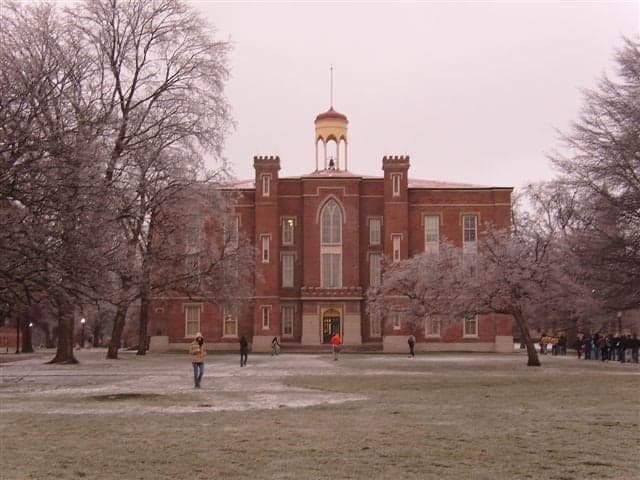
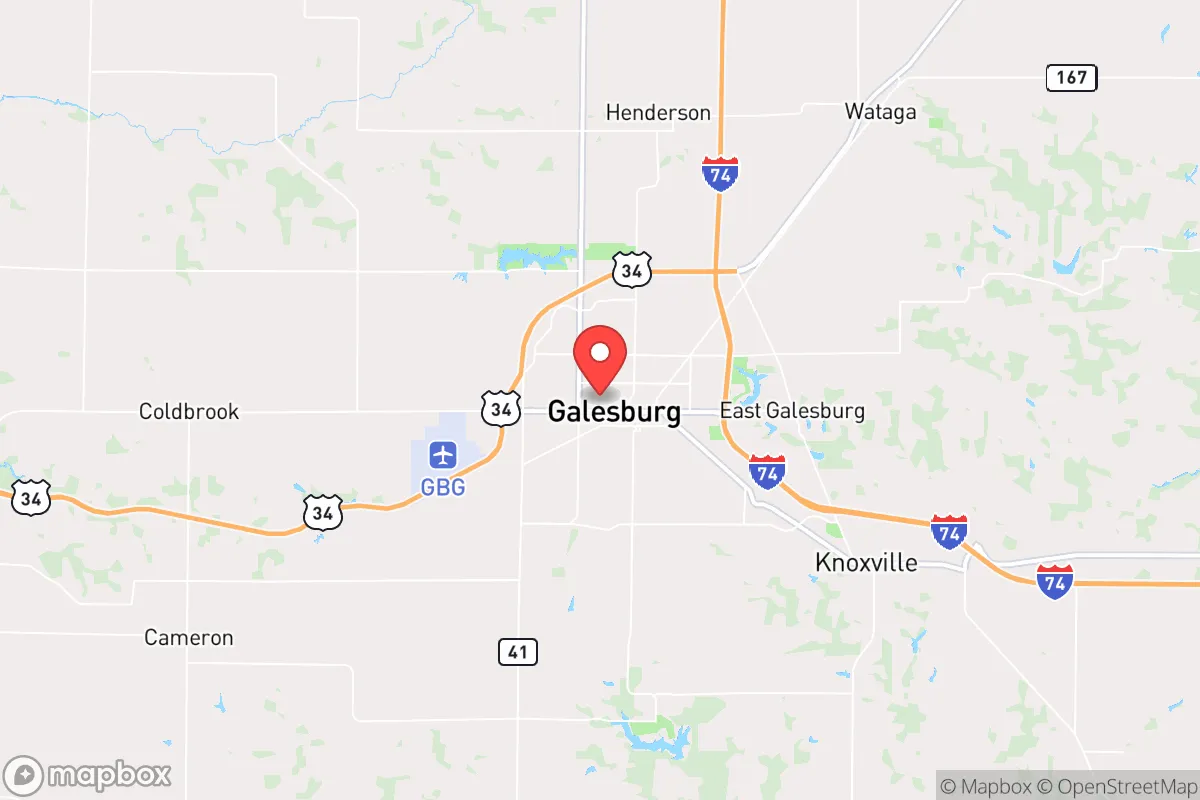
Photo: Wikipedia
Demographics of Galesburg, IL
Affluence Level in Galesburg, IL
A below-average socioeconomic profile. Incomes, home values, and educational attainment trail the U.S., with higher poverty and unemployment.
People of Galesburg, IL
The people of Galesburg, Illinois, today number 29,653, forming a community that is predominantly white (72.0%) with significant Black (12.2%) and Hispanic (8.9%) populations, and a small but present East/Southeast Asian (0.8%) and Indian (0.6%) presence. The city is notably less diverse than the national average, with a foreign-born share of just 3.8% and a college-educated rate of 19.3%, reflecting its historical roots as a manufacturing and railroad hub. Galesburg’s identity is shaped by its working-class character, a strong sense of local pride, and a population that has been slowly declining for decades, creating a tight-knit but aging demographic.
How the city was settled and grew
Galesburg was founded in 1836 by George Washington Gale, a Presbyterian minister who led a group of settlers from upstate New York to establish a manual-labor college and a temperance community. The original population was overwhelmingly white, Anglo-Saxon, and Protestant, drawn by the promise of fertile prairie land and the opportunity to build a utopian society free from alcohol. The arrival of the Chicago, Burlington and Quincy Railroad in 1854 transformed Galesburg into a major rail hub, attracting a wave of Irish and German immigrants who settled in the South Side and East Main Street neighborhoods, where they built Catholic churches and ethnic social clubs. By the late 19th century, Swedish immigrants arrived in significant numbers, clustering in the North Seminary Street area and establishing the city’s strong Lutheran and Swedish-American identity. The railroad and manufacturing boom through the early 20th century drew Black workers from the South, who settled primarily in the West End and South Kellogg Street corridor, forming the foundation of Galesburg’s Black community.
Modern era (post-1965)
After the 1965 Hart-Cellar Act, Galesburg saw only modest immigration, with the foreign-born share remaining low at 3.8% today. The most notable post-1965 shift was the growth of the Hispanic population, which rose to 8.9% as Mexican and Central American families moved into the West Main Street and South Henderson Street areas, often working in manufacturing and agriculture. The Black population, which had grown during the Great Migration, stabilized at 12.2% and remains concentrated in the West End and South Side neighborhoods. The East/Southeast Asian community (0.8%) is small and dispersed, with no single ethnic enclave, while the Indian population (0.6%) is even smaller, often tied to professional roles at Knox College or local healthcare. Suburbanization has been limited; Galesburg’s population peaked at 37,243 in 1960 and has declined steadily since, as younger families moved to larger cities like Peoria or the Quad Cities. The North Side and Lake Storey areas have seen some new housing development, but the overall trend has been one of stagnation rather than growth.
The future
Galesburg’s population is projected to continue its slow decline, with the median age rising as younger residents leave for better job opportunities elsewhere. The city is becoming slightly more diverse, driven by Hispanic growth, but the white population is aging and shrinking. The Black and Hispanic communities are expected to grow modestly, particularly in the West End and South Side, while the East/Southeast Asian and Indian populations will likely remain small and scattered. The city’s cultural identity is evolving from its historic Swedish-American and railroad roots toward a more multi-ethnic working-class character, though change is slow. New residents are most likely to be attracted by affordable housing and a slower pace of life, but the lack of major employers and a declining tax base pose challenges for future growth.
For someone moving in now, Galesburg offers a low-cost, tight-knit community with a strong sense of history, but it is a place where population decline and economic stagnation are real concerns. The city is becoming more diverse, but slowly, and the cultural identity remains rooted in its Midwestern, working-class past. Newcomers should expect a quiet, affordable lifestyle with limited amenities, but a genuine sense of neighborliness and local pride.

* Values derived from national, state, county, city and local statistics and may differ in a specific area. Last updated: 2026-11-21T09:01:41.000Z
Narrative content on this page is AI-generated and may contain mistakes. Verify any details that matter before acting on them.
ReloMaps may earn a commission from affiliate links at no extra cost to you.

