 Popular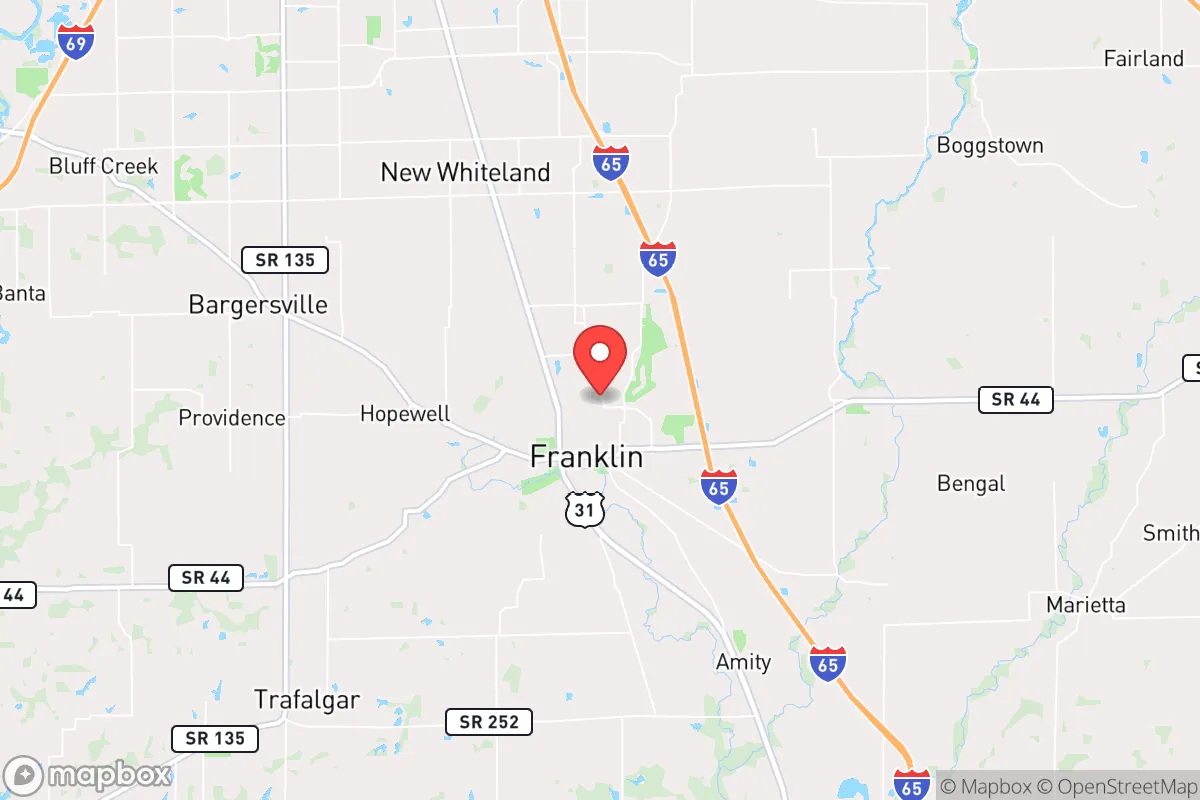
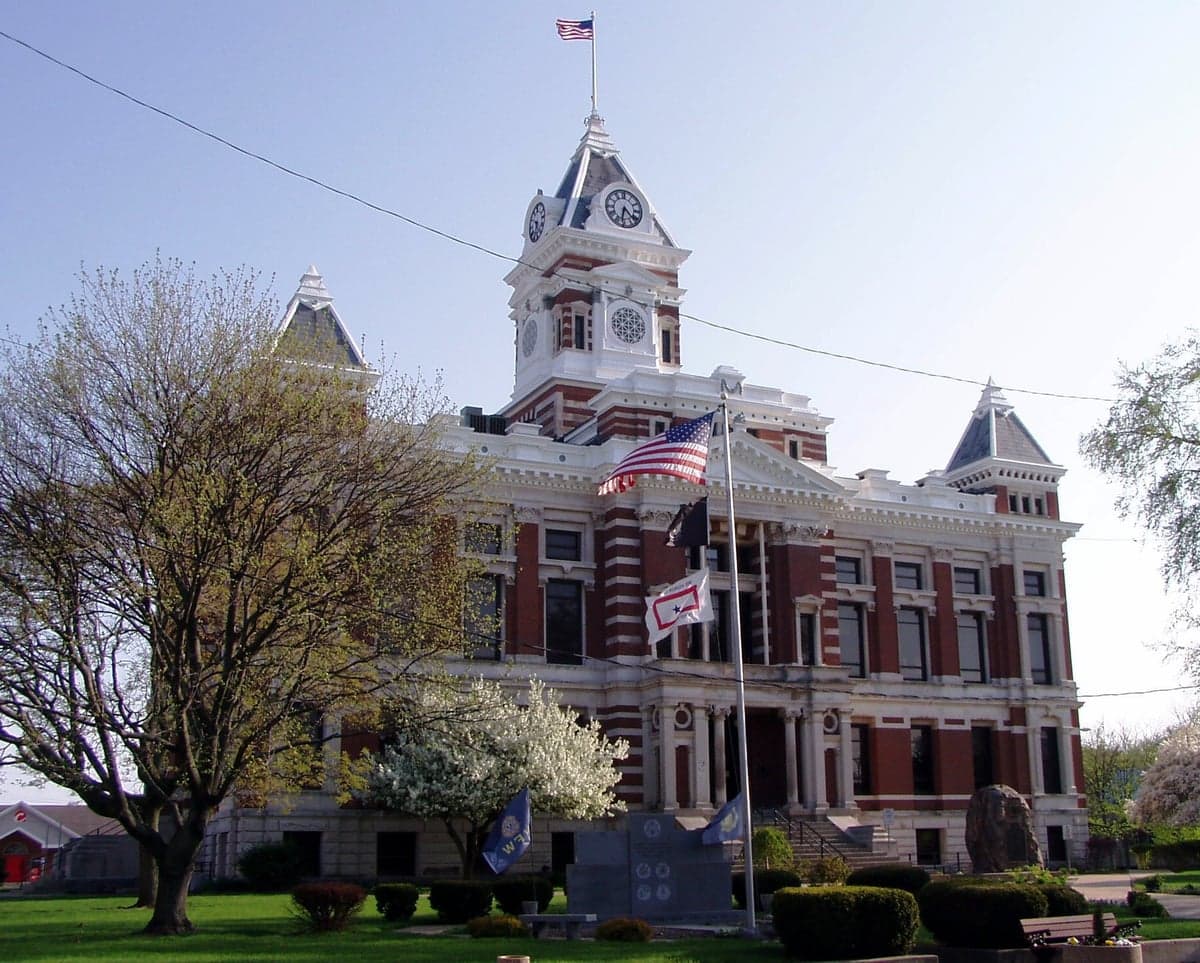
Photo: Wikipedia
Political ClimatePolitical Climate in Franklin, IN
District shown is the primary district for this city’s centroid. Cities may span multiple districts.
Local Political AnalysisPolitical Analysis of Franklin, IN
Franklin, Indiana, has long been a rock-solid conservative stronghold, and honestly, it still is, but you can feel the winds shifting a bit. The Cook PVI of R+16 tells you the baseline—this is deep-red territory, and Johnson County as a whole hasn't voted for a Democratic presidential candidate since 1964. But if you’ve lived here as long as I have, you notice the quiet changes. The old guard of farmers and small business owners who’d never dream of voting anything but straight-ticket Republican is being slowly diluted by newcomers from Indianapolis and Greenwood, some of whom bring more moderate or even progressive ideas about taxes, land use, and personal freedoms. The core is still solid, but the edges are fraying.
How it compares
Drive ten miles north to Greenwood or twenty miles into Indianapolis, and you’re in a completely different political universe. Greenwood has been trending purple for years, with more mixed precincts and a younger, more diverse population that’s less hostile to government expansion. Franklin, by contrast, still feels like a place where the county commissioners and school board members are known by name at the local diner. Surrounding towns like Edinburgh and Whiteland lean conservative too, but they don’t have the same institutional pull. The real contrast is with Bloomington, about 45 minutes southwest—that’s a progressive island where the local government actively pursues policies that would make Franklin residents’ hair stand on end. Franklin’s political identity is defined partly by being not that: a place where the Second Amendment isn’t debated, where property rights are respected, and where the idea of a countywide mask mandate or vaccine passport would be met with outright rebellion.
What this means for residents
For the average person, Franklin’s political climate means a lighter touch from government in daily life. You won’t see the kind of zoning overreach or business regulation that chokes small towns in blue states. The local government generally stays out of your business—low property taxes, no city income tax, and a school board that hasn’t gone off the deep end with critical race theory or gender ideology. But here’s the thing I’m watching: the county’s rapid growth is bringing pressure for more services, more infrastructure, and inevitably, more rules. The recent push for a countywide comprehensive plan raised eyebrows among old-timers who see it as the first step toward telling people what they can do with their own land. If you value personal freedom and minimal government interference, Franklin is still a good bet, but you need to stay engaged. The school board elections in 2024 were a wake-up call—a slate of moderate candidates nearly won, and that would have been a disaster for parents who want transparency and local control.
On the cultural front, Franklin holds onto its distinctions proudly. The annual Johnson County Fair, the historic downtown square with its courthouse, and the strong presence of churches—especially the conservative evangelical congregations—anchor the community in traditional values. You won’t find a drag queen story hour at the public library or a diversity, equity, and inclusion office at city hall, and that’s by design. The biggest worry among folks I talk to is that the state-level push from Indianapolis—things like the governor’s occasional progressive executive orders or federal overreach on environmental regulations—will trickle down. For now, Franklin remains a place where you can raise a family without feeling like the government is an adversary. But the long-term trajectory depends on whether the newcomers assimilate into the local culture or try to change it. I’m cautiously optimistic, but I’m also keeping my eye on those school board meetings.

State Political ClimatePolitical Climate in Indiana
State Political AnalysisPolitical Environment in the State
Indiana has been a reliably Republican state for decades, but don’t let the red-on-the-map fool you—it’s a more nuanced place than the national headlines suggest. The state has voted for the GOP presidential candidate in every election since 2008 (with the notable exception of Barack Obama’s narrow win here in 2008), and the current partisan lean is roughly R+11 to R+14 depending on the cycle. Over the past 10-20 years, the trajectory has been a slow but steady shift rightward in rural areas, while the Indianapolis metro and a few college towns have become more competitive or even Democratic-leaning. For a conservative-leaning individual or family looking to relocate, Indiana offers a solid foundation of Republican governance, but the devil is in the details—especially if you’re watching for creeping government overreach or cultural shifts.
Urban vs. rural divide
The political map of Indiana is a classic story of a deep red countryside clashing with blue-ish islands. The vast majority of the state’s 92 counties vote Republican by double digits, with places like Hamilton County (north of Indianapolis) being a GOP stronghold—think Carmel, Fishers, and Noblesville, where you’ll find some of the highest concentrations of conservative voters in the Midwest. Meanwhile, Marion County (Indianapolis proper) has become a reliably Democratic anchor, driven by the city’s growing minority population, young professionals, and university influence. The other blue spots are Monroe County (Bloomington, home to Indiana University) and Tippecanoe County (West Lafayette, Purdue University), both of which have trended left as student populations and faculty have grown. The real action, though, is in the exurbs and smaller cities like Fort Wayne, Evansville, and South Bend, which are reliably red but have seen some suburban drift toward the center. If you’re looking for a place where your vote feels like it counts, the rural counties—like Kosciusko (Warsaw) or Dubois (Jasper)—are about as safe as it gets.
Policy environment
Indiana’s policy environment is broadly conservative, but with some notable exceptions that might raise eyebrows. The state has a flat income tax rate of 3.15% (down from 3.23% in 2024, with a planned phase-out to 2.9% by 2027), and property taxes are capped at 1% of assessed value for owner-occupied homes—a big win for homeowners. The regulatory posture is business-friendly, with a right-to-work law still on the books (though it’s been under constant attack from unions) and no state-level minimum wage above the federal $7.25. On education, Indiana has a robust school choice program—vouchers and charter schools are widely available, and the state’s Education Scholarship Account program has expanded to cover more families. However, the state’s 2023 law banning gender-affirming care for minors (Senate Enrolled Act 480) and the 2022 near-total abortion ban (Senate Enrolled Act 1) have drawn national attention and legal challenges. Election laws are moderately restrictive: voter ID is required, early voting is available but not as generous as in some states, and the state purges inactive voters regularly. For a conservative, the policy mix is mostly good, but the constant legal battles over social issues can feel like a distraction from economic freedom.
Trajectory & freedom
On the freedom front, Indiana has been a mixed bag over the last five years. The good news: constitutional carry became law in 2022 (House Enrolled Act 1296), meaning no permit is needed to carry a handgun—a major win for Second Amendment advocates. The state also passed a parental rights bill in 2023 (House Enrolled Act 1608) that requires schools to notify parents about curriculum changes and allows them to opt their kids out of certain materials. On the concerning side, the state has expanded its emergency powers during the pandemic era, and while Governor Eric Holcomb didn’t go as far as some blue-state governors, the 2021 law limiting local health department authority (Senate Enrolled Act 5) was a double-edged sword—it reined in overreach but also centralized power in the statehouse. Medical autonomy took a hit with the abortion ban, which has no exceptions for rape or incest (only life of the mother and fatal fetal anomalies), and the state has been aggressive in enforcing it. Property rights are generally strong, but there’s been a quiet trend of eminent domain abuse for economic development projects, particularly around the LEAP Lebanon Innovation District in Boone County. Overall, Indiana is becoming more free on guns and parental rights, but less free on medical choices and local control.
Civil unrest & political movements
Indiana hasn’t seen the kind of violent protests you’d find in Portland or Seattle, but there have been flashpoints. The 2020 George Floyd protests in Indianapolis turned destructive, with looting and fires downtown, and the city’s Democratic leadership was criticized for a slow response. On the right, the Indiana Freedom Coalition and local Moms for Liberty chapters have been active in school board meetings, pushing back against CRT and LGBTQ curriculum. Immigration politics are relatively quiet—Indiana is not a border state, but there’s been a growing tension in towns like Logansport and Goshen, where meatpacking plants have drawn immigrant labor. The state has no sanctuary cities, and a 2011 law (Senate Enrolled Act 590) requires local law enforcement to cooperate with federal immigration authorities. Election integrity controversies have been minimal, though the 2020 election saw some grassroots concerns about mail-in voting expansion during the pandemic. The most visible political movement right now is the school choice and parental rights push, which has energized conservative voters in suburban counties like Hamilton and Hendricks.
Projection
Over the next 5-10 years, Indiana is likely to stay red, but the shade of red will depend on who moves in. The state is seeing significant in-migration from Illinois, particularly from Chicago suburbs, and those newcomers tend to bring more moderate or even liberal voting habits. The Indianapolis metro is growing fast—places like Whitestown and Westfield are exploding with new housing—and that growth could dilute the rural conservative vote. On the policy front, expect continued battles over abortion and transgender rights, with the state legislature likely to pass further restrictions. The flat tax phase-out will continue, which should keep the state competitive, but property tax caps may face pressure as local governments cry for more revenue. The biggest wild card is the LEAP Lebanon project, a massive economic development zone that could bring thousands of new residents and jobs—but also more government involvement in land use. For a conservative moving in now, the state will probably be a safe bet for the next decade, but you’ll want to watch the suburban counties closely—they’re the battleground for the state’s future.
For a new resident, the bottom line is this: Indiana offers a low-tax, gun-friendly, school-choice-friendly environment that’s hard to beat in the Midwest. But it’s not a libertarian paradise—the state government is willing to use its power on social issues, and local control is often sacrificed for state-level uniformity. If you’re looking for a place where your vote matters and your values are reflected in law, Indiana is a solid choice. Just keep an eye on the Indianapolis suburbs—they’re the canary in the coal mine for where the state is heading.
* Values derived from national, state, county, city and local statistics and may differ in a specific area. Last updated: 2026-04-22T08:37:58.000Z
Narrative content on this page is AI-generated and may contain mistakes. Verify any details that matter before acting on them.
ReloMaps may earn a commission from affiliate links at no extra cost to you.

