 Popular
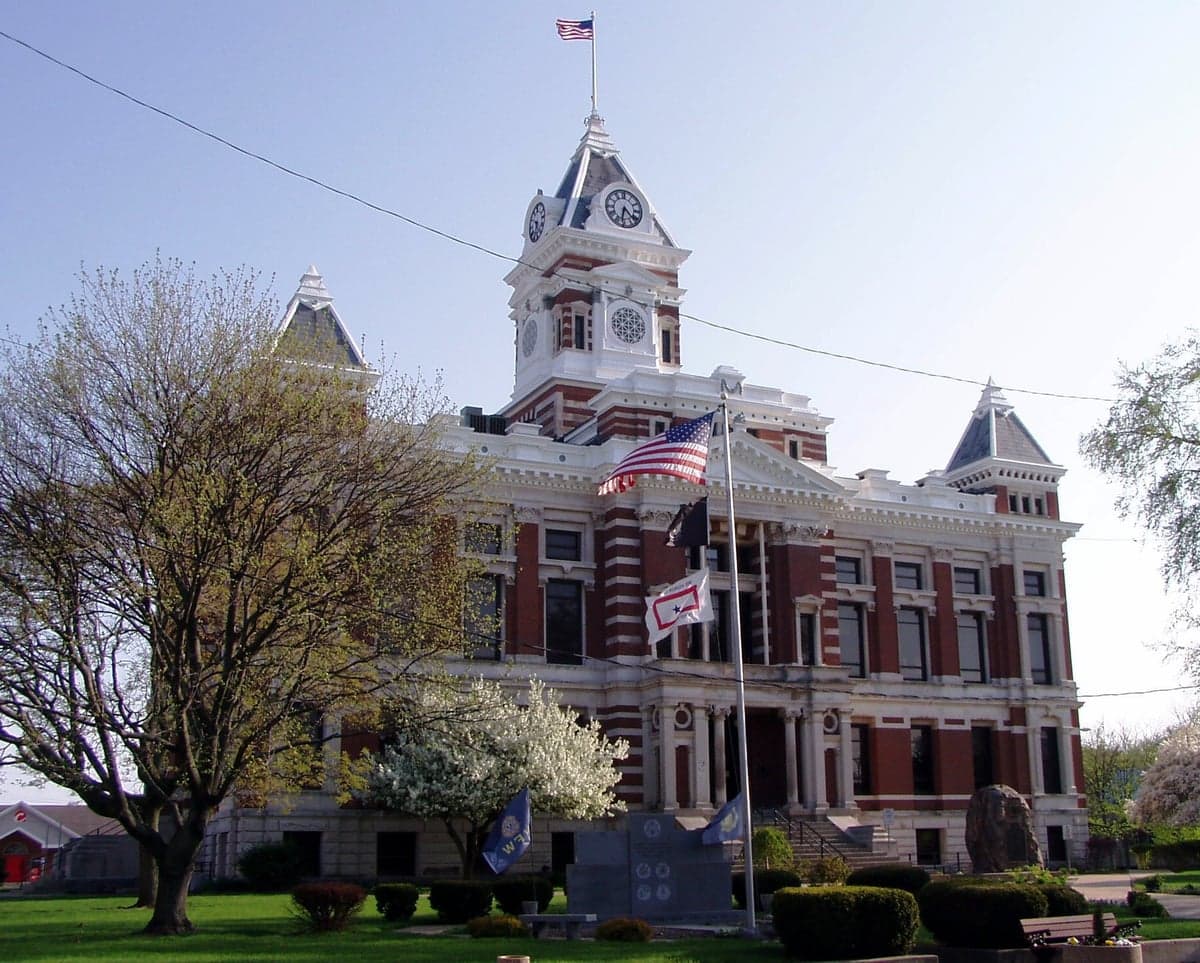
Photo: Wikipedia
Demographics of Franklin, IN
Affluence Level in Franklin, IN
A middle-class area roughly in line with national averages across income, home values, education, and employment.
People of Franklin, IN
The people of Franklin, Indiana today form a predominantly white, family-oriented community of roughly 26,000 residents, with a notably low foreign-born share of 0.9% and a college attainment rate of 24.6%. The city retains a distinctly Midwestern, small-town character, with a population that is 90.2% white, 2.6% Black, 2.3% Hispanic, and 1.2% East/Southeast Asian. Franklin’s identity is shaped by its role as the Johnson County seat, a historic downtown core, and a steady influx of families seeking affordable housing within commuting distance of Indianapolis.
How the city was settled and grew
Franklin was platted in 1823 on land ceded by the Miami and Delaware tribes through the 1818 Treaty of St. Mary’s. The earliest settlers were primarily of English, Scottish, and German stock, drawn by the promise of fertile farmland and the establishment of the county seat. The arrival of the Jeffersonville, Madison and Indianapolis Railroad in the 1840s spurred a first wave of growth, bringing merchants and tradesmen who built the Downtown Historic District around the Johnson County Courthouse. By the late 19th century, a small but notable community of German Catholic families had settled in the West Side near St. Rose of Lima Church, while the North Side developed around Franklin College (founded 1834), attracting faculty and students from across the Midwest. The city’s industrial base—chiefly a furniture factory and a canning plant—drew a modest number of Southern white migrants during the early 1900s, but Franklin remained overwhelmingly native-born and white through the mid-20th century.
Modern era (post-1965)
The post-1965 period saw Franklin’s population shift from a stable agricultural hub to a bedroom suburb of Indianapolis, a transformation accelerated by the completion of Interstate 65 in the 1970s. Domestic in-migration from other parts of Indiana and the Midwest drove growth, with new subdivisions like Hurstbourne and Greenwood Meadows (on the city’s east and south edges) absorbing white middle-class families priced out of Marion County. The foreign-born population remained negligible—0.9% today—reflecting limited immigration-driven diversity. The Black population, at 2.6%, is concentrated in older rental stock near the South Side along Jefferson Street, a pattern dating to the 1970s when a small number of African American families moved from Indianapolis for lower housing costs. The Hispanic share (2.3%) is a recent phenomenon, with most families settling in the West Side near the industrial parks along State Road 44, drawn by warehouse and logistics jobs. The East/Southeast Asian population (1.2%) is scattered but slightly clustered near the North Side around Franklin College, where a handful of faculty families and small business owners have settled since the 1990s. No Indian-subcontinent community is present in the data.
The future
Franklin’s population is projected to grow modestly, driven by continued suburban spillover from Indianapolis and the expansion of logistics centers along the I-65 corridor. The city is likely to remain overwhelmingly white and native-born, with the Hispanic share slowly rising as service-sector employment grows. The Black and East/Southeast Asian populations are expected to plateau or increase only slightly, as Franklin lacks the job diversity or housing stock to attract significant new immigrant groups. The city is not tribalizing into distinct ethnic enclaves; instead, new subdivisions like Hurstbourne and Greenwood Meadows are absorbing mostly white families, while older neighborhoods like the South Side and West Side see gradual, modest diversification. The college-educated share (24.6%) may tick upward as remote workers from Indianapolis seek lower property taxes, but Franklin’s character as a conservative, family-oriented suburb is unlikely to shift dramatically.
For a mover today, Franklin offers a stable, low-diversity community with a strong sense of local identity, anchored by its historic downtown and proximity to Indianapolis. The population is homogenizing in the sense that new growth is almost entirely domestic and white, but the city’s small existing minority communities are stable rather than shrinking. This is a place where the demographic story is one of continuity, not transformation—a deliberate choice for those seeking a predictable, family-centered environment.

* Values derived from national, state, county, city and local statistics and may differ in a specific area. Last updated: 2026-04-22T08:37:58.000Z
Narrative content on this page is AI-generated and may contain mistakes. Verify any details that matter before acting on them.
ReloMaps may earn a commission from affiliate links at no extra cost to you.

