Photo: Wikipedia
Demographics of Forsyth, MO
Affluence Level in Forsyth, MO
A middle-class area roughly in line with national averages across income, home values, education, and employment.
People of Forsyth, MO
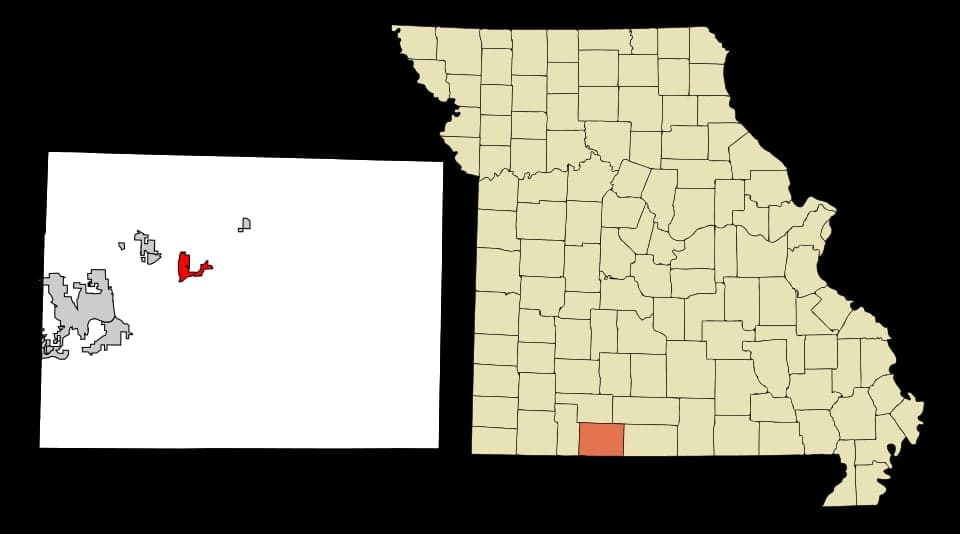
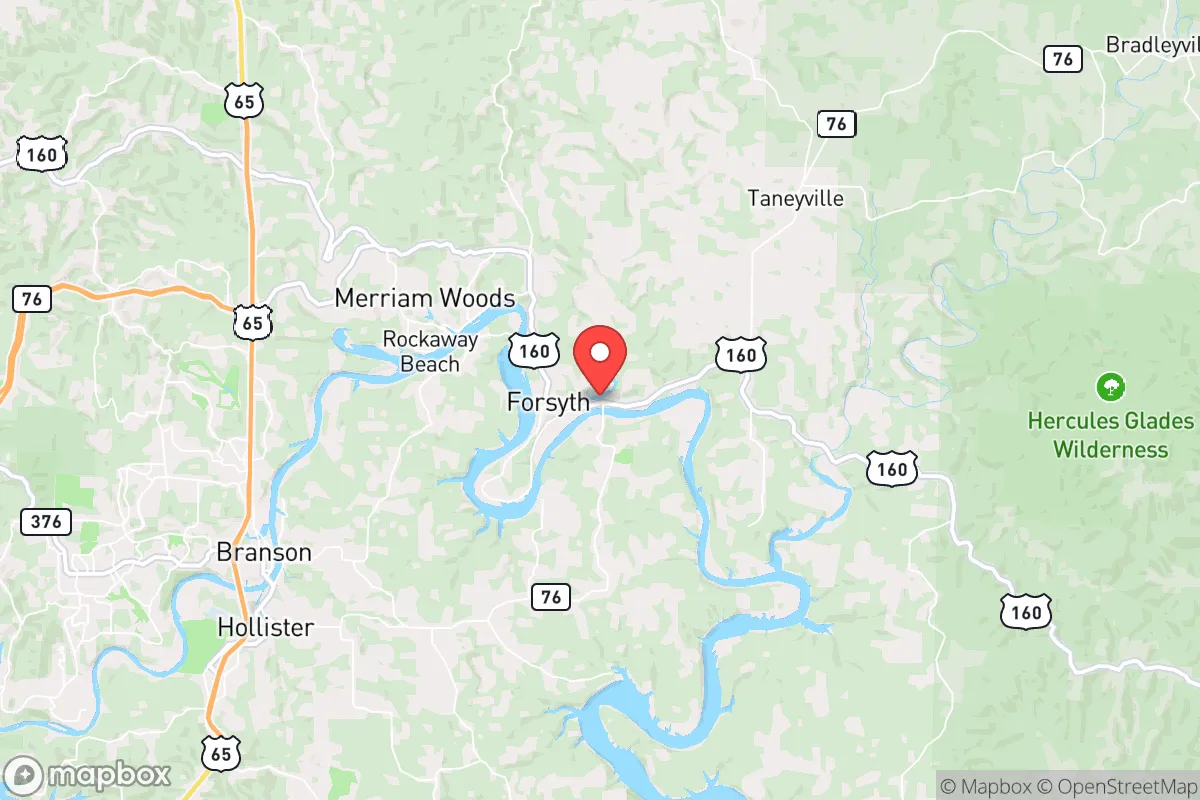
The people of Forsyth, Missouri, today number 2,749, forming a small, predominantly white community with a notably low foreign-born population of 0.0%. The city’s character is shaped by its role as the Taney County seat and its position on the shores of Bull Shoals Lake, attracting a mix of retirees, service-industry workers, and families seeking a quiet, rural lifestyle. With 91.5% of residents identifying as white and a college education rate of 28.2%, Forsyth is a culturally homogeneous town where local identity is deeply tied to Ozarks heritage and outdoor recreation. Its population density remains low, and the community retains a strong sense of local governance and tradition.
How the city was settled and grew
Forsyth was founded in 1837 as the county seat of Taney County, named after U.S. Senator John Forsyth. The original settlers were primarily of English, Scottish, and Irish descent, drawn by the promise of fertile land along the White River and the opportunity to establish a government center in the sparsely populated Ozarks. These early families built homes in what is now the Historic Downtown Forsyth district, centered around the courthouse square, which remains the city’s civic and commercial heart. The population grew slowly through the 19th and early 20th centuries, sustained by subsistence farming, timber, and small-scale milling. A significant wave arrived after the construction of the Powersite Dam in 1913, which created Lake Taneycomo and spurred a tourism economy. Newcomers, many from neighboring Missouri and Arkansas counties, settled in the Lake Taneycomo Shoreline area, building seasonal cabins and small resorts that laid the groundwork for the modern recreation industry. By 1950, the population had reached just over 1,000, with the community remaining overwhelmingly white and locally born.
Modern era (post-1965)
After the 1965 Immigration and Nationality Act, Forsyth saw virtually no change in its foreign-born population, which remains at 0.0% today. Instead, the modern era has been defined by domestic in-migration, particularly from the 1970s onward. The completion of Bull Shoals Dam in 1951 created Bull Shoals Lake, and by the 1980s, the lake’s recreational appeal began drawing retirees and second-home buyers from the Midwest, especially from Illinois, Iowa, and Kansas. These new residents concentrated in the Bull Shoals Lake Estates subdivision and along the Highway 76 Corridor, where lakefront homes and vacation rentals proliferated. The city’s racial composition remained stable: the white share of the population has stayed above 90%, with the 2020 Census showing 91.5% white, 1.5% Hispanic, and 0.9% Black. The Hispanic population, though small, is concentrated in the West Forsyth area, where some families work in local construction, hospitality, and agriculture. The Black population, also tiny, is dispersed rather than clustered in any single neighborhood. The college-educated share, at 28.2%, is slightly below the national average, reflecting the area’s blue-collar and service-oriented economy.
The future
Forsyth’s population is projected to grow modestly over the next 10–20 years, driven primarily by continued domestic migration of retirees and remote workers seeking lower costs and lake access. The city’s demographic profile is unlikely to become significantly more diverse: the foreign-born population is expected to remain near zero, and the Hispanic share may rise slowly but will likely stay below 5%. New residential development is concentrated in the Forsyth Highlands subdivision, a master-planned community on the city’s eastern edge, and along the Highway 160 Bypass, where new single-family homes and townhouses are being built for incoming families. The cultural identity of Forsyth is evolving from a purely agricultural and government town toward a recreation-and-retirement hub, but the core character—conservative, family-oriented, and deeply rooted in Ozarks traditions—remains intact. The city’s low crime rate, strong local schools, and lack of major urban amenities will continue to attract those seeking a quiet, predictable lifestyle.
For someone moving in now, Forsyth offers a stable, predominantly white community with a strong sense of place and a slow pace of change. The population is aging slightly, but new families are arriving in the newer subdivisions, balancing the demographic mix. The city is becoming more oriented toward lake recreation and remote work, but its social and political conservatism remains a defining feature. Newcomers should expect a welcoming but insular environment where local networks and community involvement are key to settling in.

* Values derived from national, state, county, city and local statistics and may differ in a specific area. Last updated: 2026-09-29T21:46:46.000Z
Narrative content on this page is AI-generated and may contain mistakes. Verify any details that matter before acting on them.
ReloMaps may earn a commission from affiliate links at no extra cost to you.

