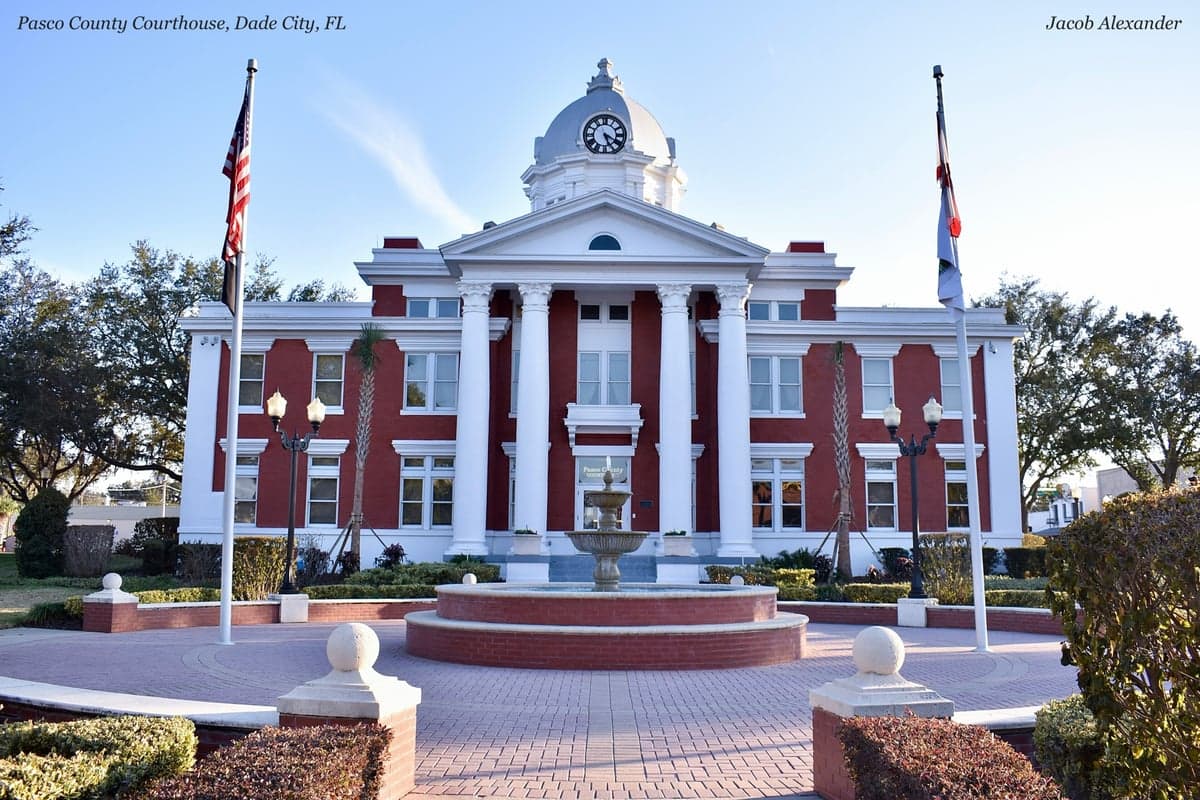
Photo: Wikipedia
Strategic Assessment of Pasco County
Meaningful friction. Expect exposure to either population pressure, blast zones, or natural disaster risk. Consider buying a retreat property.
What does the Strategic Assessment tell us?
Our Strategic Assessment grades tactical survivability of an area. Major population centers, military targets, fallout zones, natural disasters, and border exposure all drive risk — lower exposure means a more defensible position in a crisis.
This is heavily inspired by Joel Skousen's Strategic Relocation book. Highly recommended you checkout the book ($)What does this tell us?
Our Strategic Assessment grades tactical survivability of an area. Major population centers, military targets, fallout zones, natural disasters, and border exposure all drive risk — lower exposure means a more defensible position in a crisis.
This is heavily inspired by Joel Skousen's Strategic Relocation book. Highly recommended you checkout the book ($)Strategic Pillars
Key Distances
Strategic Assessment Analysis
Pasco County, Florida, offers a compelling strategic position for relocators prioritizing resilience and self-sufficiency, balancing proximity to Tampa’s economic engine with a distinct buffer from its densest urban core. The county’s geography—stretching from the Gulf Coast inland through suburban sprawl and into rural ranchlands—provides a layered defense against both natural and man-made disruptions. For those serious about disaster readiness, Pasco’s mix of established infrastructure, growing agricultural capacity, and relative distance from major fallout targets makes it a pragmatic choice, though not without its own exposure to hurricane risks and coastal vulnerabilities.
Geographic position and natural advantages for long-term stability
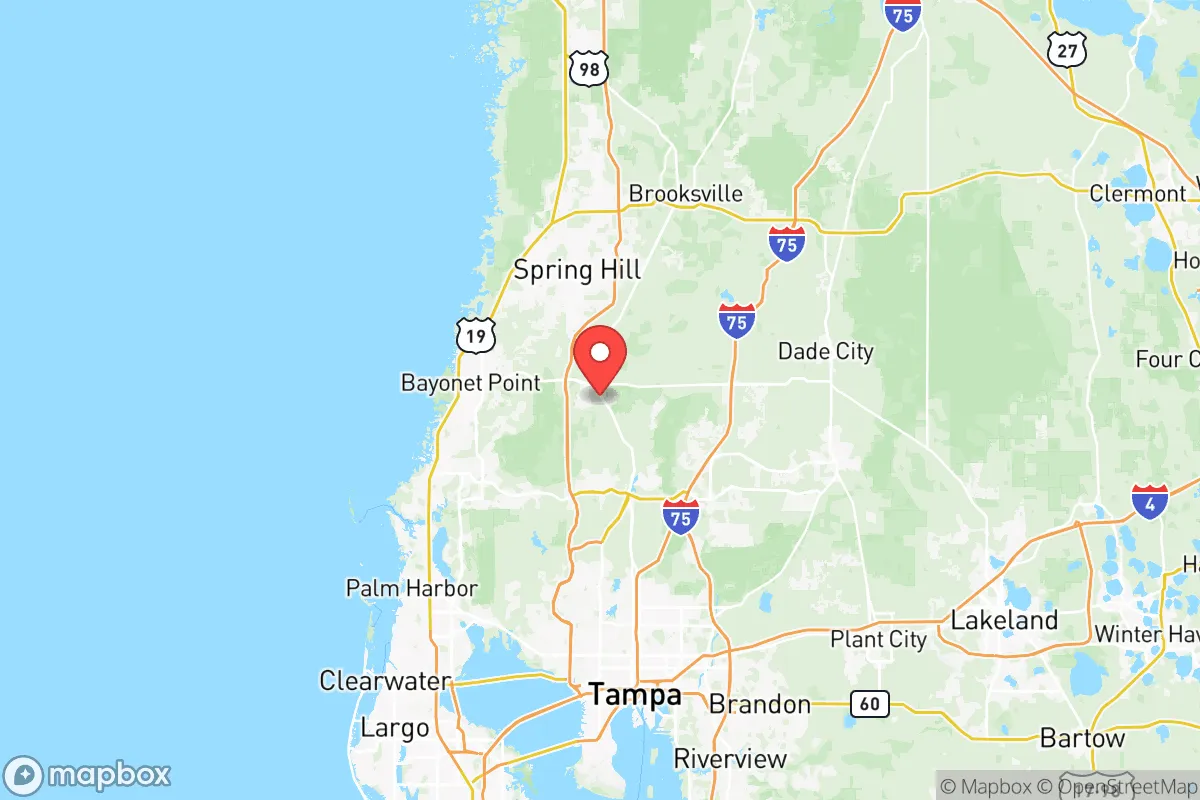
Pasco County’s location along Florida’s Nature Coast gives it a unique blend of coastal access and interior security. The county seat, Dade City, sits roughly 30 miles inland, offering a buffer from storm surge that communities like Hudson or New Port Richey along the Gulf directly face. The Withlacoochee River and the vast Green Swamp—a 560,000-acre watershed spanning Pasco and neighboring counties—serve as natural barriers and water reserves, critical for long-term sustainability. The area’s karst topography, with its limestone aquifers, provides a natural filtration system for groundwater, a key advantage over regions reliant on surface reservoirs vulnerable to contamination. For a relocator, this means the inland corridor from Land O’ Lakes to San Antonio offers defensible terrain with access to fresh water, while the coastal strip remains a trade-off between amenity and risk.
Risks, exposures, and proximity to fallout-relevant landmarks
Pasco’s primary natural threat is hurricanes, with the entire county lying in a high-risk zone for storm impacts. The 2024 hurricane season reinforced that even inland areas like Wesley Chapel can face prolonged power outages and flooding from stalled rainbands. Man-made risks are comparatively low but not negligible: the county hosts the Crystal River Nuclear Plant (now decommissioned but still storing spent fuel) on its western edge, and the Port of Tampa—a major petrochemical and shipping hub—lies just 40 miles south. While Pasco itself lacks heavy industry, its proximity to Tampa’s refinery corridor and MacDill Air Force Base means a regional event could disrupt supply chains and utilities. The county’s sprawling suburban development pattern, particularly along the Suncoast Parkway corridor, creates choke points for evacuation routes, a vulnerability during rapid-onset events. For the resilience-minded, the rural northeast quadrant—around the communities of Lacoochee and Trilby—offers the greatest separation from these risks, though with fewer services.
Practical resilience for a relocator: food, water, energy, and defensibility
Pasco County’s practical resilience hinges on its agricultural base and water resources. The county is a leading producer of beef cattle, citrus, and row crops in Florida, with the Pasco County Cooperative Extension actively supporting local food systems and farm-to-table networks. The Floridan Aquifer provides abundant, high-quality groundwater, and many rural properties already rely on private wells—a significant advantage over municipal systems that can fail during grid outages. Energy infrastructure is a mixed bag: Duke Energy’s natural gas plants and the decommissioned nuclear site provide baseline capacity, but the grid is vulnerable to hurricane damage, and solar adoption remains below state averages. Defensibility varies sharply by location: suburban subdivisions offer community cohesion but limited stand-alone capability, while the ranchlands east of I-75 allow for greater self-sufficiency, with larger lot sizes and fewer neighbors. The county’s active Pasco County Emergency Management office runs robust preparedness programs, including Community Emergency Response Team (CERT) training, which strengthens local resilience networks.
Overall, Pasco County presents a balanced strategic picture for the disaster-conscious relocator. Its inland areas offer genuine advantages in water security, agricultural potential, and distance from major targets, while the coastal and suburban zones require more careful planning for hurricane and grid-disruption scenarios. The county’s growth—projected to add over 100,000 residents by 2030—brings both economic opportunity and increased competition for resources. For those willing to prioritize the rural eastern corridor and invest in on-site power and water systems, Pasco provides a viable base for long-term resilience without complete isolation from urban amenities. The key is choosing the right micro-location within the county, as the difference between a defensible homestead and a vulnerable subdivision is often just a few miles.

* Values derived from national, state, county, city and local statistics and may differ in a specific area. Last updated: 2026-10-25T03:17:51.000Z
Narrative content on this page is AI-generated and may contain mistakes. Verify any details that matter before acting on them.
ReloMaps may earn a commission from affiliate links at no extra cost to you.

