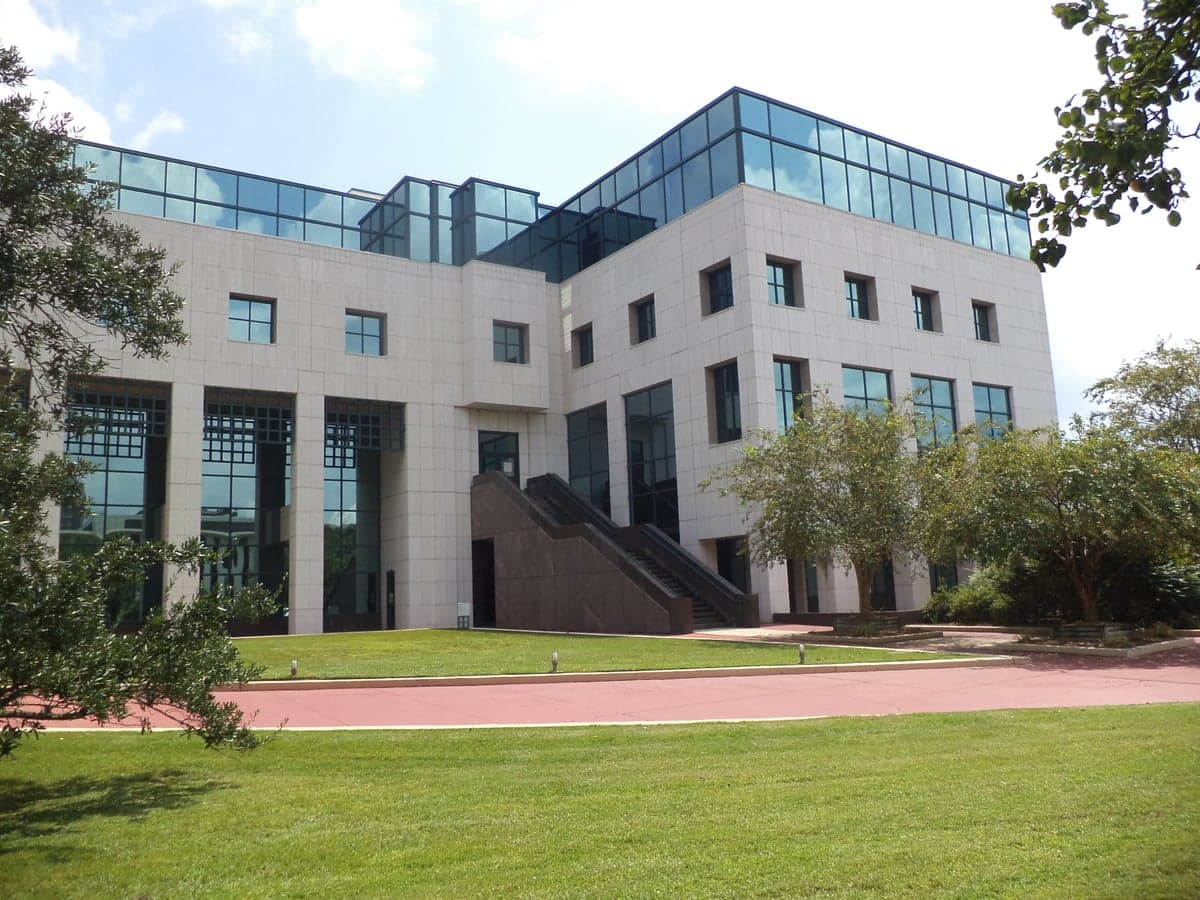
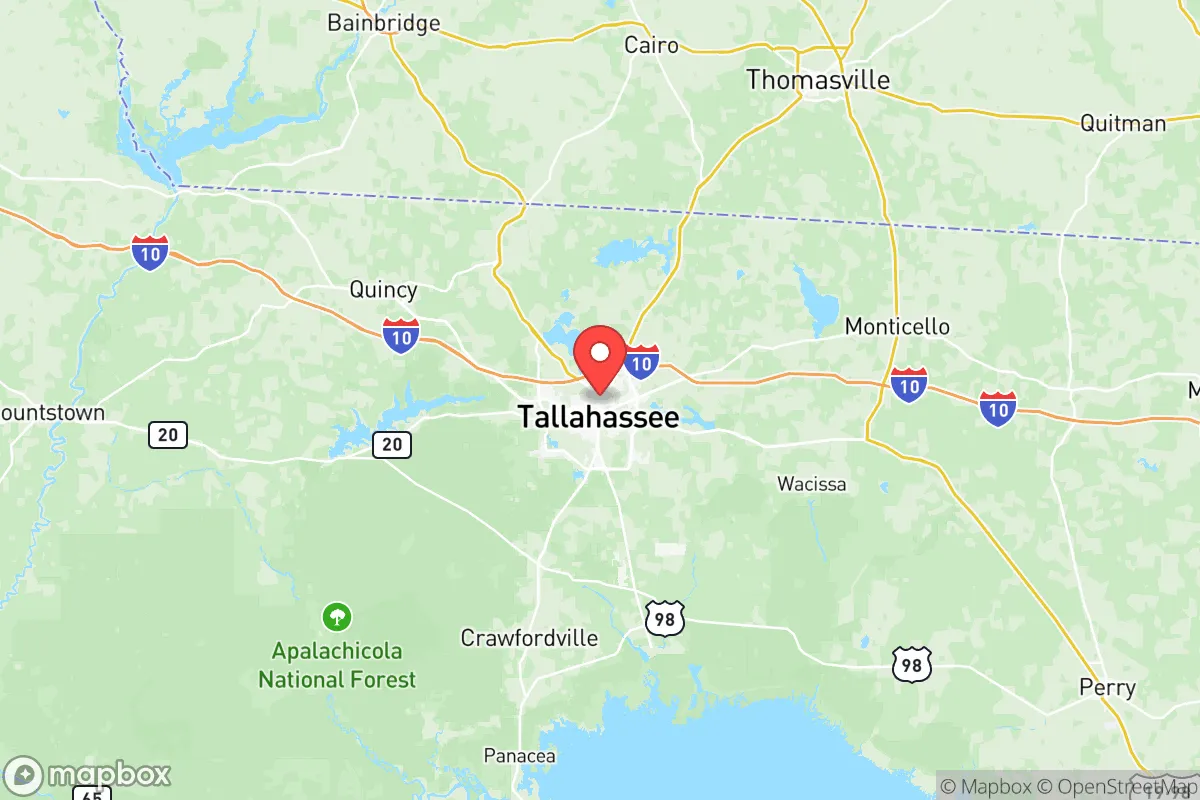
Photo: Wikipedia
Personal Sovereignty in Leon County
Viable for self-reliance. Generally workable, though some barriers may limit total independence.
What does Personal Sovereignty tell us?
Personal Sovereignty measures your capacity for self-reliance and independence with minimal government friction. Higher scores mean fewer barriers between you and the way you want to live... but it assumes you have the space you need and good neighbors.
What does this tell us?
Personal Sovereignty measures your capacity for self-reliance and independence with minimal government friction. Higher scores mean fewer barriers between you and the way you want to live... but it assumes you have the space you need and good neighbors.
State Policy
Energy independence: Importer (10% of energy produced in-state)
Personal Liberty
Homesteading

Personal Liberty Analysis
Leon County, anchored by Tallahassee as Florida’s state capital, presents a mixed personal sovereignty environment where state-level preemptions on taxes and firearms create a baseline of individual freedom, but local governance in the urban core imposes a noticeably heavier regulatory hand than in the county’s rural outskirts. For a conservative-leaning individual or family weighing autonomy, the key distinction lies between the city limits of Tallahassee and unincorporated areas like Woodville, Miccosukee, and Bradfordville, where zoning, enforcement, and cultural attitudes shift significantly. The county’s overall sovereignty profile is best described as a patchwork: strong on self-defense rights and property protections by national standards, but with a local tax and regulatory posture that demands careful neighborhood selection.
Tax burden and regulatory posture in Leon County vs. surrounding areas
Florida’s lack of a state income tax provides a foundational advantage for personal financial sovereignty, and Leon County’s combined state and local sales tax rate of 8.0% (7.5% state plus 0.5% discretionary surtax) is moderate compared to other Florida counties. Property taxes, however, are a more localized consideration: the county’s millage rate for 2025 is approximately 5.8 mills for the general fund, plus school district levies that bring the total effective rate to roughly 7.8–8.2 mills depending on the municipality. Tallahassee imposes a higher combined millage than unincorporated areas like Chaires or Miccosukee, where the absence of city services lowers the tax burden by roughly 0.5–0.8 mills. Regulatory posture in the city is notably heavier: Tallahassee enforces a strict stormwater management code, tree protection ordinances that limit removal on private property, and a rental inspection program that adds compliance costs for landlords. In contrast, the county’s rural service areas — particularly around Lake Talquin and the eastern reaches near Capitola — operate under far looser land-use oversight, with fewer permitting hurdles for accessory structures and home-based businesses. For a reader prioritizing low-tax, low-regulation living, the unincorporated zones east of Tallahassee or south toward Woodville offer a meaningfully lighter touch than the city proper.
Self-defense rights and gun law specifics in Leon County
Florida’s statewide preemption of firearm regulations ensures that Leon County cannot enact its own gun control ordinances, creating a uniform legal baseline across both Tallahassee and rural areas. The state operates under a permitless carry regime (effective July 2023), meaning any law-abiding adult 21 or older can carry a concealed firearm without a license. Open carry is generally prohibited except in specific contexts like hunting, fishing, or camping, but the practical effect for daily life is that concealed carry is unrestricted. Leon County’s sheriff’s office has historically been supportive of Second Amendment rights, and the county issues concealed weapon licenses through the state system without local administrative barriers. Gun ranges and firearms retailers are concentrated along the U.S. 27 corridor south of Tallahassee and in the Woodville area, with the Tallahassee Shooters indoor range and the Florida Fish and Wildlife Conservation Commission’s Joe Budd Shooting Range providing accessible training facilities. Stand Your Ground and Castle Doctrine laws apply statewide, offering strong legal protection for defensive use of force in the home, vehicle, or workplace. For a reader concerned about local government overreach on firearms, the state preemption provides reliable protection, though the cultural atmosphere in Tallahassee’s urban core is notably less gun-friendly than in rural communities like Miccosukee or Bradfordville, where firearm ownership is near-universal and openly practiced.
Self-reliance and homesteading viability across Leon County
Homesteading and off-grid living viability varies dramatically within Leon County, driven primarily by zoning and minimum lot size requirements. Unincorporated areas east of Tallahassee, particularly around Miccosukee and Capitola, offer agricultural zoning with minimum lot sizes of 1 to 5 acres, making small-scale farming, livestock keeping, and rainwater collection feasible without special permits. The Miccosukee community, in particular, has a strong tradition of rural self-sufficiency, with many properties operating on well water and septic systems. In contrast, Tallahassee’s urban and suburban zoning (R-1 and R-2 districts) typically requires minimum lot sizes of 6,000 to 10,000 square feet and restricts livestock to chickens only, with no allowance for goats, pigs, or larger animals. Off-grid solar installations are permitted countywide under Florida’s net metering rules, but Tallahassee’s building code requires interconnection with the municipal grid for residences within city limits, effectively prohibiting true grid independence. Woodville and the Lake Talquin area are the most permissive for off-grid living, with fewer code enforcement patrols and a higher tolerance for alternative housing such as tiny homes and RV dwellings on rural parcels. The county’s Right to Farm Act protections apply in agricultural zones, shielding farmers from nuisance lawsuits, but these protections do not extend to residential subdivisions. For a reader seeking maximum self-reliance, a parcel of 5+ acres in the Miccosukee or Capitola areas provides the most favorable regulatory environment within Leon County.
Personal liberties: parental rights, medical autonomy, speech, and property
Florida’s statewide legal framework provides strong protections for several dimensions of personal liberty that directly affect Leon County residents. Parental rights in education are governed by the Parental Bill of Rights (Florida Statute 1014), which affirms parents’ authority over their children’s medical decisions, education, and moral upbringing; this applies uniformly across Leon County schools, including the Leon County School District and charter schools like the Tallahassee School of Math and Science. Medical autonomy is shaped by Florida’s broad conscientious objection statutes, which allow healthcare providers and individuals to refuse participation in procedures they find objectionable, and by the state’s prohibition on local vaccine mandates — a preemption that prevents Tallahassee from imposing its own immunization requirements beyond state law. Free speech protections are robust under Florida’s anti-SLAPP statute and the state’s public meeting laws, though Tallahassee’s city commission has faced criticism for restrictive public comment policies at meetings, a contrast to the more open proceedings in county commission meetings held in the unincorporated areas. Property rights are strengthened by Florida’s Private Property Rights Protection Act (the Bert Harris Act), which provides a cause of action when government regulation reduces property value by more than 50%; this has been invoked against Tallahassee’s tree ordinance and stormwater regulations. For a reader weighing these factors, the legal baseline in Leon County is favorable for parental and medical autonomy, but the local enforcement climate in Tallahassee can be more adversarial on property rights and speech than in the county’s rural precincts.
Overall, Leon County offers a bifurcated sovereignty environment where state-level preemptions on taxes, firearms, and parental rights provide a solid floor of personal freedom, but local governance in Tallahassee introduces meaningful friction on property use, regulatory compliance, and public speech. For a conservative-leaning individual or family, the most autonomous lifestyle is found in the county’s rural eastern and southern areas — Miccosukee, Capitola, Woodville, and the Lake Talquin region — where lower taxes, looser zoning, and a culture of self-reliance align more closely with homesteading and off-grid aspirations. Compared to deep-blue urban counties in other states, Leon County’s sovereignty profile is moderately strong; compared to Florida’s more rural and libertarian-leaning counties like Liberty or Calhoun to the west, it is noticeably more regulated. The practical takeaway for a relocation decision is that neighborhood selection within Leon County matters as much as the county itself, and the unincorporated rural pockets deliver a level of personal sovereignty that the Tallahassee city limits cannot match.

* Values derived from national, state, county, city and local statistics and may differ in a specific area. Last updated: 2026-06-16T13:10:59.000Z
Narrative content on this page is AI-generated and may contain mistakes. Verify any details that matter before acting on them.
ReloMaps may earn a commission from affiliate links at no extra cost to you.

