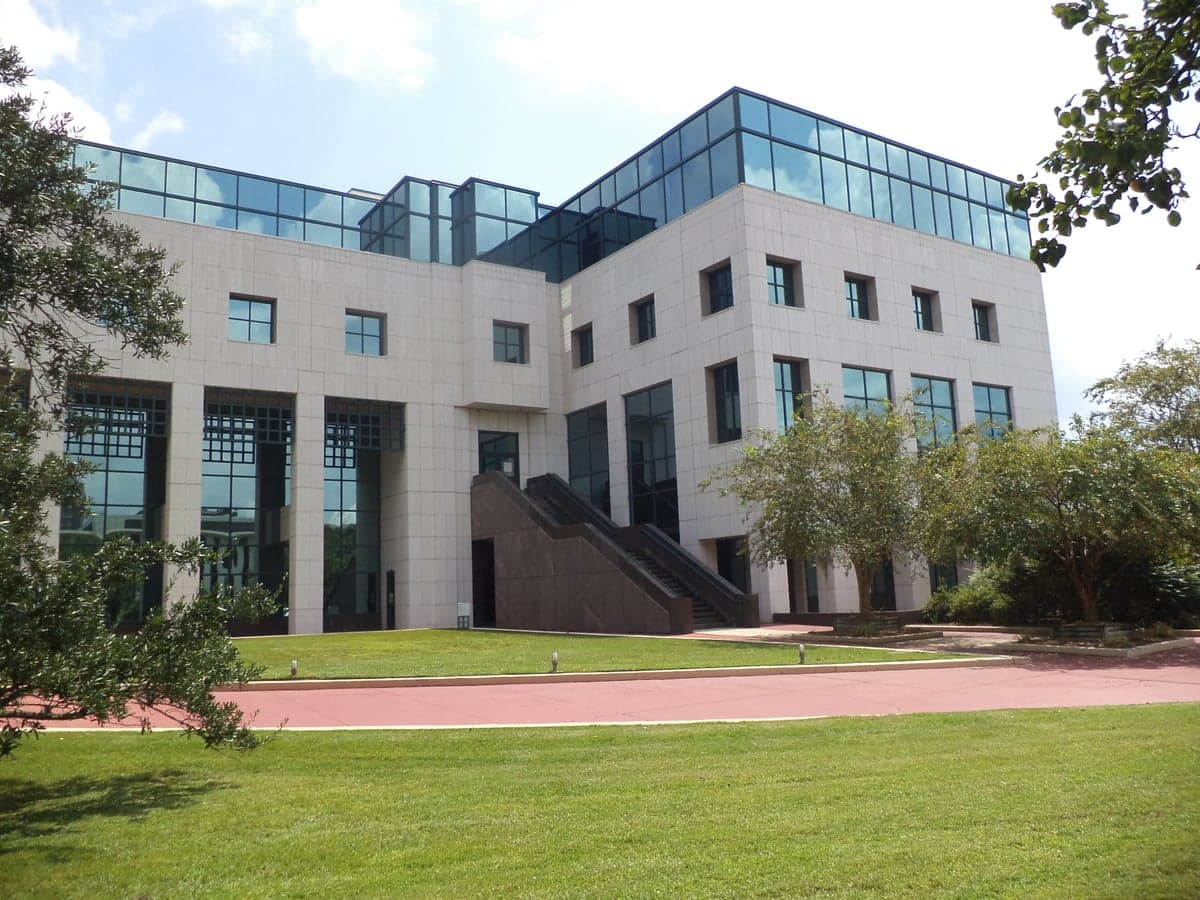
Photo: Wikipedia
Demographics of Leon County
Affluence Level in Leon County
A middle-class area roughly in line with national averages across income, home values, education, and employment.
People of Leon County
Leon County, Florida, is a study in contrasts: a politically liberal, college-town core in Tallahassee surrounded by deeply conservative rural stretches, with a population that is 53.9% White, 30.4% Black, and 7.9% Hispanic. Home to 295,335 residents, the county is defined by the gravitational pull of Florida State University and state government, creating a highly educated workforce (48.6% college degree attainment) but a remarkably low foreign-born share of just 3.3%. The people of Leon County today are a mix of long-standing Black families rooted in Reconstruction-era settlements, white professionals drawn by government and education jobs, and a modest but growing Hispanic and Asian presence concentrated in and around Tallahassee.
Settlement & growth (pre-1960)
Long before European contact, the Apalachee people inhabited the region, building a sophisticated agricultural society with a population estimated in the tens of thousands. Their capital, Anhaica (near present-day Tallahassee), was encountered by the Spanish expedition of Hernando de Soto in 1539, marking the first sustained European contact in what would become the continental United States. Spanish missions dotted the landscape through the 17th century, but disease, warfare, and slave raids by English colonists from Carolina decimated the Apalachee population by the early 1700s, leaving the area largely depopulated.
American settlement began in earnest after Florida became a U.S. territory in 1821. The territorial government selected Tallahassee as the capital in 1824, situated roughly midway between the existing colonial capitals of St. Augustine and Pensacola. This decision drove the first major wave of white settlers — primarily planters from Georgia, South Carolina, and Virginia — who established cotton plantations on the fertile red clay hills. By the 1840s, Leon County had become one of Florida's wealthiest counties, built on enslaved labor. The enslaved population outnumbered whites by the 1850s, a demographic legacy that persists today in the county's 30.4% Black share.
After the Civil War and emancipation, freedmen established independent communities across the county. Settlements like Miccosukee, Belair, and the historic Frenchtown neighborhood in Tallahassee became centers of Black life, with families farming small plots or working as sharecroppers. Frenchtown, in particular, emerged as a thriving commercial and cultural hub for Black residents during Jim Crow, with its own businesses, schools, and churches. The post-Reconstruction period also saw the arrival of a small number of European immigrants, mostly Irish and Italian laborers who worked on railroad construction and in the timber industry, though their numbers remained tiny compared to the Deep South's plantation belt.
The 20th century brought two transformative forces: government and education. The establishment of Florida State College for Women (now Florida State University) in 1905 and Florida A&M University (FAMU) in 1887 created a steady demand for faculty, staff, and service workers. The Great Depression and New Deal expanded the state and federal government presence in Tallahassee, drawing white professionals from across the South. World War II accelerated this trend, as Camp Gordon Johnston and other military installations brought soldiers and civilian workers to the region, many of whom stayed after the war. By 1960, Leon County's population had grown to roughly 74,000, still majority-white but with a substantial Black minority concentrated in Frenchtown, the Griffin Heights neighborhood, and rural communities like Woodville and Chaires.
Modern era (post-1965)
The 1965 Hart-Cellar Act had a muted effect on Leon County compared to coastal Florida. The foreign-born population remains just 3.3%, far below the state average of roughly 21%. Instead, the county's modern demographic story is one of domestic migration and suburbanization. The expansion of Florida State University into a major research institution, combined with the growth of state government under the 1968 Florida Constitution, drew educated professionals from across the country. Tallahassee's annexations in the 1970s and 1980s absorbed previously rural areas like the South Monroe Street corridor and the Lake Bradford Road area, while suburban subdivisions spread north and east toward the Georgia line.
The Black population, while still a large share, underwent significant geographic shifts. The Civil Rights movement opened housing opportunities outside of historic Black neighborhoods. Middle-class Black families moved to suburbs like Killearn Estates, Betton Hills, and the Bradfordville area, while Frenchtown and Griffin Heights experienced disinvestment and population decline. The Hispanic population, though small at 7.9%, grew noticeably after 2000, driven by Mexican and Central American immigrants working in construction, landscaping, and the service industry, with a visible concentration along the North Monroe Street corridor and in the Lake Jackson area. The East/Southeast Asian community (2.0%) is largely composed of professionals and graduate students at FSU and FAMU, with no single ethnic enclave but a visible presence near the universities. The Indian-subcontinent population (1.4%) follows a similar pattern, heavily tied to the tech and academic sectors.
The most dramatic recent shift has been the influx of residents from other parts of Florida and the broader Sun Belt. Since 2010, Leon County has seen steady growth from South Florida, particularly from Miami-Dade and Broward counties, as families seek lower costs and a slower pace. This migration has brought a more politically diverse population, with many newcomers registering as Republicans in a county that has voted Democratic in every presidential election since 1992. The county's white population has declined from roughly 60% in 2000 to 53.9% today, while the Hispanic and Asian shares have doubled, though from a very low base.
The future
Leon County is projected to grow modestly, reaching roughly 320,000 by 2035, driven by natural increase and continued domestic migration. The county is becoming slightly more diverse, but at a slower pace than Florida as a whole. The Hispanic share is expected to rise to 10-12% by 2035, while the Black share will likely remain stable or decline slightly as younger Black residents move to larger metro areas for job opportunities. The East/Southeast Asian and Indian populations will grow in absolute terms but remain small shares, concentrated in professional and academic circles.
The most significant demographic trend is the aging of the white population and the outmigration of young adults. Leon County has a net loss of residents aged 25-34, many of whom leave after college for higher-paying jobs in Orlando, Tampa, or out of state. This "brain drain" is partially offset by the arrival of new students and faculty, but it means the county's population is older than the state average, with a median age of roughly 33. Suburbanization will continue, with growth concentrated in the northeastern quadrant near the Thomasville Road corridor and in the southeastern area around the Capital Circle Southeast extension. Rural communities like Woodville, Chaires, and Miccosukee will see slow infill development but retain their small-town character.
For someone moving to Leon County now, the region offers a stable, educated population with deep historical roots, a strong sense of place, and a pace of change that is gradual rather than disruptive. The county's identity will remain anchored to its role as Florida's political and educational capital, with a population that is politically polarized but socially cohesive. Newcomers should expect a community that values tradition, education, and civic engagement, with the trade-off of slower economic growth and fewer big-city amenities than Florida's coastal metros.

* Values derived from national, state, county, city and local statistics and may differ in a specific area. Last updated: 2026-06-16T13:10:59.000Z
Narrative content on this page is AI-generated and may contain mistakes. Verify any details that matter before acting on them.
ReloMaps may earn a commission from affiliate links at no extra cost to you.

