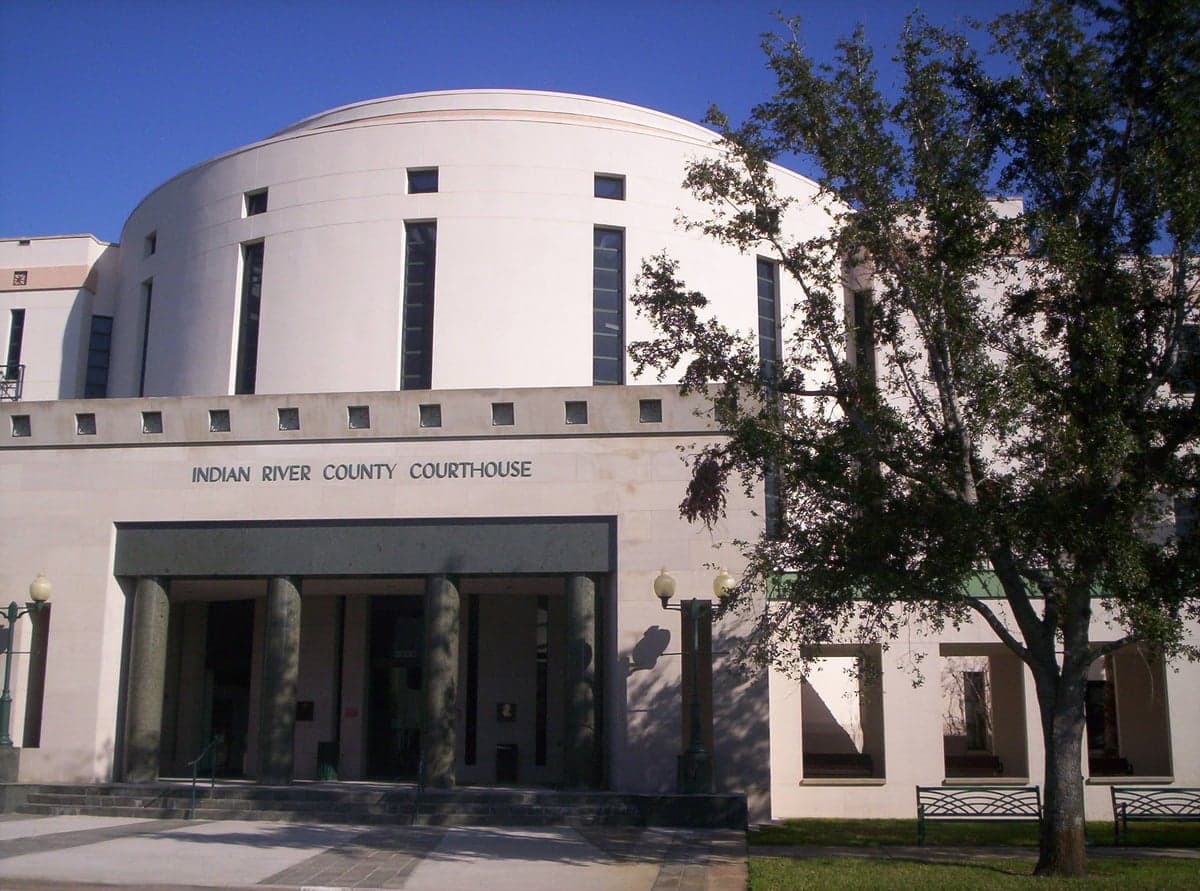
Photo: Wikipedia
Personal Sovereignty in Indian River County
Viable for self-reliance. Generally workable, though some barriers may limit total independence.
What does Personal Sovereignty tell us?
Personal Sovereignty measures your capacity for self-reliance and independence with minimal government friction. Higher scores mean fewer barriers between you and the way you want to live... but it assumes you have the space you need and good neighbors.
What does this tell us?
Personal Sovereignty measures your capacity for self-reliance and independence with minimal government friction. Higher scores mean fewer barriers between you and the way you want to live... but it assumes you have the space you need and good neighbors.
State Policy
Energy independence: Importer (10% of energy produced in-state)
Personal Liberty
Homesteading

Personal Liberty Analysis
Indian River County offers a notably high degree of personal sovereignty relative to many coastal Florida counties, driven by a light regulatory touch, a deeply embedded gun culture, and a tax structure that favors property owners and entrepreneurs. While not as libertarian-leaning as some rural inland counties, the area strikes a balance between access to coastal amenities and a governance philosophy that generally defers to individual choice, particularly in unincorporated areas and smaller towns like Fellsmere, Sebastian, and Vero Beach's western fringe. For a single individual or family prioritizing autonomy, the county's posture is one of pragmatic freedom, where state preemption laws and local political culture create a buffer against the more interventionist tendencies seen in Broward or Palm Beach counties.
Tax burden and regulatory posture: how Florida's framework shapes local freedom
Florida's absence of a state income tax is the foundational advantage for anyone moving to Indian River County, but the local picture adds nuance. The county's combined sales tax rate is 7%, which includes the state's 6% levy and a 1% discretionary surtax approved by voters for infrastructure and school construction. This is moderate by Florida standards, but the real story is property taxes. The county's millage rate for 2025 is approximately 5.4 mills for the general fund, with an additional 1.5 mills for the school district, yielding a total effective rate around 6.9 mills on assessed value. That is lower than the state average and significantly lower than coastal peers like Martin County (7.8 mills) or St. Lucie County (8.2 mills). For a $400,000 home with a homestead exemption, the annual tax bill lands around $2,100—a figure that appeals to cost-conscious conservatives. Regulatory posture is equally light: the county has no local building moratoriums, no rent control ordinances, and a streamlined permitting process for single-family homes in unincorporated areas. The city of Fellsmere, in particular, is known for its pro-business stance, with minimal zoning friction for small-scale agricultural or commercial ventures. However, Vero Beach city limits impose stricter sign ordinances and tree protection rules, so those seeking maximum regulatory freedom should prioritize unincorporated parcels or towns like Sebastian, where the city council has consistently voted against expanding code enforcement staff.
Self-defense and gun law specifics: what the Second Amendment landscape looks like on the ground
Indian River County is a stronghold for gun rights, with local culture and law enforcement both aligned with a permissive interpretation of the Second Amendment. Florida is a permitless carry state as of July 2023, meaning any law-abiding adult can carry a concealed firearm without a license. The Indian River County Sheriff's Office, led by Sheriff Eric Flowers, is explicitly supportive of this framework, with a stated policy of not enforcing any federal firearms regulations that conflict with state law. The county has no local ordinances restricting magazine capacity, firearm types, or where guns can be carried beyond state preempted limits—meaning no local bans on open carry or restrictions in parks. The practical effect is that a resident in unincorporated areas or towns like Gifford or Wabasso can carry a firearm for self-defense without bureaucratic hurdles. The sheriff's office also runs a robust concealed weapons licensing program for those who still want a permit for reciprocity in other states, with typical wait times under 30 days. For those interested in training, the Indian River County Shooting Range in Fellsmere offers a 25-yard pistol range and a 100-yard rifle range, with annual memberships under $100. The only notable restriction is that discharging a firearm within city limits of Vero Beach or Sebastian is prohibited except at approved ranges, so rural parcels in Fellsmere or the western corridor near the St. Johns River are the preferred locations for those who want to shoot on their own property.
Self-reliance and homesteading viability: lot sizes, zoning, and off-grid feasibility
Indian River County presents a mixed but generally favorable environment for homesteading and off-grid living, with significant variation by location. The county's comprehensive plan allows for agricultural zoning (A-1) on parcels as small as 5 acres in the rural western areas, while the eastern urban service boundary restricts subdivision below 10 acres for agricultural use. This means that a family seeking to keep chickens, goats, or a small orchard can do so legally on a 5-acre lot in Fellsmere or near the Oslo Road corridor, but not on a standard quarter-acre lot in Vero Beach's suburban subdivisions. Off-grid feasibility is highest in unincorporated areas west of I-95, where the county has no building code requirement for grid-tied electricity and allows composting toilets under Florida's Department of Health regulations for private wells and septic systems. The city of Sebastian, however, requires connection to municipal water and sewer for any new construction within its utility service area, which effectively prohibits true off-grid living there. Rainwater collection is legal countywide, but the county health department imposes a 1,000-gallon minimum cistern size for potable use, and permits are required for any system supplying indoor plumbing. Solar panel installation is straightforward: no county-level permitting fees for systems under 10 kW, and net metering is available through Florida Power & Light, which serves the entire county. For those serious about self-sufficiency, the western corridor near the Blue Cypress Conservation Area offers the most permissive environment, with parcels of 20+ acres available for under $10,000 per acre and no homeowners' association restrictions—a stark contrast to the deed-restricted communities in Vero Beach's Indian River Shores.
Personal liberties: parental rights, medical autonomy, speech, and property
Indian River County reflects Florida's broader conservative shift on personal liberties, particularly in education and medical choice. The county is home to a strong school choice ecosystem: there are 12 charter schools, including the well-regarded Indian River Charter High School, and the state's Family Empowerment Scholarship program is widely used, with over 1,200 students in the county receiving vouchers for private or homeschool expenses in 2024. Parental rights in education are explicitly protected under Florida's Parental Bill of Rights, and the school board has consistently voted to maintain transparency in curriculum materials, with no local controversies over library books or classroom content. Medical autonomy is similarly robust: Florida has no state-level vaccine mandate, and Indian River County's hospital system, Cleveland Clinic Indian River Hospital, does not require COVID-19 vaccination for elective procedures or visitor access. The county also has a thriving direct primary care (DPC) market, with at least four clinics in Vero Beach and Sebastian offering membership-based primary care for $50–$100 per month, bypassing insurance entirely. Property rights are strongly protected: the county has no inclusionary zoning ordinances, no rent control, and a streamlined process for short-term rentals in unincorporated areas (though Vero Beach and Sebastian both require permits and limit rentals to 30-day minimums in residential zones). Free speech is robust, with the county's public comment periods at commission meetings routinely lasting over an hour, and no local restrictions on political signage beyond state-mandated size limits. The only notable friction point is the county's noise ordinance, which is enforced in unincorporated areas after 11 PM and can be a concern for those running home-based mechanical workshops or hosting large gatherings.
Overall, Indian River County ranks among the top 20% of Florida counties for personal sovereignty, offering a governance environment that is noticeably lighter than the coastal corridor from Palm Beach to Miami. The combination of no income tax, low property taxes, permitless carry, permissive agricultural zoning, and strong school choice creates a framework where individuals and families can exercise significant control over their lives without constant government friction. For a conservative-leaning reader, the key trade-off is between the convenience of Vero Beach's amenities and the greater freedom found in Fellsmere or the rural west—but even the most regulated parts of the county are far more autonomy-friendly than comparably sized cities in New York, California, or even Colorado. The county's trajectory suggests continued alignment with state-level preemption and local deference, making it a stable choice for those prioritizing personal liberty.

* Values derived from national, state, county, city and local statistics and may differ in a specific area. Last updated: 2026-06-23T17:48:37.000Z
Narrative content on this page is AI-generated and may contain mistakes. Verify any details that matter before acting on them.
ReloMaps may earn a commission from affiliate links at no extra cost to you.

