Political ClimatePolitical Climate in Filadèlfia, PA
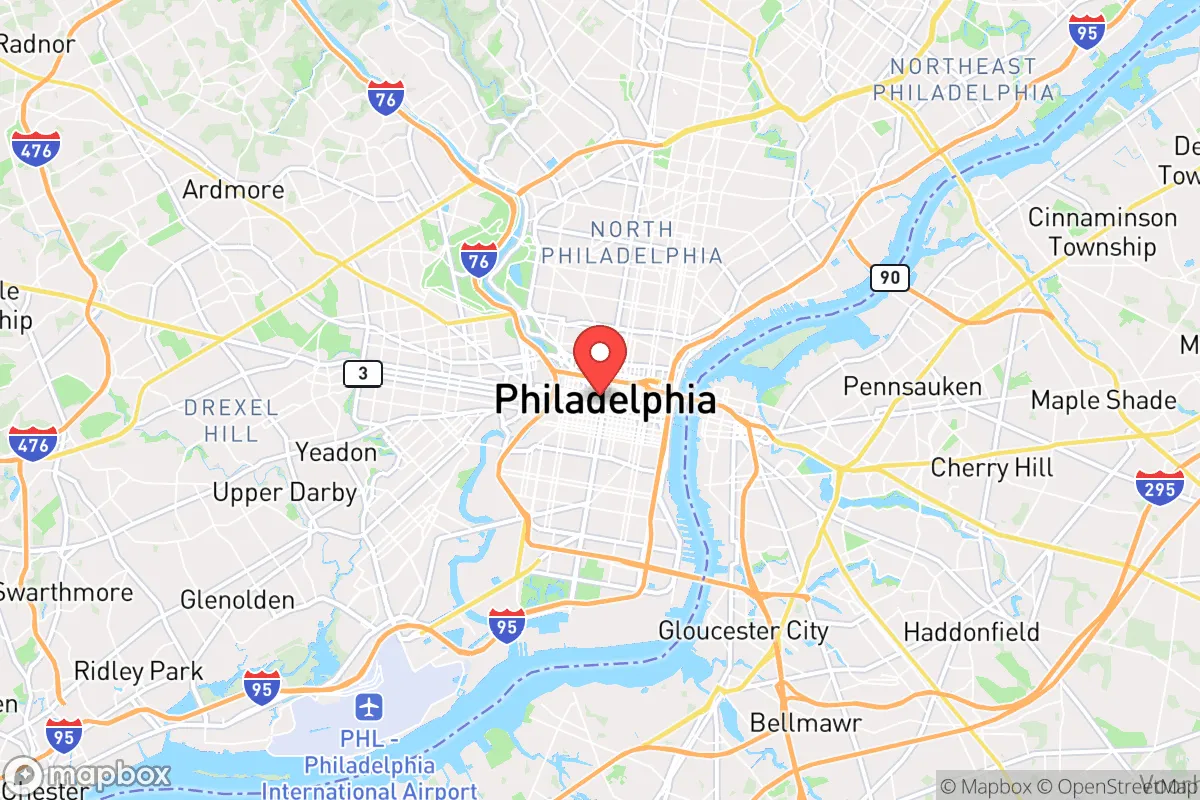
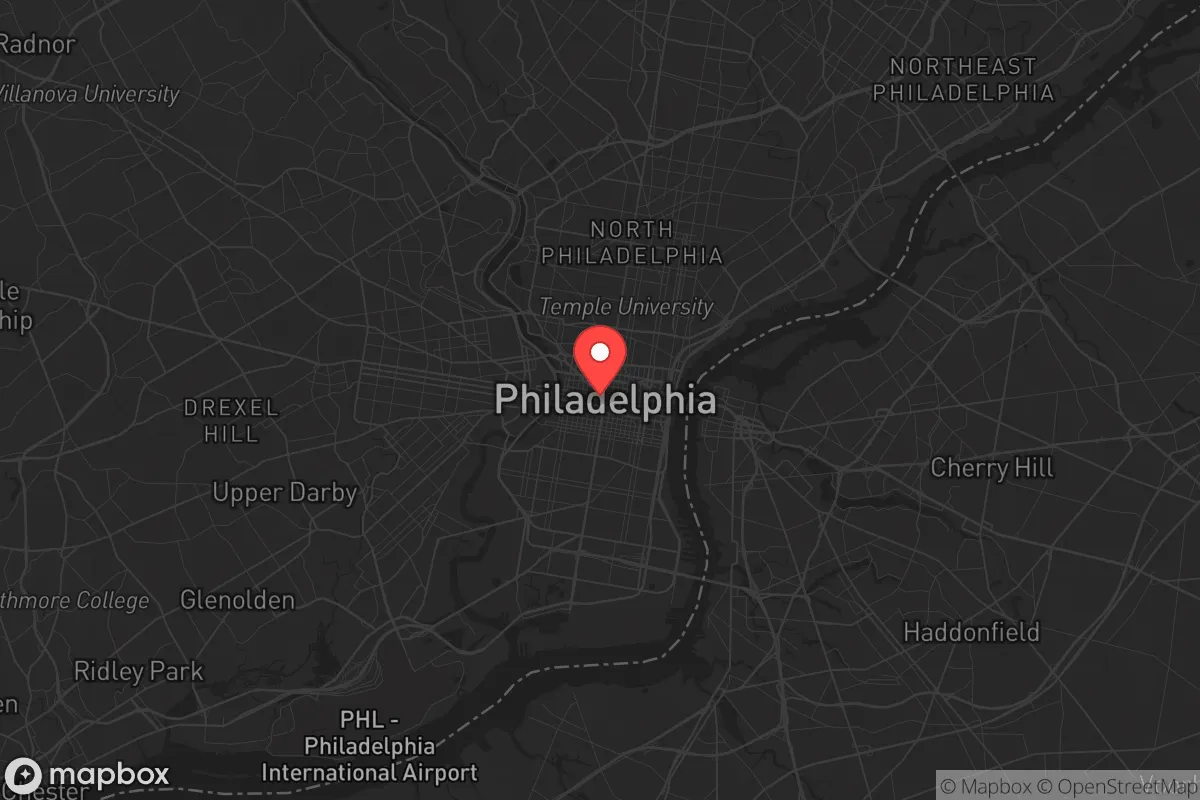
District shown is the primary district for this city’s centroid. Cities may span multiple districts.
Local Political AnalysisPolitical Analysis of Filadèlfia, PA
Filadèlfia, PA is one of the most overwhelmingly Democratic strongholds in the entire country, carrying a Cook Partisan Voting Index (PVI) of D+40. That’s not a typo — it’s a level of partisan uniformity you’d normally associate with a handful of deep-blue urban cores like Detroit or the South Bronx. In practice, this means that in nearly every federal, state, and local election, Democratic candidates routinely win by margins of 70% or more. The city’s trajectory has been steadily blue for decades, and if anything, the lean has only intensified since the 2016 and 2020 cycles, as the surrounding suburbs of Pennsylvania, PA — which as a state sits at a Cook PVI of EVEN — have become more competitive while Filadèlfia itself has pulled further left.
How it compares
The contrast between Filadèlfia and the rest of Pennsylvania, PA is stark. The state as a whole is a pure toss-up — a PVI of EVEN means it’s a perfect bellwether, swinging between parties every few years. But inside Filadèlfia, you’re living in a political bubble. Drive 20 minutes northwest to places like Bala Cynwyd or Lower Merion Township, and you’ll find suburbs that are still reliably Democratic but far more moderate, with PVI numbers closer to D+10 or D+15. Head 45 minutes north to Bucks County or west to Chester County, and you’ll hit swing territory where elections are decided by a few thousand votes. Meanwhile, go an hour south to Delaware County’s more rural edges, or east across the river into New Jersey, and the political landscape shifts again. Filadèlfia itself, though, is the anchor of the state’s Democratic base — without its massive turnout, Pennsylvania would be a reliably red state.
What this means for residents
For liberal residents, Filadèlfia is about as comfortable as it gets politically. You’ll find city government, school boards, and local institutions all aligned with progressive priorities — from $15 minimum wage ordinances to sanctuary city policies and strong tenant protections. Conservative residents, on the other hand, face a very different reality. While you’re certainly not alone — there are active Republican ward organizations in neighborhoods like Northeast Philly and parts of South Philly — your vote in local elections rarely changes the outcome. That said, the state-level picture is different: because Pennsylvania is so evenly divided, every Filadèlfia voter’s participation matters enormously in gubernatorial and presidential races. The city’s sheer population means that even a modest shift in turnout here can swing the entire state.
Culturally, Filadèlfia’s deep-blue politics shape daily life in ways both visible and subtle. You’ll see Black Lives Matter murals and LGBTQ+ pride flags flying year-round in Center City and University City. The city’s public schools and transit system (SEPTA) are heavily unionized and reflect the local labor movement’s influence. At the same time, the city’s strong-mayor system means that whoever holds City Hall — currently a Democrat — has outsized control over policing, zoning, and budgeting. The biggest policy distinction from the rest of Pennsylvania is probably gun legislation: Filadèlfia has its own stricter firearm ordinances, though they’re often challenged in the state legislature. If you’re moving here, expect a place where progressive values aren’t just campaign talking points — they’re baked into how the city operates, for better or worse.

State Political ClimatePolitical Climate in Pennsylvania
State Political AnalysisPolitical Environment in the State
Pennsylvania is the ultimate swing state, with a Cook PVI of EVEN that perfectly captures its razor-thin partisan balance. Over the past 20 years, the state has shifted from a reliable blue firewall in presidential elections to a true battleground, flipping from Obama in 2008 and 2012 to Trump in 2016, then back to Biden in 2020 by just over 80,000 votes. The dominant coalitions are a shrinking but still potent union-and-urban Democratic base in Philadelphia and Pittsburgh, facing off against a growing, energized Republican coalition in the rural center and sprawling exurbs. For a relocator, this means your experience of Pennsylvania’s politics will depend almost entirely on which of the state’s distinct regions you land in.
Urban vs. rural divide
The political map of Pennsylvania is a story of two starkly different worlds. The southeastern corner, anchored by Philadelphia and its close-in suburbs like Montgomery County and Delaware County, is the engine of the state’s Democratic vote — these three counties alone can deliver a 600,000-vote margin for a Democrat. Out west, Pittsburgh and Allegheny County provide another deep blue anchor, though the margins there are slightly thinner than Philly’s. In between lies the vast "T" — the rural and small-town expanse stretching from the northern tier down through the center and into the southwest. Counties like Tioga, Bedford, and Franklin routinely vote 70-80% Republican. The real battlegrounds are the collar counties around Philadelphia — Bucks, Chester, and Lancaster — which have been trending rightward in recent cycles, particularly among working-class and suburban voters frustrated with Democratic governance in the city. If you move to Lancaster City itself, you’ll find a liberal island in a deeply red county; move to York County and you’re in solidly red territory that’s been getting redder.
Policy environment
Pennsylvania’s policy landscape is a patchwork reflecting its divided government. The state has a flat income tax of 3.07% — one of the lowest in the nation — and a sales tax of 6% (8% in Philadelphia and Pittsburgh). Property taxes are high and locally determined, a perennial complaint for homeowners. The regulatory posture is mixed: the state has a robust oil and gas industry in the Marcellus Shale, but also imposes some of the strictest environmental regulations in the region. Education policy is a flashpoint, with a 2023 court ruling declaring the state’s school funding system unconstitutional, which will likely lead to major reforms and tax shifts in the coming years. Healthcare is dominated by large systems like UPMC in the west and Jefferson Health in the east. Election laws are relatively moderate — no-excuse mail-in voting was expanded in 2019 under Act 77, but the state lacks same-day voter registration and has strict voter ID requirements for first-time voters. For a conservative relocator, the low income tax and energy-friendly policies are draws, but the high property taxes and potential education funding overhaul are concerns.
Recent policy direction
The last five years have seen Pennsylvania lurch in both directions on key liberty issues, reflecting its divided government. On gun rights, the state is a preemption state — local governments cannot pass their own gun laws — which has been a major win for Second Amendment advocates, though Philadelphia and Pittsburgh routinely challenge this. In 2022, the legislature passed a constitutional amendment to require voter ID for all elections, but it must pass again in 2025 before going to voters. On education, the state expanded school choice with the creation of the Educational Improvement Tax Credit (EITC) program, but a full school voucher bill was vetoed by Governor Josh Shapiro in 2023. On medical freedom, Pennsylvania has no mask or vaccine mandates currently in effect, but the state health department retains broad emergency powers that could be reactivated. Property rights are generally strong, though the state’s Act 13 (2012) that limited local zoning over oil and gas drilling was partially struck down by the state Supreme Court. On privacy and surveillance, the state has no comprehensive data privacy law, but Philadelphia has its own municipal surveillance oversight board. For a relocator weighing these issues, the key takeaway is that the state’s direction depends heavily on which party controls the governorship and legislature — and that balance can flip every four years.
Civil unrest & political movements
Pennsylvania has seen its share of political flashpoints. The 2020 election aftermath was particularly intense here, with Trump’s campaign filing numerous lawsuits over mail-in ballot procedures in Philadelphia and Allegheny counties, and the state becoming a national focus of election integrity debates. In 2021, the "Audit the Vote" movement gained traction in rural counties, with several Republican-controlled counties calling for forensic audits of the 2020 results. On the left, the George Floyd protests in 2020 were large and sometimes violent in Philadelphia, leading to ongoing debates about policing and public safety. Immigration politics are less visible here than in border states, but Philadelphia is a self-declared sanctuary city, which has been a rallying issue for conservative activists in the surrounding suburbs. The state also has a small but vocal secession movement in the northern tier — the "Northern Pennsylvania" or "Pennsylvania’s 51st county" idea — though it remains fringe. For a new resident, the most visible sign of political tension is likely the yard signs and bumper stickers: you’ll see "FJB" and "Let’s Go Brandon" in rural areas, and "In This House We Believe" signs in the liberal enclaves.
Projection
Over the next 5-10 years, Pennsylvania is likely to remain a toss-up state, but the demographic trends favor a slow rightward shift. The population is aging and the rural areas are shrinking, but the growth is happening in the exurbs of Philadelphia — places like Chester County and Lancaster County — which are trending redder as they fill with families fleeing the city. The Pittsburgh region is losing population overall, which hurts the Democratic base. Meanwhile, the Philadelphia suburbs are becoming more diverse but also more polarized, with Asian and Hispanic voters showing signs of splitting their tickets. The wild card is the state’s 19 electoral votes and the national attention they bring — expect Pennsylvania to be ground zero for campaign spending, voter outreach, and legal battles every two years. For someone moving in now, expect a decade of intense political competition, with control of the governorship and legislature likely flipping at least once. The practical implication: your vote will matter more here than in almost any other state.
For a new resident, the bottom line is that Pennsylvania offers a genuine swing-state experience. If you’re conservative, you’ll find welcoming communities in the rural counties and growing exurbs, with low taxes and strong gun rights, but you’ll also live under a governor who may veto your priorities. If you’re liberal, you’ll find vibrant urban centers with strong unions and progressive policies, but you’ll be surrounded by a state that could flip red in any given election. The key is to choose your county carefully — your day-to-day political reality will be shaped more by whether you’re in Philadelphia, Pittsburgh, or Lancaster than by the state as a whole. Plan for high property taxes, a competitive job market in the energy and healthcare sectors, and a political environment where your voice — and your vote — will genuinely count.
* Values derived from national, state, county, city and local statistics and may differ in a specific area. Last updated: 2026-08-19T14:46:47.000Z
Narrative content on this page is AI-generated and may contain mistakes. Verify any details that matter before acting on them.
ReloMaps may earn a commission from affiliate links at no extra cost to you.

