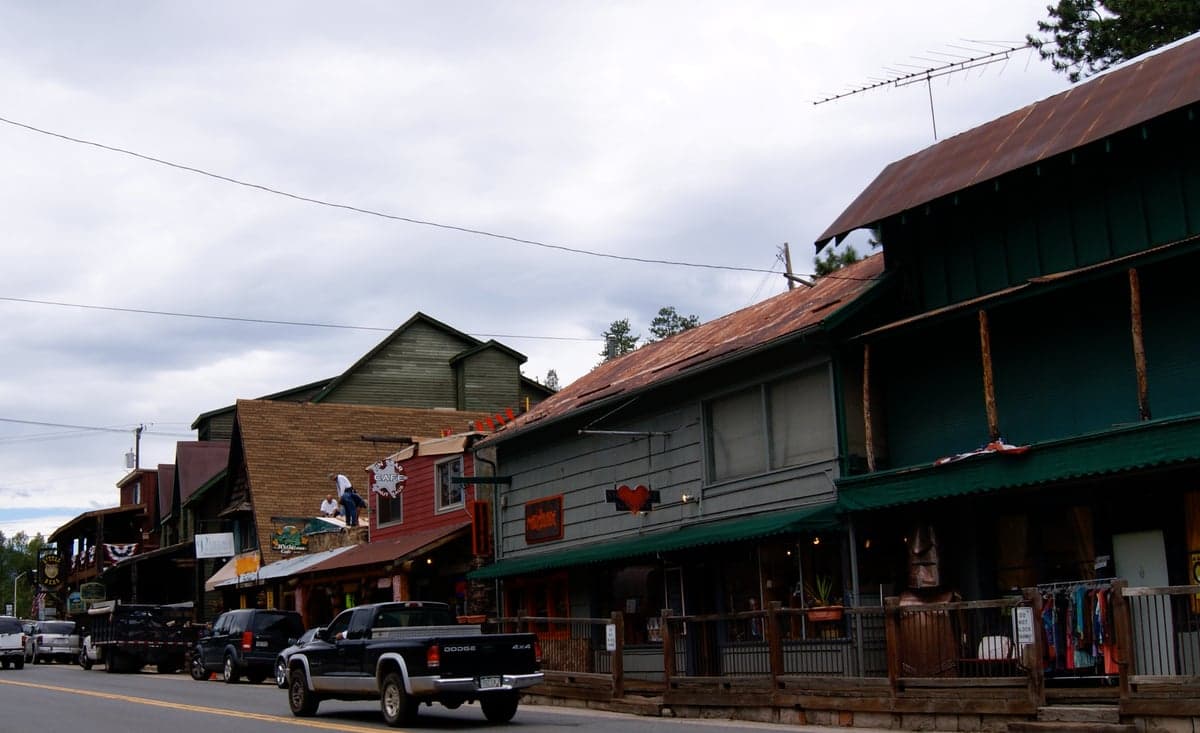
Photo: Wikipedia
Strategic Assessment of Evergreen, CO
Workable tactical position. Some exposure to population density or targets, but generally defensible in a crisis.
What does the Strategic Assessment tell us?
Our Strategic Assessment grades tactical survivability of an area. Major population centers, military targets, fallout zones, natural disasters, and border exposure all drive risk — lower exposure means a more defensible position in a crisis.
This is heavily inspired by Joel Skousen's Strategic Relocation book. Highly recommended you checkout the book ($)What does this tell us?
Our Strategic Assessment grades tactical survivability of an area. Major population centers, military targets, fallout zones, natural disasters, and border exposure all drive risk — lower exposure means a more defensible position in a crisis.
This is heavily inspired by Joel Skousen's Strategic Relocation book. Highly recommended you checkout the book ($)Strategic Pillars

Key Distances
Regional Safe Places
Below is our recommended "safe zones" in Colorado and the surrounding area based on our strategic heuristics. For most people, it's unrealistic to live in a “safe zone” full-time due to work, family or other personal reasons. They tend to be more rural. However, many of these areas are perfect for second homes and retreat properties that double as a vacation home or even a short-term rental.
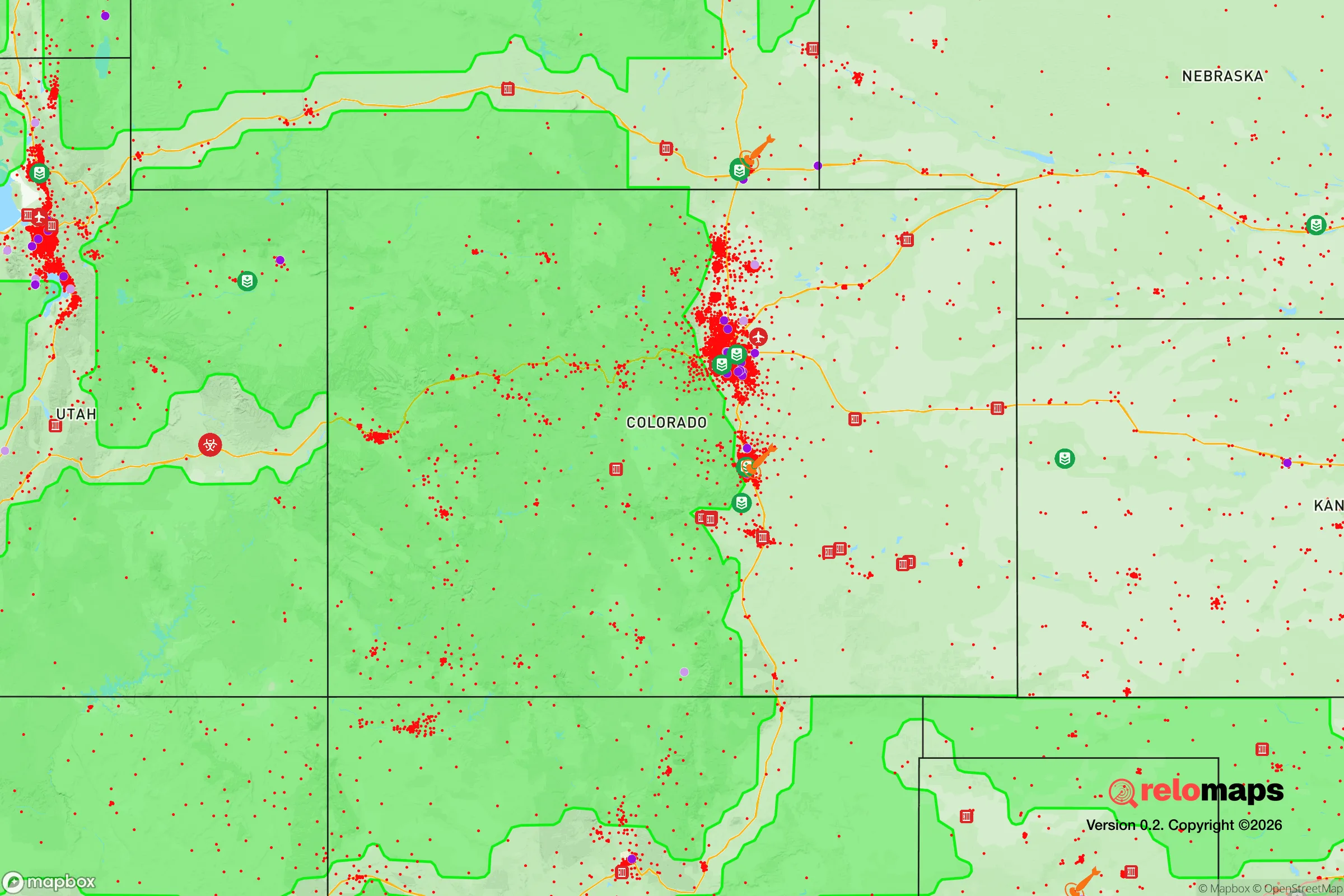
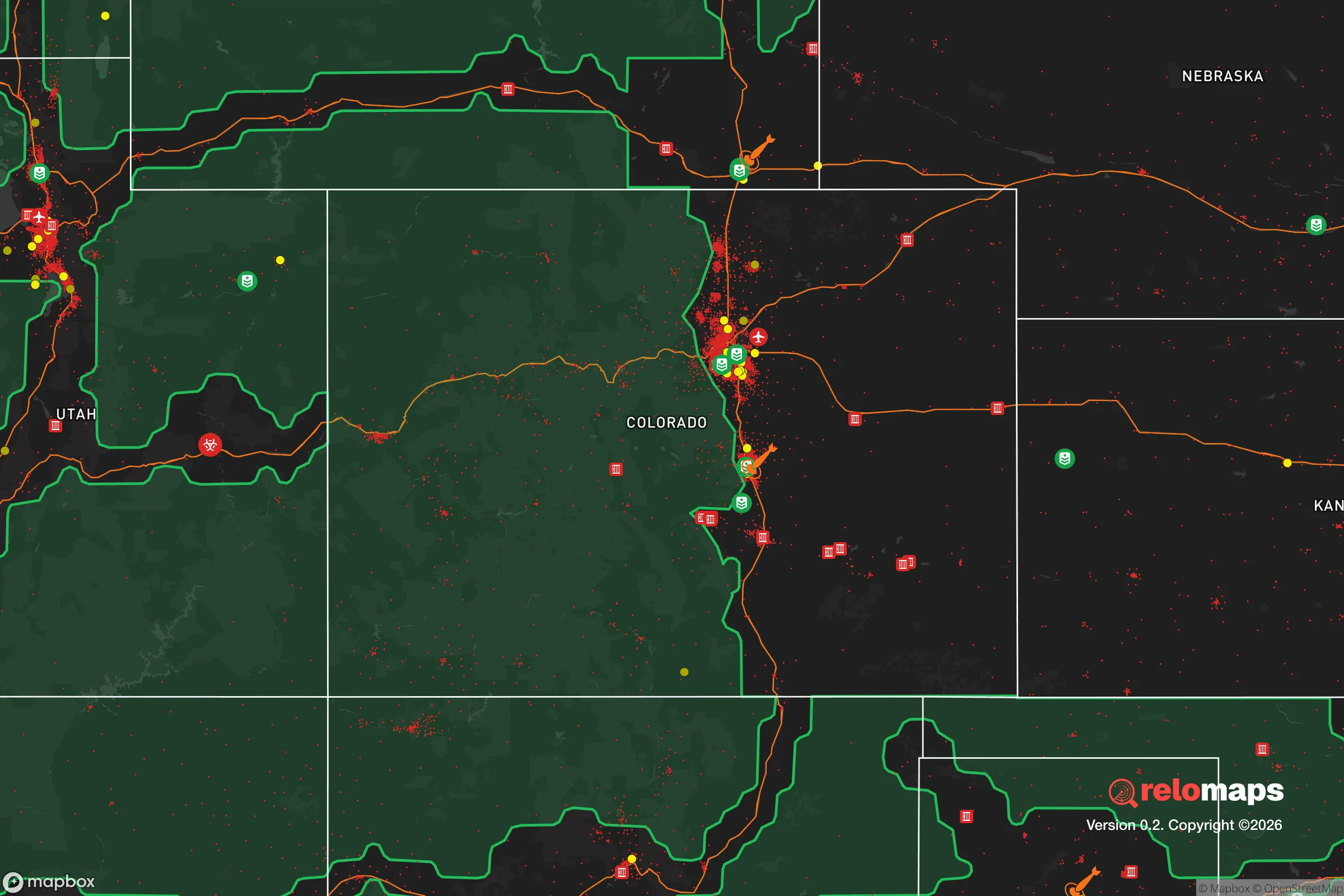


Important Note: For informational purposes only. This does not mean nothing bad ever happens in the green zones. Please use common sense. This is based on public data and modeled with AI. We tried to take a conservative approach but mistakes happen. We update this regularly as new information becomes available.
Solar Generator Recommendations
Backup power matters more here than in safer locations. We've picked three solar generators across budgets and capacity tiers — start with the budget unit if you only need a few essentials, or step up if you want to run a fridge and HVAC for days at a time.

Jackery Portable Power Station Explorer 300
Budget OptionPower on the Go: Weighing only 11 lbs, it's convenient to set up and store with book-sized foldable solar panels

BLUETTI Portable Power Station AC180
Designed for both indoor and outdoor scenarios, AC180 is highly capable as it has a robost capacity and continuous output power.

EF ECOFLOW DELTA Pro Ultra Power Station
Upgraded PickEcoFlow DELTA Pro Ultra is a whole-home energy system designed to grow with your family. Integrated with the Smart Home Panel 2, it scales to meet your evolving energy needs — keeping your home powered, intelligent, and secure through every stage of life.
We earn a commission, at no additional cost to you.
Strategic Assessment Analysis
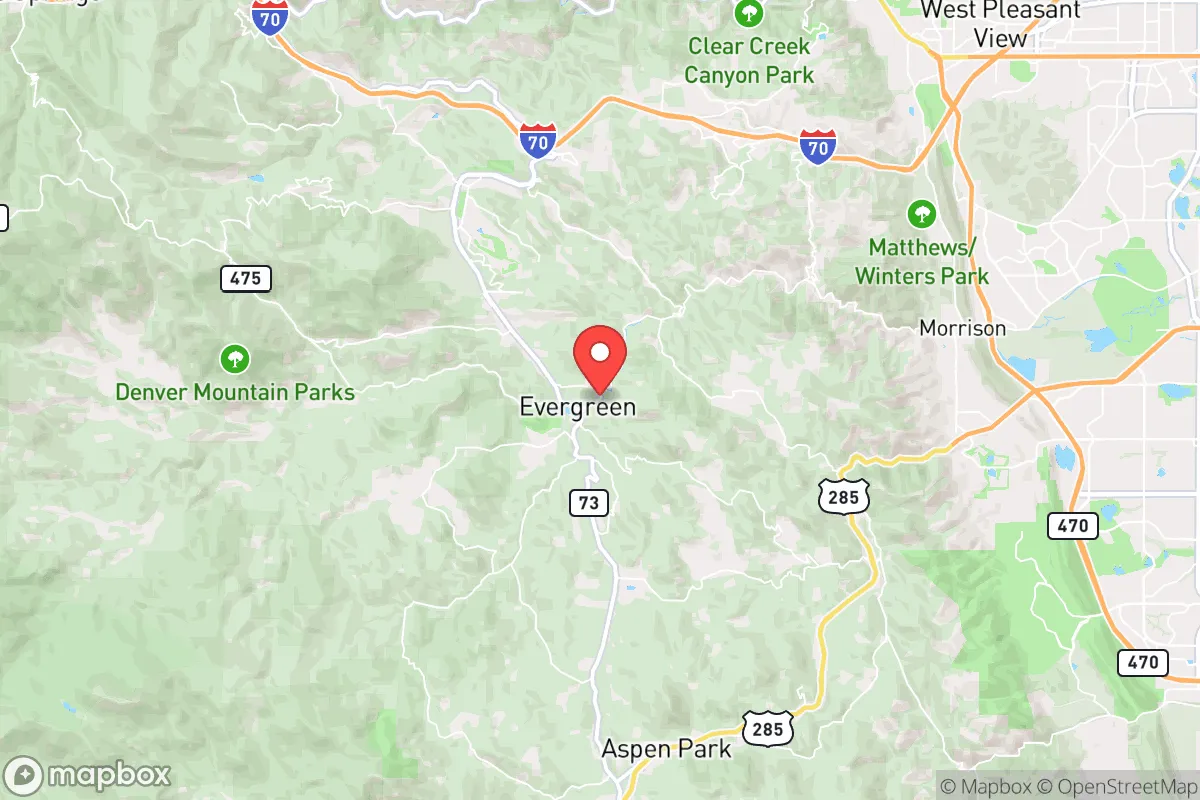
Evergreen, Colorado, offers a compelling mix of geographic isolation and practical access that makes it a serious contender for those prioritizing resilience and self-sufficiency. Perched at over 7,200 feet in the foothills of the Rocky Mountains, this unincorporated community of roughly 9,000 residents sits about 30 miles west of Denver, close enough for supply runs but far enough to avoid the worst of a metropolitan collapse. Its position along the I-70 corridor provides a critical lifeline to the high plains and mountain redoubts, while the surrounding Pike National Forest and private acreage create natural buffers that few suburban areas can match.
Geographic position and natural advantages for long-term security
Evergreen’s primary strategic asset is its elevation and terrain. The community is nestled in a valley surrounded by ridges and peaks that rise above 9,000 feet, offering natural chokepoints and observation points. The area’s geology—primarily granite and metamorphic rock—means groundwater is generally clean and well-filtered, though wells can be deep and expensive to drill. The continental climate delivers about 20 inches of precipitation annually, mostly as snow, which acts as a natural water reservoir during spring melt. For a relocator, this means a reliable, if seasonal, water source if you have catchment or storage. The surrounding forests—ponderosa pine, Douglas fir, and aspen—provide abundant firewood, building materials, and game such as mule deer and elk, though hunting pressure is moderate. The thin, high-altitude air also reduces the risk of airborne pathogens lingering as long as they might in humid lowlands, a subtle but real advantage for pandemic scenarios.
Risks, exposures, and proximity to fallout-relevant landmarks
No resilience assessment is honest without addressing the downsides. Evergreen’s proximity to Denver—a major population center and likely target in a conflict—is its most significant vulnerability. The prevailing westerly winds mean fallout from a Denver-area detonation would blow east, away from Evergreen, but a ground burst or airburst over the city could still send radioactive debris into the foothills within hours. The I-70 corridor, while a lifeline, is also a funnel for refugees fleeing the Front Range; a sudden evacuation could turn the highway into a parking lot, as seen during the 2021 Marshall Fire evacuations. Wildfire is the most immediate and recurring threat. The 2020 Cameron Peak Fire and 2021 East Troublesome Fire burned within 20 miles of Evergreen, and the area’s dense forests and steep canyons create extreme fire behavior. The 2012 Lower North Fork Fire destroyed 27 homes in nearby Conifer, a stark reminder that defensible space is not optional here. Additionally, the area sits near the Rocky Flats National Wildlife Refuge, a former nuclear weapons plant that was cleaned up but still carries a stigma; while the site is now a wildlife refuge, its history means some locals remain wary of long-term contamination risks.
Practical resilience for a relocator: food, water, energy, and defensibility
For a family or individual serious about self-sufficiency, Evergreen requires upfront investment. Water is the most critical variable: most homes rely on private wells, and drilling a new well can cost $15,000–$30,000, with depths of 200–500 feet common. Those on community water systems (e.g., Evergreen Metropolitan District) face less control but more reliability. Rainwater catchment is legal in Colorado but limited to 110 gallons per property without a permit, so storage tanks and snow melt are the primary backup. Food production is challenging at this altitude: the growing season is only 60–90 days, with frost possible any month. Cold frames, high tunnels, and hardy crops like potatoes, kale, and root vegetables are viable, but a full pantry will depend on stored goods and trade. The local farmers’ market (May–October) and nearby Conifer’s market provide seasonal produce, but year-round food security means stocking up from Denver’s Costco or local grocers like the Evergreen Natural Foods Market. Energy resilience is strong: solar panels work well at high altitude due to clear skies and snow reflection, though snow load can be an issue. Many homes already have wood stoves or fireplaces, and propane tanks are common for heating and cooking. Off-grid solar setups with battery storage are feasible, and the area’s micro-hydro potential (from year-round creeks) is underutilized but real. Defensibility is mixed: the valley’s single main road (CO-74) is a natural chokepoint, but the many dirt roads and trails through the forest make it porous. A determined group could secure the few entry points, but the community’s dispersed layout means neighbors are often out of sight—a double-edged sword for mutual aid. The local sheriff’s office (Jefferson County) is responsive but stretched thin; the Evergreen Fire/Rescue district is well-funded and professional, but during a major event, resources will be prioritized for the Front Range.
The overall strategic picture for a relocator
Evergreen is not a bug-out location for the unprepared; it is a long-term homestead for those willing to invest in infrastructure and accept trade-offs. Its strengths—clean air, abundant wildlife, defensible terrain, and proximity to Denver’s medical and supply hubs—are balanced by real risks: wildfire, a short growing season, and the shadow of a major city that could become a liability in a crisis. For a conservative-leaning family valuing self-reliance, community cohesion, and a slower pace, Evergreen offers a rare combination of seclusion and access. The key is to arrive with a plan: drill a well, install solar, build a root cellar, and get to know your neighbors. The area’s resilience is not automatic—it is earned through preparation and a willingness to adapt to the mountain’s rhythms. If you can handle the winters and the fire risk, Evergreen is one of the better bets in the Front Range for those who want to be close enough to civilization to benefit from it, but far enough to survive without it.

* Values derived from national, state, county, city and local statistics and may differ in a specific area. Last updated: 2026-09-24T17:27:52.000Z
Narrative content on this page is AI-generated and may contain mistakes. Verify any details that matter before acting on them.
ReloMaps may earn a commission from affiliate links at no extra cost to you.

