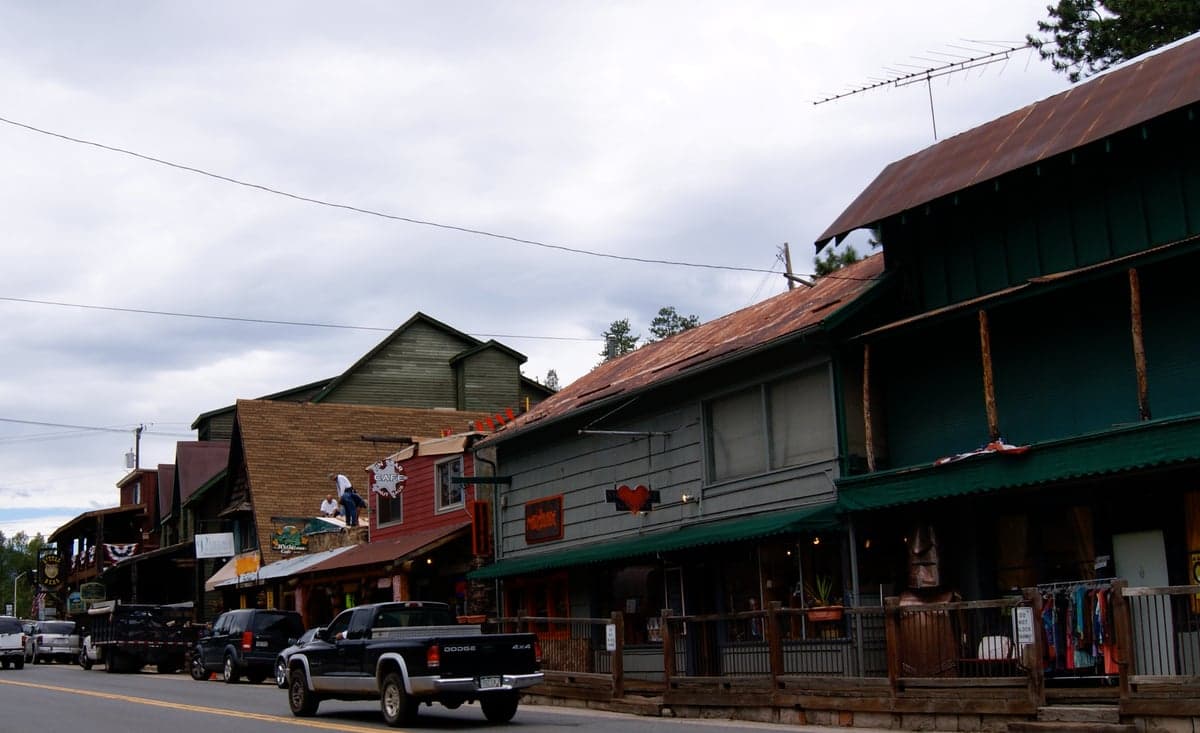
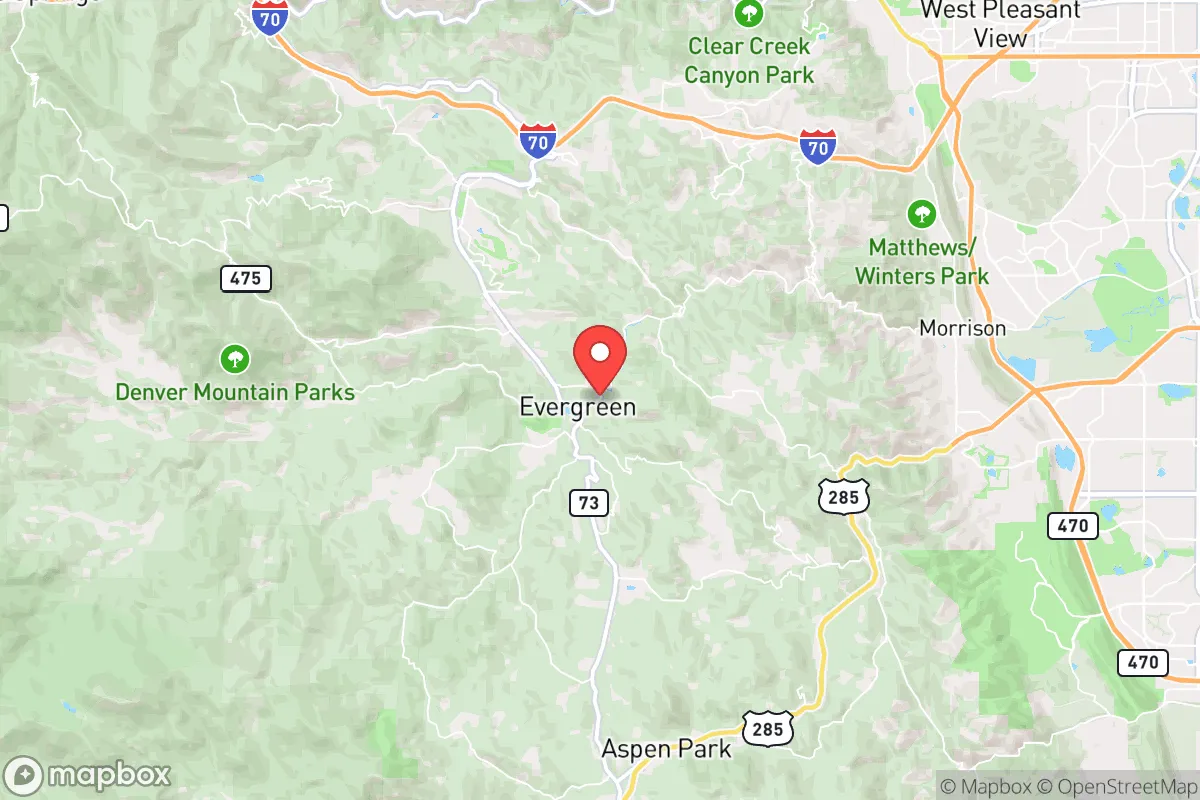
Photo: Wikipedia
Demographics of Evergreen, CO
Affluence Level in Evergreen, CO
A wealthy area with high-earning, well-educated households. Incomes, home values, and educational attainment meaningfully outpace national averages.
People of Evergreen, CO
Evergreen, Colorado, is a predominantly white, highly educated mountain community of 8,643 residents, characterized by a strong outdoors-oriented culture and a distinctly conservative-leaning political identity. With a foreign-born population of just 0.6% and a 69.4% college-educated rate, the town’s population is notably homogeneous and affluent compared to the Denver metro area it borders. The people of Evergreen today are largely professionals, remote workers, and retirees who value privacy, open space, and a small-town atmosphere, with a demographic profile that has remained remarkably stable over the past several decades.
How the city was settled and grew
Evergreen’s human history begins with the Ute people, who used the area as a summer hunting ground before European settlement. The first permanent white settlers arrived in the 1860s, drawn by the promise of gold and timber. The town’s name comes from the dense evergreen forests that covered the hillsides, and early industry centered on logging and small-scale mining. The arrival of the railroad in the late 1870s spurred a modest population of homesteaders, ranchers, and summer tourists from Denver. The historic Downtown Evergreen area, centered around Main Street and the Evergreen Lake, became the commercial hub for these early families. By the early 20th century, the community was a seasonal retreat for wealthy Denver families, who built summer cabins in what is now the Hiwan Hills neighborhood. The population remained small—under 1,000—through the 1940s, with a character defined by ranching families and a tight-knit, largely Anglo-American social fabric.
Modern era (post-1965)
The modern transformation of Evergreen began in the 1970s and 1980s, as Denver’s suburban sprawl pushed westward along Interstate 70. The construction of the Evergreen Parkway (Colorado Highway 74) made the town accessible as a commuter suburb for professionals working in Denver and the Tech Center. This wave brought an influx of upper-middle-class families, many of whom built custom homes on large lots in neighborhoods like Witter Gulch and Bergen Park. The post-1965 immigration reforms had virtually no impact on Evergreen’s demographics; the town’s foreign-born share remains negligible at 0.6%. The population today is 88.0% white, with a Hispanic share of 6.8%—a figure that reflects the broader Colorado trend of Hispanic growth, but at a much lower rate than the state average. Black residents (0.8%) and East/Southeast Asian residents (0.8%) are present in very small numbers, concentrated mostly in newer subdivisions like El Pinal and the Evergreen Highlands area. The Indian-subcontinent population is effectively zero. The town’s character during this period solidified around environmental conservation, horse properties, and a strong local identity that resists annexation by Denver or Jefferson County.
The future
Evergreen’s population is projected to remain stable or grow very slowly, constrained by limited developable land, strict zoning laws, and high property values. The median home price exceeds $1 million, which effectively filters for high-income buyers and limits demographic diversification. The Hispanic share may rise modestly as service-sector workers seek housing in more affordable adjacent areas like Conifer or Bailey, but within Evergreen’s town limits, the population is expected to remain overwhelmingly white and college-educated. New construction is concentrated in the North Evergreen area near the Jefferson County line, where a few small-lot subdivisions have been approved. The cultural identity is likely to stay rooted in outdoor recreation, conservative politics, and a resistance to urbanization. For someone moving in now, Evergreen offers a stable, low-diversity, high-amenity environment where the population is aging slightly—the median age is 48.5—and where newcomers are typically families or retirees seeking a quieter, more private alternative to the Front Range suburbs.
Evergreen is becoming a carefully preserved enclave for the affluent and the outdoors-oriented, with little demographic change on the horizon. For a mover seeking a politically conservative, racially homogeneous, and highly educated community with direct access to national forest and a strong sense of local identity, Evergreen remains one of Colorado’s most consistent choices.

* Values derived from national, state, county, city and local statistics and may differ in a specific area. Last updated: 2026-09-24T17:27:52.000Z
Narrative content on this page is AI-generated and may contain mistakes. Verify any details that matter before acting on them.
ReloMaps may earn a commission from affiliate links at no extra cost to you.

