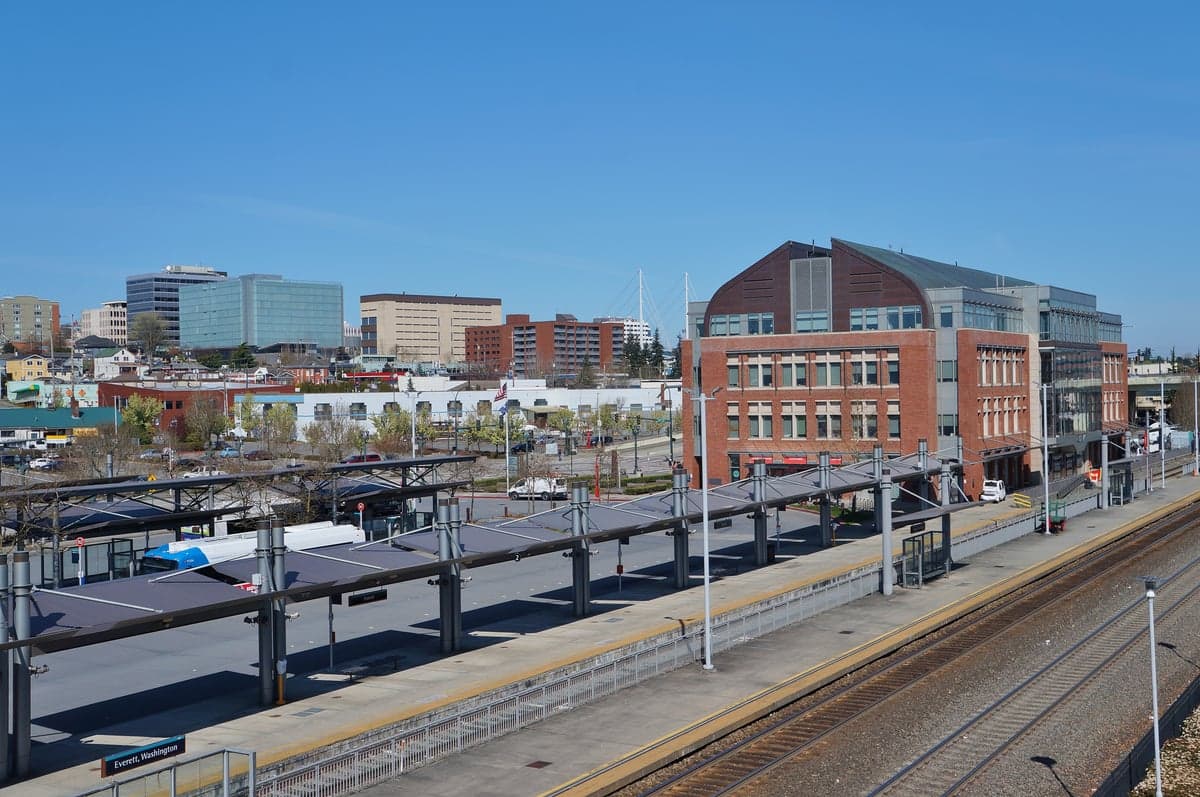
Photo: Wikipedia
Quality of Life in Everett, WA
A high quality of life with strong walkability, manageable living costs, healthy neighborhood signals, and solid amenity access.
What does Quality of Life tell us?
Quality of Life blends cost of living, nearby amenities, socioeconomic signals, and neighborhood character. City-level scores represent the whole municipality; individual neighborhoods can differ.
What does this tell us?
Quality of Life blends cost of living, nearby amenities, socioeconomic signals, and neighborhood character. City-level scores represent the whole municipality; individual neighborhoods can differ.
Cost of Living
62% above national average
The Real Cost of Living in Everett, WA for 2026
| Tier | Individual | Family (4) |
|---|---|---|
| Survival | $27k | $50k |
| Comfortable | $97k | $143k |
| Luxury | $142k+ | $220k+ |
| Elite (Top 5%) | $167k+ | $259k+ |
57%
The Area Signal
A metric tracking the socioeconomic signals of the area.
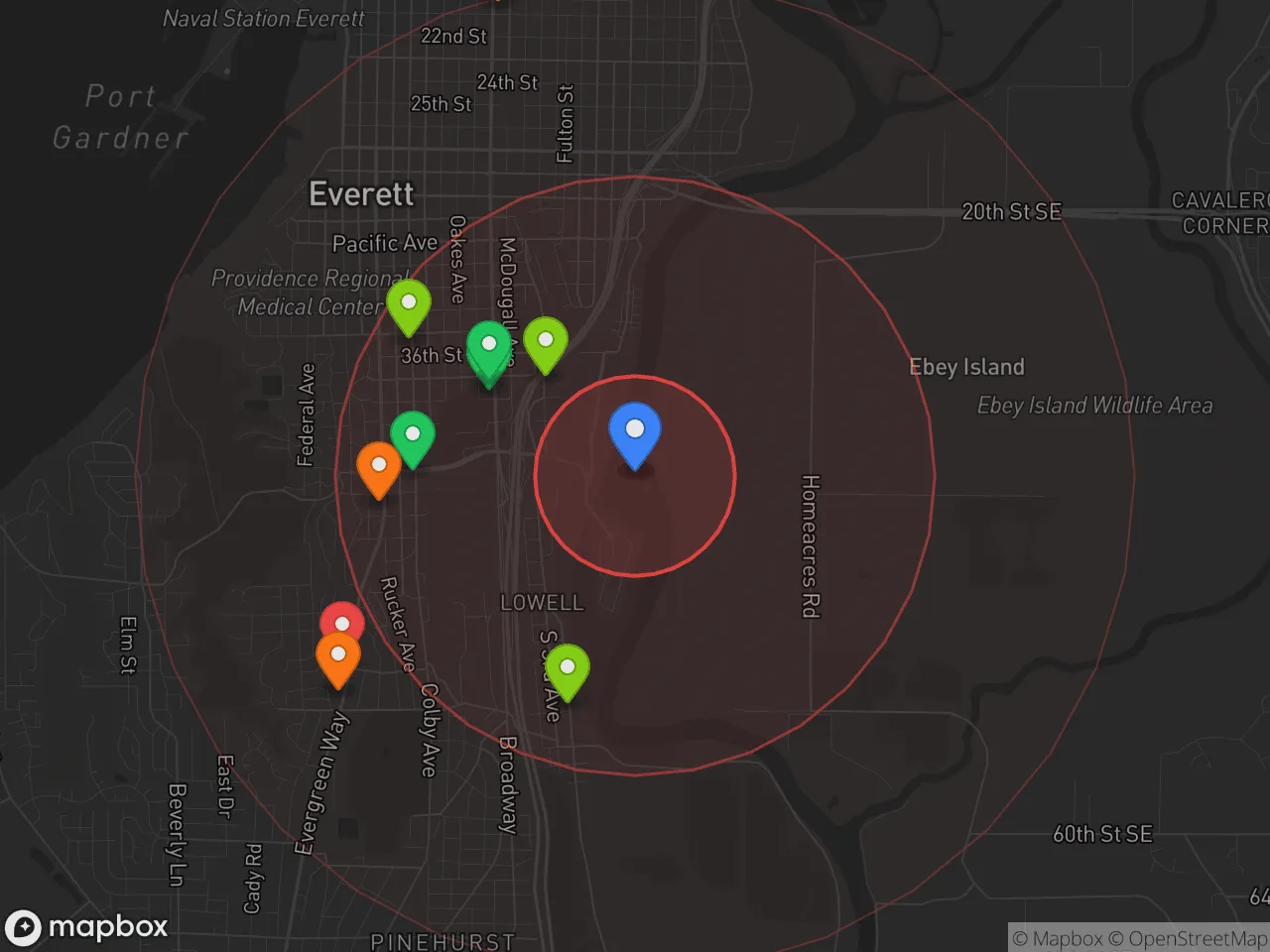
Hobbies
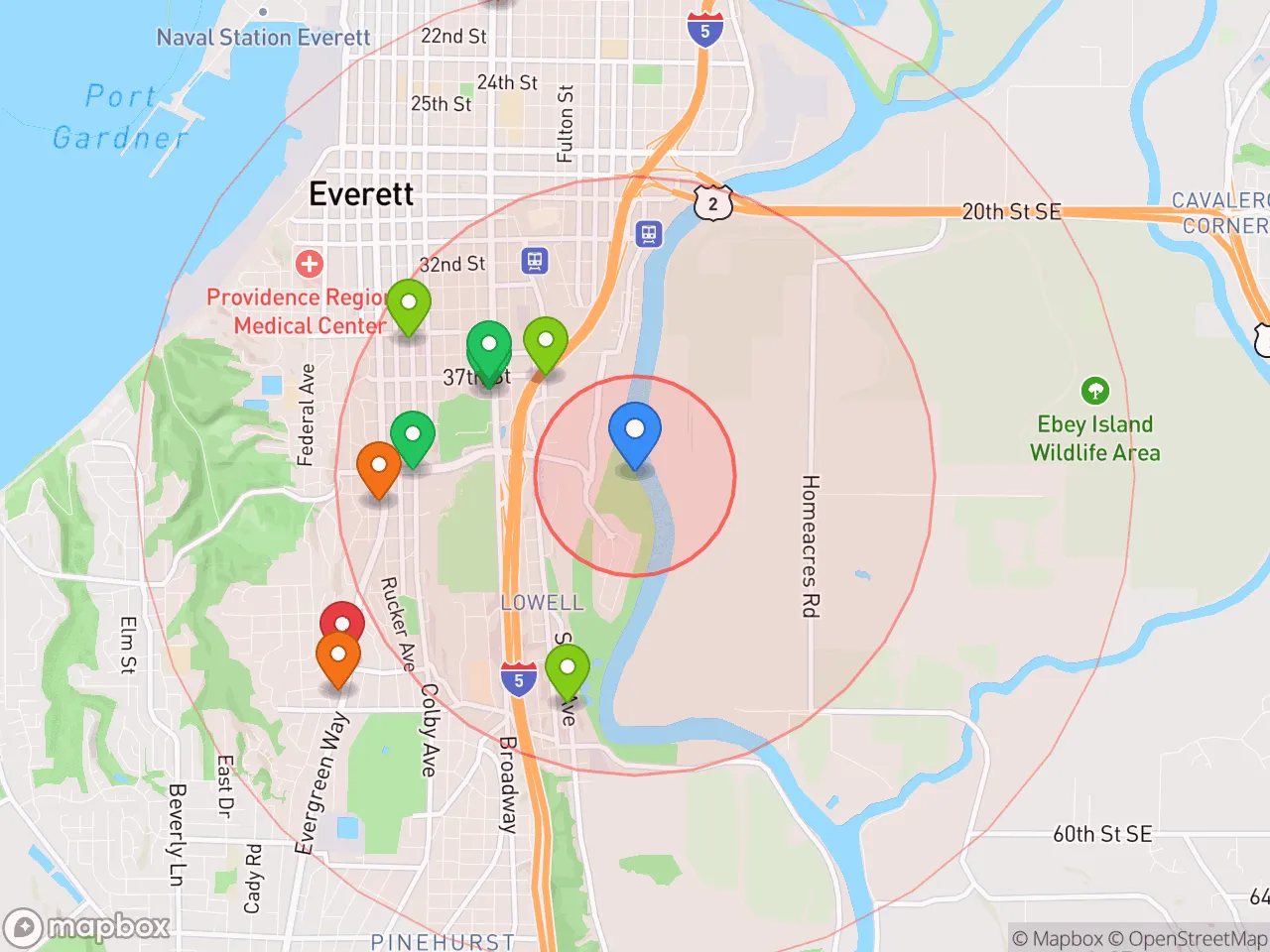
Explore the areaGroceries
0 within 10 miles
Gas
0 within 10 miles
Hospital
0 within 20 miles
Airport
SEA — Seattle–Tacoma International
Post Office
Critical Amenities
Quality-of-Life Analysis
Everett, Washington, presents a quality of life defined by its working-class roots and growing affluence, attracting a mix of Boeing engineers, maritime workers, and young families priced out of Seattle. With a cost of living index of 162 (62% above the U.S. average), the city is notably more affordable than its southern neighbor, yet still commands a premium over most of Snohomish County. The population skews toward middle-income earners, with a strong blue-collar backbone in aerospace and manufacturing, alongside a rising cohort of remote tech workers drawn by the lower housing costs relative to King County.
Cost of living and housing affordability compared to Seattle and Bellingham
Everett’s housing market sits in a middle ground between Seattle’s extreme prices and the relative bargains of Marysville or Arlington. The median home value of $532,300 is roughly half of Seattle’s median, making it one of the more attainable waterfront cities in the Puget Sound region. Median rent of $1,675 is similarly competitive—about 30% less than comparable rentals in Seattle’s Ballard or Capitol Hill neighborhoods. However, the cost of living index of 162 means everyday expenses like groceries, utilities, and transportation run well above the national norm. The average commute of 26.4 minutes is slightly longer than the national average of 26 minutes, reflecting the many residents who drive south to Boeing’s Everett plant or north to the Naval Station Everett. For buyers, property taxes in Snohomish County average about 0.9% of assessed value, which is moderate by Washington standards, but the lack of a state income tax helps offset the high sales tax (10.1% in Everett).
Schools, parks, and daily-life amenities in Snohomish County’s urban core
Daily life in Everett revolves around a compact downtown with a revitalized waterfront, anchored by the Everett Marina and the Angel of the Winds Arena. The Everett School District serves roughly 20,000 students, with Jackson High School and Cascade High School consistently ranking among the top 20% of Washington high schools for college readiness. For families, the city offers over 40 parks, including the 200-acre Forest Park with its swimming pool and zoo, and the 1.5-mile waterfront trail along Port Gardner Bay. Grocery access is solid, with a mix of major chains like Fred Meyer and local markets such as the Everett Farmers Market (April–October). Dining leans toward casual seafood and pub fare, with notable spots like the Scuttlebutt Brewing Taproom and the historic Monte Cristo Hotel’s restaurant. The city’s transit system, Everett Transit, provides bus service, but most residents rely on cars; the Sounder commuter train connects downtown Everett to Seattle in about an hour, a viable option for the 15% of workers who commute south.
Everett is best suited for those who value affordable waterfront living and a slower pace than Seattle, while still needing access to a major metro area. It works well for aerospace and manufacturing workers, military families stationed at Naval Station Everett, and remote workers who want a lower mortgage payment without sacrificing Puget Sound views. The city’s trade-off is clear: lower housing costs come with a longer commute for Seattle-bound workers, and the urban amenities are more modest than those of a larger city. For buyers seeking a home under $550,000 with a commute under 30 minutes, Everett remains one of the most practical choices in the region.

Crime in Everett, WA
Crime rates similar to the national median for U.S. locations.
Violent CrimeViolent Crime Analysis
Property CrimeProperty Crime Analysis
Crime Analysis
Everett, Washington, presents a mixed safety profile for prospective residents, with property crime rates significantly exceeding national averages while violent crime remains closer to the state norm. The city's 2023 data shows a violent crime rate of 245.7 per 100,000 residents and a property crime rate of 2,489.7 per 100,000, figures that reflect broader challenges common to large metro areas in the Pacific Northwest. Readers should be aware that Snohomish County, like many urban counties in Washington, operates under a progressive justice system that prioritizes rehabilitation over incarceration, a policy approach that critics argue contributes to higher recidivism and diminished public safety.
Crime in context
Everett's violent crime rate of 245.7 per 100,000 is roughly 30% lower than the national average of about 380 per 100,000, but its property crime rate of 2,489.7 per 100,000 is nearly 70% higher than the U.S. average of approximately 1,950 per 100,000. Compared to Washington state as a whole, which reported a violent crime rate of 298 per 100,000 and a property crime rate of 2,210 per 100,000 in 2023, Everett is slightly safer for violent offenses but notably worse for property crimes. The city's proximity to Seattle and its role as a regional economic hub for aerospace and manufacturing contribute to a transient population that can strain local law enforcement resources. Snohomish County's elected prosecutor, like many in the region, has implemented policies that reduce cash bail and divert low-level offenders from jail, a progressive approach that aligns with state-level reforms but has drawn criticism for potentially emboldening repeat property criminals.
What residents experience
Residents most frequently encounter property crimes such as vehicle break-ins, package theft, and burglary, particularly in commercial corridors like Broadway and the waterfront areas near the Everett Marina. The city's homeless population, estimated at over 1,000 individuals, is concentrated in the downtown core and along the Snohomish River trail, where visible drug use and petty theft are common. Violent crime, while less frequent, includes aggravated assault and robbery, often linked to gang activity or domestic disputes. The progressive district attorney's office has faced criticism for plea deals that reduce felony charges to misdemeanors, a pattern that some residents and business owners argue undermines deterrence. For example, a 2024 audit of Snohomish County prosecutions found that over 40% of property crime cases were dismissed or reduced, a statistic that fuels public frustration.
Neighborhood-level variation
Safety varies significantly by neighborhood. The Port Gardner and Riverside areas, with higher home values and active neighborhood watches, report lower crime rates. In contrast, the downtown core, especially around Hewitt Avenue and the transit center, sees concentrated property crime and drug-related incidents. The Delta neighborhood, near the Boeing plant, experiences moderate crime but benefits from industrial-area lighting and security patrols. Prospective residents should prioritize neighborhoods with established community policing programs and consider that property crime rates in Everett's safest blocks can be 60% lower than the city average, while the most affected areas see rates double the citywide figure. Consulting local crime maps and visiting at different times of day is recommended before choosing a specific location.
* Values derived from national, state, county, city and local statistics and may differ in a specific area. Last updated: 2026-04-21T11:03:12.000Z
Narrative content on this page is AI-generated and may contain mistakes. Verify any details that matter before acting on them.
ReloMaps may earn a commission from affiliate links at no extra cost to you.

