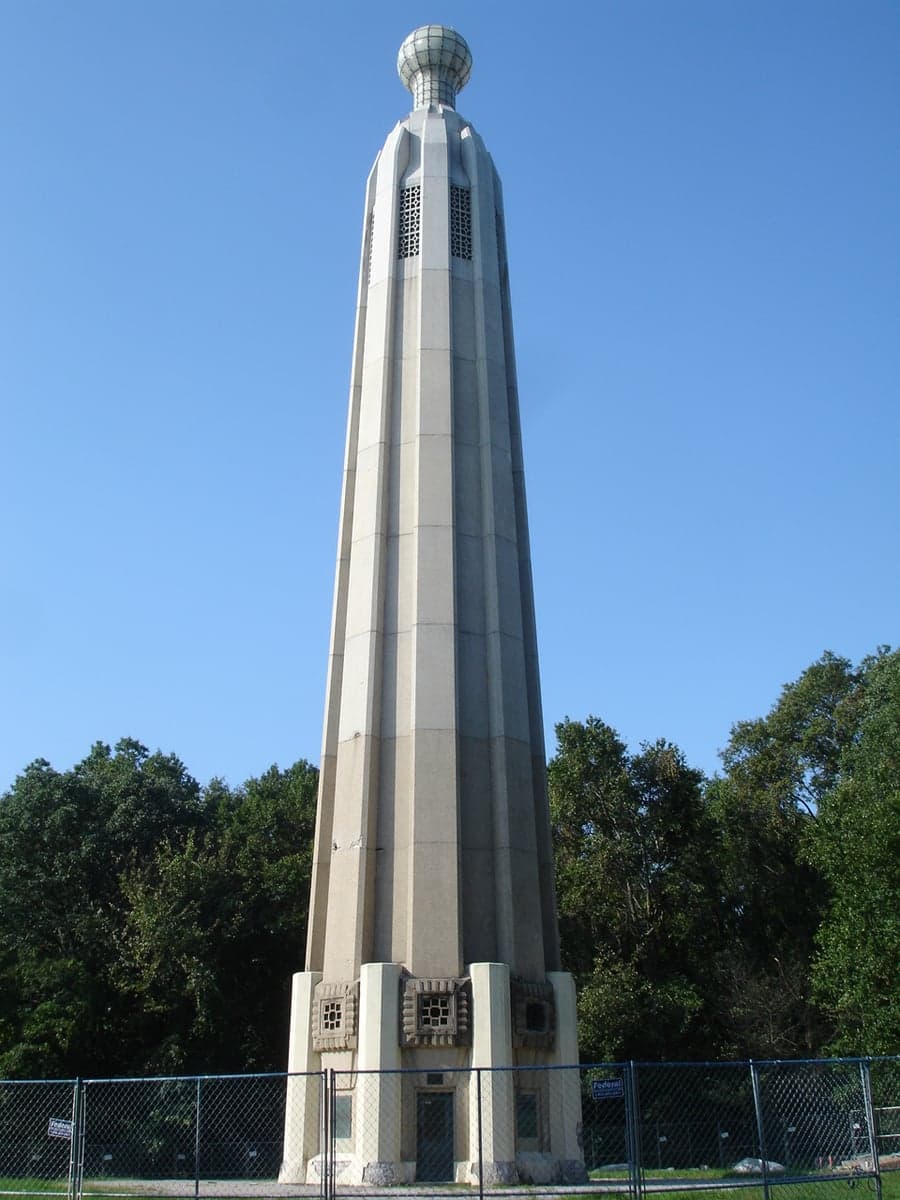
Photo: Wikipedia
Political ClimatePolitical Climate in Edison, NJ
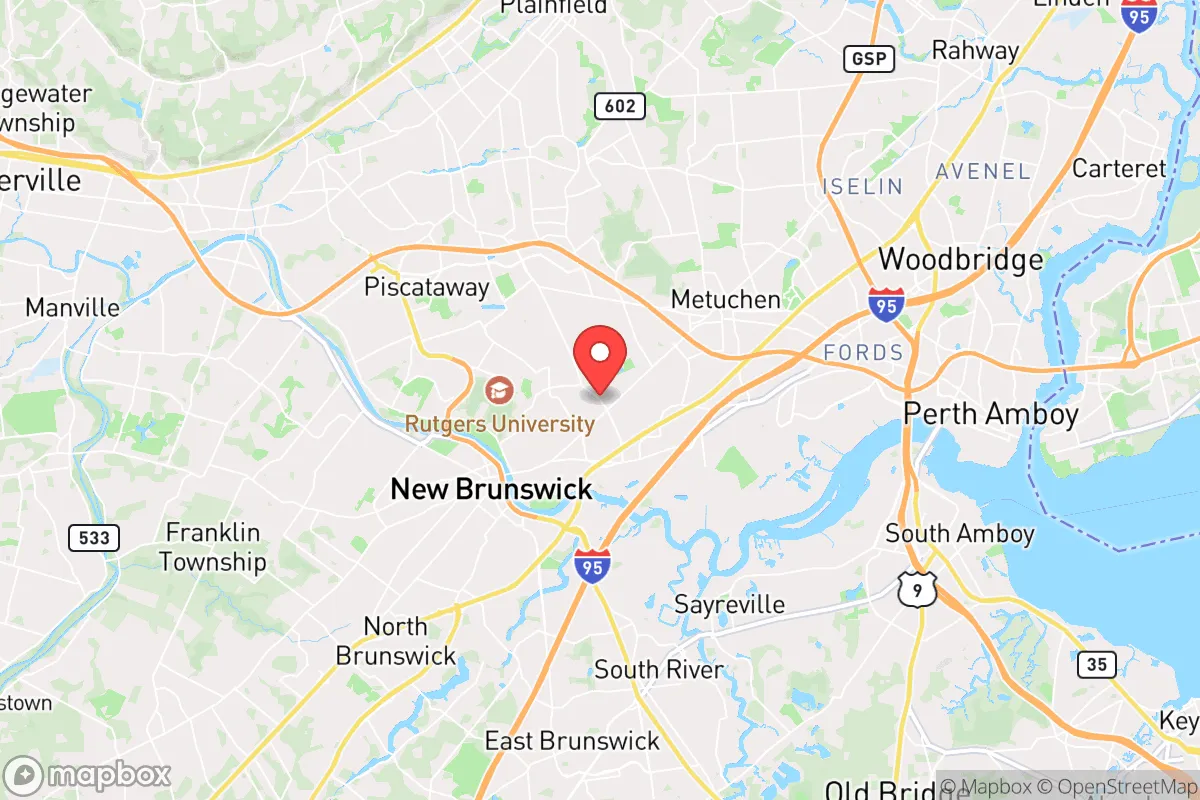
District shown is the primary district for this city’s centroid. Cities may span multiple districts.
Political rankings in New Jersey
- Most Conservative Cities in New Jersey
- Most Liberal Cities in New Jersey
- Best Conservative-Leaning Towns in the Northeast
- Best Conservative-Leaning Towns in the Mid-Atlantic
- Safest Liberal-Leaning Towns on the East Coast
- Safest Conservative-Leaning Towns on the East Coast
- Most Affordable Liberal-Leaning Small Towns in the U.S.
- Safest Liberal-Leaning Cities in the U.S.
- Most Conservative Counties in New Jersey
- Most Liberal Counties in New Jersey
Local Political AnalysisPolitical Analysis of Edison, NJ
Edison, NJ, sits in a political landscape that’s solidly Democratic but not overwhelmingly so, carrying a Cook PVI of D+5 that mirrors the statewide New Jersey average exactly. This isn’t a deep-blue stronghold like Newark or Jersey City; it’s a reliably blue suburb where the margin is comfortable but the local conversation still has room for Republican voices, especially on taxes and school policy. The trajectory here has been a slow, steady drift leftward over the past two decades, driven by demographic shifts and the growing political weight of the Asian-American and South Asian communities that now define much of Edison’s character.
How it compares
When you look at the numbers, Edison is the statistical twin of New Jersey as a whole — both sit at D+5 on the Cook index, which means the district is about five points more Democratic than the national average. But the lived reality is more layered than that single number suggests. Neighboring towns like Metuchen and Highland Park lean further left, with Highland Park being a bona fide progressive enclave, while nearby Old Bridge and Sayreville trend more conservative, often voting closer to the statewide average or even tipping Republican in down-ballot races. In Edison, the Democratic edge is powered by strong turnout in the township’s large Indian-American and Chinese-American precincts, particularly around the Oak Tree Road corridor, while older, established Italian and Jewish neighborhoods in the western part of town still vote more moderately. The result is a town where a Republican candidate can win a ward or two but rarely threatens the overall Democratic majority.
What this means for residents
For liberal residents, Edison’s lean means you’re likely to see Democratic majorities on the township council and in the state legislature, with policy priorities like school funding, transit improvements, and environmental cleanups along the Raritan River getting consistent attention. You’ll also find that national issues like abortion rights and gun control are generally safe topics in local social circles. For conservative residents, the reality is more about playing defense than offense. You’re not going to win a countywide race here, but you can still have real influence at the local level — school board races in Edison are genuinely competitive, and tax-focused Republican candidates have won seats by tapping into frustration over the state’s highest-in-the-nation property taxes. The practical takeaway is that Edison is a place where the Democratic machine is strong but not monolithic; a well-organized minority can still shape local outcomes, especially on fiscal issues.
What this means for residents
The cultural and policy distinctions in Edison are where the political climate really becomes tangible. This is a township that has embraced its diversity as a political asset, with elected officials reflecting the community’s multi-ethnic makeup in a way that feels organic rather than performative. The school system, which is heavily Asian-American, has become a flashpoint for debates over academic rigor, mental health resources, and the pressure-cooker culture of competitive admissions — issues that cut across traditional party lines. On policy, Edison tends to be more pragmatic than ideological, favoring business-friendly development in its transit village and along Route 1 while still supporting progressive state mandates on clean energy and paid leave. Looking ahead, the trajectory points to Edison becoming slightly more Democratic as younger, more diverse voters age into the electorate, but the margin will likely stay in the D+5 to D+8 range for the foreseeable future — blue enough to feel safe, but not so blue that the political conversation becomes a one-party echo chamber.

State Political ClimatePolitical Climate in New Jersey
State Political AnalysisPolitical Environment in the State
New Jersey is a solidly Democratic state with a Cook PVI of D+5, but calling it a liberal monolith misses the real story. The state hasn't voted for a Republican for president since George H.W. Bush in 1988, yet it remains a place where conservative-leaning suburbs and rural counties hold real political power at the local level. Over the last 15 years, the Democratic grip has tightened in the wealthy commuter belt while the southern and northwestern parts of the state have drifted further right, creating one of the most geographically polarized political maps in the Northeast.
Urban vs. rural divide
The political map of New Jersey breaks down along a clear urban-suburban-rural axis. The engine of Democratic dominance is the northeastern corridor — Newark, Jersey City, and the dense Hudson County suburbs — where turnout in cities like Elizabeth and Paterson routinely delivers 70-80% margins for Democrats. The suburban counties of Bergen, Essex, and Middlesex have shifted hard left since 2016, driven by college-educated professionals who commute to New York City. This is the coalition that put Phil Murphy in the governor's mansion twice and gave Democrats a 25-15 majority in the state Senate.
Meanwhile, the rural and exurban counties tell a completely different story. Sussex, Warren, and Hunterdon counties in the northwest vote Republican by 20-30 point margins, as do the shore counties of Ocean and Cape May. The 2021 gubernatorial race showed this split vividly: Jack Ciattarelli won 19 of 21 counties but lost the state because of the massive Democratic margins in Essex, Hudson, and Middlesex. The 2024 presidential race followed the same pattern, with Donald Trump winning the rural south and northwest while Kamala Harris swept the urban core and inner suburbs.
Policy environment
New Jersey's policy environment is defined by its tax structure and regulatory posture. The state has the highest property taxes in the nation, averaging around $9,500 per household, and a progressive income tax that tops out at 10.75% for earners above $1 million. The corporate business tax is also among the highest in the country, which shapes the business climate. On the regulatory side, New Jersey is one of the most restrictive states for land use and development, with the Highlands Act limiting construction across 800,000 acres in the northwest and the Pinelands Protection Act doing the same in the south.
Education policy is a major differentiator. New Jersey consistently ranks in the top three nationally for K-12 outcomes, but the funding formula heavily favors urban districts, which has created persistent tension with suburban and rural taxpayers. The state has also been a leader in healthcare regulation, with strict certificate-of-need laws that limit hospital competition and a health insurance exchange that offers robust subsidies. On election law, New Jersey is one of the most accessible states in the country — automatic voter registration, no-excuse mail-in voting, and same-day registration are all in place.
Recent policy direction
The last five years have seen New Jersey move decisively left on several fronts, but with notable friction. The 2022 gun safety package, signed by Governor Murphy, banned .50 caliber rifles, required firearms training for concealed carry applicants, and restricted carrying in sensitive places like schools and government buildings. This followed the Bruen decision and was a direct response to the Supreme Court's expansion of carry rights. On the other side, the state passed a parental notification law for school library materials in 2023, giving parents a formal role in challenging books — a nod to the conservative movement that has gained traction in suburban school boards.
On taxation, the 2024 budget included a modest property tax relief expansion through the ANCHOR program, which provides direct rebate checks to homeowners and renters. The state also passed a clean energy mandate requiring 100% carbon-free electricity by 2035, the most aggressive in the nation. On medical freedom, New Jersey has a shield law protecting providers who perform abortions and gender-affirming care from out-of-state prosecution, and it remains a sanctuary state with a 2018 executive order limiting local police cooperation with federal immigration enforcement. Ballot access remains wide open, with no voter ID requirement and universal mail-in voting.
Civil unrest & political movements
New Jersey has a visible activist landscape on both sides. The Black Lives Matter protests in Newark and Trenton in 2020 were large and mostly peaceful, but they catalyzed a backlash that produced a robust "Back the Blue" movement in the suburban and shore counties. The state's sanctuary policy has been a persistent flashpoint, particularly in Freehold and Lakewood, where immigration enforcement clashes have made headlines. Lakewood is also the epicenter of the state's fast-growing Orthodox Jewish community, which votes heavily Republican and has become a key swing bloc in Ocean County.
Election integrity controversies have been quieter here than in other states, but they exist. The 2020 and 2022 cycles saw Republican county committees file lawsuits over mail-in ballot processing in Essex and Passaic counties, though none produced evidence of widespread fraud. The more visible movement has been the school board wars — conservative parents' groups have organized in Montgomery and Westfield to challenge curriculum changes and library policies, while progressive groups have countered with their own slates. The state's 2023 school board elections saw record turnout in these districts, reflecting a genuine grassroots battle over education.
Projection
Over the next 5-10 years, New Jersey's political trajectory points toward continued Democratic dominance at the statewide level, but with a shrinking margin. The demographic trends are clear: the urban core is growing younger and more diverse, while the rural counties are aging and losing population. The in-migration pattern is also telling — New Jersey loses more residents to other states than it gains, and the people leaving are disproportionately middle-income families heading to Florida, Texas, and the Carolinas. This outflow is slowly shifting the electorate toward the higher-income, college-educated voters who lean Democratic.
However, the Republican coalition is not static. The Orthodox Jewish community in Lakewood and the growing Asian-American population in Edison and Cherry Hill have shown willingness to vote Republican on specific issues like school choice and small business regulation. The 2025 gubernatorial race will be the first real test of whether the GOP can hold its suburban gains from 2021 or whether the national environment drags it back. Expect the state to remain D+4 to D+6 for the foreseeable future, with the real battles happening in county commissions and school boards rather than statewide races.
For a new resident, the practical takeaway is that New Jersey rewards political engagement at the local level. Statewide, your vote for governor or senator is unlikely to change the outcome, but your vote for county commissioner, school board, or town council can be decisive. The tax burden is real and will shape your budget, but the services — particularly education and infrastructure — are correspondingly strong. If you lean conservative, you'll find your community in the northwest or along the shore, but you'll need to accept that state policy will lean left. If you lean liberal, you'll find a state that matches your values on most issues, but you'll pay for it. Either way, New Jersey is a place where politics is personal, local, and impossible to ignore.
* Values derived from national, state, county, city and local statistics and may differ in a specific area. Last updated: 2026-11-13T06:02:11.000Z
Narrative content on this page is AI-generated and may contain mistakes. Verify any details that matter before acting on them.
ReloMaps may earn a commission from affiliate links at no extra cost to you.

