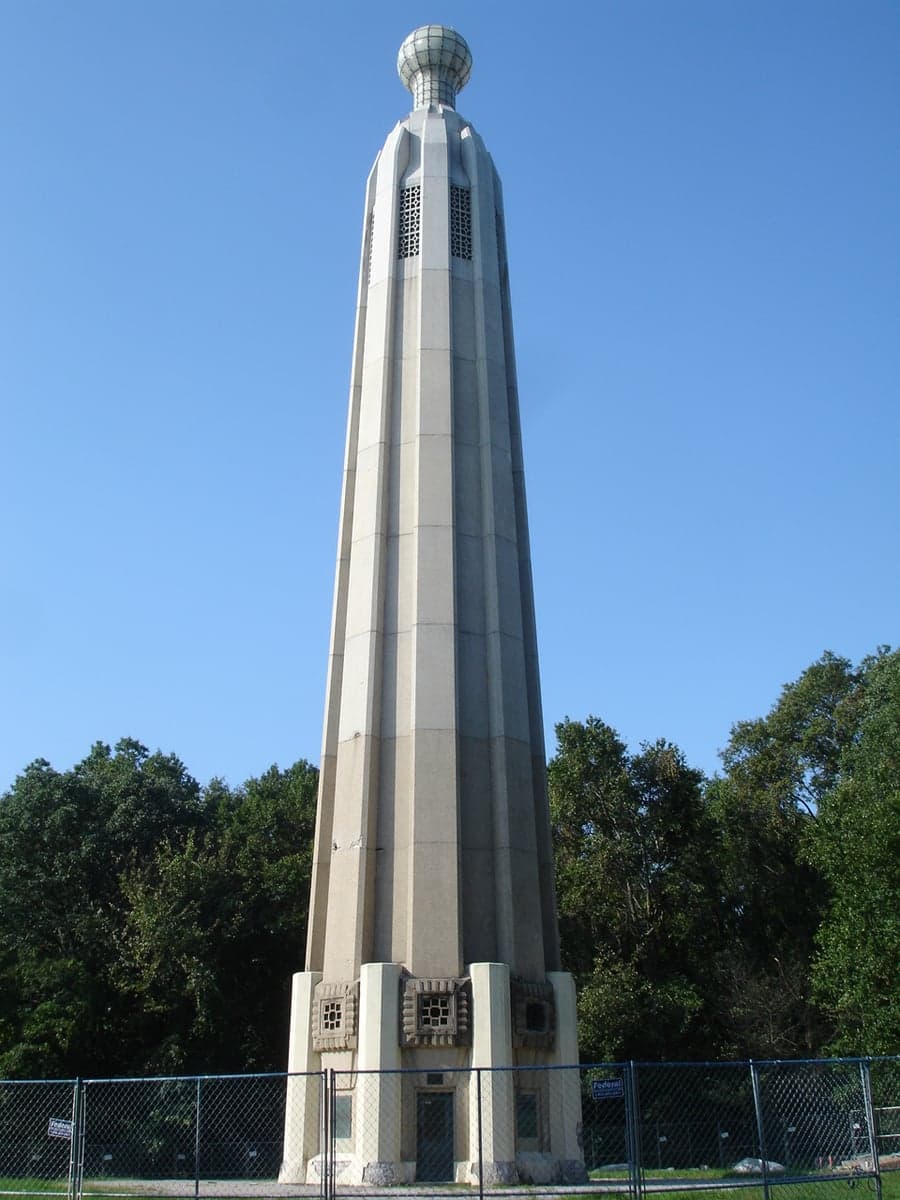
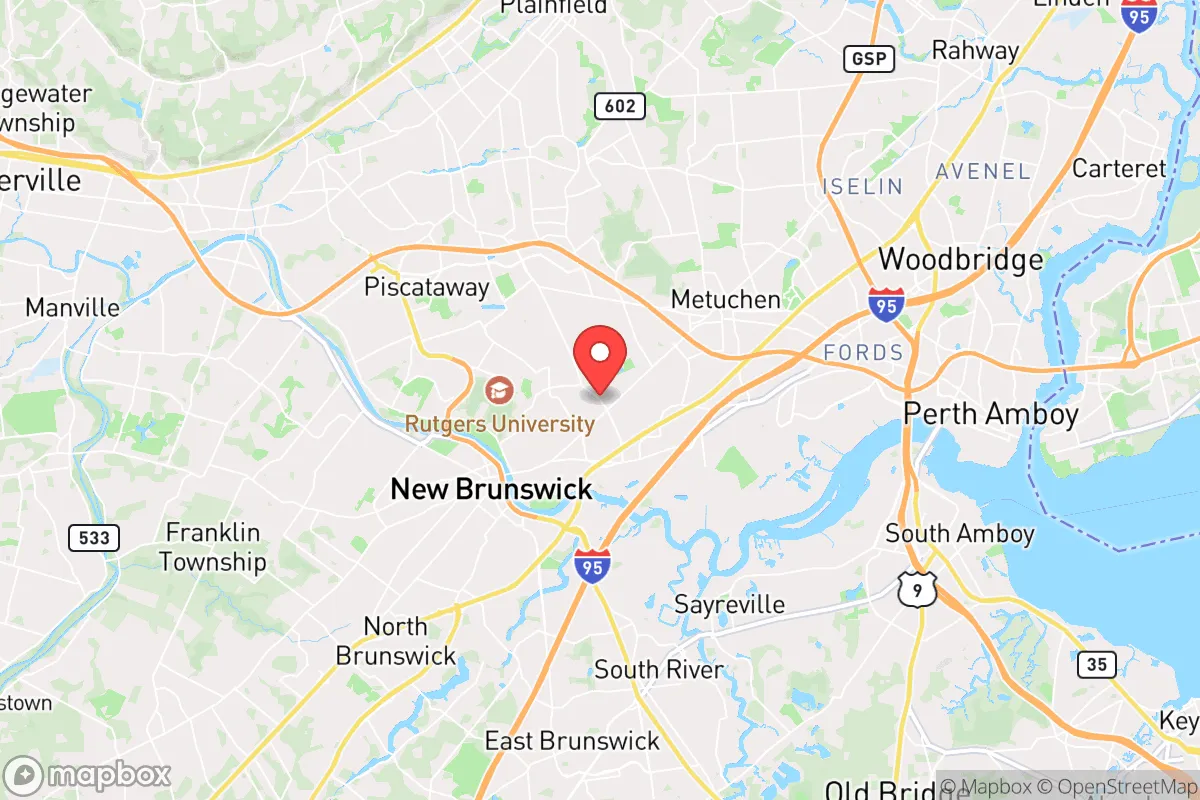
Photo: Wikipedia
Personal Sovereignty in Edison, NJ
Viable for self-reliance. Generally workable, though some barriers may limit total independence.
What does Personal Sovereignty tell us?
Personal Sovereignty measures your capacity for self-reliance and independence with minimal government friction. Higher scores mean fewer barriers between you and the way you want to live... but it assumes you have the space you need and good neighbors.
What does this tell us?
Personal Sovereignty measures your capacity for self-reliance and independence with minimal government friction. Higher scores mean fewer barriers between you and the way you want to live... but it assumes you have the space you need and good neighbors.
State Policy
Energy independence: Importer (17% of energy produced in-state)
Personal Liberty
Homesteading

Personal Liberty Analysis
Edison, New Jersey, presents a mixed picture for those prioritizing personal sovereignty: the state’s heavy regulatory and tax apparatus constrains individual autonomy, but the township’s dense suburban infrastructure offers specific, if narrow, avenues for self-reliance. For a relocation researcher, the honest assessment is that Edison is a high-cost, high-regulation environment where personal freedom is exercised through legal compliance and financial planning rather than through off-grid independence or permissive gun laws. The trade-off is access to one of the nation’s densest job markets and infrastructure networks, which can fund a self-directed life even as the state takes a substantial cut.
How New Jersey's tax burden and regulatory posture shape daily autonomy
New Jersey consistently ranks among the top three states for tax burden, and Edison residents feel this acutely. The combined state and local tax burden hovers near 12.2% of personal income, the highest in the nation, driven by property taxes that average $9,400 annually on a median home value of roughly $450,000 in Middlesex County. The state’s progressive income tax tops out at 10.75% for earners above $1 million, but even a household earning $150,000 faces a marginal rate near 6.37%. For a sovereignty-minded reader, this means the state captures a significant share of earnings before discretionary spending on private alternatives—schools, security, or healthcare—becomes possible.
Regulatory posture is similarly heavy-touch. New Jersey’s minimum wage is $15.13/hour (2026), among the highest nationally, which raises costs for small businesses and contractors. The state’s COAH (Council on Affordable Housing) mandates force municipalities like Edison to zone for multi-family housing, limiting the ability to purchase large lots for private use. Environmental regulations under the NJ DEP are among the strictest in the country, affecting everything from septic system approvals to tree removal on private property—a homeowner cannot cut down a mature tree without a permit in many zones. For those seeking to run a home-based business, Edison’s zoning code requires conditional use permits for most commercial activity, adding time and cost to what would be a simple home office in less regulated states.
Self-defense and gun law specifics in Edison and New Jersey
New Jersey is one of the most restrictive states for firearm ownership, and Edison’s local enforcement reflects that. The state requires a Firearms Purchaser ID (FID) card for long guns and a separate permit for each handgun purchase, with a 30-day waiting period between handgun purchases. Carry permits, post-Bruen, are shall-issue, but the application process is arduous: it requires four references, a multi-hour training course, and a psychological evaluation, with approval times often exceeding six months in Middlesex County. Magazine capacity is capped at 10 rounds, and hollow-point ammunition requires a separate permit—a rarity nationally.
Self-defense law is equally constrained. New Jersey does not have a "Stand Your Ground" statute; instead, it imposes a duty to retreat if safe retreat is possible, even in one’s own home in certain circumstances. The Castle Doctrine applies only to the interior of a dwelling, not to porches, yards, or vehicles. Use of force is judged under a "reasonable person" standard that juries in Middlesex County apply conservatively. For a family considering Edison, the practical takeaway is that self-defense planning must emphasize non-lethal options, home hardening, and legal counsel retainers rather than firearm-centric strategies. The state’s Safe Act also mandates that all gun sales, including private transfers, go through a licensed dealer with a background check, eliminating private-party sales as a workaround.
Self-reliance and homesteading viability: lot sizes, zoning, and off-grid feasibility
Edison is a fully suburbanized township of 30.1 square miles with a population density of about 3,400 people per square mile. The median lot size is 0.15 acres—roughly 6,500 square feet—which makes traditional homesteading (livestock, large gardens, or solar arrays) impractical. Zoning ordinances in R-75 and R-100 residential districts require 75-100 foot frontage and 10-foot side setbacks, leaving little room for auxiliary structures like chicken coops or greenhouses without variance approval. The township’s animal ordinance permits only domestic pets; chickens, bees, and rabbits require a special permit that is rarely granted in standard residential zones.
Off-grid feasibility is near zero. Edison is served by PSE&G for electricity and gas, and the township requires connection to municipal sewer and water—there are no private well or septic options in most neighborhoods. Solar panels are allowed but must be installed by licensed contractors and connected to the grid; net metering is available, but battery storage is subject to fire code restrictions that add cost. Rainwater harvesting is limited to 100 gallons per property without a permit, and composting is restricted to enclosed bins. For a reader seeking genuine self-reliance, Edison is a poor fit; the realistic path is suburban resilience—deep freezers, generator hookups, and a robust emergency kit—rather than land-based independence. The nearby Raritan River and Dismal Swamp offer fishing and foraging, but these are public lands with strict regulations.
Personal liberties: parental rights, medical autonomy, speech, and property
Parental rights in New Jersey are moderate relative to the national spectrum. The state mandates comprehensive sex education in public schools, with an opt-out provision that parents must actively exercise each year. COVID-era vaccine mandates for school attendance were lifted in 2023, but the state retains a universal vaccine schedule for school entry, with only medical and religious exemptions—philosophical exemptions are not recognized. Medical autonomy is constrained: New Jersey has no right-to-try law for experimental treatments beyond federal statutes, and the state’s medical marijuana program requires a doctor’s recommendation and a registry card, though recreational cannabis is legal for adults 21+.
Speech and expression are broadly protected under the First Amendment, and Edison’s public forums—including Roosevelt Park and the Edison Municipal Complex—are open for assembly with standard permitting. Property rights are the weakest link: New Jersey’s eminent domain powers are broad, and Edison has used them for redevelopment projects, including the Edison Towne Square mixed-use development. The state’s landlord-tenant laws heavily favor tenants, which matters for those considering rental income from accessory units—eviction processes are slow and costly. For families, the school choice landscape is limited; Edison’s public schools are well-rated, but charter options are scarce, and private school tuition averages $15,000/year in the area.
Overall sovereignty verdict for Edison, NJ
Compared to the rest of the United States, Edison ranks in the bottom quintile for personal sovereignty—its tax burden, gun restrictions, and zoning density place it alongside other Northeast corridor suburbs like Arlington, VA or White Plains, NY. However, it is not the most restrictive environment in New Jersey; nearby Hoboken and Jersey City have even tighter rental controls and higher density. For a sovereignty-focused reader, the strategic calculus is clear: Edison offers economic opportunity and infrastructure resilience that can fund autonomy elsewhere, but it is not a place to exercise independence in land use, self-defense, or off-grid living. The realistic recommendation is to treat Edison as a financial base camp—maximize income, minimize discretionary spending, and plan for eventual relocation to a lower-regulation state if full sovereignty is the goal. For those who must stay, the path is compliance, legal preparation, and building a network of like-minded neighbors within the constraints of New Jersey law.

* Values derived from national, state, county, city and local statistics and may differ in a specific area. Last updated: 2026-11-13T06:02:11.000Z
Narrative content on this page is AI-generated and may contain mistakes. Verify any details that matter before acting on them.
ReloMaps may earn a commission from affiliate links at no extra cost to you.

