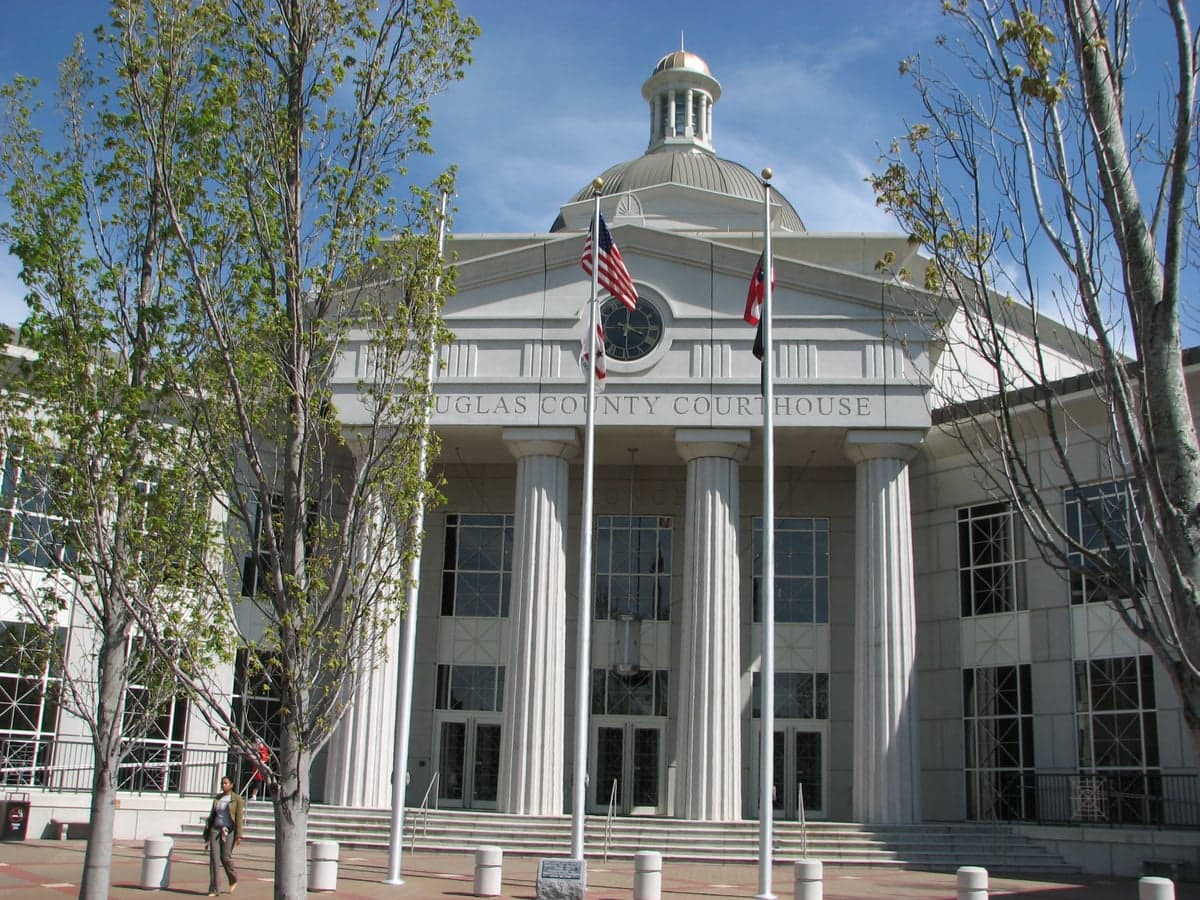
Photo: Wikipedia
Political ClimatePolitical Climate in Douglasville, GA
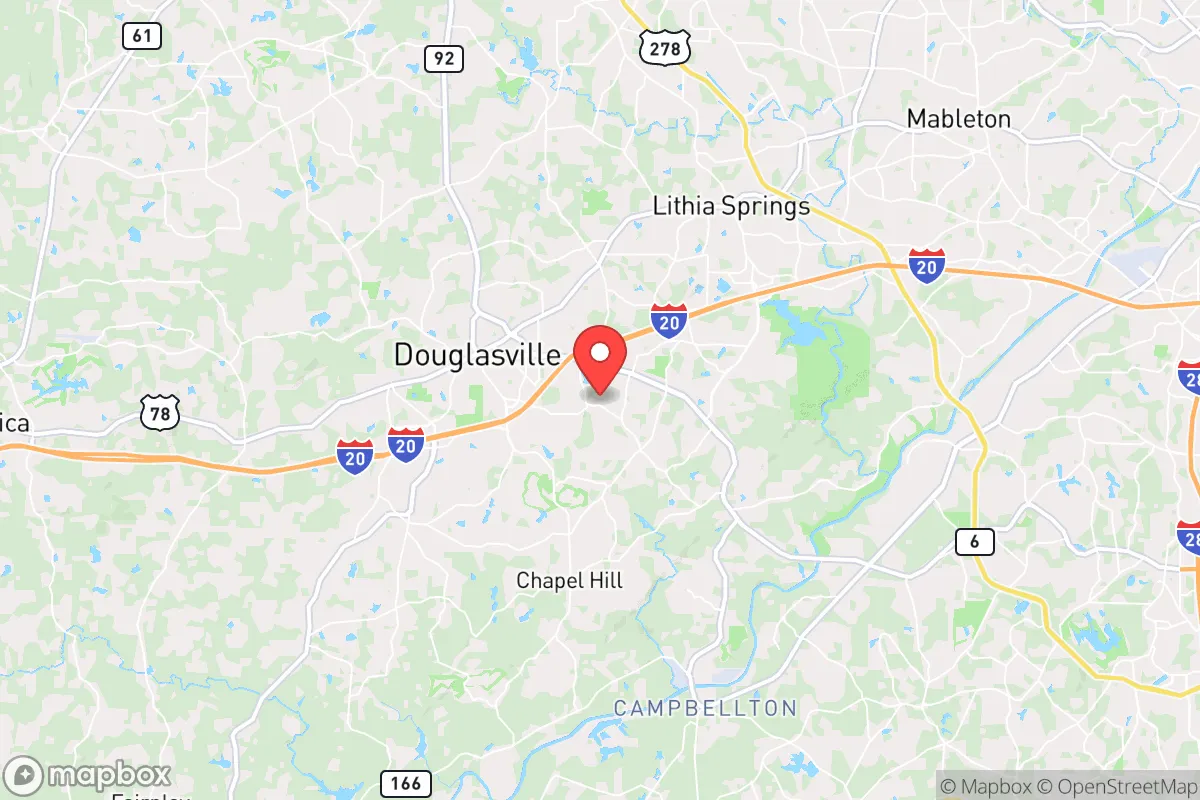
District shown is the primary district for this city’s centroid. Cities may span multiple districts.
Local Political AnalysisPolitical Analysis of Douglasville, GA
Douglasville, Georgia, has a Cook PVI of D+25, meaning it leans heavily Democratic in federal elections, but that number doesn’t tell the whole story of what it’s like to live here day-to-day. If you’ve been around a while, you remember when this was a reliably conservative corner of Douglas County—folks minded their own business, kept their guns, and didn’t expect the county to meddle in how they raised their kids or ran their small businesses. Over the last decade, though, the political climate has shifted noticeably as Atlanta’s sprawl has pushed progressive voters and policies further west along I-20. The local government has followed suit, with more emphasis on zoning regulations, mask mandates during COVID, and diversity initiatives that feel like they’re checking boxes rather than solving real problems. The trajectory is clear: Douglasville is becoming a satellite of Atlanta’s political machine, and that’s a concern for anyone who values local control and personal freedom.
How it compares
Drive 15 minutes west on I-20 and you hit Villa Rica, which still votes reliably red—Carroll County went +18 for Trump in 2020. Head south toward Newnan in Coweta County, and you’ll find a similar conservative tilt, with lower taxes and fewer land-use restrictions. Douglasville sits in the middle of that shift, and the contrast is stark when you cross the county line. In Douglas County, property taxes have crept up to fund new parks and a transit study for a potential commuter rail to Atlanta—projects that sound nice but often come with strings attached, like stricter building codes and higher fees for homeowners. Meanwhile, surrounding towns like Hiram and Dallas in Paulding County have kept a more hands-off approach, with lower millage rates and fewer hoops to jump through for a home addition or a home-based business. If you’re looking for a place where the government stays out of your garage sale or your backyard chicken coop, Douglasville is becoming less appealing by the year.
What this means for residents
For families and small business owners, the practical effect of Douglasville’s political lean is a growing list of local regulations that can feel like overreach. The city council has passed ordinances limiting short-term rentals like Airbnb, requiring special permits for home-based businesses, and even debating a noise curfew that would affect weekend gatherings. Property taxes in Douglas County have risen about 15% since 2020, partly to fund a new county administration building and a slate of social programs that many residents never asked for. Schools in the Douglas County School System have adopted DEI training and gender-inclusive policies that some parents find intrusive, with less emphasis on core academics and discipline. If you value the Second Amendment, you’ll find that Douglasville’s local ordinances are still relatively friendly—open carry is legal, and there’s no county-level red flag law—but the pressure from Atlanta’s progressive state legislators is constant. Voter turnout in Douglasville hit 68% in 2024, driven largely by new arrivals from Fulton and DeKalb counties, which means the political center of gravity will keep shifting left unless long-time residents stay engaged.
Culturally, Douglasville still has pockets of the old Georgia—the Douglas County Fair, the annual Christmas parade, and a handful of family-owned diners where the waitress knows your name. But the new developments along Chapel Hill Road and the influx of chain stores and apartment complexes are changing the character of the town. The city council voted 4-3 in 2023 to adopt a “Welcoming City” resolution, which critics saw as a symbolic step toward sanctuary city policies, even though it doesn’t change enforcement. For now, you can still buy a .308 at the local Academy Sports without a hassle, and the county sheriff’s office hasn’t gone soft on property crime. But if you’re the kind of person who wants to live and let live without a government checklist, keep an eye on the next few election cycles—Douglasville’s small-town feel is hanging by a thread, and the thread is getting thinner every year.

State Political ClimatePolitical Climate in Georgia
State Political AnalysisPolitical Environment in the State
Georgia has shifted from a reliably Republican stronghold to a genuine battleground state over the past two decades, with its current political climate defined by a razor-thin partisan split. The state voted for Joe Biden in 2020 by just 11,779 votes and elected two Democratic U.S. Senators in 2021, yet Republicans still control the Governor’s office, both legislative chambers, and all statewide elected offices. This tension between a rapidly growing, diverse metro Atlanta and a deeply conservative rural and exurban base creates a political environment that is both competitive and volatile, with the trajectory leaning leftward due to massive in-migration from blue states and demographic shifts among younger voters.
Urban vs. rural divide
The political map of Georgia is a story of two Georgias. Metro Atlanta, home to roughly 60% of the state’s population, is the engine of Democratic power. The core counties of Fulton, DeKalb, Clayton, and Cobb are solidly blue, with Fulton County delivering over 70% of its vote to Biden in 2020. The suburbs have flipped dramatically: Gwinnett County, once a Republican stronghold, went from voting for Mitt Romney by 12 points in 2012 to supporting Biden by 18 points in 2020. Meanwhile, the rest of the state remains deeply red. Rural south Georgia counties like Brooks, Irwin, and Telfair routinely vote 70-80% Republican. The exurban and small-town counties surrounding Atlanta—such as Forsyth, Cherokee, and Paulding—have become the new conservative bulwarks, with Forsyth County voting 65% for Trump in 2020. The divide is stark: drive 30 minutes outside the I-285 perimeter and the political landscape shifts from progressive urbanism to traditional Southern conservatism.
Policy environment
Georgia’s policy environment is a mixed bag for conservatives. The state has a flat income tax rate of 5.49%, which is being phased down to 4.99% by 2029 under the Tax Cuts and Jobs Act-style reform passed in 2022. Property taxes are relatively low, with a median effective rate of 0.87%, and there is no state-level estate or inheritance tax. The regulatory climate is business-friendly, with Georgia ranking 4th in the nation for business climate according to Site Selection Magazine. However, the state has expanded Medicaid under the Affordable Care Act only through a limited waiver program called Pathways to Coverage, which requires work requirements and premiums—a conservative compromise that has resulted in low enrollment. Education policy is a flashpoint: the state has a robust school choice program, including the Georgia Special Needs Scholarship and the new Promise Scholarship for low-income students, but public school funding remains a perennial issue. Election laws have been tightened under the 2021 Election Integrity Act (SB 202), which added voter ID requirements for absentee ballots, limited drop boxes, and reduced the runoff election window. This law has been both praised by conservatives for security and criticized by progressives as voter suppression.
Trajectory & freedom
Georgia’s trajectory on personal freedom is a tug-of-war between expanding liberty and creeping government overreach. On the positive side for conservatives, the state passed constitutional carry (permitless carry) in 2022 under HB 218, allowing law-abiding citizens to carry a concealed firearm without a permit. The state also enacted a parental rights bill (HB 1178) in 2022, requiring schools to notify parents of any changes to a student’s mental, emotional, or physical health, including gender identity discussions. However, the state has seen concerning expansions of government power. The 2020 COVID-19 emergency orders gave Governor Brian Kemp broad authority to close businesses and mandate restrictions, which many conservatives viewed as an overreach. More recently, the state has cracked down on election integrity with SB 202, which some argue creates unnecessary bureaucracy for voters. On medical freedom, Georgia has not passed any broad vaccine mandate bans, leaving that to local jurisdictions. The state’s abortion law (HB 481) bans most abortions after six weeks, which was upheld by the Georgia Supreme Court in 2023, but this remains a deeply divisive issue that could shift with future court rulings.
Civil unrest & political movements
Georgia has been a focal point for political activism and civil unrest. The 2020 election aftermath saw massive protests in Atlanta, including the “Stop the Steal” rally at the state capitol and the subsequent “Cop City” protests against the Atlanta Public Safety Training Center, which turned violent in 2023. The state has seen a rise in organized activist movements on both sides. On the left, groups like the Georgia NAACP and Fair Fight Action (founded by Stacey Abrams) have been highly effective at voter registration and turnout, particularly in minority communities. On the right, the Georgia Republican Party has been fractured between establishment conservatives and Trump-aligned populists, with the 2022 primary featuring a bitter challenge to Governor Kemp from former Senator David Perdue. Immigration politics are a growing flashpoint, particularly in the Atlanta suburbs where the foreign-born population has surged. Georgia has no sanctuary city policies, and the state has passed laws requiring local law enforcement to cooperate with ICE, but some cities like Atlanta and Clarkston have adopted more welcoming stances. Election integrity remains a live issue, with ongoing litigation over absentee ballot rules and the role of the State Election Board.
Projection
Over the next 5-10 years, Georgia is likely to continue its slow drift toward a purple or even blue state, driven by demographic trends. The Atlanta metro area is growing by about 100,000 people per year, with a significant portion coming from blue states like California, New York, and Illinois. These newcomers tend to be younger, more diverse, and more progressive, particularly in the inner suburbs. The rural population is aging and declining, which will erode the Republican base. However, the exurban counties like Forsyth, Cherokee, and Coweta are growing rapidly and remain deeply conservative, providing a counterbalance. The state’s political future will hinge on turnout in the 2024 and 2028 elections, particularly among suburban women and Black voters. If Republicans can maintain their edge in the exurbs and rural areas while improving margins among white working-class voters in the Atlanta suburbs, they can remain competitive. But the demographic tide is against them, and a Democratic trifecta (Governor, Senate, House) is a realistic possibility by 2030. For a conservative moving to Georgia, the state will likely remain a battleground where your vote matters more than almost anywhere else in the country.
Bottom line for a new resident: Georgia offers a low-tax, business-friendly environment with strong gun rights and parental rights, but you are moving into a state that is politically contested and shifting leftward. Your vote will count, your voice will matter, and you will need to be engaged to preserve the freedoms that make Georgia attractive. If you are looking for a solidly red state where you can coast, look to Alabama or Tennessee. If you want to fight for conservative values in a state that still has a fighting chance, Georgia is your arena.
* Values derived from national, state, county, city and local statistics and may differ in a specific area. Last updated: 2026-04-30T13:12:51.000Z
Narrative content on this page is AI-generated and may contain mistakes. Verify any details that matter before acting on them.
ReloMaps may earn a commission from affiliate links at no extra cost to you.

