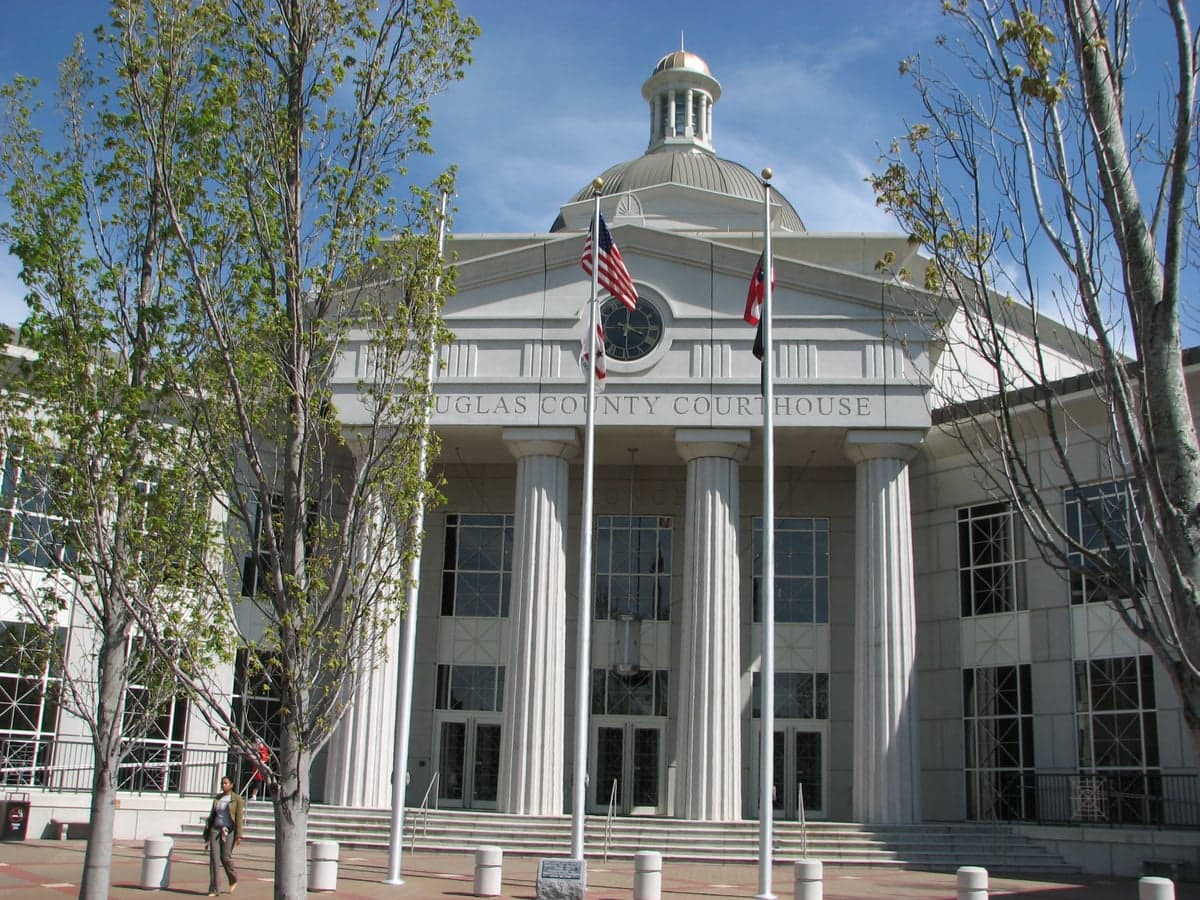
Photo: Wikipedia
Strategic Assessment of Douglasville, GA
Meaningful friction. Expect exposure to either population pressure, blast zones, or natural disaster risk. Consider buying a retreat property.
What does the Strategic Assessment tell us?
Our Strategic Assessment grades tactical survivability of an area. Major population centers, military targets, fallout zones, natural disasters, and border exposure all drive risk — lower exposure means a more defensible position in a crisis.
This is heavily inspired by Joel Skousen's Strategic Relocation book. Highly recommended you checkout the book ($)What does this tell us?
Our Strategic Assessment grades tactical survivability of an area. Major population centers, military targets, fallout zones, natural disasters, and border exposure all drive risk — lower exposure means a more defensible position in a crisis.
This is heavily inspired by Joel Skousen's Strategic Relocation book. Highly recommended you checkout the book ($)Strategic Pillars

Key Distances
Regional Safe Places
Below is our recommended "safe zones" in Georgia and the surrounding area based on our strategic heuristics. For most people, it's unrealistic to live in a “safe zone” full-time due to work, family or other personal reasons. They tend to be more rural. However, many of these areas are perfect for second homes and retreat properties that double as a vacation home or even a short-term rental.
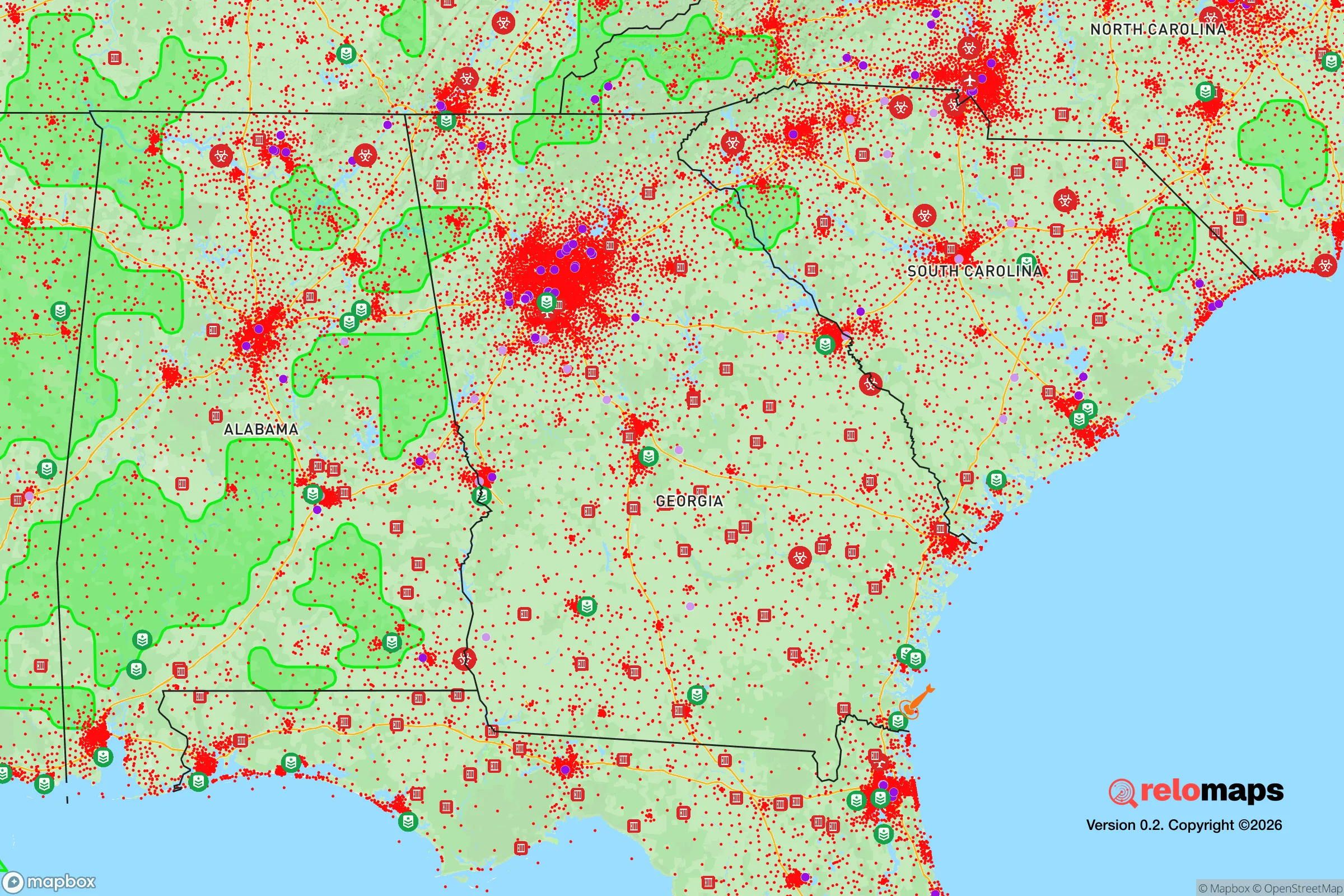
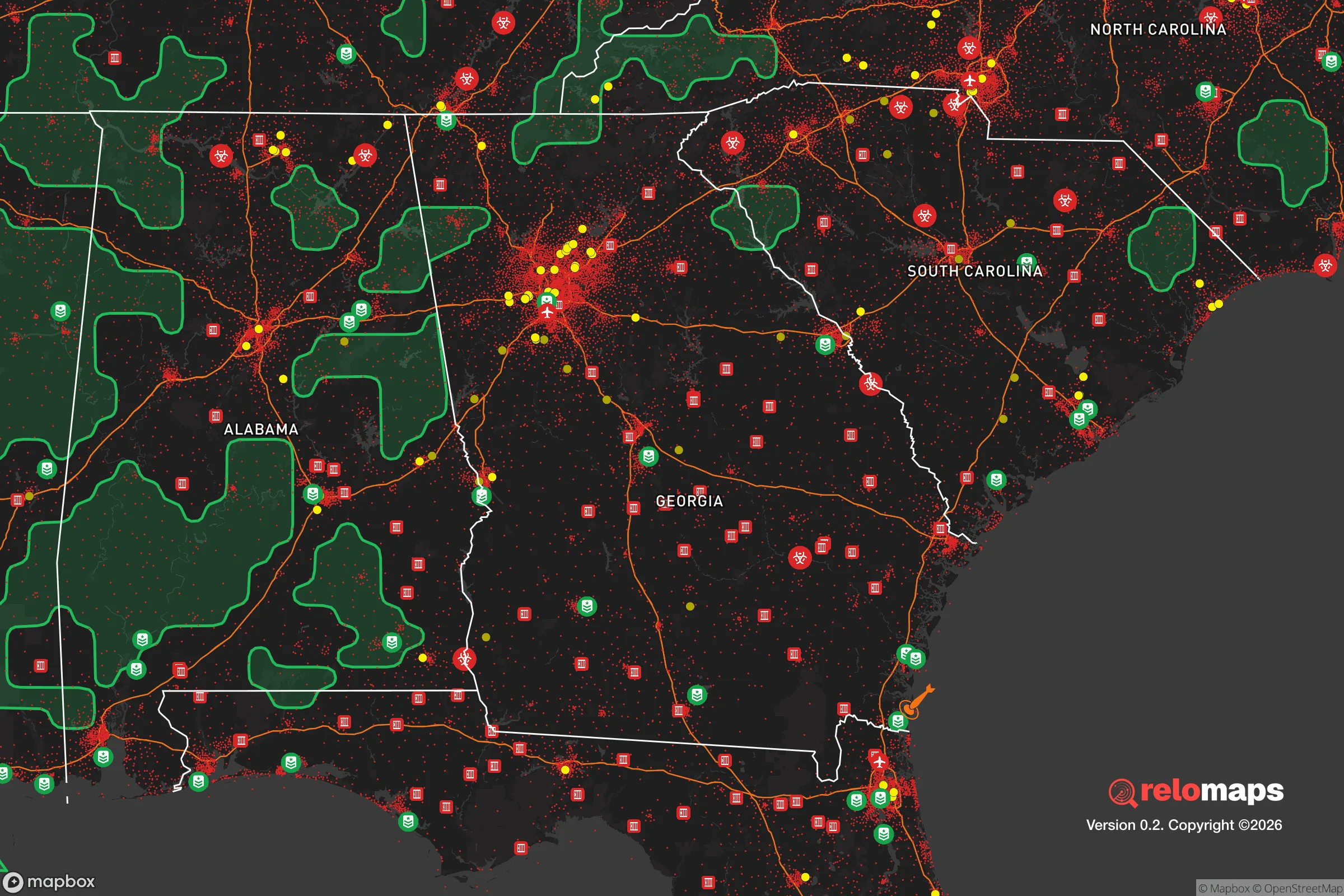


Important Note: For informational purposes only. This does not mean nothing bad ever happens in the green zones. Please use common sense. This is based on public data and modeled with AI. We tried to take a conservative approach but mistakes happen. We update this regularly as new information becomes available.
Solar Generator Recommendations
Backup power matters more here than in safer locations. We've picked three solar generators across budgets and capacity tiers — start with the budget unit if you only need a few essentials, or step up if you want to run a fridge and HVAC for days at a time.

Jackery Portable Power Station Explorer 300
Budget OptionPower on the Go: Weighing only 11 lbs, it's convenient to set up and store with book-sized foldable solar panels

BLUETTI Portable Power Station AC180
Designed for both indoor and outdoor scenarios, AC180 is highly capable as it has a robost capacity and continuous output power.

EF ECOFLOW DELTA Pro Ultra Power Station
Upgraded PickEcoFlow DELTA Pro Ultra is a whole-home energy system designed to grow with your family. Integrated with the Smart Home Panel 2, it scales to meet your evolving energy needs — keeping your home powered, intelligent, and secure through every stage of life.
We earn a commission, at no additional cost to you.
Strategic Assessment Analysis
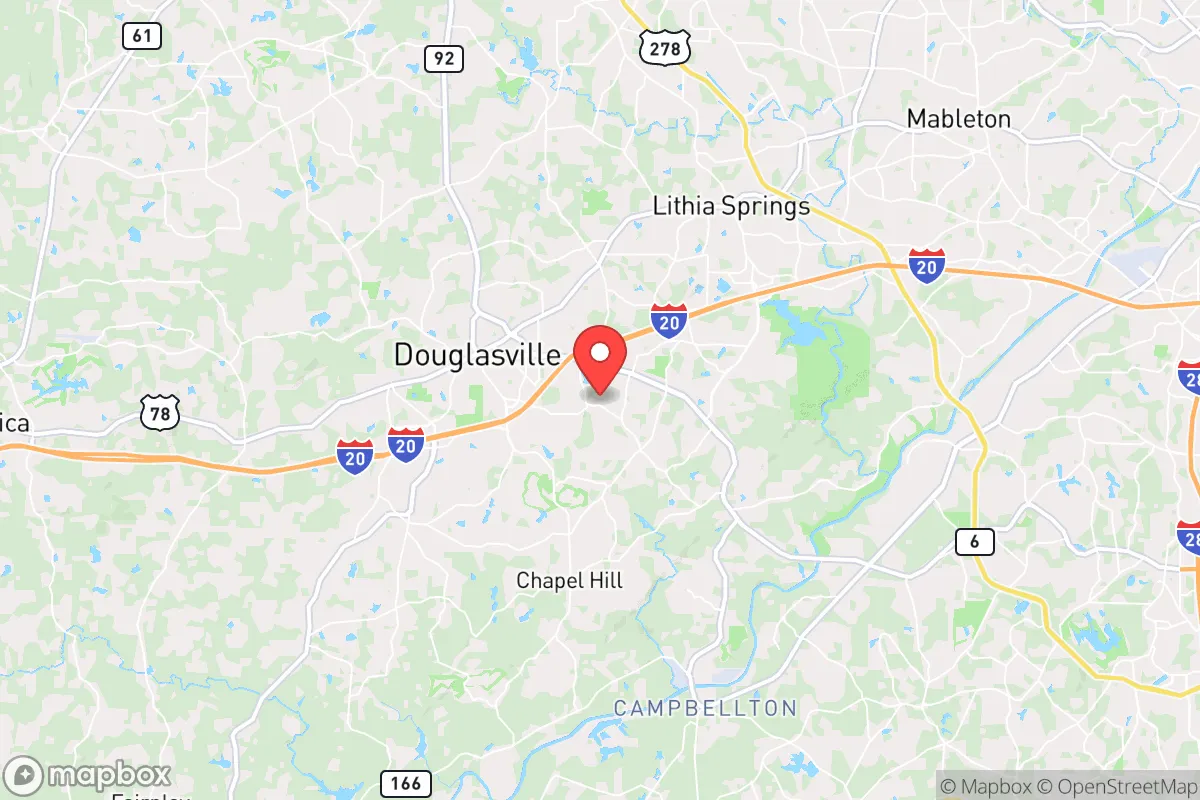
Douglasville, Georgia, sits in a precarious but potentially strategic position for those prioritizing resilience and self-sufficiency. Located roughly 20 miles west of downtown Atlanta along the I-20 corridor, this city of roughly 35,000 offers a blend of suburban infrastructure and rural-adjacent access that can be leveraged for a prepared lifestyle. Its primary advantage is proximity to the vast, sparsely populated regions of west Georgia and east Alabama, while its primary liability is its unavoidable connection to the Atlanta metropolitan area—a major target for any scenario involving civic unrest, infrastructure collapse, or mass casualty events. For a relocator with a conservative, prepper mindset, Douglasville is not a bug-out location but a potential staging ground that requires careful risk assessment and deliberate hardening.
Geographic position and natural advantages for long-term security
Douglasville’s geography is defined by the rolling Piedmont foothills, which provide decent drainage, varied terrain, and a moderate climate that supports year-round gardening and livestock. The area sits atop the Piedmont aquifer system, meaning private wells can be viable with proper drilling depths—typically 200 to 400 feet in this region. The Chattahoochee River, a major water source for the entire Atlanta metro, flows roughly 10 miles east of the city, but relying on it in a crisis is unwise due to its centrality to regional infrastructure and likely contamination or security issues. Instead, the numerous smaller creeks and tributaries—such as Dog River and Little Tallapoosa Creek—offer more discreet, defensible water sources for those on the western fringe of the county. The terrain itself is a mix of hardwood forest and open pasture, providing both cover and potential for sustainable food production. Douglas County’s average elevation of 1,100 feet above sea level also places it above the worst flood risks, though low-lying areas near waterways can still see flash flooding during heavy rain events.
Risks, exposures, and proximity to fallout-relevant landmarks
The single greatest risk for a Douglasville relocator is its position within the Atlanta metropolitan statistical area. In any scenario involving civil unrest, grid-down events, or a major terrorist or EMP attack, the population of over 6 million people in the metro area will become a liability. I-20 is a primary evacuation route, meaning Douglasville would see heavy traffic and potentially hostile movement from Atlanta refugees. The city itself is within 30 miles of Hartsfield-Jackson Atlanta International Airport, one of the busiest in the world and a likely target for any coordinated attack. Additionally, the proximity to major rail lines, interstate highways, and the Centers for Disease Control and Prevention (CDC) in Atlanta—a potential target for bioweapon-related incidents—adds layers of risk. On the natural disaster front, the area is not prone to hurricanes, earthquakes, or wildfires, but severe thunderstorms and tornadoes are a real threat. Douglas County has experienced multiple EF-1 and EF-2 tornadoes in the past decade, and the lack of basements in many homes is a significant vulnerability. The nuclear plant at Plant Vogtle is over 150 miles away, but the more immediate concern is the potential for a chemical spill or industrial accident along the I-20 corridor, which hosts numerous warehouses and logistics hubs.
Practical resilience for a relocator: food, water, energy, and defensibility
For a relocator serious about self-sufficiency, Douglasville offers a mixed bag. The city itself has standard suburban infrastructure—municipal water, natural gas, and grid electricity—but these are brittle in a long-term crisis. The key is to live on the western or southern edges of the county, where lot sizes increase and zoning is more lenient for livestock, gardens, and alternative energy. Areas near Winston, GA, or along Highway 5 south of Douglasville are more promising for a homesteading setup. Water is the first priority: a drilled well with a hand pump or solar-powered pump is essential, as municipal water treatment plants are vulnerable to contamination and power loss. Rainwater catchment is also viable, with average annual rainfall of 50 inches. For energy, solar panels with battery storage are practical, but the tree cover in many lots requires careful siting. Wood heat is a strong option, as the region has abundant hardwood forests, and a wood stove or outdoor boiler can provide both heat and cooking capability. Defensibility is a challenge in a suburban grid; the ideal property is set back from the road, with natural tree lines for cover and a clear line of sight to approaches. A rural property with a long driveway and a neighbor network is far preferable to a cul-de-sac in a subdivision. The local gun culture is strong, with several ranges and gun shops in the area, and Georgia’s constitutional carry law means you can defend your property without bureaucratic hurdles. However, the proximity to Atlanta means that in a collapse scenario, you will need to be prepared to defend against roving groups, not just isolated threats.
Community, local governance, and the overall strategic picture
Douglas County leans conservative, with a Republican voter registration advantage and a local government that is generally pro-business and pro-Second Amendment. The county commission and sheriff’s office have historically taken a law-and-order stance, which is a positive for those concerned about civil unrest. However, the city of Douglasville itself has a more mixed political makeup, and the county is experiencing rapid growth—population increased by roughly 15% between 2010 and 2020—which brings urban pressures like traffic, zoning changes, and rising property taxes. For a relocator, the strategic picture is this: Douglasville is a viable location if you are willing to invest in hardening a property on the rural fringe, build strong local relationships, and maintain a low profile. It is not a remote retreat; it is a buffer zone. The best-case scenario is that you are close enough to Atlanta to access its medical and supply networks in normal times, but far enough to avoid the worst of a metropolitan collapse. The worst-case scenario is that you are caught in the exodus from a major event and forced to defend your position against desperate urbanites. The calculus favors those who buy land west of the city, dig a well, plant a garden, and keep a low profile. If you are looking for a place to ride out the coming storms with a foot in both worlds—civilization and wilderness—Douglasville deserves a hard look, but only if you are willing to do the work to make it defensible.

* Values derived from national, state, county, city and local statistics and may differ in a specific area. Last updated: 2026-04-30T13:12:51.000Z
Narrative content on this page is AI-generated and may contain mistakes. Verify any details that matter before acting on them.
ReloMaps may earn a commission from affiliate links at no extra cost to you.

